
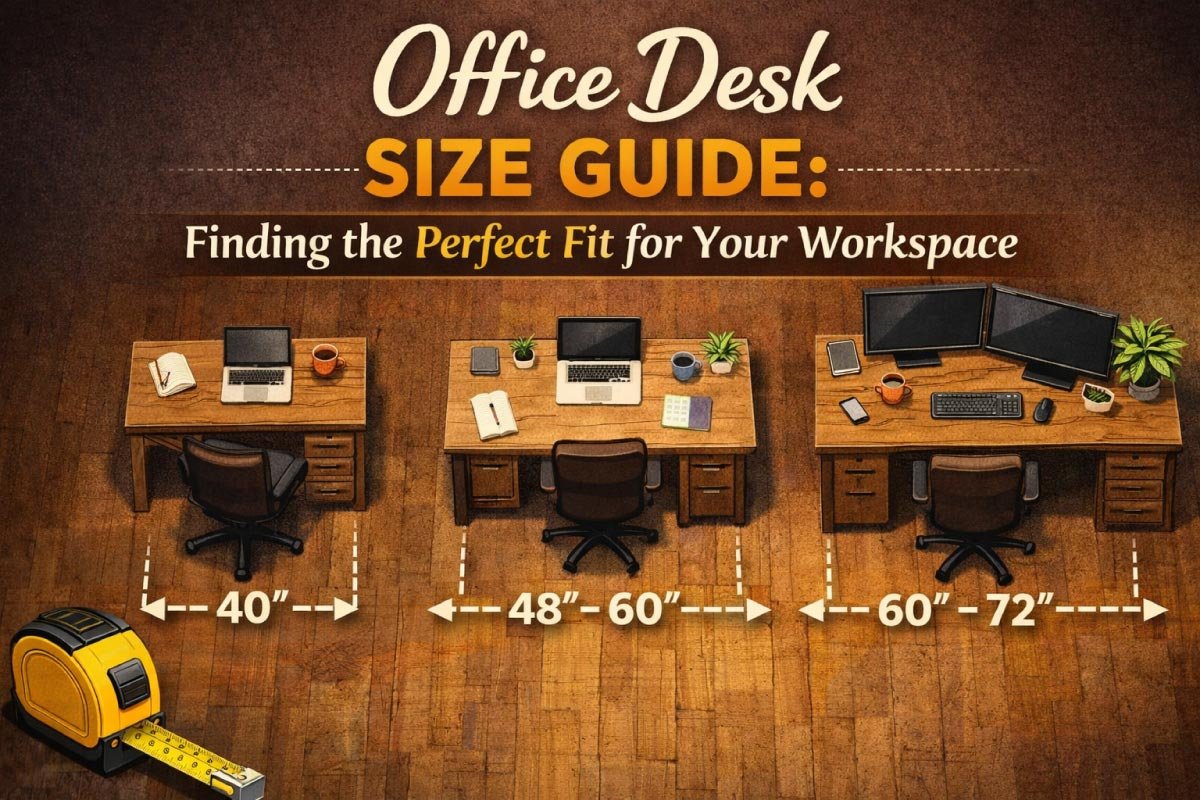
Selecting the right office desk is more than just picking a stylish piece of furniture. Desk size directly affects your comfort, productivity, and the overall efficiency of your workspace.
Whether you are working from home, managing an office, or setting up a study area for your child, choosing the correct desk dimensions is crucial for ergonomics, organization, and functionality.
This guide will explore standard desk sizes, depth and height considerations, types of desks, space optimization tips, and recommendations for different users.
Standard Office Desk Sizes
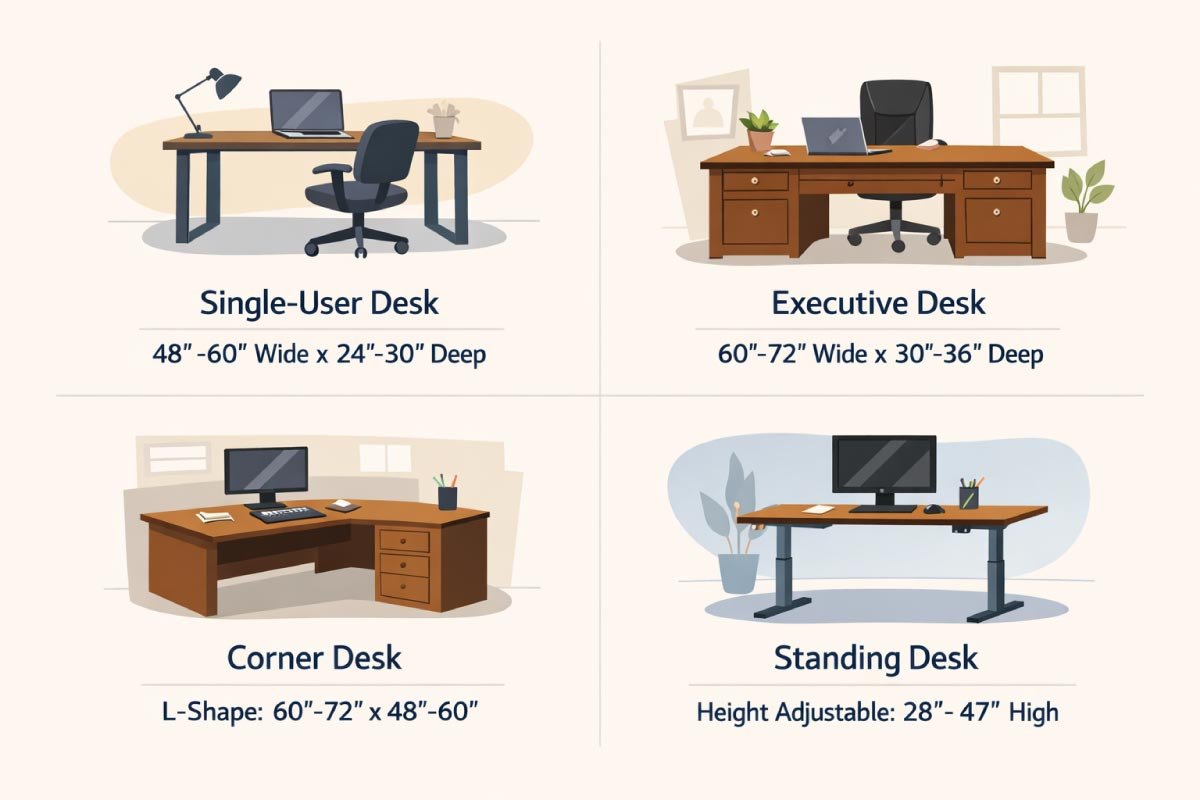
Office desks come in various sizes and shapes to accommodate different tasks, user heights, and room dimensions. The standard desk dimensions are often designed to provide enough workspace while allowing for comfortable seating, movement, and legroom. The most common desk sizes include single-user desks, executive desks, corner desks, and standing desks.
Standard Office Desk Sizes
Choosing the right office desk size is essential for comfort, productivity, and efficient use of space. Desk dimensions vary based on type, purpose, and user needs. This table provides standard measurements for different desks, helping you select the ideal width, depth, and height for your workspace.
| Desk Type | Width (inches) | Depth (inches) | Height (inches) | Ideal For |
|---|---|---|---|---|
| Single-User Desk | 42–60 | 24–30 | 28–30 | Home office, small spaces |
| Executive Desk | 60–84 | 30–36 | 29–31 | Managers, large offices |
| Corner Desk | 48–72 | 24–36 | 28–30 | Maximizes corner space |
| Standing Desk | 48–72 | 24–36 | Adjustable 28–48 | Ergonomic, flexible work setup |
| Compact Student Desk | 36–48 | 18–24 | 28–30 | Study areas, minimal setup |
Key Takeaway: A standard single-user desk width of 48–60 inches is suitable for most users, providing enough space for monitors, keyboards, and stationery without overcrowding the room.
Desk Height and Ergonomics
Height is one of the most critical factors in choosing an office desk. An incorrect desk height can cause discomfort, poor posture, and long-term health issues like back or neck pain. Ergonomic standards recommend a desk height that allows your elbows to rest at a 90-degree angle when typing or writing.
Recommended Desk Heights
Desk height plays a crucial role in maintaining proper posture and preventing discomfort during work or study. Heights should correspond to the user’s stature to promote ergonomic alignment. This table outlines recommended desk heights for different age groups and body types, ensuring comfort and productivity for everyone.
| User Type | Desk Height (inches) | Notes |
|---|---|---|
| Adult Standard | 28–30 | Suitable for users 5’5”–6’2” |
| Shorter Adults | 26–28 | For users below 5’5” |
| Taller Adults | 30–32 | For users above 6’2” |
| Children (8–12) | 22–26 | Adjustable chairs recommended |
| Teenagers (13–17) | 26–28 | Matches standard chair heights |
Pro Tip: Pair your desk with an adjustable chair to optimize ergonomic posture. Footrests can also help maintain proper alignment for shorter users.
Desk Depth and Workspace Efficiency
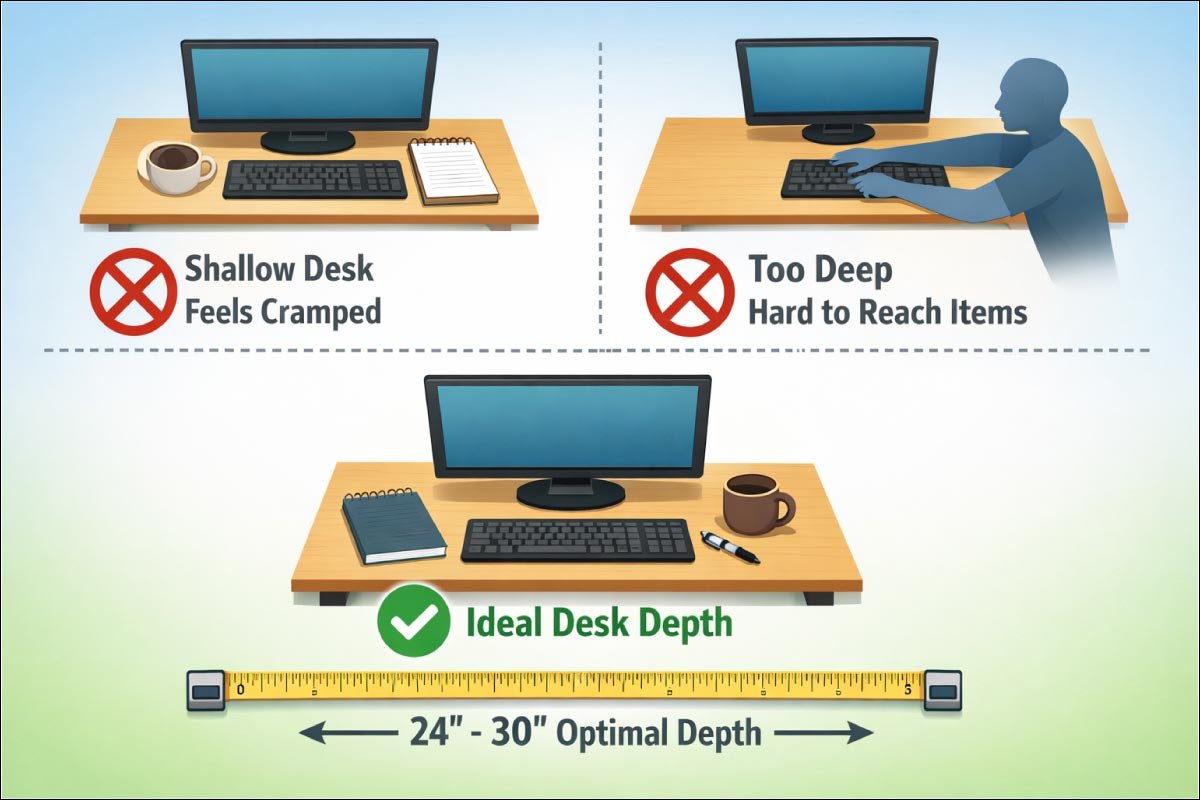
Desk depth determines how far you can place your monitors, writing materials, and other office supplies. Shallow desks may feel cramped, while overly deep desks can make items difficult to reach. A depth of 24–30 inches is ideal for most users, ensuring enough space for monitors, keyboards, and notebooks while maintaining easy reach.
Desk Depth Guidelines
Desk depth affects workspace functionality, comfort, and overall ergonomics. Adequate depth ensures monitors, keyboards, and accessories are positioned correctly, reducing strain on eyes and wrists. This table provides recommended desk depths for various desk types, helping you create an efficient and comfortable work or study environment.
| Desk Type | Recommended Depth (inches) | Ideal Use Case |
|---|---|---|
| Single-User Desk | 24–30 | Standard home or office desk |
| Executive Desk | 30–36 | Multi-monitor setups |
| Corner Desk | 24–36 | L-shaped layouts, corner placement |
| Standing Desk | 24–36 | Adjustable setups for ergonomic use |
| Compact Student Desk | 18–24 | Limited space, minimal accessories |
Note: Consider monitor placement and keyboard/mouse distance. A minimum of 20 inches from the user to the screen helps reduce eye strain.
Office Desk Shapes and Their Advantages
Desk shape affects both aesthetics and functionality. Common shapes include rectangular, L-shaped, U-shaped, and adjustable sit-stand desks. The choice of shape depends on room size, task requirements, and personal preferences.
Office Desk Shapes
The shape of a desk influences workflow, space utilization, and overall comfort. Different shapes cater to varying needs, from single-user setups to executive workstations. This table outlines common office desk shapes, their dimensions, and ideal use cases, helping you choose the most functional layout for your workspace.
| Desk Shape | Width (inches) | Depth (inches) | Best For |
|---|---|---|---|
| Rectangular | 42–72 | 24–30 | Standard workspace, minimal setup |
| L-Shaped | 48–72 | 24–36 | Corner spaces, multitasking |
| U-Shaped | 72–96 | 30–36 | Executive offices, large workstations |
| Adjustable Sit-Stand | 48–72 | 24–36 | Ergonomic, flexible work postures |
| Compact Folding | 36–48 | 18–24 | Small rooms, portable use |
Tip: L-shaped and U-shaped desks are ideal for multitasking or dual-monitor setups. Rectangular desks are versatile for most spaces.
Read More:
Space Requirements Around a Desk
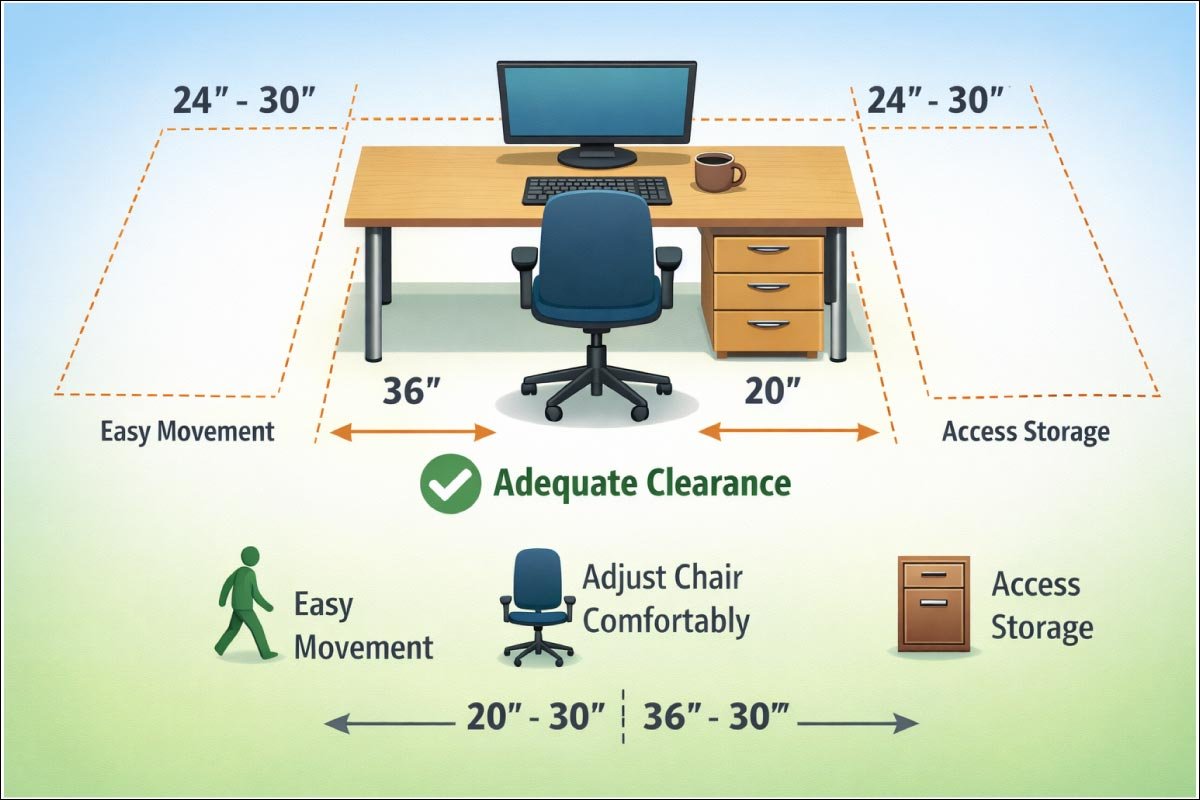
Adequate space around a desk is crucial for comfort, productivity, and safety. Proper clearance allows easy movement, chair adjustment, and access to storage without obstruction. This section highlights recommended space requirements to create an organized, ergonomic workspace that promotes efficiency while preventing strain or a cramped environment.
Desk Space Requirements
Proper space around a desk ensures comfort, accessibility, and efficient workflow. Desk type, chair movement, and room layout all influence space requirements. This table provides recommended room dimensions and chair clearance for various desks, helping you plan a functional workspace that accommodates movement, storage, and ergonomic needs.
| Desk Type | Room Space Required (ft²) | Chair Clearance (inches) | Notes |
|---|---|---|---|
| Single-User Desk | 6 x 6 | 36 | Minimum functional space |
| Executive Desk | 8 x 8 | 36–40 | Provides ample circulation |
| L-Shaped Desk | 8 x 6 | 36 | Maximizes corner space |
| U-Shaped Desk | 10 x 8 | 40 | Ideal for executive setups |
| Standing Desk | 6 x 6 | 36 | Adjustable height requires space |
Practical Advice: Always leave at least 3 feet of clearance behind your chair for smooth movement.
Read More:
Storage and Desk Accessories
Desk storage and accessories enhance organization, productivity, and workspace efficiency. Drawers, shelves, and cable management solutions help keep essentials within reach while reducing clutter. Understanding the dimensions and functionality of these features ensures you select a desk that accommodates your tools, documents, and devices effectively.
Desk Storage Dimensions
Desk storage dimensions determine how effectively you can organize office supplies, documents, and equipment. Properly sized drawers, shelves, and trays enhance accessibility and workflow. This table outlines standard storage measurements for common desk accessories, helping you choose a desk that keeps your workspace tidy, functional, and ergonomically efficient.
| Storage Type | Width (inches) | Depth (inches) | Height (inches) | Use Case |
|---|---|---|---|---|
| Pedestal Drawers | 12–16 | 18–24 | 24–28 | File storage, office supplies |
| Keyboard Tray | 18–24 | 12–16 | 2–4 | Ergonomic typing |
| Overhead Shelf | 24–36 | 12–15 | 10–15 | Books, décor, office tools |
| Cable Management | Variable | Variable | Variable | Keeps wires organized |
Tip: Consider a desk with adjustable storage for flexibility in organizing office supplies, files, and electronic devices.
Choosing the Right Desk for Different Users
Choosing the right desk depends on the user’s needs, space, and work style. Factors like desk size, storage, ergonomics, and adjustability play a crucial role in productivity and comfort. Considering these aspects helps ensure that the desk supports daily tasks efficiently while complementing the room’s layout and purpose.
-
Home Office: Medium-sized desks (48–60 inches) with storage drawers and cable management are ideal. A balance of workspace and storage ensures productivity without overcrowding.
-
Executive Office: Large desks (60–84 inches) with deep drawers, multi-monitor setups, and a premium finish provide both function and prestige.
-
Students: Compact desks (36–48 inches wide, 18–24 inches deep) with shelves or a small drawer keep the workspace organized while fitting smaller rooms.
-
Standing/Adjustable Desk Users: Adjustable desks allow alternating between sitting and standing. Depth should be sufficient for monitors and keyboards, with enough clearance for movement.
Read More:
Material and Build Considerations
When choosing a desk, the material and build are as important as size. The right materials ensure durability, stability, and ease of use, while poor construction can affect functionality. Considering these factors helps select a desk that supports daily work, lasts longer, and fits your space.
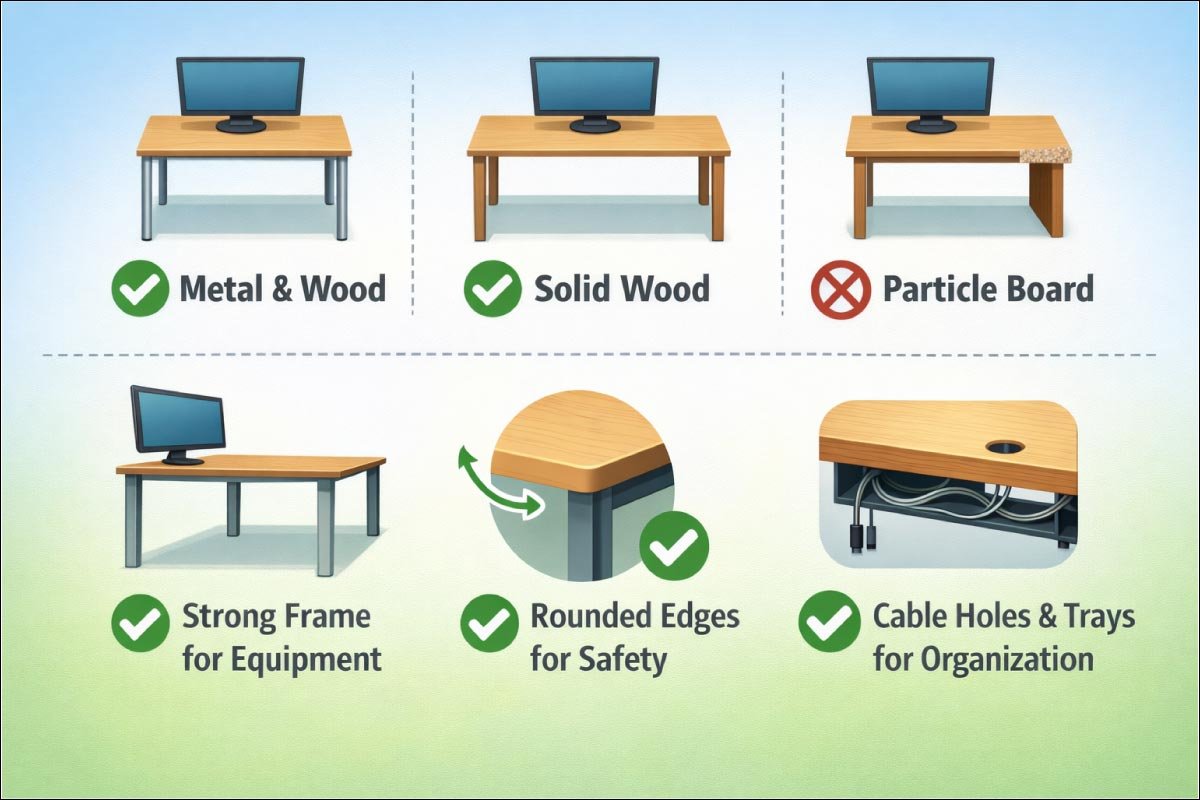
Additional Tips:
-
Ensure the desk frame supports your equipment weight.
-
Rounded edges prevent accidental injuries.
-
Cable holes or trays keep workspaces neat.
Read More:
Optimizing Desk Placement in a Room
The placement of a desk within a room greatly affects comfort, workflow, and access to natural light. Thoughtful positioning can enhance productivity, reduce strain, and optimize space. By considering room layout, lighting, and movement needs, you can create a functional and ergonomic workspace tailored to daily tasks.
-
Against a Wall: Maximizes floor space but may limit access to natural light.
-
Near a Window: Ideal for natural light, which reduces eye strain.
-
Corner Placement: L-shaped desks can make use of corners efficiently.
-
Center of the Room: Creates a statement but requires more space for movement.
Pro Tip: Maintain at least 36 inches of clearance around the desk for chair movement and accessibility.
Read More:
Conclusion
Choosing the right office desk size is essential for creating a functional, comfortable, and productive workspace. Standard desk dimensions, ergonomic heights, appropriate depths, and careful placement all contribute to your efficiency and well-being.
Whether you are outfitting a home office, student study area, or executive suite, understanding desk sizes and space requirements will ensure your workspace is both practical and aesthetically pleasing.
By considering desk type, user height, room space, storage needs, and ergonomics, you can select a desk that fits perfectly into your environment while supporting your work habits. Remember, the right desk is not just a piece of furniture—it’s the foundation of a productive workday.
Read More:

I am Engineer Hassan, a professional engineer with over 15 years of experience in measurements, design accuracy, and furniture, appliance, and home product sizing. Through Size Helper, I provide research-based guides and trending 2026 home design ideas for living rooms, bedrooms, sofas, wall décor, fashion, and sports—helping users make confident, informed decisions. Every guide is written with real expertise, verified data, and a commitment to quality, usability, and style.