

There is a common misconception that minimalist living rooms are cold, sterile, and uncomfortable — more like a showroom than a home. I believed that too, until I redesigned my own living room three years ago and discovered something surprising: when minimalism is done right, it is one of the coziest ways to live. The secret is not in removing everything. It is in keeping only the things that genuinely matter, and giving those things the space to breathe.
This guide walks through five trending minimalist living room ideas that manage to feel warm, inviting, and deeply livable. Whether you are starting from scratch or simply tired of a cluttered space that never quite feels relaxing, these ideas are practical, beautiful, and rooted in how people actually live.
1. Warm Neutral Color Palettes
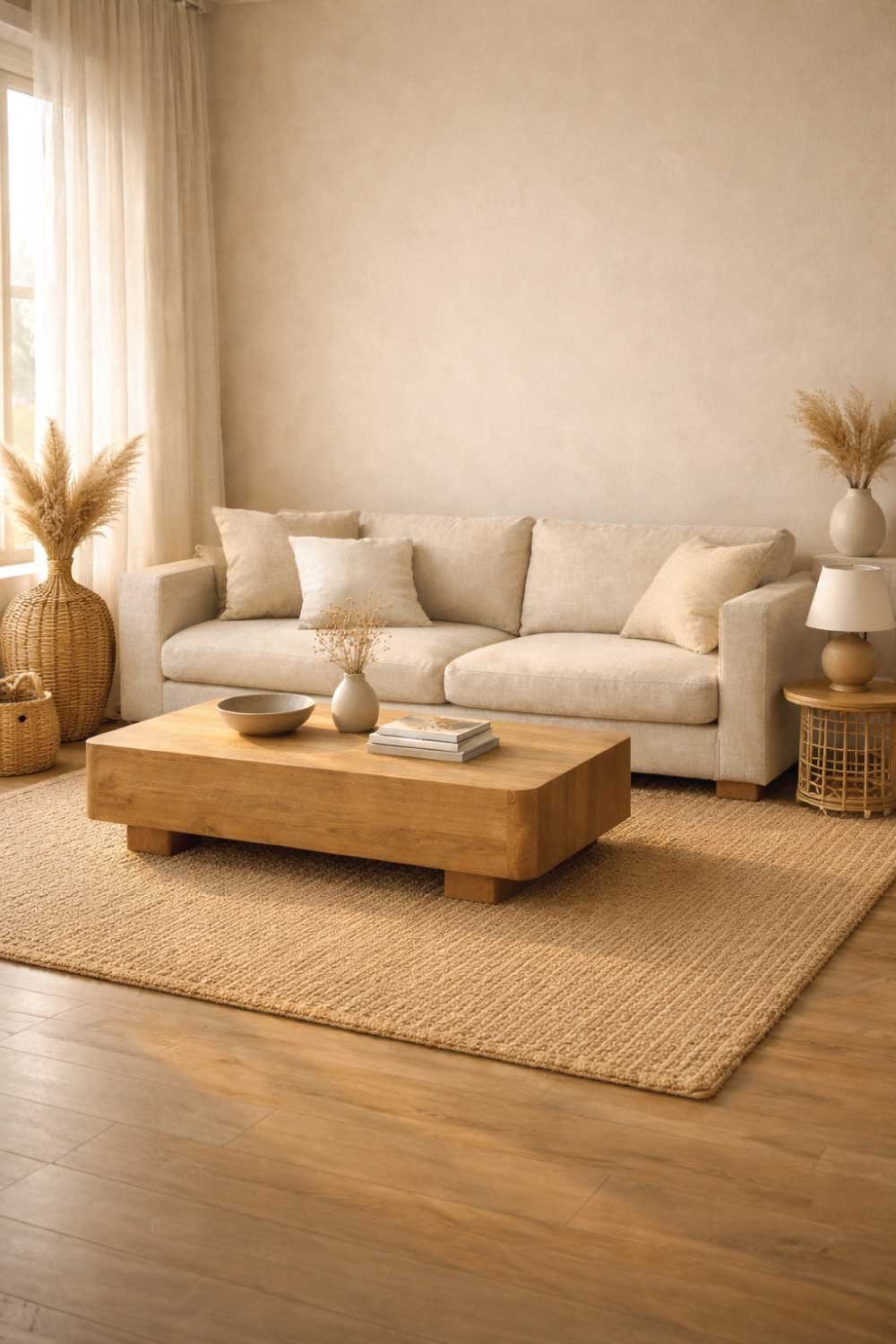
Color is the fastest way to set the emotional temperature of a room, and the biggest shift happening in minimalist interior design right now is a deliberate move away from stark white toward warm, layered neutrals. Think soft oatmeal, warm sand, dusty linen, aged cream, and pale terracotta. These tones carry the clean simplicity of minimalism while adding the warmth that makes a room feel like somewhere you actually want to sit for hours.
The reason warm neutrals work so well in minimalist spaces is that they do two things simultaneously. They unify the room visually — everything reads as part of the same calm, cohesive palette — while also creating subtle depth through tone variation. A room painted in warm white with a slightly darker beige sofa, a natural jute rug, and linen curtains in a soft cream feels layered and considered without being busy or complicated.
How to build a tonal palette that feels rich, not flat
What designers call a tonal palette is the key idea here. Rather than introducing multiple distinct colors, you build an entire room from different shades and textures within the same color family. The texture becomes the visual interest, not the color contrast. This is why a minimalist room in warm neutrals can feel so sophisticated — the restraint is deliberate, and it reads as intentional luxury rather than indecision.
When I repainted my living room from a cool bright white to a warm off-white with the faintest hint of yellow in the undertone, I was genuinely shocked by how different the space felt. The furniture had not changed. The layout had not changed. But the room suddenly felt like late afternoon sunlight lived there permanently. My friends stopped calling it my blank living room and started asking what candles I was burning, convinced the warmth was coming from somewhere else entirely.
Choosing accent colors that keep the calm intact
Accent colors in a warm neutral minimalist room should be organic and earthy rather than bold or contrasting. Burnt sienna in a throw pillow, deep olive in a ceramic vase, warm charcoal in a woven blanket — these add character without disrupting the calm that minimalism creates. The goal is a palette that feels like it grew naturally from the earth rather than one designed to make a statement.
Always test paint samples in your actual room at different times of day before committing. Warm neutrals shift dramatically between morning light and evening lamplight. A tone that looks perfect at noon can read as muddy by 8pm. Buy a small sample pot, paint a large swatch directly on the wall, and live with it for two or three days before deciding.
2. Natural Materials and Organic Textures
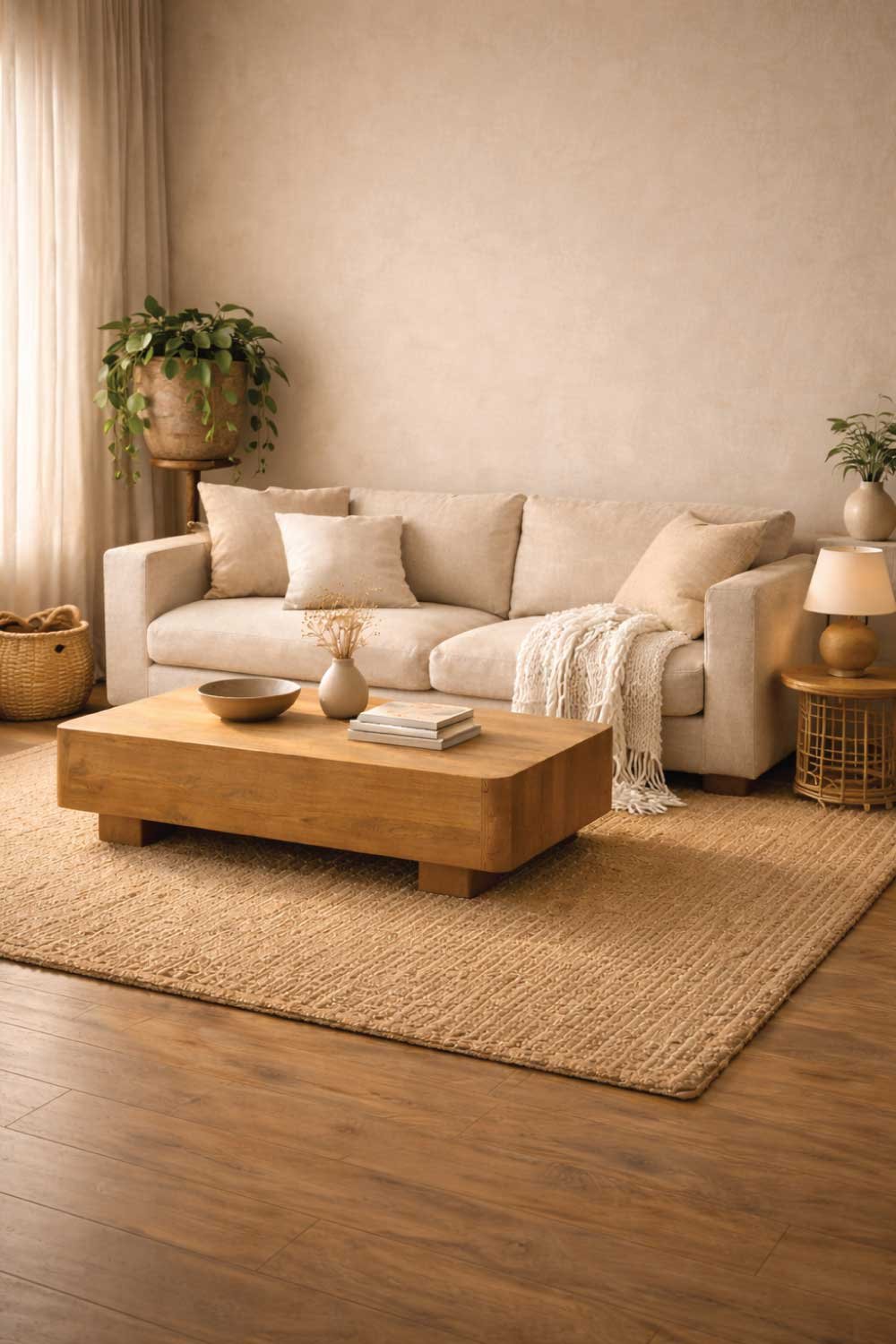
If warm color is the foundation of a cozy minimalist living room, natural materials are the structure built on top of it. Wood, linen, wool, rattan, jute, clay, stone — these materials bring an organic warmth into a space that no synthetic material can replicate. They also age beautifully, which matters in a minimalist room where each piece carries significant visual weight.
The current trend in minimalist design is what many designers are calling natural minimalism or organic minimalism. It is the rejection of cold industrial minimalism — polished concrete, brushed steel, harsh surfaces — in favor of materials that feel warm to the touch and visually connected to the natural world. A raw oak coffee table, a chunky wool throw draped over a linen sofa, a terracotta pot holding a trailing plant — each object is simple, but together they create a room that feels genuinely lived-in and warm.
Wood, linen, and boucle: the materials defining 2026
Wood is the single most important natural material in a cozy minimalist living room. It introduces warmth, grain, and a sense of organic imperfection that softens even the most stripped-back space. The key is choosing wood with visible grain and a natural finish rather than heavily lacquered or overly processed versions. Solid oak, walnut, and ash all work beautifully. Even a single wooden element — a side table, a floating shelf, a picture frame — can shift the feeling of an entire room.
Textiles deserve equal attention. In a minimalist room with limited objects, the fabrics you choose carry enormous weight. Linen, cotton canvas, chunky knit wool, and boucle are all having significant design moments right now because they add visual and tactile texture without introducing pattern or color complexity. A boucle sofa in warm white is one of the most sought-after choices in minimalist interiors this year precisely because it is both visually calm and physically inviting — you look at it and immediately want to sit down.
How I learned that texture was the missing piece
I learned the power of natural materials the hard way. My first attempt at a minimalist living room leaned heavily on white and gray — a gray synthetic rug, gray metal shelving, white plastic storage boxes. It looked clean in photographs but felt deeply uncomfortable to actually spend time in. The turning point was replacing the synthetic rug with a natural jute one and adding a chunky wool throw to the sofa. Those two changes, costing less than eighty dollars combined, made the room feel fifty times warmer. Texture was what I had been missing all along, and once I understood that, everything else in the room started to make more sense.
Mixing natural materials is more art than science, but a useful rule is to vary the texture while keeping the tone consistent. A smooth wooden table pairs beautifully with a rough-woven jute rug precisely because the contrast in texture is interesting while the warm earthy tones remain harmonious. Introduce too many different tones alongside too many different textures and the room starts to feel chaotic — the opposite of the calm you are working toward.
3. Intentional Lighting Layers
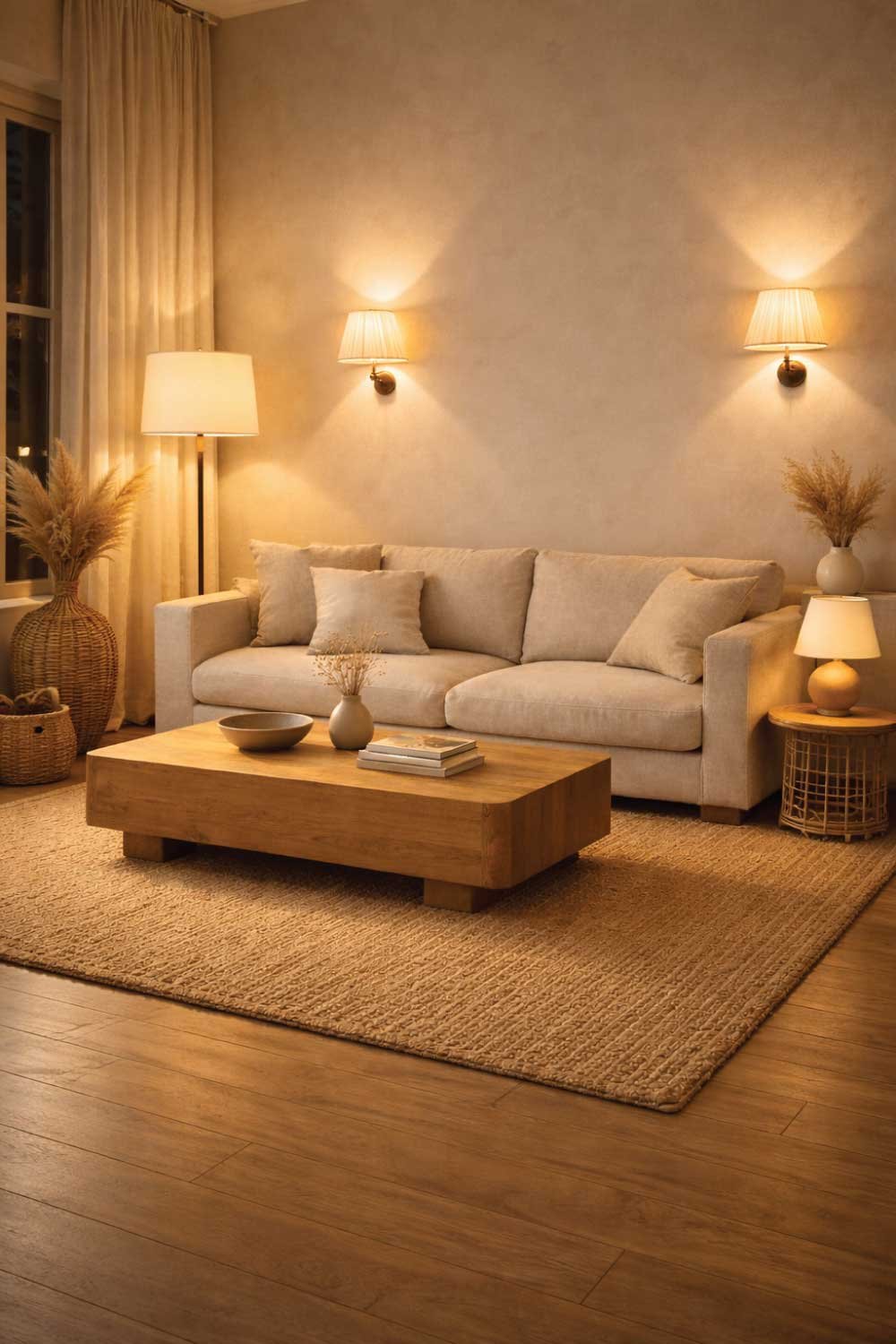
Lighting is the element most people get wrong in minimalist living rooms, and fixing it is often the highest-impact change you can make without moving a single piece of furniture. The common mistake is relying on a single overhead light source — a ceiling fixture or recessed lights — to illuminate the entire room. That approach produces flat, even light that is functional but emotionally cold. It looks like an office. It does not feel like a home.
The trending approach in minimalist interior design is layered lighting: building a room’s illumination from multiple sources at different heights, with different levels of warmth and intensity. The three layers are ambient light for overall illumination, task lighting for functional areas like reading or working, and accent lighting for atmosphere and visual interest. In a cozy minimalist living room, it is the third layer that transforms the space from pleasant to genuinely warm and inviting.
Floor lamps, sconces, and the power of warm bulbs
Floor lamps with fabric shades cast a soft diffused glow that feels nothing like overhead lighting. Wall sconces at eye level create pools of warm light that draw the eye horizontally and make a room feel more intimate. Table lamps on side tables or shelves bring light down to the level where you actually spend time — seated on a sofa or chair — rather than projecting it downward from above. Candles, while not practical as primary sources, add a flicker and warmth that no electric light fully replicates.
Color temperature matters enormously in a minimalist room. Bulbs in the 2700K to 3000K range produce a warm amber-toned light that feels relaxed and residential. Anything above 4000K starts to feel clinical and cool — fine for a kitchen or bathroom, but wrong for a living room where the goal is comfort. If your current lights feel harsh or flat, changing the bulbs alone can shift the atmosphere significantly without touching anything else in the room.
The evening I stopped using my ceiling light entirely
When I first moved into my current apartment, the living room had a single ceiling light in the center of the room. It was bright, even, and somehow made the space feel smaller and less comfortable than it actually was. Over three months I added a floor lamp in one corner, two table lamps on either side of the sofa, and a small LED strip behind the television for soft backlighting. I never use the overhead light in the evenings anymore. The room feels entirely different after sunset — warmer, quieter, more like a sanctuary than a rented apartment.
Dimmers are worth the small investment. The ability to reduce your ambient light intensity in the evenings while accent lights take over gives you enormous control over the emotional atmosphere of a room without requiring any additional furniture or decor. It is one of those invisible upgrades that you feel every single day without consciously noticing why the room feels so right.
4. Considered Furniture with Negative Space
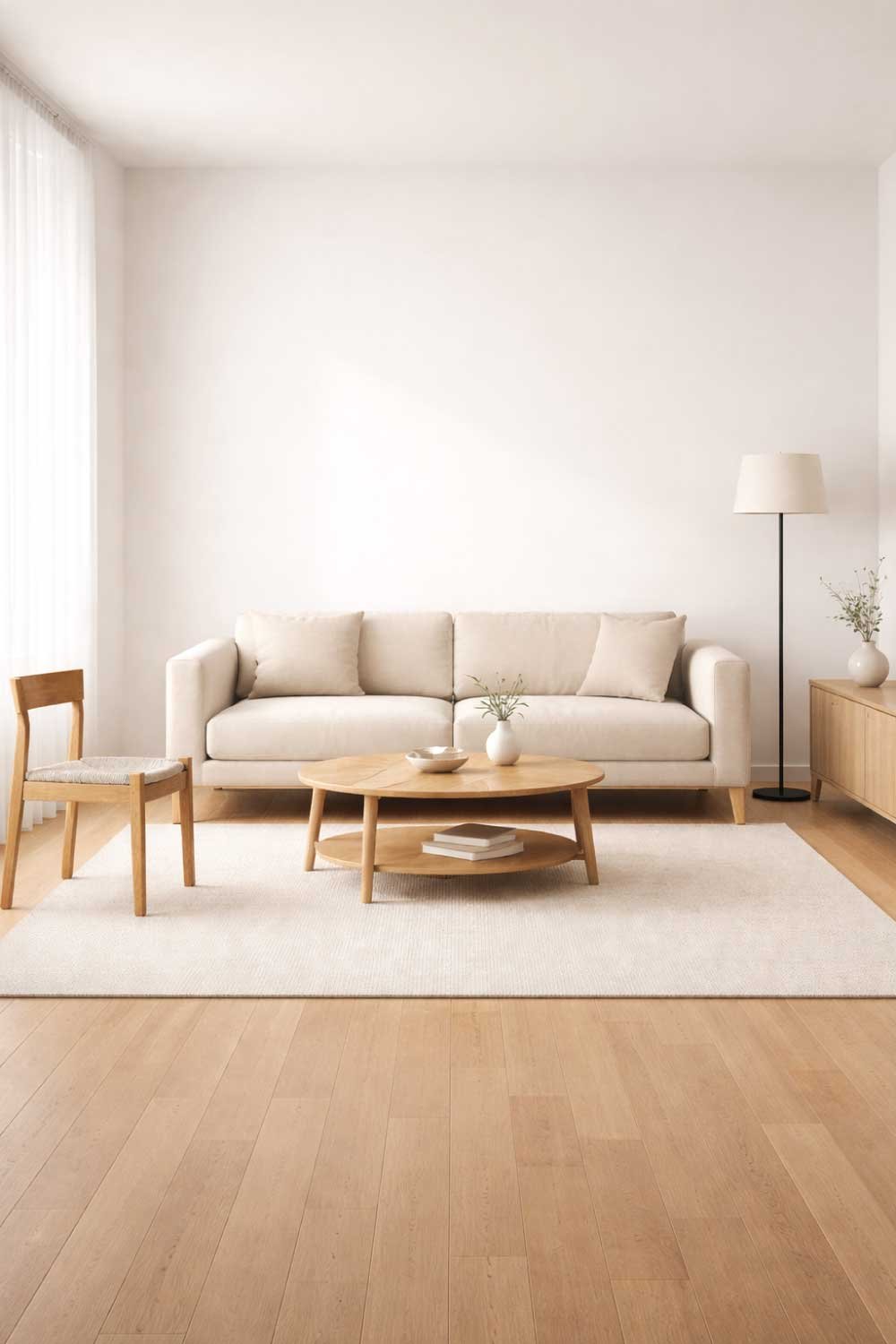
Furniture selection and placement in a minimalist living room is not simply about having fewer pieces. It is about choosing each piece with real intention and then giving it enough space to exist on its own terms. This is what distinguishes a genuinely minimalist room from one that simply looks underfurnished — the difference between deliberate restraint and accidental emptiness. One feels confident. The other feels incomplete.
The principle at work here is negative space, borrowed from visual art and graphic design. Negative space is the empty area around and between objects, and in interior design it functions as a design element in itself rather than something to be filled. When furniture has adequate breathing room — space between the sofa and the wall, open floor visible around the rug edges, clear surface on a side table — the eye can rest, and the room feels calm rather than anxious.
Choosing a sofa, coffee table, and rug that do the heavy lifting
Sofa choice is the most important furniture decision in any living room, and in a minimalist space it carries even more weight because it will be one of very few large objects present. The current trend favors low-profile sofas with simple clean silhouettes — straight arms, uniform cushions, legs that lift the piece slightly off the floor. Lifted legs are particularly useful in small minimalist rooms because they reveal floor space beneath the sofa, making the room feel larger and less visually heavy.
Coffee tables in minimalist living rooms are trending toward natural wood, simple geometric shapes, and open designs rather than solid closed ones. A coffee table with a lower shelf rather than a solid base allows light to pass through and the eye to travel beneath it, reducing its visual weight considerably. Nesting tables are another smart choice — two or three tables that stack together when not in use, expanding only when needed, perfectly aligned with minimalist thinking.
Why I removed the objects from two corners entirely
Resist the instinct to fill every corner. In my early attempts at minimalist decorating, I kept a small plant in every corner, a lamp beside every chair, a decorative object on every surface. The room looked balanced in theory but felt anxious in practice — like something was competing for attention everywhere I looked. Removing the objects from two corners entirely, leaving them genuinely open, made the remaining corners feel more special and the room as a whole feel more spacious and calm. Empty space, I finally understood, is not wasted space. It is breathing room.
The practical test for furniture placement in a minimalist room is simple: if you had to justify the presence of each piece in writing, could you do it quickly and clearly? The sofa is here because it is where we rest. The coffee table is here because we need a surface within reach. The floor lamp is here because we need warm light for evening reading. If an object cannot pass that test, it probably does not belong there.
Also Read:
5. Curated Decor That Earns Its Place
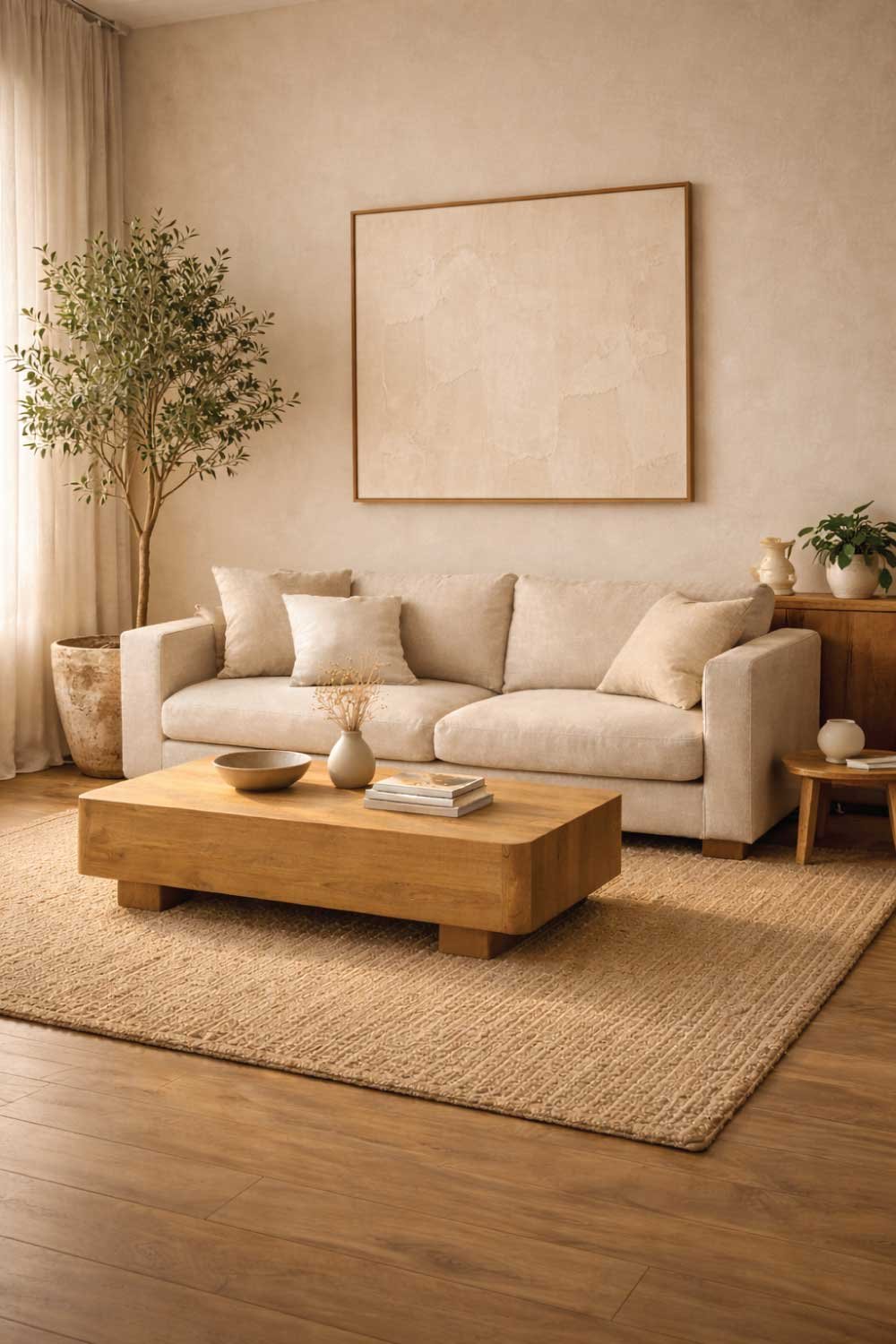
Decor in a minimalist living room operates on completely different logic than decor in a maximalist space. When a room contains many objects, individual pieces blend into the overall atmosphere and no single thing demands full attention. In a minimalist room, every object is visible, every piece is noticed, and anything that does not contribute positively actively detracts from the whole. This sounds demanding, but it is actually liberating — it gives you permission to own less and invest more genuinely in the things you choose to keep.
The concept of curated decor is about choosing objects for a combination of aesthetic quality and personal meaning. A beautiful ceramic bowl bought on a memorable trip, a single piece of art that genuinely moves you, a plant you actually enjoy caring for — these objects do more for a minimalist room than ten decorative purchases made without real intention. They make the space feel personal and deeply lived-in without introducing the visual noise that undermines calm.
Plants, art, and the one-piece wall rule
Plants deserve special mention because they are one of the few elements that introduce life, color, and organic form into a minimalist room without ever feeling like clutter. A single large plant — a fiddle leaf fig, a monstera, or an olive tree in a simple terracotta pot — can do more for a living room than an entire shelf of smaller decorative objects. The scale and presence of one considered plant anchors a corner, introduces natural color, and softens the clean lines of minimalist furniture in exactly the right way.
Wall art in a minimalist living room should follow the principle of one considered piece rather than a gallery wall. A gallery wall, however beautiful in a more layered interior, introduces complexity that works against minimalist calm. One larger piece — whether a painting, a photograph, a textile, or a beautifully framed print — becomes a genuine focal point. The empty wall surrounding it is not wasted space. It is what makes the art fully visible and properly felt.
The three things I keep on my main shelf
Surface styling in a minimalist room works best in odd numbers and with generous empty space between objects. I keep three things on my main shelf: a small ceramic vase bought from a local market, a stack of three books I am genuinely reading or returning to regularly, and a single trailing pothos in a simple white pot. Nothing else. Every few months I swap the books for others I am actually engaging with at that time. The shelf looks consistent but feels current and personal, and because there is so little on it, each object receives the full attention it deserves. That is the quiet satisfaction of minimalism done well — not emptiness, but presence.
Also Read:
Bringing It All Together
The cozy minimalist living room is not a style you arrive at by following a checklist. It is a sensibility you develop by paying close attention to how your space makes you feel and being willing to make decisions slowly and deliberately. Warm neutrals create emotional softness. Natural materials bring tactile warmth and organic life. Layered lighting transforms the atmosphere hour by hour. Considered furniture placement gives every piece room to exist fully. Curated decor makes a room feel personal without making it feel busy.
None of these ideas require significant money. Most of them require the opposite of spending — editing, removing, simplifying. The best minimalist living rooms feel expensive not because they contain expensive things but because every choice in the room is confident and clear. That confidence is available to anyone willing to slow down, pay attention, and trust that less, chosen carefully, is always more than enough.
Frequently Asked Questions
How do you make a minimalist living room feel warm and cozy?
The key is layering warm neutrals, natural materials like wood and linen, soft lighting from multiple sources, and a small number of personally meaningful decor objects. Warmth in minimalism comes from texture and tone, not from adding more things.
What colors work best in a minimalist living room?
Warm off-whites, soft beiges, dusty linens, aged creams, and pale terracotta tones all work beautifully. The goal is a tonal palette where different shades of the same warm color family create depth through texture rather than color contrast.
How much furniture should a minimalist living room have?
Focus on function rather than a fixed number. Every piece should have a clear purpose. Most minimalist living rooms work well with a sofa, a coffee table, one or two accent chairs, a rug, and a single statement light source plus layered accent lighting.
Can a minimalist living room feel personal?
Absolutely. Intentional decor — objects chosen for genuine aesthetic or personal meaning rather than habit or obligation — makes a minimalist room feel more personal than a maximalist one, not less. When there are fewer things, each one is more visible and more meaningful.

I am Engineer Hassan, a professional engineer with over 15 years of experience in measurements, design accuracy, and furniture, appliance, and home product sizing. Through Size Helper, I provide research-based guides and trending 2026 home design ideas for living rooms, bedrooms, sofas, wall décor, fashion, and sports—helping users make confident, informed decisions. Every guide is written with real expertise, verified data, and a commitment to quality, usability, and style.