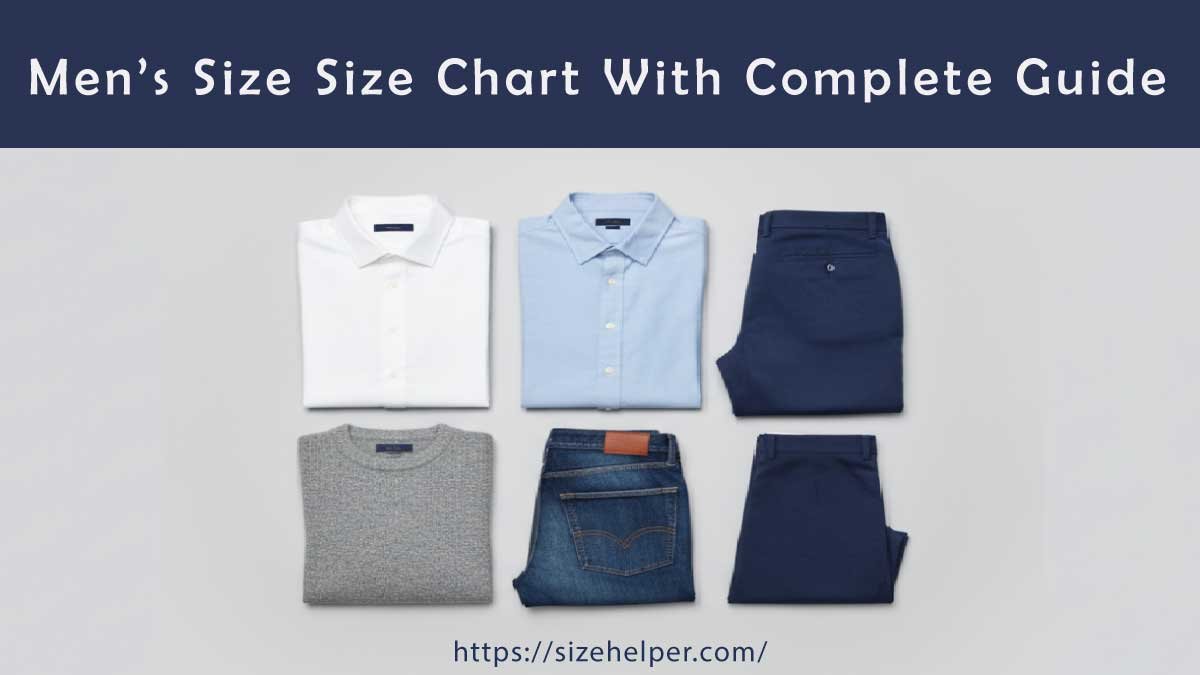
Shopping for men’s clothing is not always as simple as grabbing something labeled “medium” or “large.” One brand’s medium may fit like a glove, while another brand’s medium feels way too tight. Then there’s the difference between US, UK, and EU sizes, confusing enough to make anyone second-guess their purchase.
That is where a men size chart is required. Rather than using imprecise labels, a chart provides you with exact measurements of shirts, pants, shoes and the like. Imagine it as your own secret weapon in how to look good but at the same time, be comfortable. This will be your guide to the world of men clothes size.
We will encompass dress shirts and jeans to suits, jackets, shoes, and accessories. You will also know how to assess yourself properly and what to look at when buying online or in the foreign country.
Why Men’s Size Charts Are So Important
Size charts are not just about numbers. They are about confidence and practicality. Here is why they matter more than most people realize:
Better First Impressions – Clothes that fit well give you a sharper, more put-together look.
Comfort All Day – Ill-fitting pants or tight shirts are not just unflattering, they are uncomfortable.
Save Money & Time – Returns and exchanges are frustrating. Knowing your exact size prevents costly mistakes.
Consistency Across Brands – Each label has its quirks. A size chart keeps you grounded.
Tailoring Made Easier – If you are investing in a suit or jacket, a chart helps you get the closest size before tailoring.
In short, a men’s size chart is about making fashion simple.
Men’s Shirt Size Chart
Shirts are a pillar of the male fashion, be it a relaxed button-up in order to go out or a fresh white shirt at work. Finding the correct fit implies balancing the neck size, the chest, and length of sleeves.
| Size | Neck (inches) | Chest (inches) | Sleeve (inches) |
|---|---|---|---|
| Small (S) | 14–14.5 | 34–36 | 32–33 |
| Medium (M) | 15–15.5 | 38–40 | 33–34 |
| Large (L) | 16–16.5 | 42–44 | 34–35 |
| X-Large (XL) | 17–17.5 | 46–48 | 35–36 |
| XXL | 18–18.5 | 50–52 | 36–37 |
| XXXL | 19–19.5 | 54–56 | 37–38 |
👉 Style Note: Slim-fit shirts are cut closer to the body and may require you to size up. Classic or regular fits give more room for movement.
Men’s T-Shirt Size Chart
T-shirts are more casual, unlike dress shirts. Nevertheless, as fitted and oversize clothing increased in popularity, it does not hurt to know what your chest measurements and waists are.
| Size | Chest (inches) | Waist (inches) |
|---|---|---|
| Small (S) | 34–36 | 28–30 |
| Medium (M) | 38–40 | 32–34 |
| Large (L) | 42–44 | 36–38 |
| X-Large (XL) | 46–48 | 40–42 |
| XXL | 50–52 | 44–46 |
👉 Pro Tip: When you are in the middle of the sizes, make the decision in terms of style. Smaller to be fitted and bigger to be relaxed.
Men’s Pants & Jeans Size Chart
For pants and jeans, the two critical numbers are waist and inseam. Waist measures around your natural waistline, while inseam runs from the crotch to the ankle.
| Waist (inches) | Inseam (Short) | Inseam (Regular) | Inseam (Long) |
|---|---|---|---|
| 28 | 30 | 32 | 34 |
| 30 | 30 | 32 | 34 |
| 32 | 30 | 32 | 34 |
| 34 | 30 | 32 | 34 |
| 36 | 30 | 32 | 34 |
| 38 | 30 | 32 | 34 |
| 40 | 30 | 32 | 34 |
👉 Style Note: Slim-fit jeans often feel tighter around the thighs and calves, while relaxed or straight fits allow more movement. Always try them on if possible.
Men’s Suit Size Chart
Suits represent the most accurate piece of clothing item. A proper suit helps one to improve his/her posture and his/her confidence whereas a poor one can be spotted a mile away. The suit sizes are determined by chest measurement alongside height rates (Short, Regular, Long).
| Suit Size | Chest (inches) | Height Guide |
|---|---|---|
| 36S | 36 | 5’4”–5’7” |
| 38R | 38 | 5’8”–6’0” |
| 40R | 40 | 5’8”–6’0” |
| 42L | 42 | 6’1”–6’3” |
| 44L | 44 | 6’1”–6’3” |
| 46R | 46 | 5’8”–6’0” |
| 48L | 48 | 6’1”–6’3” |
👉 Tailoring Tip: Even the finest off the rack suit can use some modifications. A good tailor is able to make fine adjustment of length of the sleeves, waist suppression, and hemming of pants.
Men’s Shoe Size Chart
Shoes are notorious for confusing sizes, especially when comparing across US, UK, and European charts.
| US Size | UK Size | EU Size | Foot Length (inches) |
|---|---|---|---|
| 7 | 6 | 40 | 9.6 |
| 8 | 7 | 41 | 9.9 |
| 9 | 8 | 42 | 10.2 |
| 10 | 9 | 43 | 10.6 |
| 11 | 10 | 44 | 10.9 |
| 12 | 11 | 45 | 11.2 |
| 13 | 12 | 46 | 11.6 |
👉 Comfort Tip: You have enlarged foot in the daytime.Also, to ensure a perfect fit, always put on new shoes in the afternoon or the evening.
Men’s Jacket Size Chart
Jackets add structure and warmth, but they should never feel bulky or restrictive.
| Size | Chest (inches) | Sleeve (inches) |
|---|---|---|
| Small | 34–36 | 32–33 |
| Medium | 38–40 | 33–34 |
| Large | 42–44 | 34–35 |
| XL | 46–48 | 35–36 |
| XXL | 50–52 | 36–37 |
👉 Layering Tip: If you plan to wear sweaters or hoodies underneath, consider sizing up.
Men’s Belt Size Chart
Belts are simple and ignored frequently. The motto: wear one size larger than your pants.
| Pant Waist (inches) | Belt Size (inches) |
|---|---|
| 30 | 32 |
| 32 | 34 |
| 34 | 36 |
| 36 | 38 |
| 38 | 40 |
| 40 | 42 |
Men’s Hat Size Chart
The hat which is too tight leaves you with headaches whereas the one which is too loose always slides down. Wear at the measurement around the widest part of your head.
| Hat Size | Head Circumference (inches) |
|---|---|
| Small | 21 1/4 – 21 5/8 |
| Medium | 22 – 22 3/8 |
| Large | 22 3/4 – 23 1/8 |
| XL | 23 1/2 – 23 7/8 |
International Size Conversions
To avoid being caught up in a store when spending money on a world wide web online or even during travelling conversion charts would save you the unexpected.
| US Size | UK Size | EU Size |
|---|---|---|
| S | 36 | 46 |
| M | 38 | 48 |
| L | 40 | 50 |
| XL | 42 | 52 |
| XXL | 44 | 54 |
How to Measure Yourself
Stand before a mirror and use a soft measuring tape for accuracy. Here’s a quick rundown:
Chest – Measure under your arms, across the fullest part.
Waist – Around your natural waistline (not too tight).
Hips – Across the widest part of your hips and seat.
Inseam – From crotch seam to ankle bone.
Neck – Around the base of your neck, leaving room for comfort.
Sleeve – From the middle of the back of your neck, over the shoulder, down to the wrist.
👉 Pro Tip: Do not pull the tape too tight. Clothes fit better when you allow for comfort.
Tips for Perfect Fit Every Time
Know your body type – Athletic builds may need stretch fabrics, while slim builds benefit from tapered cuts.
Fabric matters – Cotton may shrink, polyester blends often don’t.
Check reviews – Shoppers often mention if items run big or small.
Don’t size up “just in case” – Oversized clothing often looks sloppy unless styled intentionally.
Invest in tailoring – Even small adjustments make affordable clothes look high-end.
The Problem With “One-Size-Fits-All”
The mistake that many men commit is to think that in case a shirt is marked medium, it will fit them just like all other medium-size shirts do. Unluckily, fashion does not do so. Depending on the target audience and location, the brands tend to understand the meaning of sizes differently. An American sportswear brand medium may be significantly bigger than a medium of a European fashion brand. This is what makes size charts so potent, they slice up marketing fluff and leave you the real numbers to deal with. With the knowledge of your own measurements, it is easy to compare to brands without having to guess at the labels.
Regular Fit vs. Slim Fit vs. Relaxed Fit
Even within the same size, fit styles dramatically change how clothing looks and feels. Let’s break it down:
Slim Fit – Closer to the body, tapered at the waist, often stylish but less forgiving. Great for lean or athletic builds.
Regular Fit – A balanced cut that works for most body types. Not too tight, not too loose.
Relaxed Fit – Extra room through the chest, waist, and legs. Comfortable for casual wear or larger body shapes.
👉 Pro Tip: Do not be afraid to try different fits. The number on the tag is only part of the story, the cut is just as important.
Seasonal Considerations
Your clothing size may not change, but the way garments fit can feel different depending on the season:
-
Summer – Lightweight fabrics and looser fits allow airflow and comfort.
-
Winter – You will likely wear layers underneath, so sizing up for jackets or sweaters may be necessary.
-
All-Year Staples – Jeans, T-shirts, and belts usually remain consistent across seasons.
This is why some men keep two different jacket sizes, one for layering in colder months and another for wearing over light clothing in spring or fall.
Accessories and Their Role in Fit
It’s not just shirts, pants, and shoes that require the right size. Accessories play a major role in how your outfit looks and feels:
Watches – A watch that’s too loose slides uncomfortably, while a tight one leaves marks on your skin. Adjust the strap length properly.
Gloves – Measured by palm circumference. Proper sizing ensures dexterity and warmth.
Socks – Usually listed in shoe size ranges. A poor fit leads to discomfort or sagging.
Eyewear – Not often thought of in terms of size, but frame width and temple length can make or break comfort.
Small details matter, well-fitted accessories complete a look just as much as a tailored shirt.
Online Shopping: The Real Challenge
More than half of men’s clothing purchases today happen online. While it’s convenient, it also comes with risks. Here are a few tips to shop smarter:
Always check the size chart – Don’t assume.
Read reviews – Customers often mention if items run large or small.
Check return policies – Some stores offer free exchanges, which is a lifesaver.
Look at model details – Many product pages list the model’s height and size worn—this gives you a real-world comparison.
👉 Pro Tip: Keep a note in your phone with your exact measurements (in both inches and cm). That way, you can quickly cross-check size charts before buying.
The Psychology of Good Fit
Clothing is not just a covering to your body, it is a way of thinking. Research indicates that individuals feel more secure and even do better in social or professional activities when they have stylish clothes that fit well.
For men, this is especially important. An oversized shirt may feel comfortable but can make you look less polished. On the other hand, clothing that’s slightly too tight can restrict movement and make you self-conscious. The sweet spot lies in clothes that match your natural shape without overwhelming or constricting it.
Common Sizing Mistakes Men Make
Ignoring sleeve length – Too many men buy shirts that fit the chest but leave sleeves dangling. Proper sleeves should end right at the wrist bone.
Wearing oversized belts – Belts should only extend a few inches past the buckle, not hang halfway around the waist.
Forgetting shoulder fit in jackets – The seam should sit right on the shoulder bone. If it droops, the jacket is too big.
Assuming one shoe size for every brand – European shoes often run smaller, American athletic brands often run larger.
Not updating measurements – Weight changes, posture, and age can all affect your clothing size.
Why Tailoring Is the Secret Weapon
Even with the best size chart, not every piece of clothing will fit perfectly off the rack. That’s where a tailor comes in. A simple sleeve adjustment or pant hem can take a $60 outfit and make it look like a $600 one.
Think of tailoring as the final step in the sizing process, it fine-tunes what the chart helped you choose. Many well-dressed men swear by this strategy.
Final Thoughts
You should feel at ease, secure and natural in the old clothes. The right men size chart eliminates any doubt in the shopping process. It makes you the boss regardless of whether you are purchasing your first custom-made suit, updating your everyday collection, or seeking the best-fitting pair of shoes. The next time you are shopping, do not just trust the tag. Compare your numbers, consider the fit you desire and consider this guide your reference. Fashion is much more enjoyable and way less stressful, as long as you fit in your clothes as they were tailor-made.
Also Read:
👠 How to Measure Women’s Sizes is key to finding the perfect fit. This full guide with detailed chart shows how to measure feet accurately, choose the right shoe size, and avoid discomfort. Read the full post to ensure every pair of shoes fits comfortably and perfectly.

I am Engineer Hassan, a professional engineer with over 15 years of experience in measurements, design accuracy, and furniture, appliance, and home product sizing. Through Size Helper, I provide research-based guides and trending 2026 home design ideas for living rooms, bedrooms, sofas, wall décor, fashion, and sports—helping users make confident, informed decisions. Every guide is written with real expertise, verified data, and a commitment to quality, usability, and style.