
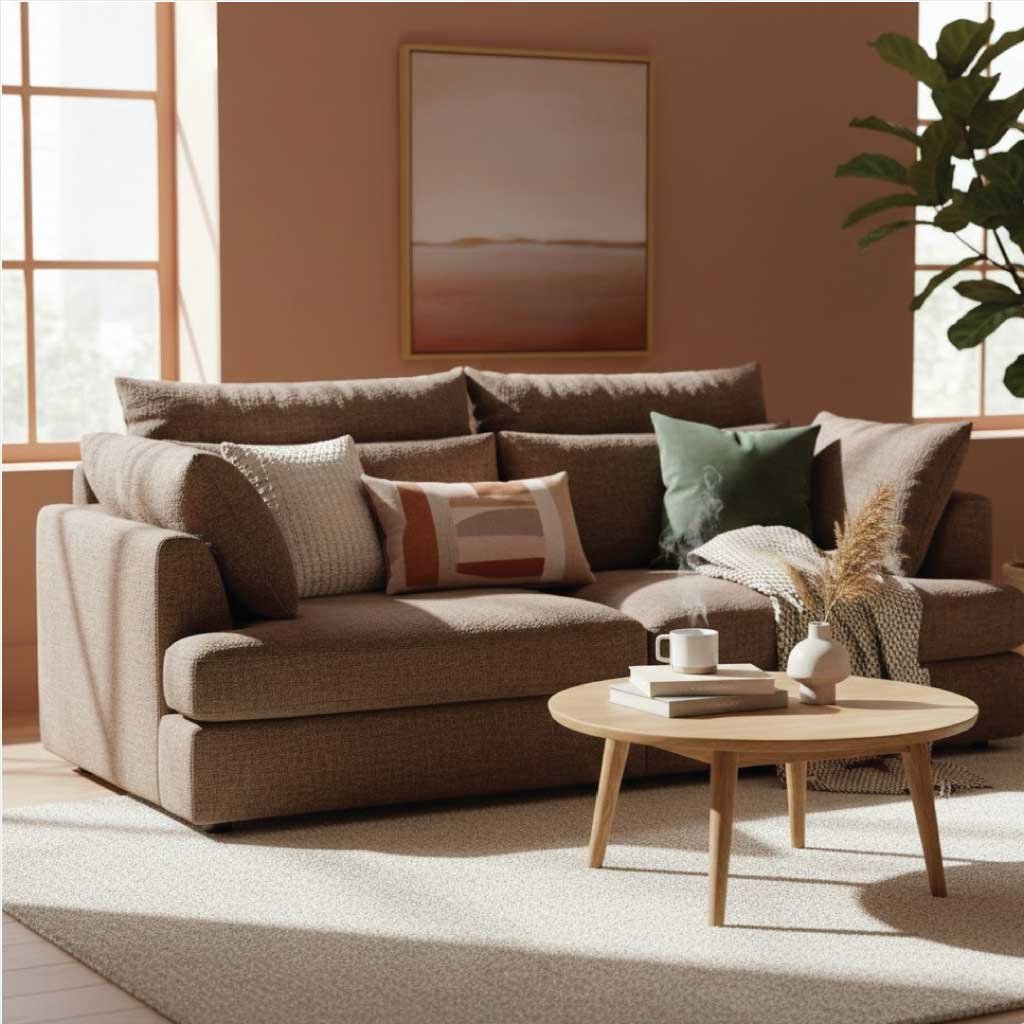
A loveseat sofa is the perfect combination of style, comfort, and space efficiency. Whether you are furnishing a small apartment, a cozy living room, or creating a seating area in a large room, choosing the right loveseat size ensures both aesthetic appeal and functional comfort. This guide will explore standard dimensions, types, and considerations to help you select the perfect loveseat.
What Is a Loveseat Sofa?
A loveseat sofa is typically designed to seat two people comfortably, hence the name “love-seat.” Unlike standard sofas that may accommodate three or more people, loveseats are compact, making them ideal for smaller spaces or as complementary seating alongside larger couches. They combine the comfort of a full sofa with the space efficiency needed in modern homes.
Loveseats can be upholstered in a variety of materials including leather, fabric, microfiber, and velvet. They often come with features such as recliners, storage compartments, or sleeper options.
Standard Loveseat Dimensions
Loveseat sofas do not follow a single universal size; however, there are industry-standard dimensions that most manufacturers adhere to. Understanding these dimensions is essential to ensure your loveseat fits your room and meets your comfort needs.
| Type of Loveseat | Width (inches) | Depth (inches) | Height (inches) | Seats |
|---|---|---|---|---|
| Standard Loveseat | 52–72 | 30–40 | 30–36 | 2 |
| Petite Loveseat | 48–54 | 28–36 | 28–34 | 2 |
| Oversized Loveseat | 72–84 | 32–42 | 32–36 | 2–3 |
| Reclining Loveseat | 60–72 | 36–42 | 32–38 | 2 |
| Sleeper Loveseat | 54–70 | 32–40 | 30–36 | 2 |
Explanation of Table:
Width: Distance from arm to arm. Crucial for ensuring the loveseat fits within your living room layout.
Depth: Front to back distance, affecting comfort and legroom.
Height: From floor to top of the backrest. Impacts room aesthetics and ergonomics.
Seats: While designed for two, some oversized models can accommodate 2–3 people.
Types of Loveseats and Their Size Implications
1. Standard Loveseat
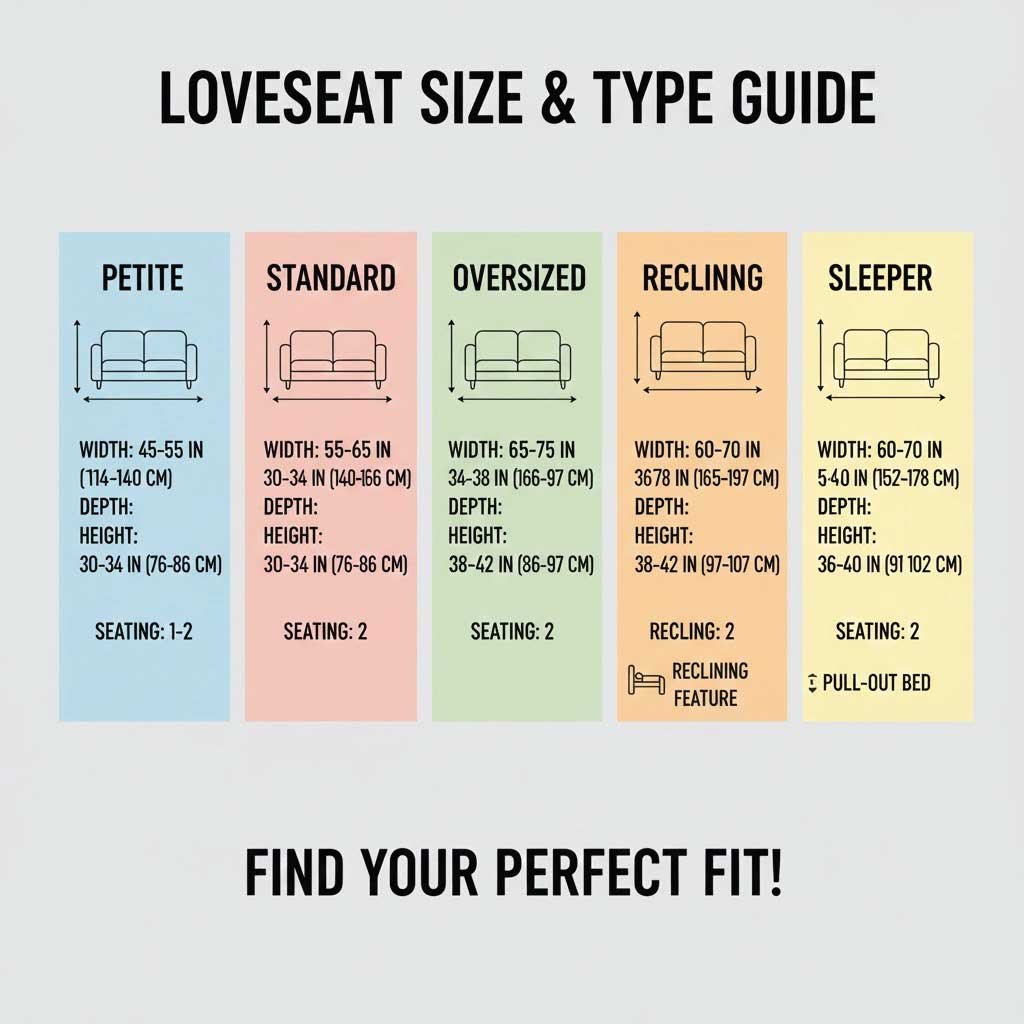
Standard loveseats typically measure 52–72 inches wide, 30–36 inches high, and 30–40 inches deep. Perfect for medium-sized living rooms, they provide comfortable seating for two. Their classic design complements most décor styles while maximizing space efficiency without overwhelming a room. Ideal as a secondary sofa or focal seating piece.
2. Petite Loveseat
Petite loveseats are compact, measuring 48–54 inches wide, 28–34 inches high, and 28–36 inches deep. Designed for small apartments, bedrooms, or studios, they are lightweight and easy to move. Despite their size, they offer comfortable two-person seating, making them a practical and stylish choice for tight living spaces.
3. Oversized Loveseat
Oversized loveseats range from 72–84 inches wide, 32–36 inches high, and 32–42 inches deep. These roomy sofas can seat two to three people comfortably and often include deep cushions for added relaxation. Ideal for large living areas, they serve as a primary seating option while adding a luxurious, cozy vibe to the room.
4. Reclining Loveseat
Reclining loveseats measure 60–72 inches wide, 36–42 inches deep, and 32–38 inches high, including the recliner mechanism. They provide enhanced comfort with built-in recliners, allowing users to lean back and relax. Ensure enough floor space for the recline feature. Perfect for home theaters, family rooms, or any space focused on relaxation.
5. Sleeper Loveseat
Sleeper loveseats measure 54–70 inches wide, 32–40 inches deep, and 30–36 inches high. They transform into a bed for guests, making them ideal for apartments or guest rooms. Additional clearance is needed for bed extension. They combine functionality and style, providing a seating solution that also accommodates overnight visitors comfortably.
Also Read: UK Bed Sizes Explained: Complete Measurement Guide
How to Measure Your Room for a Loveseat
Before buying a loveseat, accurately measuring your room is essential to ensure a perfect fit. Consider wall space, traffic flow, and nearby furniture. Proper measurements prevent overcrowding, maintain comfortable walkways, and help visualize how the loveseat will complement your room’s layout, style, and overall functionality.
1- Measure Available Space
Use a measuring tape to determine the exact wall space where the loveseat will be placed. Leave at least 6–12 inches on each side to allow easy movement around the furniture. Accurate measurement prevents crowding and ensures the loveseat fits comfortably while maintaining proper flow and accessibility within the room.
2- Consider Depth and Legroom
Check the depth of the loveseat to ensure it does not obstruct walkways or pathways in the room. Adequate legroom is essential for comfortable seating and unhindered movement. Take into account nearby furniture, doors, and traffic flow to maintain a spacious and functional living area that is visually balanced.
3- Check Height Against Windows or Shelves
Measure the height of the loveseat in relation to nearby windows, shelves, or wall-mounted furniture. Avoid blocking natural light or interfering with existing décor. Ensuring proper vertical clearance preserves room aesthetics, maintains functionality, and prevents a cramped appearance while allowing the loveseat to blend seamlessly with surrounding furnishings.
4- Visualize Scale
Compare the loveseat’s width and overall size with other furniture in the room. Visualizing scale ensures it complements rather than overwhelms your space. Proper proportion maintains balance in the layout, prevents awkward gaps or crowding, and creates a harmonious seating arrangement, enhancing both comfort and aesthetic appeal in your living area.
Pro Tip: Use painter’s tape to mark the exact floor space your loveseat will occupy. This helps visualize size in real time.
Also Read: Twin Bed Dimensions in Feet & Inches for Easy Planning
Loveseat vs Sofa: Size Comparison
| Feature | Loveseat | Standard Sofa | Sectional Sofa |
|---|---|---|---|
| Width | 52–72 in | 72–96 in | 90–140 in |
| Depth | 30–40 in | 32–40 in | 36–44 in |
| Seats | 2 | 3–4 | 4+ |
| Ideal Space | Small to medium rooms | Medium to large rooms | Large rooms or open layouts |
| Portability | High | Moderate | Low |
Key Insight: Loveseats are compact yet versatile, perfect for smaller rooms or as additional seating alongside a sofa. They are also easier to move than full-sized sofas.
Tips for Choosing the Right Loveseat Size
Selecting the perfect loveseat involves more than style; size, comfort, and functionality are essential. Proper measurements, material choice, and room compatibility ensure your loveseat fits seamlessly, supports daily use, and complements your décor, creating a balanced, inviting, and practical living space.
1. Prioritize Comfort
Consider seat depth and height for maximum comfort. Taller individuals benefit from deeper seats, while standard dimensions suit most. Testing seating options ensures the loveseat feels supportive and cozy, creating a relaxing space without compromising room flow or style.
2. Room Size Matters
Measure your space carefully before buying. Loveseats should ideally take up 30–40% of the wall area to prevent overcrowding. Proper sizing maintains balance, allows for smooth movement, and ensures the sofa complements other furniture while preserving an open, airy feel.
3. Consider Functionality
If you want a sleeper or reclining loveseat, plan for extra space. Recliners and fold-out beds require clearance in front, ensuring ease of use. Accounting for functionality during selection prevents cramped arrangements and enhances practicality without sacrificing comfort or design.
4. Style Compatibility
Match the loveseat size with your room’s aesthetic. Petite loveseats fit minimalist or modern spaces, while oversized options suit traditional or cozy interiors. Correct sizing reinforces visual harmony, ensuring the furniture complements your décor without overwhelming or underutilizing the available space.
5. Clearance for Movement
Allow adequate space around the loveseat for comfortable movement. Ensure there’s room for reclining mechanisms or bed conversion. Proper clearance avoids obstruction, protects furniture longevity, and keeps traffic flow smooth while maintaining a functional, safe, and aesthetically balanced living area.
6. Material Choice
Select loveseat material based on style and maintenance needs. Fabric offers comfort but may require more upkeep, while leather adds elegance and durability, especially for oversized pieces. The right material balances practicality, aesthetics, and lifestyle demands, enhancing both visual appeal and long-term usability.
Loveseat Shape and Dimension Variations
Loveseats come in multiple shapes, affecting their dimensions:
Traditional Loveseat: Rectangular and symmetrical.
Tuxedo Loveseat: Features high arms and a uniform back, often slightly taller.
English Roll Arm Loveseat: Low profile, soft cushioning; slightly deeper than standard.
Curved or Rounded Loveseat: Requires more floor space due to rounded dimensions but adds elegance.
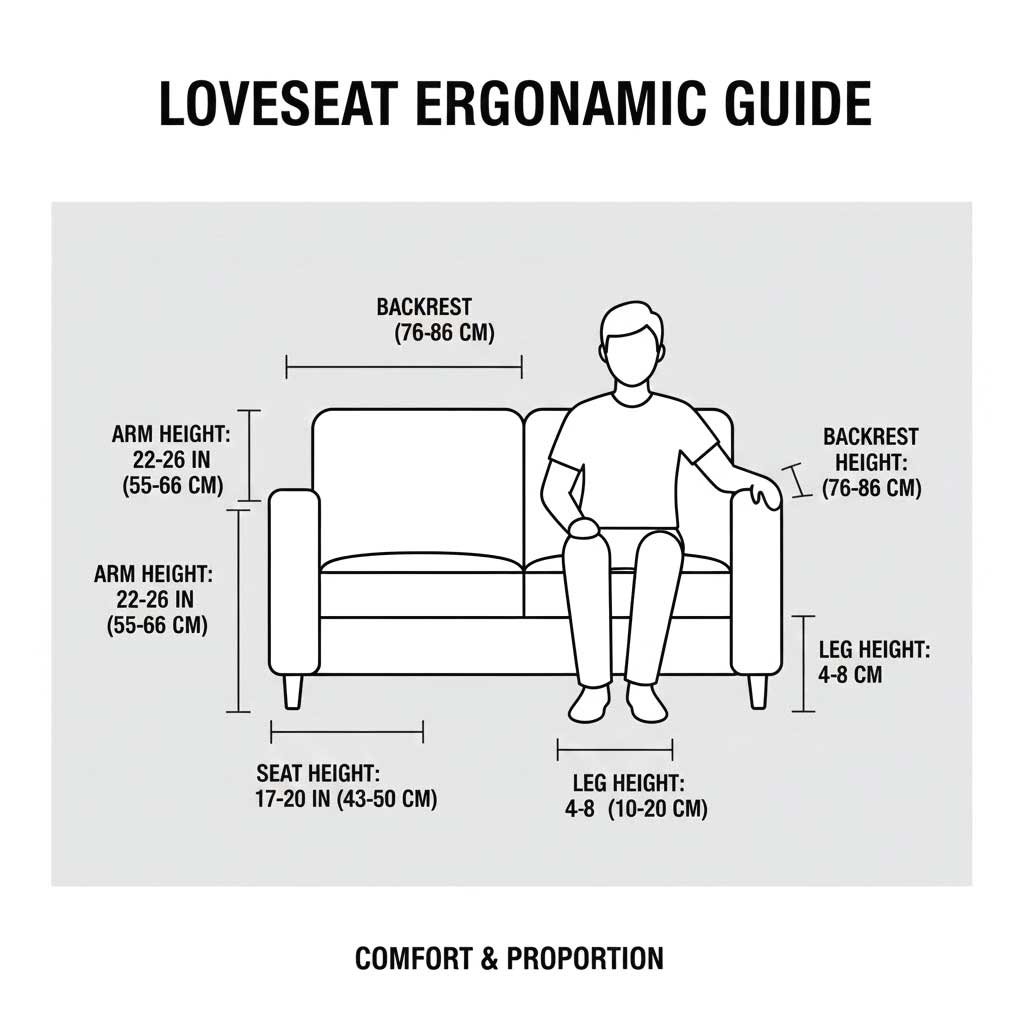
Loveseat Seating Height Guide
| Feature | Average Measurement |
|---|---|
| Seat Height | 16–20 in from floor |
| Arm Height | 24–32 in |
| Backrest Height | 30–36 in |
| Leg Height | 4–8 in |
Practical Tip: Higher seats are more comfortable for taller individuals, while lower seats suit smaller people or children.
Loveseat Dimensions for Specific Spaces
Small Apartments
Recommended Width: 48–54 inches
Depth: 28–34 inches
Height: 28–32 inches
Tip: Petite or standard loveseat avoids overcrowding.
Medium Living Rooms
Recommended Width: 60–70 inches
Depth: 32–38 inches
Height: 30–36 inches
Tip: Standard or reclining loveseat fits well alongside a sofa.
Large Living Rooms
Recommended Width: 72–84 inches
Depth: 36–42 inches
Height: 32–36 inches
Tip: Oversized loveseat offers a luxurious seating option.
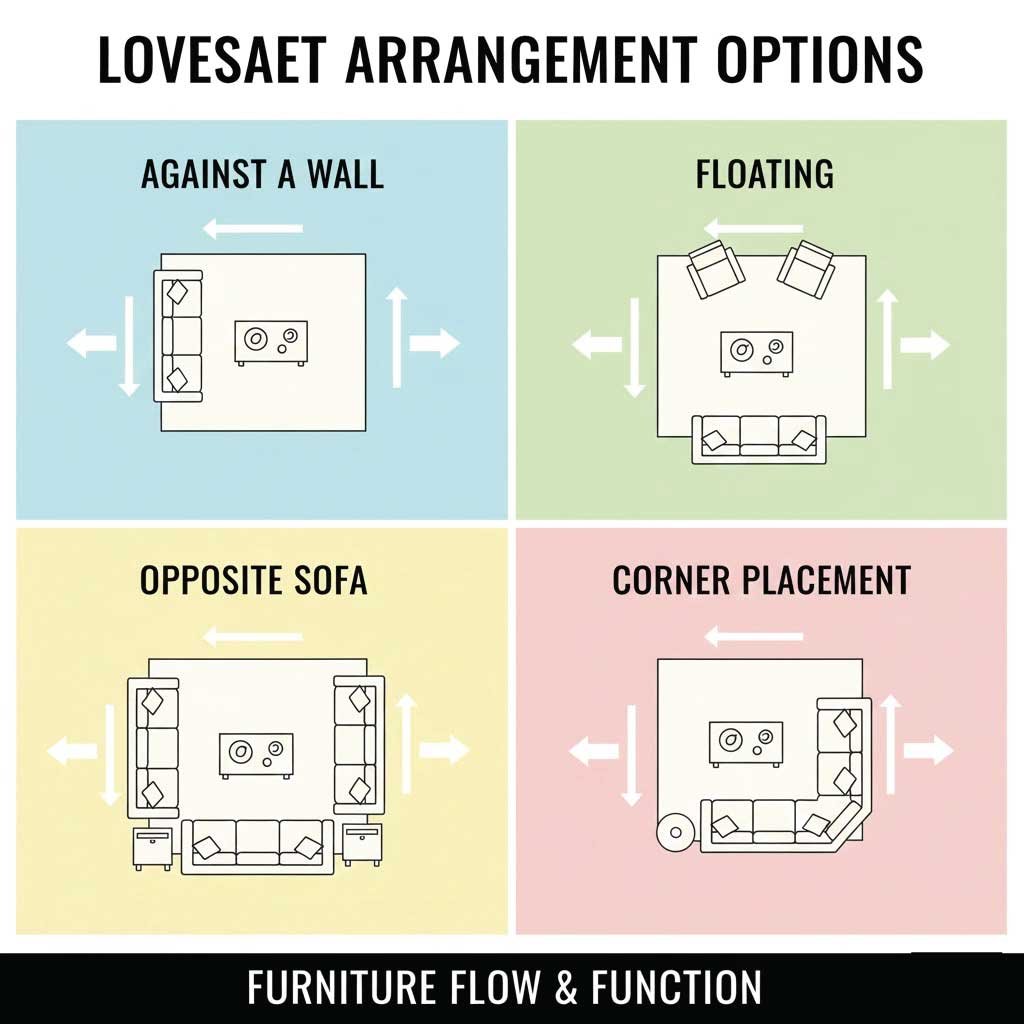
Loveseat Layout Considerations
When arranging your loveseat in a room:
Against a Wall: Maximizes open space.
Floating in Room: Works in larger spaces, paired with rugs and coffee tables.
Opposite Sofa: Creates a conversational seating area.
Corner Placement: Ideal for small rooms to maximize floor space.
Tip: Maintain 2–3 feet clearance between loveseat and coffee table for easy movement.
Also Read: Ultimate King Size Mattress Guide — Size, Ideas & Tips
Conclusion
Choosing the right loveseat size and dimensions is essential for comfort, style, and space efficiency. From petite loveseats ideal for apartments to oversized reclining models for luxury and comfort, understanding standard dimensions ensures you select a loveseat that fits your lifestyle and room perfectly.
Using the charts provided and following room measurement tips, you can make an informed choice that balances aesthetic appeal, ergonomic comfort, and functional use.
Final Loveseat Dimensions Summary Table
| Type | Width (in) | Depth (in) | Height (in) | Seats | Best Use |
|---|---|---|---|---|---|
| Petite | 48–54 | 28–36 | 28–34 | 2 | Small apartments |
| Standard | 52–72 | 30–40 | 30–36 | 2 | Medium rooms |
| Oversized | 72–84 | 32–42 | 32–36 | 2–3 | Large living rooms |
| Reclining | 60–72 | 36–42 | 32–38 | 2 | Relaxation & recline |
| Sleeper | 54–70 | 32–40 | 30–36 | 2 | Guest rooms |

I am Engineer Hassan, a professional engineer with over 15 years of experience in measurements, design accuracy, and furniture, appliance, and home product sizing. Through Size Helper, I provide research-based guides and trending 2026 home design ideas for living rooms, bedrooms, sofas, wall décor, fashion, and sports—helping users make confident, informed decisions. Every guide is written with real expertise, verified data, and a commitment to quality, usability, and style.