
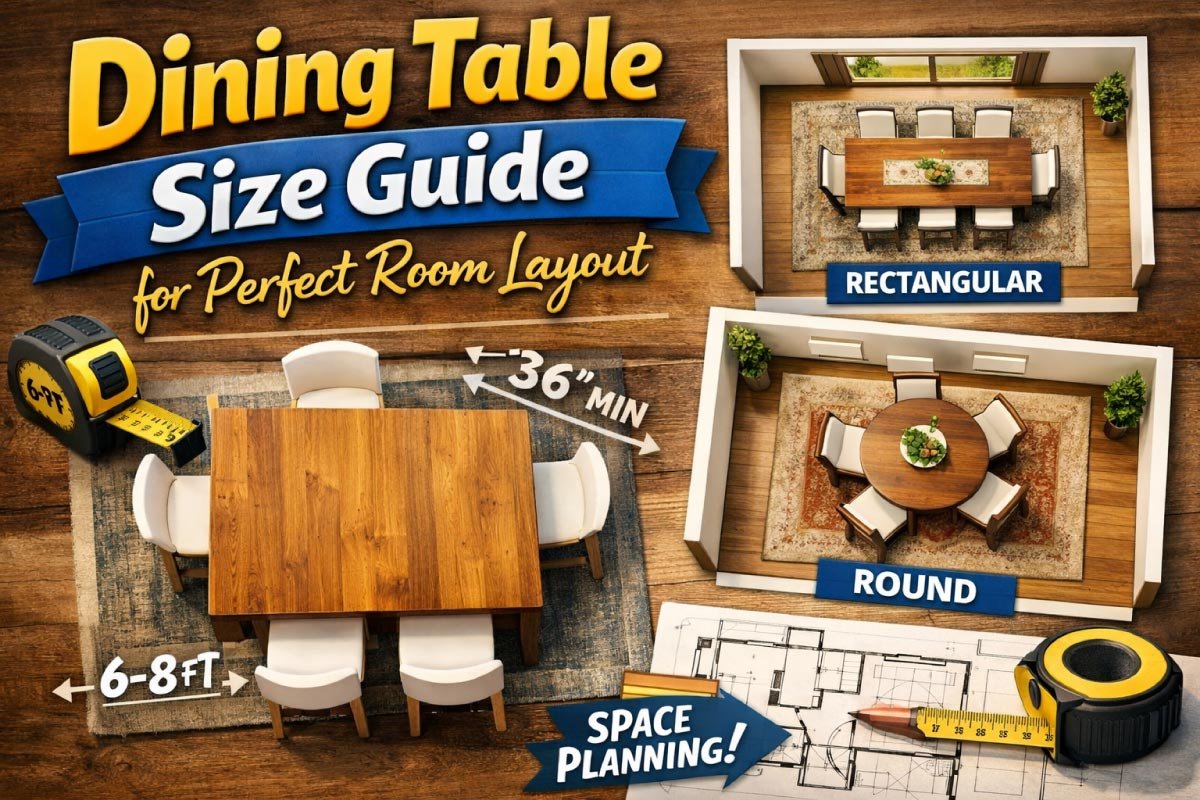
Choosing the right dining table is about more than just style—it’s about functionality, comfort, and proportion. A dining table that fits your space well can transform your dining room, ensuring smooth movement, adequate seating, and a balanced look. Conversely, the wrong size can make the room feel cramped or awkwardly empty.
Whether you’re redesigning your dining area or purchasing your first table, this guide will help you understand standard table sizes, seating capacities, and how to optimize your space for a perfect room layout.
Why Dining Table Size Matters
Selecting the right dining table size is essential for comfort, functionality, and visual harmony. A properly sized table allows adequate seating space, maintains room flow, and complements surrounding furniture. Careful planning ensures your table meets practical needs while enhancing the overall style and balance of your dining area.
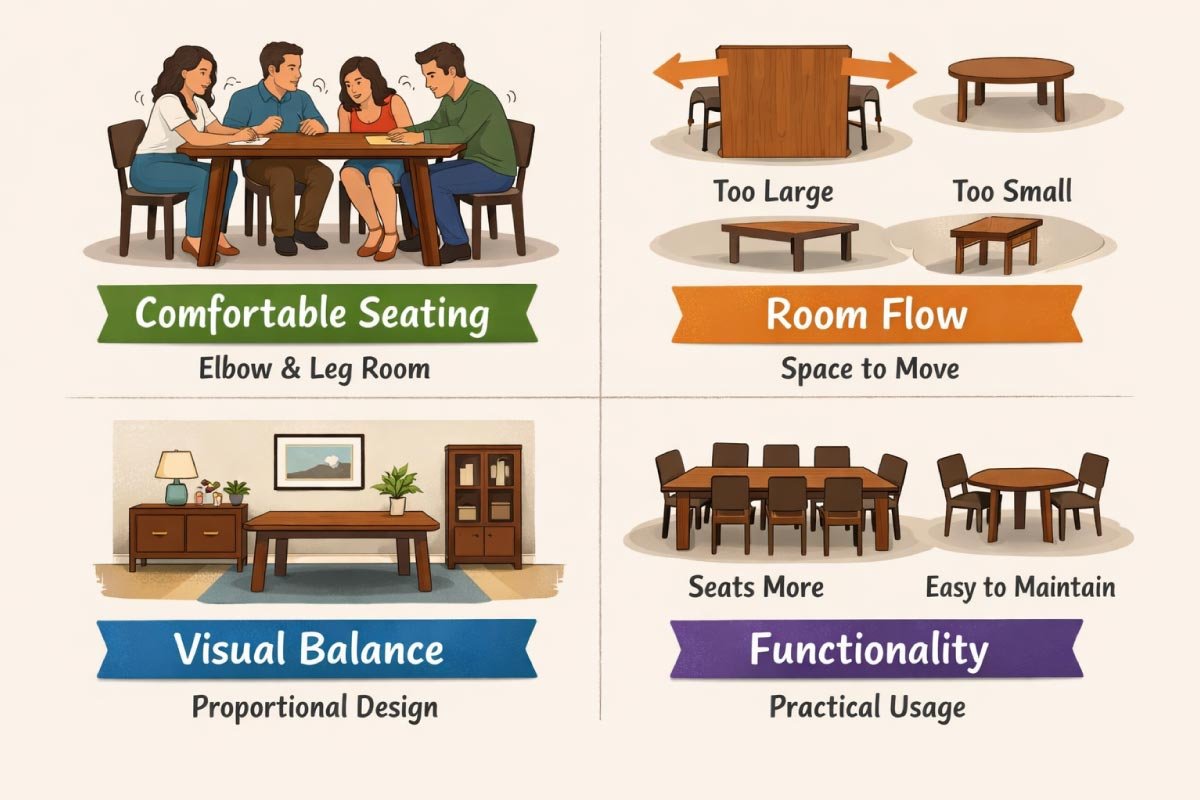
- Comfortable Seating: Every diner needs enough elbow room and leg space. A crowded table can make mealtime uncomfortable.
- Room Flow: A table that’s too large restricts movement, while a table that’s too small can feel lost in the room.
- Visual Balance: The right table proportion complements other furniture like sideboards, cabinets, and chairs, creating a harmonious space.
- Functionality: Larger tables accommodate more people, but smaller tables are easier to maintain and keep cozy.
Proper planning ensures you pick a table that balances function, aesthetics, and comfort.
Standard Dining Table Dimensions
Understanding standard dining table dimensions helps you choose a table that fits your room and lifestyle. Each shape—rectangular, square, round, or oval—has typical width, length, and height ranges that ensure comfort, proper spacing, and visual balance, making it easier to plan seating and overall room layout.
1. Rectangular Tables
Rectangular tables are a classic choice for dining rooms, offering versatility and the ability to seat multiple people comfortably. Their length determines capacity, while width affects elbow room. Proper spacing around the table ensures easy movement and a functional, inviting dining space, whether for everyday meals or gatherings.
| Table Size | Length (inches) | Width (inches) | Height (inches) | Seating Capacity |
|---|---|---|---|---|
| Small | 36–48 | 30–36 | 28–30 | 4 people |
| Medium | 60–72 | 36–42 | 28–30 | 6–8 people |
| Large | 84–96 | 36–48 | 28–30 | 8–10 people |
Tip: Leave at least 36–48 inches between the table edge and walls or furniture for easy movement.
2. Round Tables
Round tables are perfect for fostering conversation and creating a cozy dining experience, especially in smaller spaces. Their diameter determines seating capacity, while a pedestal base can maximize legroom. Choosing the right size ensures comfort, easy movement, and an inviting atmosphere for meals with family or friends.
| Table Size | Diameter (inches) | Height (inches) | Seating Capacity |
|---|---|---|---|
| Small | 36–42 | 28–30 | 4 people |
| Medium | 48–54 | 28–30 | 4–6 people |
| Large | 60–72 | 28–30 | 6–8 people |
Tip: Round tables with a pedestal base provide extra legroom, making seating more comfortable.
3. Square Tables
Square tables are ideal for compact spaces, breakfast nooks, or square-shaped rooms. Their equal length and width create a balanced, intimate dining setup. Choosing the right size ensures enough seating while maintaining comfort and easy movement, making them perfect for small families or cozy gatherings with friends.
| Table Size | Length x Width (inches) | Height (inches) | Seating Capacity |
|---|---|---|---|
| Small | 36 x 36 | 28–30 | 4 people |
| Medium | 48 x 48 | 28–30 | 4–6 people |
| Large | 60 x 60 | 28–30 | 6–8 people |
Tip: Square tables are best for small families or intimate dining spaces.
4. Oval Tables
Oval tables offer a versatile blend of rectangular efficiency and rounded elegance, making them ideal for narrow or elongated rooms. Their gently curved edges create a softer look while maximizing seating. Choosing the right size ensures comfort, smooth movement around the table, and a balanced, inviting dining environment.
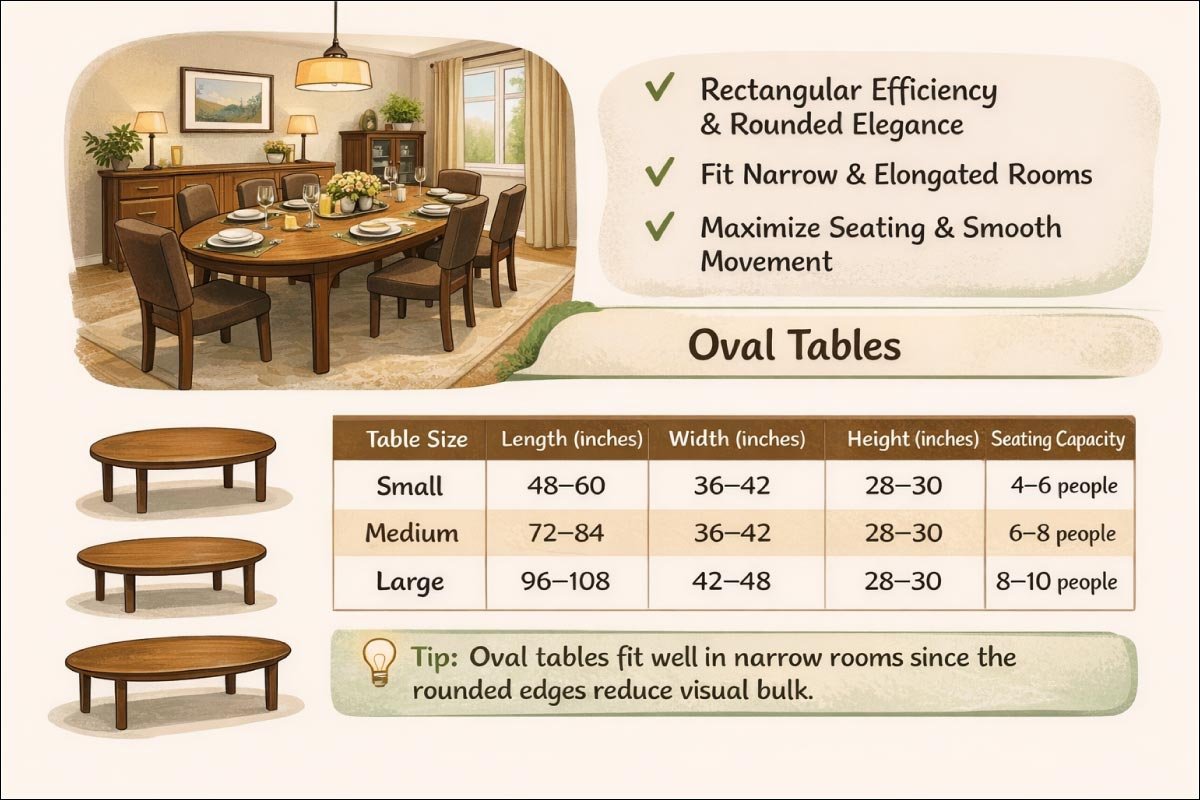
| Table Size | Length (inches) | Width (inches) | Height (inches) | Seating Capacity |
|---|---|---|---|---|
| Small | 48–60 | 36–42 | 28–30 | 4–6 people |
| Medium | 72–84 | 36–42 | 28–30 | 6–8 people |
| Large | 96–108 | 42–48 | 28–30 | 8–10 people |
Tip: Oval tables fit well in narrow rooms since the rounded edges reduce visual bulk.
Determining the Right Table Size for Your Room
Choosing the ideal dining table requires more than style—it’s about fit and functionality. Consider your room’s dimensions, the number of people you usually host, and the space needed for comfortable movement. The right table size ensures meals are enjoyable without compromising flow or aesthetics.
1. Measure Your Room
Accurate measurements are the foundation of choosing the right dining table. Knowing your room’s dimensions helps ensure proper clearance for chairs, smooth traffic flow, and unobstructed pathways. Allowing enough space around the table keeps your dining area functional, comfortable, and visually balanced.
- Leave 36–48 inches around the table for movement and chair clearance.
- Ensure pathways to doors, windows, and other furniture remain unobstructed.
2. Determine Seating Needs
Knowing how many people will regularly use your dining table is key to selecting the right size. Factor in family members, frequent guests, and occasional larger gatherings. Choosing a table that accommodates your seating needs ensures comfort, practicality, and flexibility for every mealtime.
- Count the number of family members or frequent guests.
- For flexible arrangements, consider extending tables for larger gatherings.
3. Consider Table Shape
The shape of your dining table affects seating capacity, room flow, and overall aesthetics. Rectangular and oval tables suit longer rooms and larger families, while round and square tables work well in smaller spaces, creating a cozy and balanced dining environment.
- Rectangular/Oval: Good for longer rooms and larger families.
- Round/Square: Ideal for small spaces or cozy dining.
4. Match Table with Other Furniture
A dining table should harmonize with existing furniture to create a cohesive room design. Considering the size and style of sideboards, cabinets, and consoles ensures balance and visual appeal, helping your dining area feel thoughtfully arranged and comfortable for everyday use.
- Ensure the table complements sideboards, cabinets, or console tables.
- Proportional furniture creates a balanced, harmonious layout.
Also Read:
Chair and Table Clearance
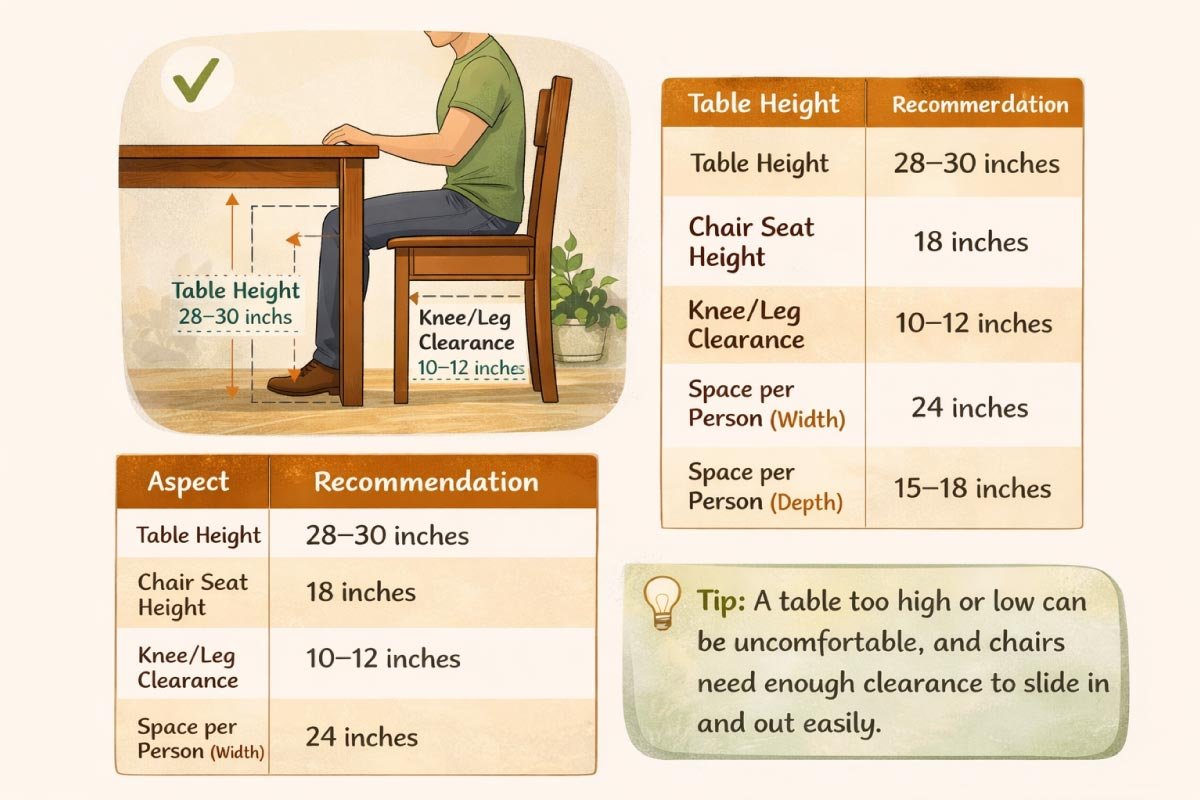
Proper clearance between chairs and tables ensures a comfortable dining experience. Correct table height, chair seat height, and spacing allow diners to sit, move, and interact without strain. Following standard guidelines for legroom and personal space keeps your dining area functional, ergonomic, and enjoyable for everyone.
| Aspect | Recommendation |
|---|---|
| Table Height | 28–30 inches |
| Chair Seat Height | 18 inches |
| Knee/Leg Clearance | 10–12 inches |
| Space per Person (Width) | 24 inches |
| Space per Person (Depth) | 15–18 inches |
Tip: A table too high or low can be uncomfortable, and chairs need enough clearance to slide in and out easily.
Also Read:
Room Layout Considerations
A well-planned dining room layout ensures comfort, functionality, and aesthetic appeal. Proper placement of your table, chairs, and other furniture allows smooth movement, clear sightlines, and balanced proportions. Thoughtful layout choices help create a space that is both inviting and practical for everyday dining and entertaining.
1. Rectangular Rooms
In rectangular dining rooms, table placement is key to maximizing space and flow. Aligning a rectangular or oval table with the longer wall creates balance and allows easy movement. Complementary furniture, like sideboards or cabinets, should be arranged thoughtfully to maintain symmetry and visual harmony.
- Place a rectangular or oval table parallel to the longer wall.
- Maintain symmetry with sideboards or cabinets along shorter walls.
2. Square Rooms
For square dining rooms, maintaining proportional balance is essential. Square or round tables complement the room’s shape, allowing comfortable seating and smooth circulation. Oversized rectangular tables can dominate the space, so choosing appropriately sized furniture ensures a harmonious, functional, and visually appealing dining area.
- Square or round tables work best, keeping proportions consistent.
- Avoid overly large rectangular tables that overwhelm the room.
3. Small Spaces
In compact dining areas, table choice and furniture arrangement are crucial for maximizing comfort and functionality. Round or drop-leaf tables provide flexible seating without overwhelming the room. Keeping additional furniture minimal helps maintain openness, ensuring the space feels airy, practical, and visually balanced.
- Consider round tables or drop-leaf tables for flexible seating.
- Minimize additional furniture to prevent clutter.
4. Open Floor Plans
In open-concept spaces, defining the dining area while maintaining flow is essential. Adequate clearance around the table ensures comfortable movement, and visual cues like rugs or lighting help delineate the space. Thoughtful placement keeps the area functional, inviting, and harmonious within the larger room.
- Ensure at least 36 inches of walking space around the table.
- Use rugs or lighting to visually define the dining area.
Also Read:
Table Expansion and Versatility
Expandable tables provide the perfect solution for varying guest counts and changing dining needs. With options like butterfly leaves, drop-leafs, or modular extensions, these tables combine functionality with style. Choosing the right expansion type ensures flexibility, space efficiency, and a comfortable dining experience for both everyday meals and special gatherings.
| Table Type | Fold/Extension Style | Benefits |
|---|---|---|
| Butterfly Leaf | Built-in folding mechanism | Quick expansion, compact storage |
| Drop-Leaf | Side leaves fold down | Ideal for small spaces |
| Self-Storing Leaf | Leaves stored inside table | Clean look, no extra storage needed |
| Modular/Extendable | Add segments to table ends | Fully customizable seating |
Tip: Expandable tables are perfect for families who entertain often, as they provide maximum flexibility without overcrowding.
Also Read:
Choosing the Perfect Table for Your Style
Beyond size, your dining table should reflect your personal style and enhance the room’s overall design. Selecting a table that complements your décor—whether modern, traditional, rustic, or industrial—creates a cohesive and inviting centerpiece, balancing functionality with aesthetic appeal.
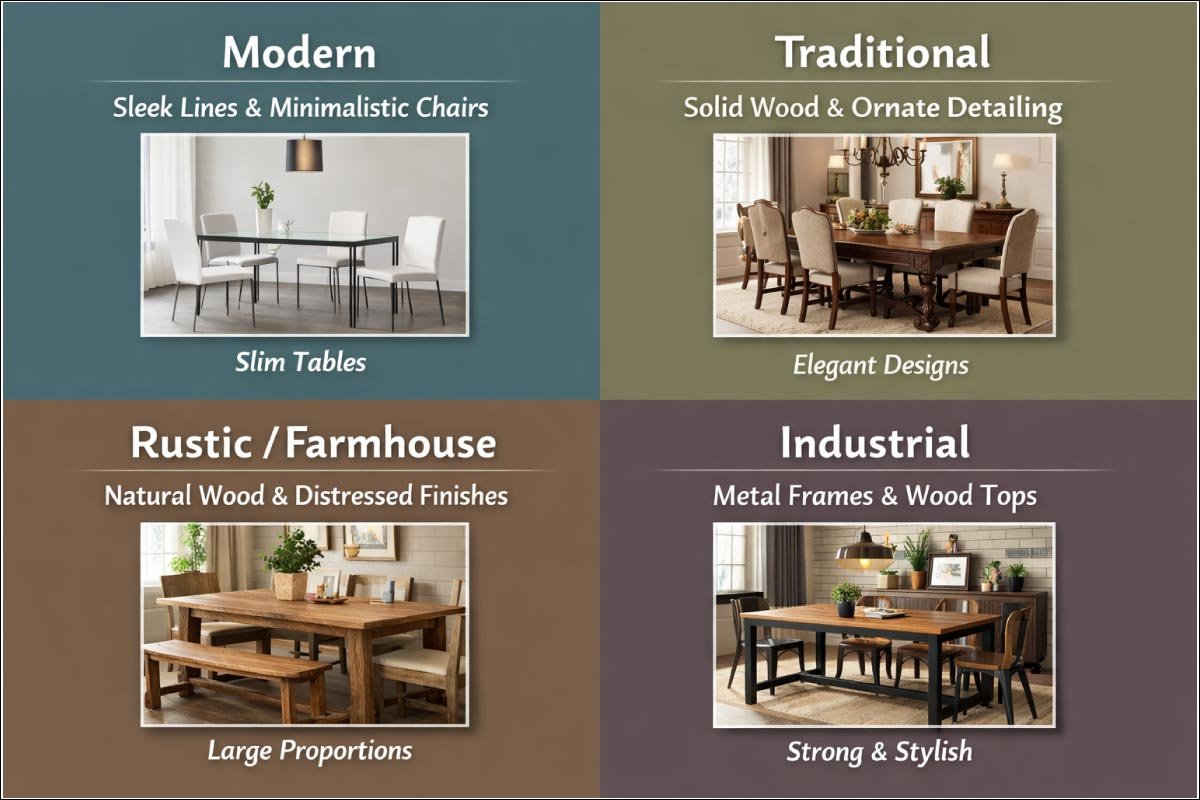
- Modern: Sleek lines, minimalistic chairs, and slim tables.
- Traditional: Solid wood tables with ornate detailing.
- Rustic/Farmhouse: Natural wood, distressed finishes, large proportions.
- Industrial: Metal frames with wood tops, combining strength with style.
Matching the table to your room’s decor ensures it feels like a cohesive centerpiece rather than an afterthought.
Also Read:
Final Tips for Perfect Dining Room Layout
A well-designed dining room balances comfort, function, and aesthetics. Simple strategies—like visualizing the table footprint, measuring accurately, and planning traffic flow—ensure smooth movement and harmonious proportions. Thoughtful placement of furniture and flexible spacing helps create a dining area that is both practical and visually appealing.
- Use Painter’s Tape: Mark the table footprint on the floor to visualize placement.
- Measure Twice: Always double-check dimensions before purchasing.
- Consider Traffic Flow: Ensure chairs don’t block doors or walkways.
- Balance with Furniture: Complement sideboards, cabinets, and lighting for harmony.
- Leave Flexibility: Keep enough space for seasonal decorations or occasional guests.
Summary
Selecting the perfect dining table requires careful consideration of room size, table shape, seating needs, and furniture proportion. Use standard dimension guidelines to choose a table that fits comfortably, allows smooth circulation, and creates a visually balanced space. With these insights, you can design a dining area that is functional, beautiful, and inviting for both everyday meals and special occasions.
Also Read:

I am Engineer Hassan, a professional engineer with over 15 years of experience in measurements, design accuracy, and furniture, appliance, and home product sizing. Through Size Helper, I provide research-based guides and trending 2026 home design ideas for living rooms, bedrooms, sofas, wall décor, fashion, and sports—helping users make confident, informed decisions. Every guide is written with real expertise, verified data, and a commitment to quality, usability, and style.