
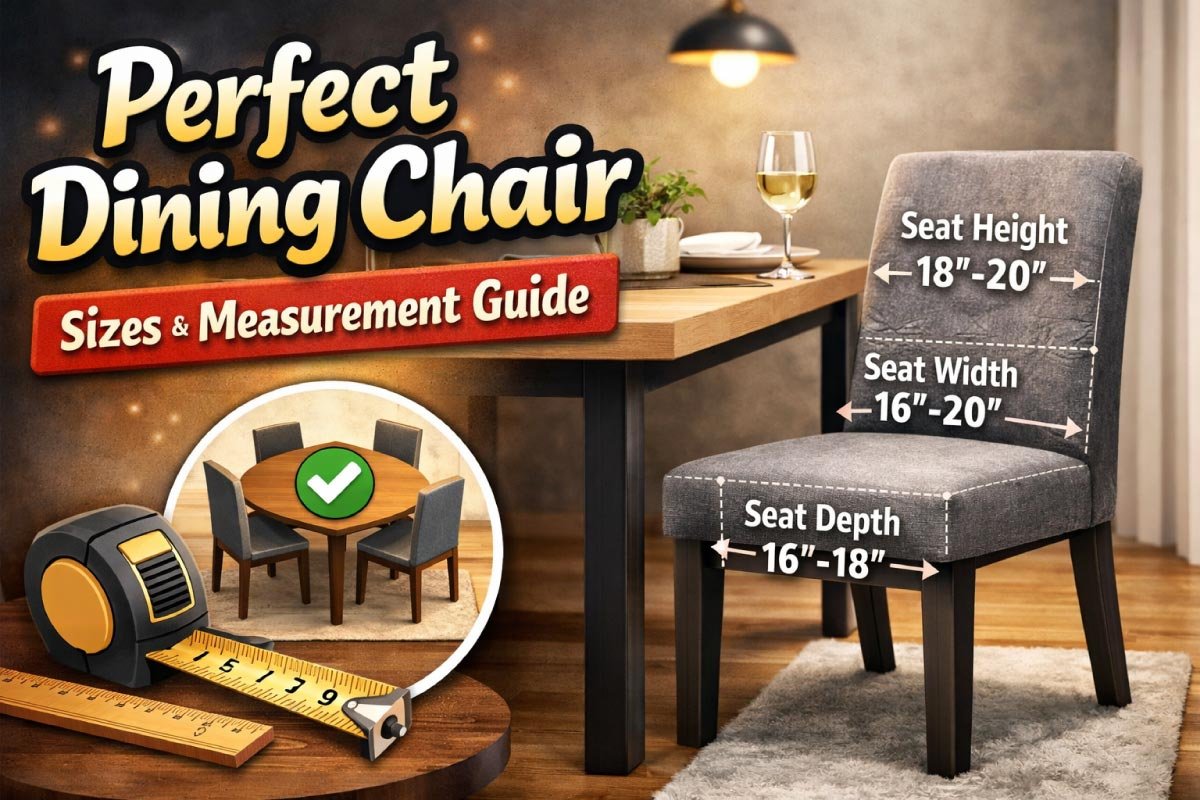
Dining chairs are more than just a place to sit—they’re integral to the comfort, style, and functionality of your dining space. Choosing the right chair size ensures everyone can sit comfortably without feeling cramped or awkward. From seat height to width and overall chair proportions, getting the measurements right can transform your dining experience.
In this comprehensive guide, we’ll cover standard dining chair sizes, variations based on table height, spacing considerations, and tips for selecting chairs that suit both your dining room and lifestyle. We’ll also include useful tables for quick reference, helping you pick the perfect chair dimensions with confidence.
Table of Contents
ToggleWhy Dining Chair Size Matters
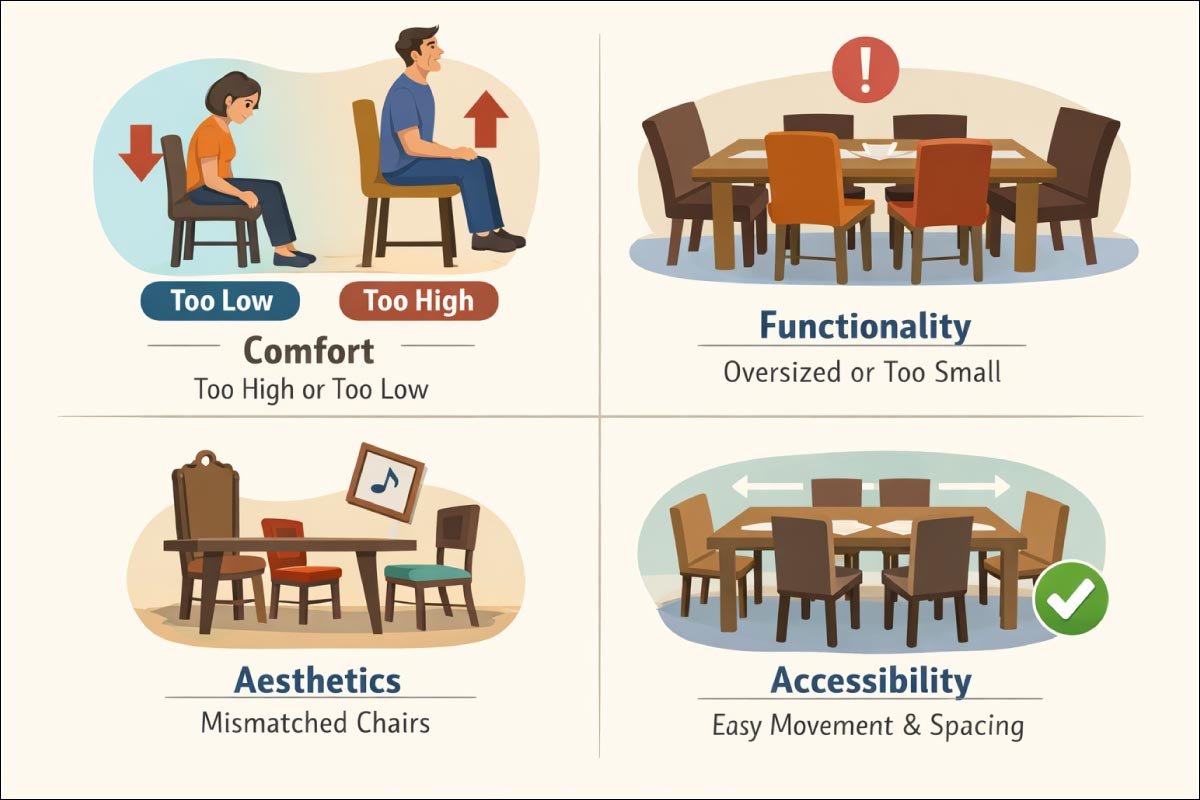
Selecting the right dining chair size is essential for creating a comfortable, functional, and visually appealing dining space. The correct dimensions ensure proper posture, adequate table clearance, and smooth movement around the table. Small miscalculations can affect both practicality and the overall harmony of your dining area.
-
Comfort: Chairs that are too high or low can cause discomfort during meals.
-
Functionality: Oversized chairs can crowd a dining table, while small chairs may lack proper support.
-
Aesthetics: Proportionally mismatched chairs can make a dining set look unbalanced.
-
Accessibility: Proper spacing around chairs ensures easy movement and reduces the risk of bumping into furniture.
By understanding dining chair measurements, you can select seating that is functional, stylish, and comfortable for your family and guests.
Standard Dining Chair Dimensions
Choosing the right dining chair goes beyond style — proper dimensions ensure comfort and harmony with your table. Standard measurements for seat height, width, and depth help you select chairs that fit perfectly, whether for everyday meals or special gatherings. Comfort, proportion, and functionality are key for a cohesive dining space.
| Chair Type | Seat Height (inches) | Seat Width (inches) | Seat Depth (inches) | Overall Height (inches) | Notes |
|---|---|---|---|---|---|
| Standard | 18 | 16–20 | 16–18 | 32–34 | Works with most standard tables (28–30″) |
| Armchair | 18 | 20–24 | 18–20 | 32–36 | Adds comfort but requires more table space |
| Counter Stool | 24–26 | 16–20 | 16–18 | 38–42 | Suitable for counter-height tables |
| Bar Stool | 28–30 | 16–20 | 16–18 | 42–48 | Works with bar-height counters or tables |
| Bench Seating | 18 | 42–60 | 14–18 | 32–34 | Accommodates multiple diners |
Pro Tip: Always measure your table height before buying chairs. Chairs should have 10–12 inches of clearance between the seat and tabletop for optimal comfort.
Seat Height & Table Compatibility
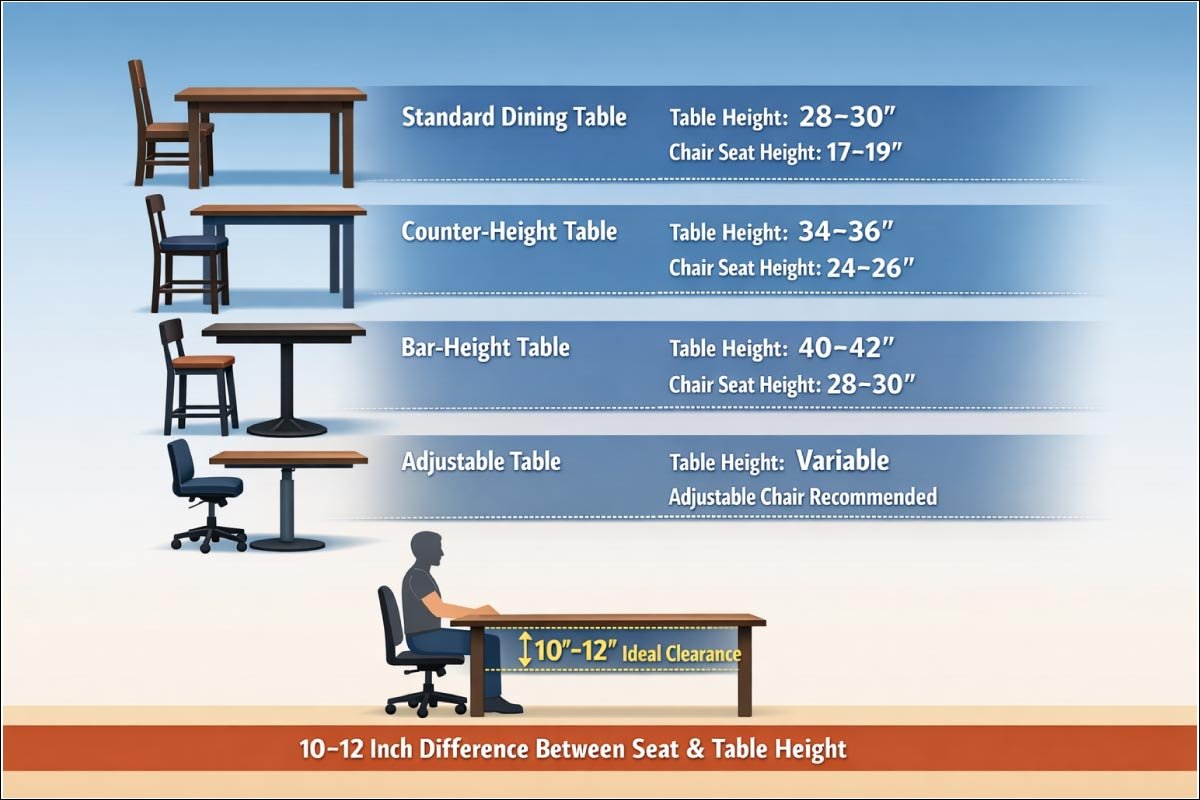
Proper seat height is essential for comfortable dining and smooth interaction with your table. Matching chair and table heights prevents strain and ensures a relaxed posture. Use these guidelines to choose chairs that complement standard, counter, or bar-height tables, maintaining the ideal 10–12 inch clearance for comfort.
| Table Type | Table Height (inches) | Recommended Chair Seat Height (inches) | Notes |
|---|---|---|---|
| Standard Dining | 28–30 | 17–19 | Classic setup for most homes |
| Counter-Height Table | 34–36 | 24–26 | Requires counter stools or high chairs |
| Bar-Height Table | 40–42 | 28–30 | Often used in casual or entertainment areas |
| Adjustable Table | Variable | Adjustable chair recommended | Flexible seating options |
Maintaining a 10–12 inch difference between chair seat height and table height ensures elbows can rest comfortably without straining shoulders or back.
Chair Width & Comfort
Chair width plays a key role in both comfort and dining room layout. Narrow chairs save space but may feel tight, while wider chairs offer more comfort at the cost of room. Use these guidelines to choose chairs that balance personal comfort with functional spacing for your table.
| Chair Type | Seat Width (inches) | Ideal For |
|---|---|---|
| Small/Side Chair | 16–18 | Compact dining rooms or breakfast nooks |
| Standard Chair | 18–20 | Most dining tables and everyday use |
| Armchair | 20–24 | Adds luxury and comfort |
| Bench Seating | 42–60 | Families or groups, shared seating |
Spacing Tip: Allow at least 24 inches of width per person at the table to avoid overcrowding.
Chair Depth & Support
Seat depth influences both comfort and proper posture. Too deep, and shorter diners may feel unsupported; too shallow, and taller individuals may sit uncomfortably. Understanding standard seat depths and pairing them with slightly angled backs ensures every chair provides optimal support for a relaxed and enjoyable dining experience
| Chair Type | Seat Depth (inches) | Notes |
|---|---|---|
| Standard Chair | 16–18 | Ideal for most adults |
| Armchair | 18–20 | Provides extra seating comfort |
| Counter Stool | 16–18 | Works well with higher counters |
| Bar Stool | 16–18 | Standard for elevated seating |
Pro Tip: Chairs with slightly angled backs improve comfort even with shallower seats.
Overall Chair Height
Overall chair height, including the backrest, affects both style and comfort. Taller chairs with high backs create a formal, elegant feel, while lower backs support a minimalist or casual look. Choosing the right height ensures your chairs complement the table and maintain balanced proportions in your dining space.
| Chair Type | Overall Height (inches) | Notes |
|---|---|---|
| Standard Chair | 32–34 | Fits standard tables, versatile style |
| Armchair | 32–36 | Adds presence and comfort |
| Counter Stool | 38–42 | Matches counter-height tables |
| Bar Stool | 42–48 | Perfect for bar tables |
Design Tip: Make sure the chair back does not overpower your dining table or room proportions.
Clearance & Spacing
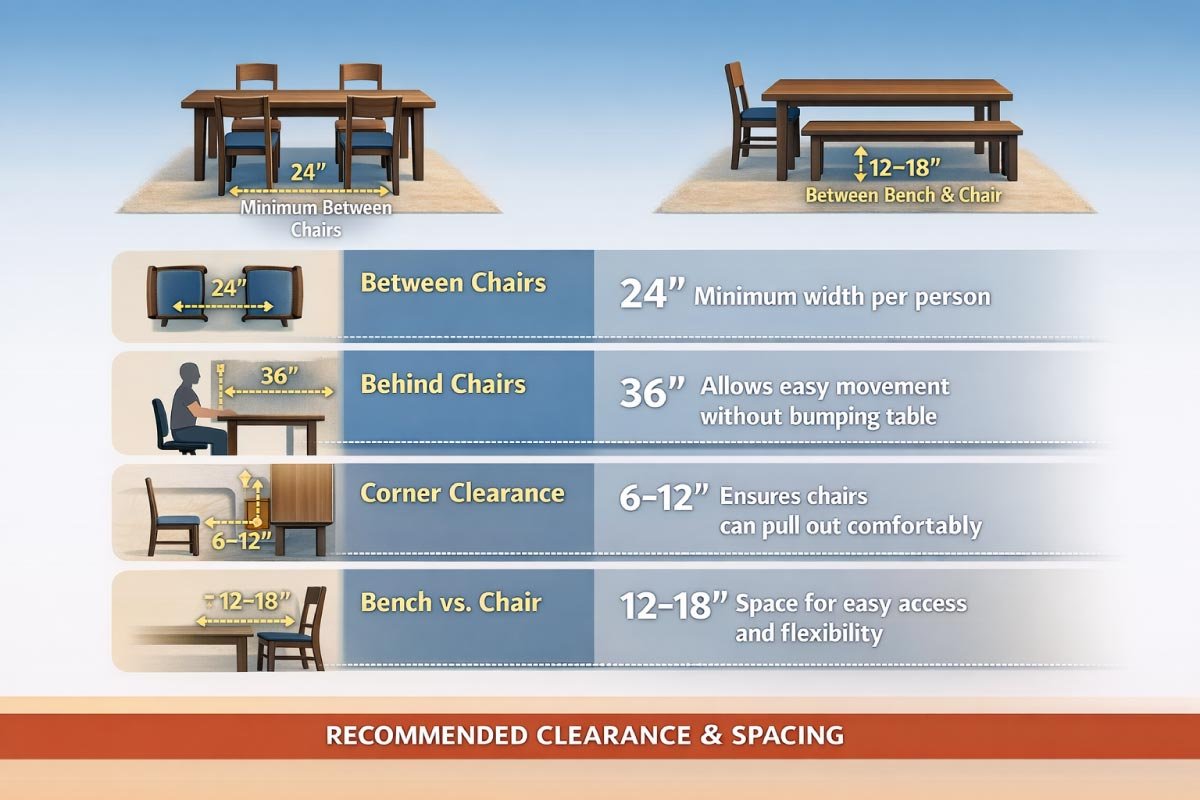
Adequate clearance and spacing around dining chairs are crucial for comfort and ease of movement. Crowded seating can make meals awkward, while thoughtful spacing enhances functionality. Use these guidelines to ensure enough room between chairs, behind them, and in corners, creating a dining area that’s both practical and enjoyable.
| Seating Arrangement | Recommended Clearance (inches) | Notes |
|---|---|---|
| Between Chairs | 24 | Minimum width per person |
| Behind Chairs | 36 | Allows easy movement without bumping table |
| Corner Clearance | 6–12 | Ensures chairs can pull out comfortably |
| Bench vs. Chair | 12–18 | Space for easy access and flexibility |
Special Considerations for Different Room Sizes
Dining chair selection should adapt to your room’s layout and lifestyle. The right chair width, style, and material can maximize comfort, maintain flow, and enhance the room’s appearance. Different room sizes and family needs call for thoughtful choices to ensure both functionality and aesthetic balance.
-
Small Dining Rooms: Opt for narrow chairs (16–18 inches wide) and avoid bulky armrests to save space.
-
Large Dining Rooms: Wider chairs and armchairs (20–24 inches) create a more luxurious feel.
-
Open-Plan Spaces: Consider chairs with low backs or transparent materials to maintain visual flow.
-
Families with Children: Durable, easy-to-clean chairs with moderate size are ideal.
Also Read:
Furniture Sizes Guide 2026: Find the Perfect Dimensions for Every Room
Dining Chair Styles & How Size Affects Choice
Choosing the right dining chair style isn’t just about looks — size plays a key role in comfort and functionality. Different designs, from ladder-back to upholstered or barstools, have varying dimensions. Matching style and size to your table ensures a cohesive, comfortable, and visually appealing dining experience.
| Style | Recommended Size | Notes |
|---|---|---|
| Ladder-Back | 18–20″ width, 32–34″ height | Classic look, comfortable for all ages |
| Upholstered | 20–22″ width, 34–36″ height | Adds softness, works for long meals |
| Side Chair | 16–18″ width, 32–34″ height | Compact, versatile, and easy to move |
| Armchair | 20–24″ width, 32–36″ height | Adds elegance, best for head-of-table seating |
| Barstool | 16–20″ width, 42–48″ height | Perfect for kitchen islands or bars |
Matching chair style and size with table dimensions ensures both comfort and aesthetics are optimized.
Also Read:
Choosing Chairs for Different Table Shapes
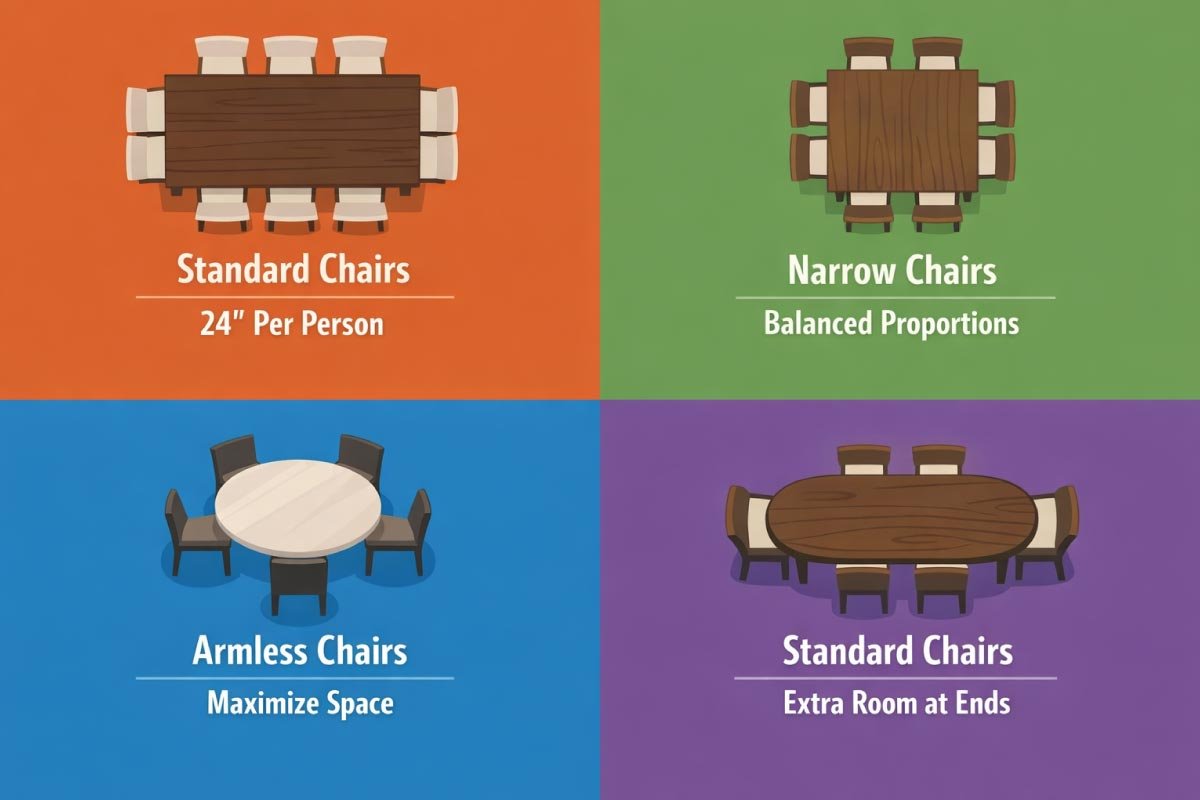
The shape of your dining table influences chair selection and placement. Matching chair size and style to the table ensures comfort, proper spacing, and visual harmony. Considering each table shape helps avoid crowding, maintains balance, and enhances the overall dining experience for every guest.
-
Rectangular Tables: Standard chairs work best, with spacing of 24 inches per person.
-
Square Tables: Chairs with slightly narrower widths help maintain balance.
-
Round Tables: Chairs without bulky arms fit better, and consider smaller diameters to avoid crowding.
-
Oval Tables: Similar to rectangular, but leave extra room at the ends for comfort.
| Table Shape | Chair Recommendation | Notes |
|---|---|---|
| Rectangular | Standard/Armchair | Flexible seating, works for all occasions |
| Square | Narrow/Side Chair | Keeps proportions balanced |
| Round | Armless Chairs | Avoid bulky chairs to maximize space |
| Oval | Standard/Armchair | Room at ends for extra seating |
Also Read:
Final Tips for Perfect Dining Chair Selection
Choosing dining chairs goes beyond style—it’s about fit, comfort, and usability. Proper measurements, clearance, and thoughtful selection ensure chairs complement your table and room. Testing comfort and considering proportions helps create a harmonious dining space where functionality and design work seamlessly together.
-
Measure your dining table and room before buying chairs.
-
Consider seat height, width, depth, and overall height in relation to your table.
-
Don’t forget clearance for moving chairs in and out.
-
Mix and match styles carefully to maintain cohesion.
-
Test chairs for comfort if possible, especially for long meals.
With the right measurements, dining chairs are no longer just functional—they become an integral part of your dining room’s style, comfort, and usability.
Also Read:

I am Engineer Hassan, a professional engineer with over 15 years of experience in measurements, design accuracy, and furniture, appliance, and home product sizing. Through Size Helper, I provide research-based guides and trending 2026 home design ideas for living rooms, bedrooms, sofas, wall décor, fashion, and sports—helping users make confident, informed decisions. Every guide is written with real expertise, verified data, and a commitment to quality, usability, and style.