Whether you are a beginner, coach, or sports enthusiast, understanding the correct sizes of sports equipment and playing areas is crucial. Using properly sized balls, bats, and courts ensures better performance, safety, and enjoyment of the game. This guide provides a comprehensive breakdown of standard sizes for popular sports, from basketball and football to cricket, tennis, and more.
Sports equipment sizes can vary based on skill level, gender, and age. Using the correct size ensures better performance, prevents injuries, and makes playing more enjoyable. This guide serves as a complete reference for sports enthusiasts, coaches, and parents who want accurate information on equipment and court sizes for popular sports.
Importance of Standard Sports Sizes
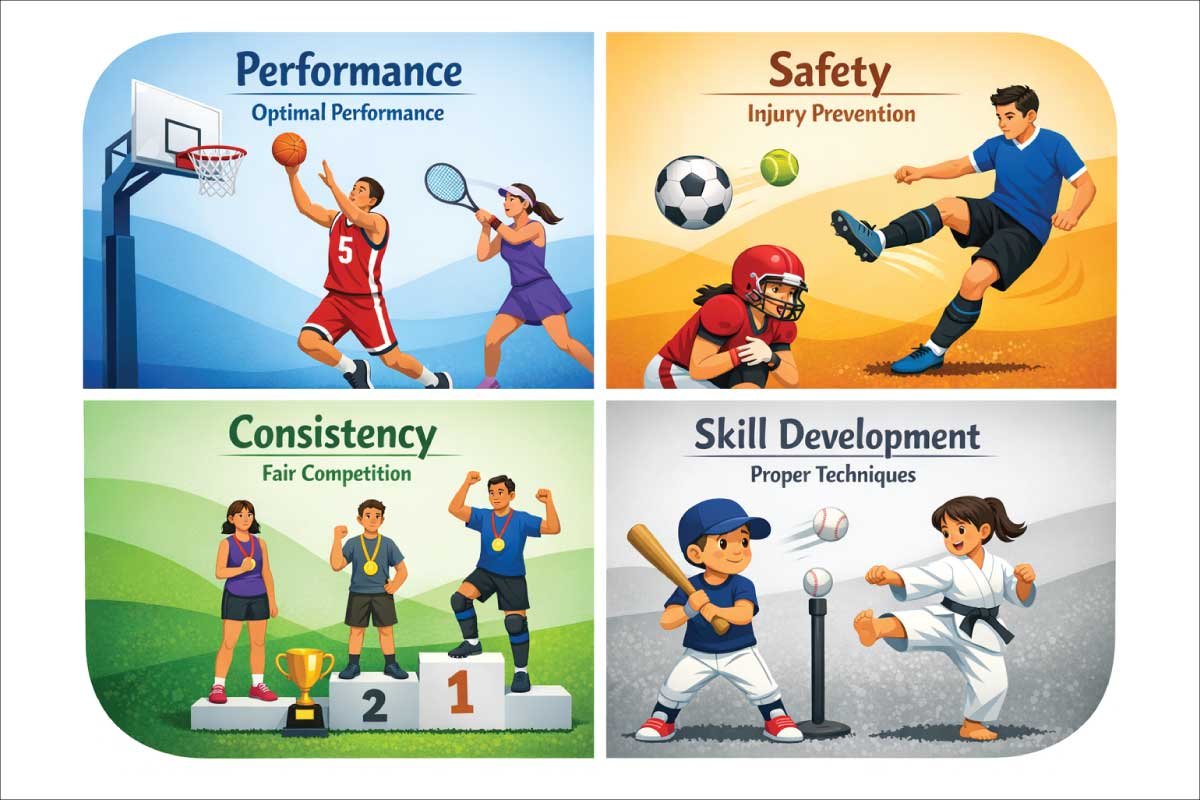
Standard sports sizes play a vital role in ensuring fair play, safety, and skill improvement across all levels of sports. Using correctly sized equipment helps athletes perform confidently, train effectively, and reduce the chances of injury while maintaining consistency in both practice and competitive environments.
-
Performance: Correctly sized equipment allows optimal performance.
-
Safety: Reduces risk of injuries.
-
Consistency: Standardized sizes maintain fairness in competitions.
-
Skill Development: Helps beginners and youth develop proper techniques.
Ball Sizes
Balls are a fundamental part of almost every sport, directly affecting grip, control, and overall performance. Choosing the correct ball size and weight based on age and level helps players develop proper techniques, improve accuracy, and play safely with better confidence.
Ball Size Chart for Popular Sports
| Sport | Age/Level | Ball Size | Circumference | Weight |
|---|---|---|---|---|
| Football (Soccer) | Adults | 5 | 27–28 in / 68–70 cm | 410–450 g |
| Youth 8–12 | 4 | 25–26 in / 63–66 cm | 350–390 g | |
| Youth 5–8 | 3 | 23–24 in / 58–61 cm | 300–340 g | |
| Basketball | Men | 7 | 29.5 in / 75 cm | 22 oz / 623 g |
| Women | 6 | 28.5 in / 72 cm | 20 oz / 567 g | |
| Youth 9–11 | 5 | 27.5 in / 70 cm | 17 oz / 482 g | |
| Youth 5–8 | 4 | 25.5 in / 65 cm | 14 oz / 397 g | |
| Volleyball | Standard | N/A | 25.5–26.5 in / 65–67 cm | 9.2–9.9 oz / 260–280 g |
| Tennis | All | N/A | 2.57–2.70 in / 6.54–6.86 cm | 1.97–2.1 oz / 56–59.4 g |
| Baseball | Adults | N/A | 9–9.25 in / 22.9–23.5 cm | 5–5.25 oz / 142–149 g |
| Cricket | Men | N/A | 8.81–9 in / 22.4–22.9 cm | 5.5–5.75 oz / 156–163 g |
| Women | N/A | 8.27–8.66 in / 21–22 cm | 4.94–5.33 oz / 140–151 g |
⚠️ Tip: Always choose youth or lightweight balls for beginners to improve skill development and avoid injuries.
Also Read:
Bat and Stick Sizes
1- Baseball Bat Size Chart:
Selecting the right baseball bat size is essential for swing control, power, and safety. Bats that are too long or heavy can slow reaction time and reduce accuracy, while properly sized bats help beginners and youth build confidence, improve technique, and transition smoothly to standard adult equipment.
| Player Age | Recommended Bat Length | Weight Range | Notes |
|---|---|---|---|
| 5–7 years | 24–26 in / 61–66 cm | 14–16 oz | Lightweight for beginners |
| 8–10 years | 26–29 in / 66–74 cm | 16–18 oz | Suitable for Little League |
| 11–13 years | 28–32 in / 71–81 cm | 18–20 oz | Intermediate players |
| 14+ / Adults | 32–34 in / 81–86 cm | 29–32 oz | Standard professional size |
2- Cricket Bat Size Chart
Cricket bat size should match a player’s height and age for optimal technique and comfort. Using the correct size allows young players to learn proper grip, stance, and shot execution, while adult bats provide the reach and weight needed for competitive play without causing strain or injury.
| Player Height | Recommended Bat Size | Notes |
|---|---|---|
| Up to 3’9″ | Size 0 | For children under 5 |
| 3’9″–4’3″ | Size 1 | Ages 5–7 |
| 4’3″–4’7″ | Size 2 | Ages 7–9 |
| 4’7″–4’11” | Size 3 | Ages 9–11 |
| 4’11″–5’3″ | Size 4 | Ages 11–13 |
| 5’3″+ | Full Size (5) | Standard adult bat |
3- Hockey Stick Size Chart
Hockey stick length affects control, passing, and shooting accuracy. Choosing a stick that fits a player’s height and skill level ensures better handling and safer play. Youth players benefit from shorter sticks for learning techniques, while adults use full-length sticks for professional-level performance and power.
| Player Height | Stick Length | Notes |
|---|---|---|
| < 4’0″ | 36–40 in / 91–102 cm | Youth beginners |
| 4’0″–4’6″ | 40–44 in / 102–112 cm | Intermediate |
| 4’6″–5’0″ | 44–48 in / 112–122 cm | Youth advanced |
| 5’0″+ | 48–60 in / 122–152 cm | Standard adult |
⚠️ Tip: Stand the bat/stick vertically beside the player. The top should reach between the hip and thigh for optimal size.
Court and Field Dimensions
Standard court and field dimensions are essential for fair play, safety, and skill development in all sports. Using correctly sized playing areas ensures that players of all ages can practice, compete, and improve techniques effectively while maintaining consistency across youth, amateur, and professional levels.
1- Football (Soccer) Field Dimensions
Soccer fields vary in size depending on age and competition level. Professional pitches follow FIFA standards, while youth fields are scaled down to suit smaller players, ensuring safety, proper gameplay, and skill development while maintaining consistency in passing, dribbling, and overall match experience.
| Level | Length | Width | Notes |
|---|---|---|---|
| Professional | 100–130 yd / 90–120 m | 50–100 yd / 45–90 m | FIFA standard |
| Youth | 70–100 yd / 64–91 m | 40–50 yd / 36–45 m | Adjusted for smaller players |
2- Basketball Court Dimensions
Basketball court sizes differ for professional and youth levels to match player height and skill. Full-size NBA or FIBA courts challenge adults with standard hoop height, while youth courts are smaller with lower hoops, allowing beginners to develop shooting accuracy, dribbling control, and game understanding.
| Level | Length | Width | Hoop Height |
|---|---|---|---|
| NBA / FIBA | 94 ft / 28.65 m | 50 ft / 15.24 m | 10 ft / 3.05 m |
| Youth | 74–84 ft / 22–25.6 m | 42–50 ft / 12.8–15.24 m | 8–9 ft / 2.44–2.74 m |
Also Read:
3- Tennis Court Dimensions
Tennis courts are designed with standard lengths for singles and doubles matches. The width differs for singles versus doubles play, ensuring fair competition and proper spacing. Correct court dimensions allow players to practice precise footwork, positioning, and shot execution effectively.
| Court Type | Length | Width | Notes |
|---|---|---|---|
| Singles | 78 ft / 23.77 m | 27 ft / 8.23 m | Standard singles court |
| Doubles | 78 ft / 23.77 m | 36 ft / 10.97 m | Includes doubles alleys |
Also Read:
4- Volleyball Court Dimensions
Volleyball court size remains consistent for adults and youth, but net height is adjusted for younger players. Proper court dimensions combined with age-appropriate net height help develop serving, spiking, and blocking skills while ensuring safety and optimal learning conditions.
| Court Type | Length | Width | Net Height |
|---|---|---|---|
| Indoor / Standard | 59 ft / 18 m | 29.5 ft / 9 m | Men: 7’11 5/8″ / 2.43 m Women: 7’4 1/8″ / 2.24 m |
| Youth | Same court size, but net lowered | N/A | 6’6″–7’0″ / 1.98–2.13 m |
Also Read:
5- Cricket Pitch Dimensions
Cricket pitches and boundaries have standardized lengths and widths to maintain consistent gameplay. A correctly sized pitch supports accurate bowling, batting, and fielding, while appropriate boundary distances ensure fair scoring opportunities and skill development for all player levels.
| Part | Length | Width |
|---|---|---|
| Pitch | 22 yd / 20.12 m | 10 ft / 3.05 m |
| Boundary | 65–90 m radius | N/A |
Youth vs Adult Sports Equipment
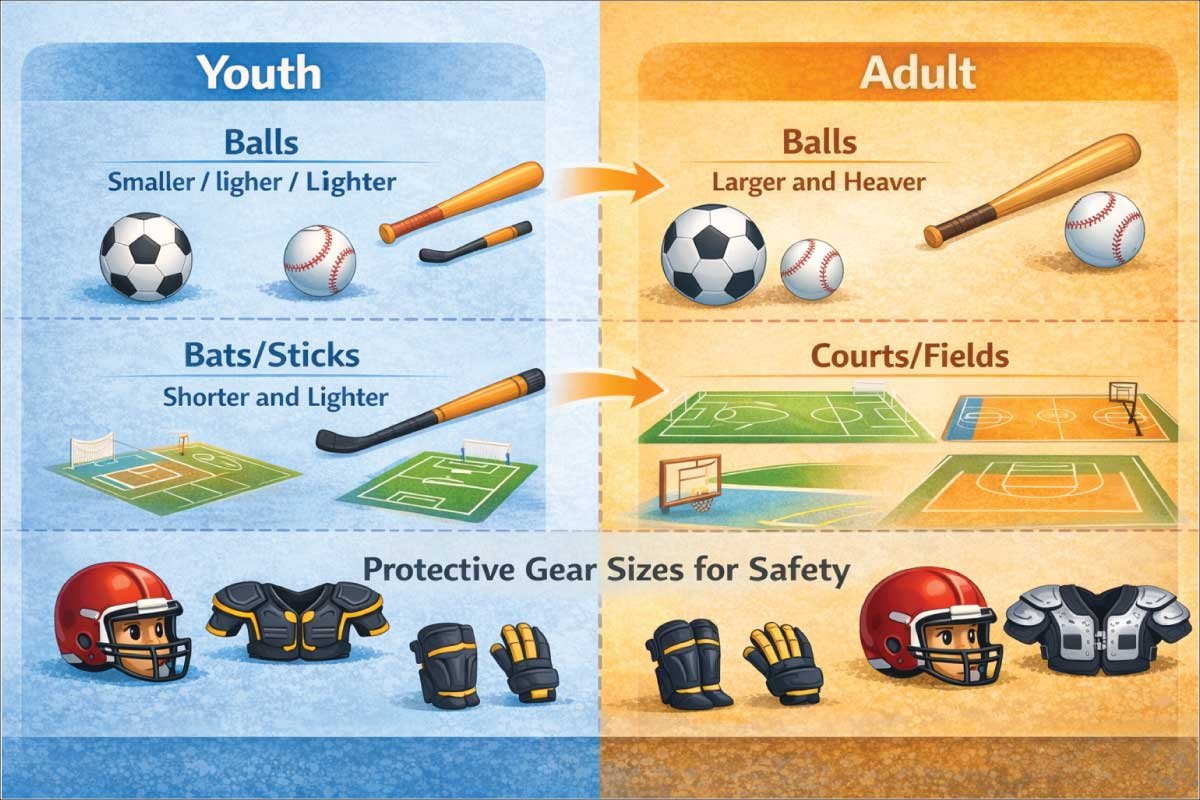
Youth and adult sports equipment differ to match players’ physical strength, size, and skill level. Properly scaled equipment helps young athletes learn techniques safely, build confidence, and enjoy the game, while adult gear is designed for higher power, speed, and competitive play.
-
Balls: Youth balls are smaller and lighter.
-
Bats/Sticks: Shorter and lighter for beginners.
-
Courts/Fields: Youth soccer and basketball courts may be scaled down.
-
Safety Gear: Helmets, pads, and gloves are sized based on age and height.
⚠️ Tip: Always match the equipment size to the player’s age, height, and strength for safety and skill development.
1. Protective Gear Sizes for Safety in Sports
Protective gear sizing is essential for athlete safety and confidence during play. Helmets, pads, gloves, and other safety equipment must fit correctly to absorb impact, allow free movement, and stay securely in place. Proper sizing charts for both youth and adults help reduce injury risks and improve overall performance.
-
Covers helmets, pads, gloves, and other essential protective equipment
-
Provides clear sizing guidance for both youth and adult athletes
-
Ensures a secure and comfortable fit during play
-
Helps absorb impact and reduce injury risk
-
Prevents gear from slipping or shifting during movement
-
Supports proper head, joint, and body protection
-
Improves confidence while training or competing
-
Allows better mobility without restricting performance
-
Helps parents and coaches choose the right size easily
-
Promotes safer sports participation at all levels
Also Read:
Common Mistakes When Choosing Sports Equipment Sizes
Choosing the right sports equipment size is essential for safety, performance, and skill development. Many players and parents make simple sizing mistakes that can lead to poor technique or injuries. Understanding these common errors helps ensure athletes use equipment that truly fits their age, strength, and level.
-
Using adult-sized balls for children instead of youth versions
-
Choosing bats or sticks that are too heavy or too long
-
Ignoring height, weight, and strength when selecting equipment
-
Playing on full-size courts or fields meant for adults
-
Overlooking manufacturer size charts and age recommendations
How Sports Equipment Sizes Affect Skill Development
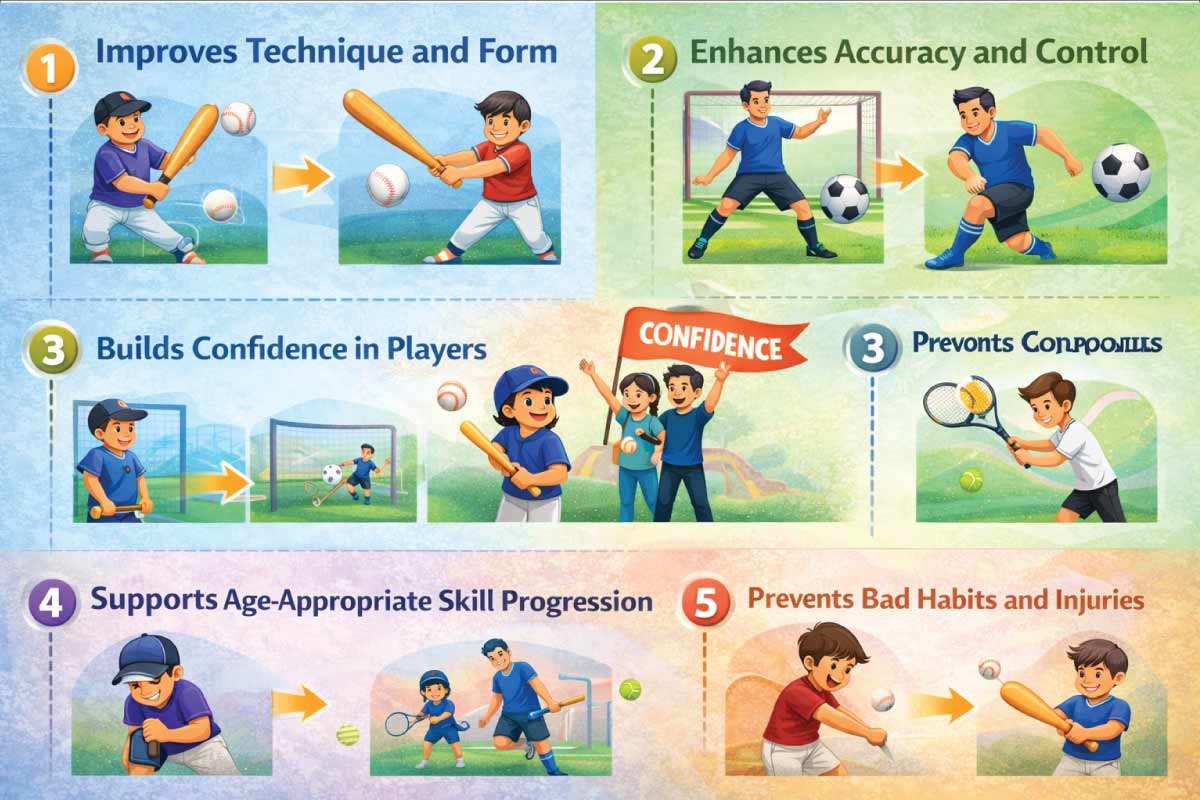
Using correctly sized sports equipment plays a major role in how athletes learn and improve their skills. The right size supports proper technique, balance, and control, allowing players to progress naturally. In contrast, incorrect sizing can slow development, reduce confidence, and increase the risk of forming bad habits.
1- Improves Technique and Form
Properly sized equipment helps athletes maintain correct posture, grip, and movement patterns. When bats, balls, or rackets match the player’s size and strength, techniques feel more natural, making it easier to learn fundamentals and avoid compensating movements that lead to poor form.
2- Enhances Accuracy and Control
Correct equipment size improves handling and precision. Players can better control direction, speed, and timing, which directly affects passing, shooting, and striking accuracy. Oversized or heavy gear often causes misjudgment, reducing consistency and limiting technical improvement.
3- Builds Confidence in Players
Using equipment that feels comfortable and manageable boosts confidence, especially for beginners and youth athletes. When players experience success early through proper sizing, they are more motivated to practice, experiment with skills, and enjoy the sport without unnecessary frustration.
4- Supports Age-Appropriate Skill Progression
Youth-sized equipment allows skills to develop gradually as physical strength and coordination improve. It ensures players focus on learning techniques rather than struggling with unsuitable gear. As athletes grow, upgrading sizes helps maintain steady and healthy skill advancement.
5- Prevents Bad Habits and Injuries
Incorrectly sized equipment often forces players to adjust their movements unnaturally. Over time, this can lead to poor habits and increased injury risk. Proper sizing supports safe movement patterns, protecting joints and muscles while encouraging long-term skill development.
Also Read:
Adjusting Sports Equipment for Different Skill Levels
Adjusting sports equipment according to skill level helps players learn progressively and safely. Beginners benefit from lighter, smaller, or modified equipment that allows better control and confidence. Intermediate players require standard practice gear to refine techniques, while professionals use regulation-size equipment for competitive accuracy. Proper scaling ensures steady improvement, reduces injury risk, and supports long-term athletic development across all age groups.
| Skill Level | Equipment Adjustments | Examples |
|---|---|---|
| Beginners | Lighter and smaller equipment | Lighter cricket balls, lower basketball hoops |
| Youth Players | Scaled-down sizes for learning | Shorter bats, smaller soccer balls |
| Intermediate | Near-standard practice equipment | Standard balls with lighter weight options |
| Advanced | Full-size regulation equipment | Official match balls and court sizes |
| Professional | Certified competition equipment | Federation-approved gear and dimensions |
Tips for Choosing the Right Size
Conclusion
Understanding sports equipment and field dimensions is crucial for safe, effective, and enjoyable play. Whether it’s the perfect football, a cricket bat that fits your height, or a basketball court that meets regulation standards, the right size impacts performance, safety, and skill development.
Use this sports sizes guide as a reference for selecting equipment for yourself, your team, or your children. Following these standards ensures a professional and enjoyable sports experience, whether at home, in school, or on the field.

I am Engineer Hassan, a professional engineer with over 15 years of experience in measurements, design accuracy, and furniture, appliance, and home product sizing. Through Size Helper, I provide research-based guides and trending 2026 home design ideas for living rooms, bedrooms, sofas, wall décor, fashion, and sports—helping users make confident, informed decisions. Every guide is written with real expertise, verified data, and a commitment to quality, usability, and style.