

A buffet, also known as a sideboard, is an essential piece of furniture in dining rooms, living areas, or kitchens. It provides practical storage for dishes, cutlery, linens, and other essentials while doubling as a display surface for décor, serving food during gatherings, or holding drinks and snacks. Choosing the right buffet size ensures it fits your space, complements your room’s proportions, and serves your functional needs without overwhelming the layout.
In this detailed guide, we will explore standard buffet dimensions, typical height, width, and depth ranges, variations by style, and tips for selecting the perfect buffet for your home.
Standard Buffet Dimensions
When purchasing or building a buffet, it’s essential to know the standard dimensions. These dimensions are based on typical dining room ergonomics, ensuring the piece is comfortable to use, visually proportional, and functional for storage and serving purposes.
-
Height: Buffets are typically between 30 and 36 inches tall. This height allows for easy access when placing dishes on top or opening drawers and cabinets.
-
Width: Standard buffet widths vary widely from 48 inches to 72 inches, accommodating different storage needs and room sizes.
-
Depth: Depth ranges from 16 to 24 inches, ensuring enough storage space while maintaining a balanced proportion in most rooms.
Understanding standard buffet dimensions helps ensure both functionality and aesthetic balance in your dining or living space. Proper height, width, and depth make serving comfortable, accommodate available wall space, and prevent overcrowding. The following table outlines typical measurements to guide selection, placement, and practical use of buffets.
| Dimension | Standard Range | Notes |
|---|---|---|
| Height | 30–36 inches (76–91 cm) | Comfortable for serving and display |
| Width | 48–72 inches (122–183 cm) | Depends on available wall space |
| Depth | 16–24 inches (41–61 cm) | Avoids protruding too far into room |
Types of Buffets and Their Sizes
Buffets serve both functional storage and decorative purposes in dining spaces. They come in various styles, each with dimensions suited to particular needs and room sizes. Understanding the differences between traditional, modern, narrow, and other specialized buffet types helps in selecting the right piece that balances storage capacity, accessibility, and aesthetic appeal in your dining or living area.
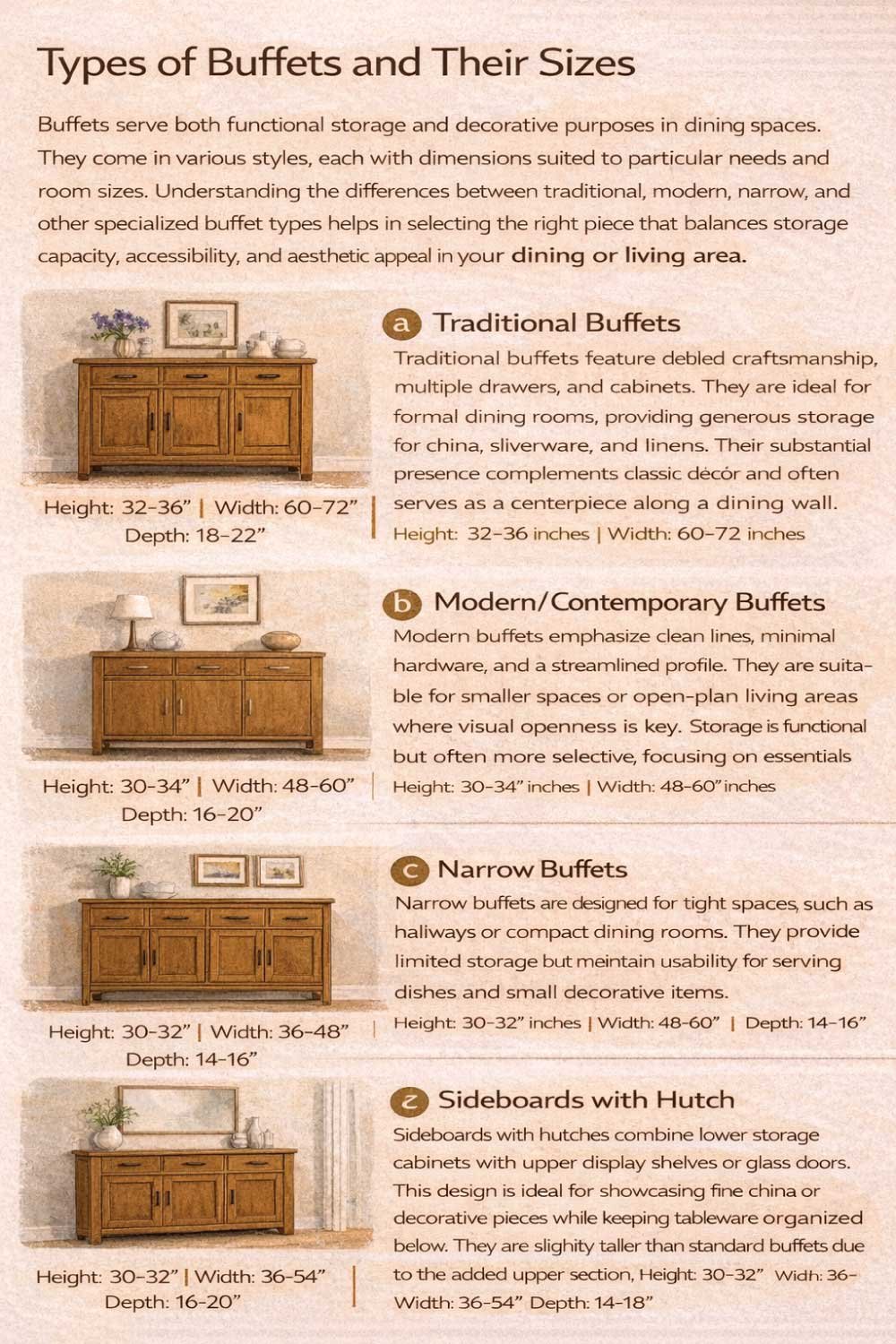
a) Traditional Buffets
Traditional buffets feature detailed craftsmanship, multiple drawers, and cabinets. They are ideal for formal dining rooms, providing generous storage for china, silverware, and linens. Their substantial presence complements classic décor and often serves as a centerpiece along a dining wall.
Height: 32–36 inches | Width: 60–72 inches | Depth: 18–22 inches
b) Modern/Contemporary Buffets
please write 1500 words detailed blog post on { Home Theatre Recliner Size Chart for Perfect Fit} and also ad 5 table charts Modern buffets emphasize clean lines, minimal hardware, and a streamlined profile. They are suitable for smaller spaces or open-plan living areas where visual openness is key. Storage is functional but often more selective, focusing on essentials while maintaining a light, uncluttered appearance.
Height: 30–34 inches | Width: 48–60 inches | Depth: 16–20 inches
c) Narrow Buffets
Narrow buffets are designed for tight spaces such as hallways or compact dining rooms. They provide limited storage but maintain usability for serving dishes and small decorative items. Their slim profile ensures circulation remains unimpeded, making them a practical solution for smaller homes.
Height: 30–32 inches | Width: 36–48 inches | Depth: 14–16 inches
d) Corner Buffets
Corner buffets maximize underutilized room corners, offering storage without disrupting traffic flow. Their angled design allows them to fit snugly along adjoining walls, making them a smart choice for smaller dining areas or rooms with irregular layouts while still maintaining style and practicality.
Height: 30–34 inches | Width: 36–48 inches | Depth: 16–18 inches
e) Sideboards with Hutch
Sideboards with hutches combine lower storage cabinets with upper display shelves or glass doors. This design is ideal for showcasing fine china or decorative pieces while keeping tableware organized below. They are slightly taller than standard buffets due to the added upper section.
Height: 60–72 inches | Width: 48–72 inches | Depth: 16–20 inches
f) Low Profile Buffets
Low profile buffets sit closer to the ground and are often used in casual or modern settings. Their reduced height makes them suitable for rooms with lower ceilings or as complementary storage under wall-mounted décor or mirrors, providing easy access to items.
Height: 28–30 inches | Width: 48–66 inches | Depth: 16–20 inches
g) Server Buffets
Server buffets are compact and primarily intended for temporary food placement during meals. They often feature shallow drawers and smaller cabinets, ideal for holding serving trays, utensils, and linens without dominating the room visually, making them versatile for both formal and informal settings.
Height: 30–32 inches | Width: 36–54 inches | Depth: 14–18 inches
Buffet Dimensions by Type
Buffets come in a variety of styles, each designed to suit specific spaces and uses. Dimensions vary depending on type, from traditional formal pieces to narrow or corner units for compact areas. The table below highlights standard height, width, and depth for each buffet style and its ideal placement.
| Buffet Type | Height (in) | Width (in) | Depth (in) | Ideal Use |
|---|---|---|---|---|
| Traditional | 32–36 | 60–72 | 18–22 | Formal dining rooms |
| Modern/Contemporary | 30–34 | 48–60 | 16–20 | Living rooms, modern dining |
| Narrow | 30–32 | 36–48 | 14–16 | Small spaces, hallways |
| Corner | 30–34 | 36–48 | 16–18 | Room corners |
Buffet Height Considerations
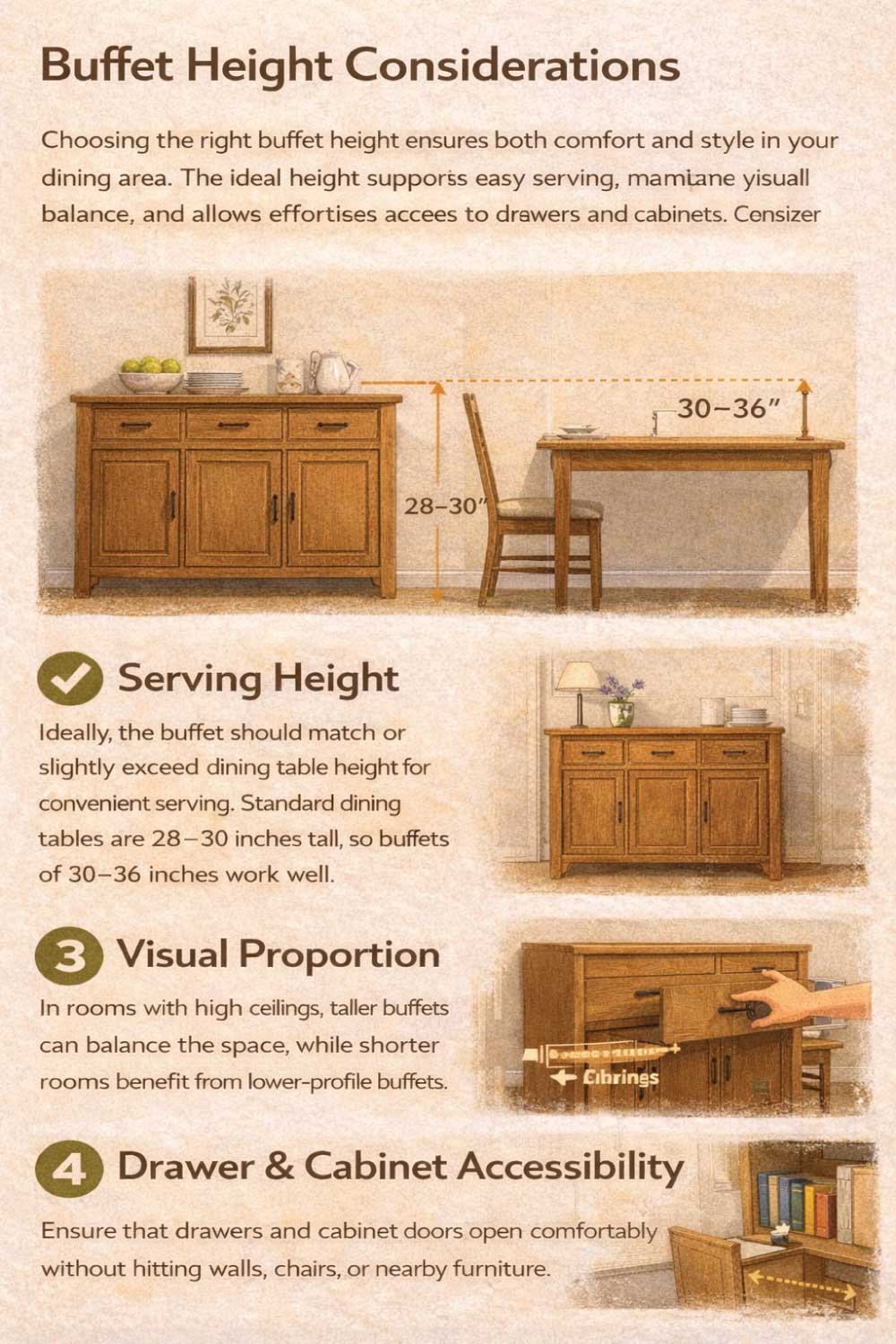
Choosing the right buffet height ensures both comfort and style in your dining area. The ideal height supports easy serving, maintains visual balance, and allows effortless access to drawers and cabinets. Consider table alignment, room proportions, and furniture spacing to create a functional and harmonious layout.
-
Serving Height: Ideally, the buffet should match or slightly exceed dining table height for convenient serving. Standard dining tables are 28–30 inches tall, so buffets of 30–36 inches work well.
-
Visual Proportion: In rooms with high ceilings, taller buffets can balance the space, while shorter rooms benefit from lower-profile buffets.
-
Drawer & Cabinet Accessibility: Ensure that drawers and cabinet doors open comfortably without hitting walls, chairs, or nearby furniture.
Also Read:
Buffet Width Guidelines
Selecting the appropriate buffet width is key to maximizing storage while maintaining room harmony. The right width ensures ease of movement, proportional aesthetics, and sufficient space for servingware. Consider the room size, dining table length, and storage needs to choose a buffet that is both practical and visually balanced.
-
Small Buffets: 36–48 inches; suitable for apartments, entryways, or compact dining rooms.
-
Medium Buffets: 48–60 inches; versatile, fits most standard dining rooms.
-
Large Buffets: 60–72 inches; ideal for large dining areas or for those who need extensive storage for servingware and linens.
Recommended Buffet Widths by Room Size
Choosing the right buffet width ensures balance and functionality in any room. Width should correspond to available space, preventing overcrowding while maximizing storage and display potential. The table below provides recommended buffet widths for small, medium, and large rooms, helping you select a piece that complements your space perfectly.
| Room Size | Suggested Buffet Width | Notes |
|---|---|---|
| Small (up to 120 sq. ft) | 36–48 in | Prevents overcrowding |
| Medium (120–250 sq. ft) | 48–60 in | Fits standard dining room walls |
| Large (250+ sq. ft) | 60–72 in | Allows for display & storage |
Buffet Depth Recommendations
Choosing the right buffet depth ensures both functionality and comfortable room flow. Proper depth provides adequate storage without obstructing movement or crowding the space. Consider room size, traffic patterns, and cabinet requirements to select a buffet that balances practicality with aesthetic appeal, making everyday use effortless and enjoyable.
-
Standard Depth: 18–20 inches — fits most dining rooms and provides adequate cabinet space.
-
Shallow Depth: 14–16 inches — ideal for narrow spaces or hallways.
-
Deep Buffets: 20–24 inches — suitable for larger dining rooms or buffets with deep drawers and cabinets.
Buffet Depth by Use
Buffet depth affects both functionality and room flow. Choosing the right depth ensures ample storage without crowding the space. Depending on use—standard storage, narrow areas, or large dining rooms—different depths work best. The table below outlines recommended buffet depths to balance practicality, accessibility, and visual harmony.
| Buffet Use | Depth (in) | Notes |
|---|---|---|
| Standard storage | 18–20 | Holds dishes, glasses, linens comfortably |
| Narrow spaces | 14–16 | Minimal footprint for hallways |
| Large dining rooms | 20–24 | Extra capacity for serving & storage |
Also Read:
Buffet Cabinet and Drawer Layouts
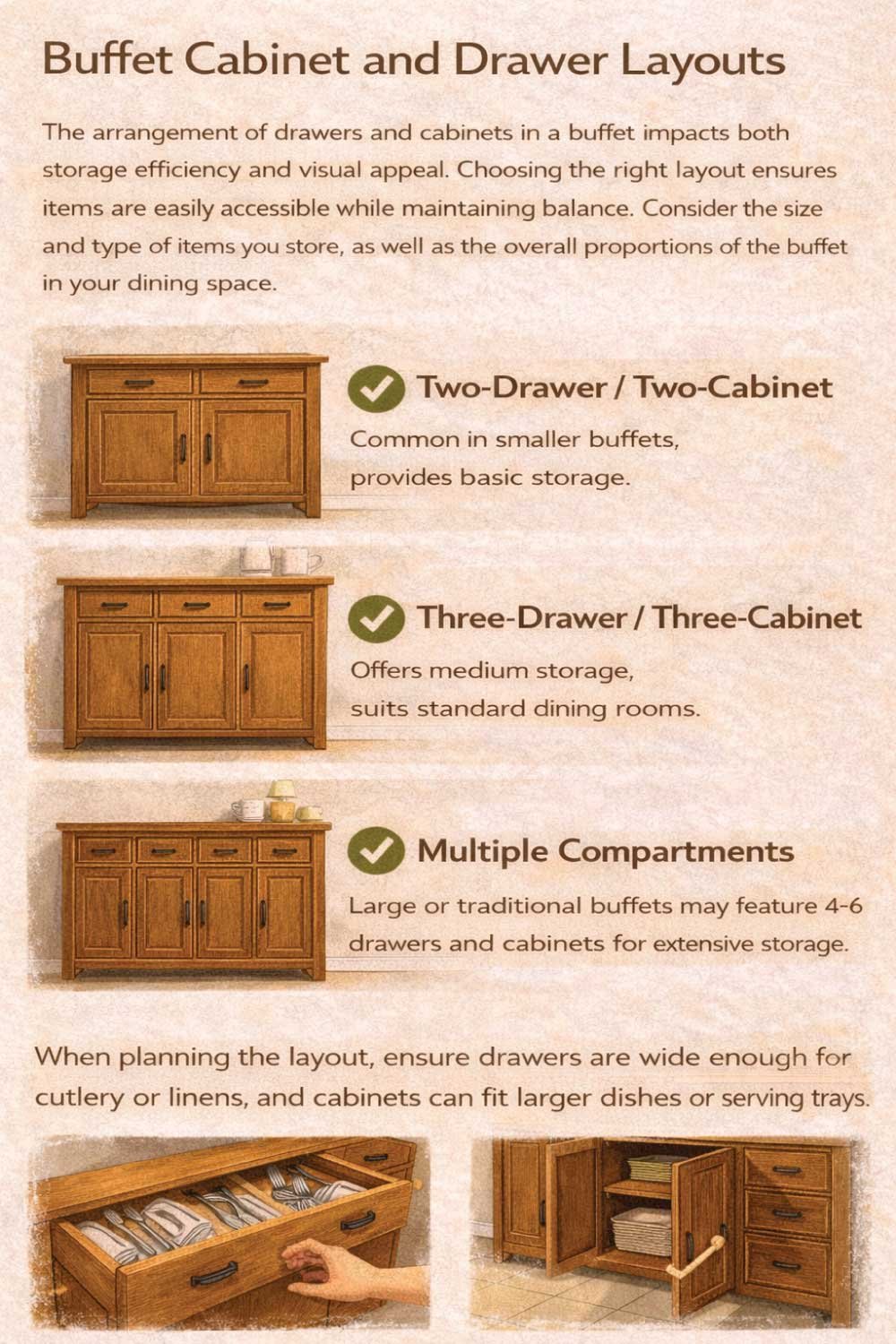
The arrangement of drawers and cabinets in a buffet impacts both storage efficiency and visual appeal. Choosing the right layout ensures items are easily accessible while maintaining balance. Consider the size and type of items you store, as well as the overall proportions of the buffet in your dining space.
-
Two-Drawer / Two-Cabinet: Common in smaller buffets, provides basic storage.
-
Three-Drawer / Three-Cabinet: Offers medium storage, suits standard dining rooms.
-
Multiple Compartments: Large or traditional buffets may feature 4–6 drawers and cabinets for extensive storage.
When planning the layout, ensure drawers are wide enough for cutlery or linens, and cabinets can fit larger dishes or serving trays.
Also Read:
Buffet Styles and Their Spatial Impact
The style of a buffet affects both its visual presence and spatial requirements. Different designs—classic, modern, rustic, or mid-century—vary in height, width, and bulk, influencing how they fit into a room. Choose a style that complements your decor while maintaining functionality and comfortable circulation.
-
Classic: Ornate and substantial; often wider and taller.
-
Modern: Sleek, minimal; usually narrower and lower-profile.
-
Rustic/Farmhouse: May feature bulkier wood but moderate height.
-
Mid-Century: Clean lines, sometimes taller legs; width varies.
Recommended Buffet Dimensions by Style
Buffet dimensions can vary depending on design style, influencing both appearance and practicality. From classic and rustic to modern and mid-century, each style has ideal height, width, and depth to suit its aesthetic and functional purpose. The table below provides standard measurements for selecting the perfect buffet style.
| Style | Height (in) | Width (in) | Depth (in) | Notes |
|---|---|---|---|---|
| Classic | 32–36 | 60–72 | 18–22 | Decorative and functional |
| Modern | 30–34 | 48–60 | 16–20 | Sleek and compact |
| Rustic/Farmhouse | 30–34 | 50–66 | 18–22 | Slightly chunky aesthetic |
| Mid-Century | 30–34 | 48–60 | 16–20 | Minimalist with style |
Buffet Placement Tips
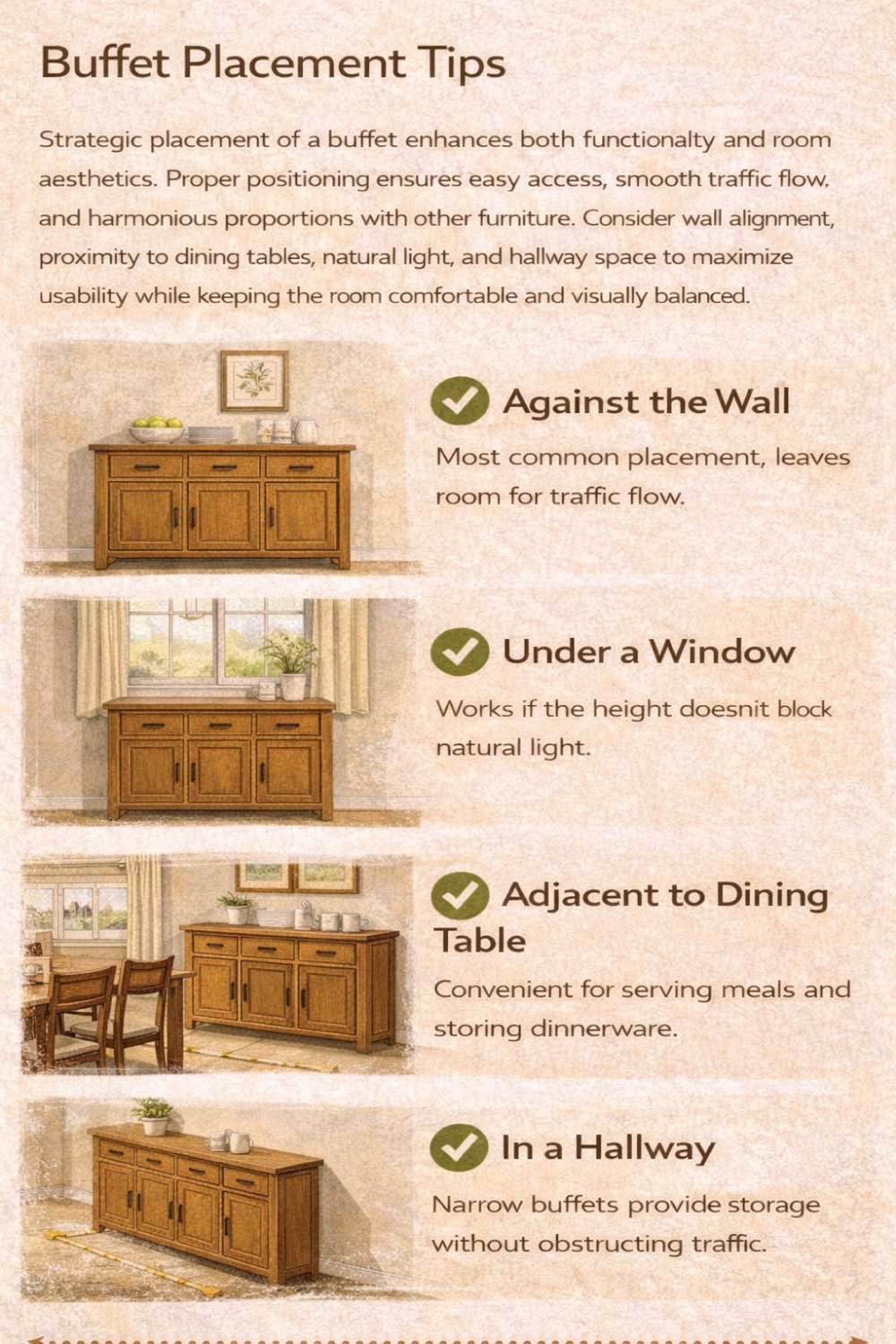
Strategic placement of a buffet enhances both functionality and room aesthetics. Proper positioning ensures easy access, smooth traffic flow, and harmonious proportions with other furniture. Consider wall alignment, proximity to dining tables, natural light, and hallway space to maximize usability while keeping the room comfortable and visually balanced.
-
Against the Wall: Most common placement, leaves room for traffic flow.
-
Under a Window: Works if the height doesn’t block natural light.
-
Adjacent to Dining Table: Convenient for serving meals and storing dinnerware.
-
In a Hallway: Narrow buffets provide storage without obstructing traffic.
Leave at least 3 feet of walking space in front of the buffet to maintain comfortable circulation.
Also Read:
Choosing the Right Buffet
Picking the perfect buffet requires balancing practicality, style, and room layout. Consider dimensions, storage capacity, material durability, and compatibility with existing furniture. Thoughtful selection ensures easy access, smooth circulation, and long-term use. A well-chosen buffet enhances both functionality and the overall aesthetic of your dining space.
-
Measure Your Space: Ensure height, width, and depth fit your room comfortably.
-
Consider Storage Needs: More drawers/cabinets for heavy storage; fewer for decorative use.
-
Check Style Compatibility: Buffets should complement your dining table and other furniture.
-
Account for Movement: Ensure doors and drawers open without obstruction.
-
Think Long-Term: Choose durable materials for longevity.
By following these guidelines, your buffet will not only provide practical storage but also enhance the aesthetic appeal of your room.
Final Thoughts
Buffets are multifunctional pieces that marry practicality with style. Understanding standard measurements and considering your space, storage, and design preferences ensures a perfect fit. From small, narrow buffets to expansive traditional sideboards, choosing the right dimensions is key to a functional and visually pleasing addition to your home.
Also Read:

I am Engineer Hassan, a professional engineer with over 15 years of experience in measurements, design accuracy, and furniture, appliance, and home product sizing. Through Size Helper, I provide research-based guides and trending 2026 home design ideas for living rooms, bedrooms, sofas, wall décor, fashion, and sports—helping users make confident, informed decisions. Every guide is written with real expertise, verified data, and a commitment to quality, usability, and style.