
Mirrors are one of the most transformative décor elements in interior design — especially in dining rooms. A well‑chosen buffet mirror can add depth, enhance lighting, and visually expand space. But choosing the right size for your buffet mirror isn’t random; it’s about proportions, symmetry, and functionality.
In this comprehensive guide, we’ll explore:
-
Why mirrors matter in dining rooms
-
How to choose the ideal buffet mirror size
-
Design principles and placement rules
-
Style ideas and décor tips
-
Tables for quick reference
Whether you’re redecorating from scratch or simply replacing an old mirror, this post will arm you with expert insights and practical charts.
Why Use a Buffet Mirror in a Dining Room?
Buffet mirrors are more than decorative accents; they serve both functional and aesthetic purposes in a dining room. Strategically placed, they can transform the atmosphere, enhance lighting, and visually expand the space. Their design impact makes them a versatile addition for any dining setting.
-
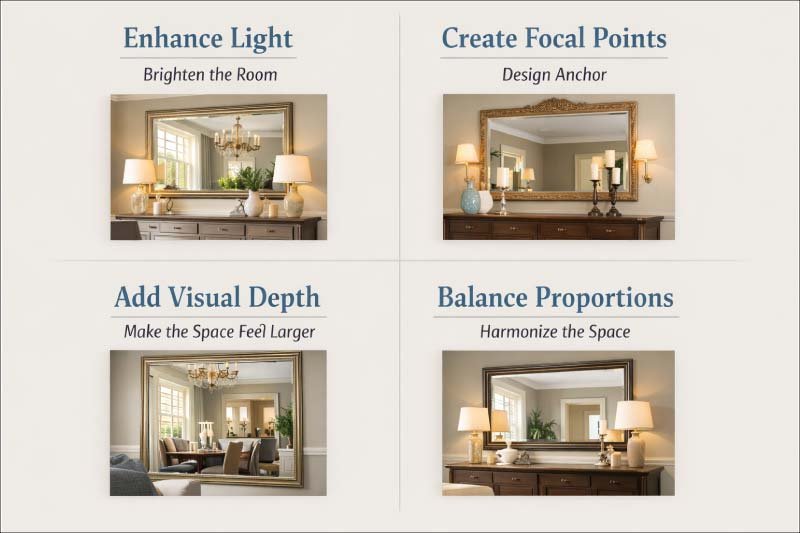
Enhance Light: Mirrors reflect both natural and artificial light — making even smaller or dim dining rooms feel brighter.
-
Create Focal Points: A mirror above a buffet or console adds an instant design anchor.
-
Add Visual Depth: Reflective surfaces make rooms look larger by creating a sense of space beyond the walls.
-
Balance Proportions: A well‑sized mirror balances out the visual weight of furniture like buffets, sideboards, or dining tables.
General Rule of Thumb for Buffet Mirror Sizes
Choosing the right buffet mirror size is all about achieving harmony in your dining space. Proper proportions create a cohesive look, ensuring the mirror complements rather than competes with your furniture. Following simple guidelines can make your dining room feel balanced, elegant, and visually appealing.
Mirror Width vs Buffet Width (Proportion Guide)
Choosing the right mirror width for your buffet is essential for balanced and visually appealing décor. A mirror that’s too small can look lost, while an oversized mirror can overwhelm the space. This table provides ideal mirror widths based on buffet size, helping you achieve perfect proportion and harmony.
| Buffet Width | Ideal Mirror Width (60%) | Upper Limit (75%) | Notes |
|---|---|---|---|
| 36″ (3′) | 22″ | 27″ | Best for small console tables |
| 48″ (4′) | 29″ | 36″ | Common buffet size |
| 60″ (5′) | 36″ | 45″ | Ideal mid‑sized rooms |
| 72″ (6′) | 43″ | 54″ | Larger rooms & statement pieces |
| 84″ (7′) | 50″ | 63″ | Extra‑wide buffets & open spaces |
| 96″ (8′) | 58″ | 72″ | Palatial or formal dining rooms |
Tip: Center the mirror with the buffet for symmetry unless you’re intentionally going for an asymmetrical design.
Height Considerations: How Tall Should a Buffet Mirror Be?
Choosing the right mirror size is essential for a balanced and visually appealing dining room. By following simple proportion guidelines, you can ensure the mirror complements your buffet without overwhelming the space, creating harmony between furniture, wall space, and decorative elements.
-
Ceiling height
-
Wall height above the buffet
-
Decorative layering (art, wall sconce pairing)
-
Viewing height of people using the space
A common recommendation is to leave about 4–12 inches of wall space above the buffet top and below the mirror. The mirror itself often ranges between 24″ to 48″ tall depending on style and room proportions.
Recommended Mirror Height by Ceiling Height
Mirror height should complement your room’s ceiling height to create balance and enhance the sense of space. Too short a mirror can feel lost, while an overly tall mirror may dominate the wall. This table recommends mirror heights based on ceiling dimensions for proportionate, elegant styling.
| Ceiling Height | Mirror Height Range | Why It Works |
|---|---|---|
| 8′ | 24″–36″ | Maintains open wall without crowding |
| 9′ | 30″–42″ | Adds height without overpowering |
| 10′ | 36″–48″ | Accentuates vertical space |
| 11′+ | 42″–60″ | Works with tall furniture and high walls |
Placement: How Far Above the Buffet Should the Mirror Be?
Choosing the right distance between a buffet and its mirror is key to achieving balance and visual appeal in a dining space. A well-placed mirror enhances light, reflects décor, and creates a sense of spaciousness. Proper spacing ensures the mirror complements the buffet without overwhelming the wall or appearing disconnected.
1. Ideal Distance for Visual Balance
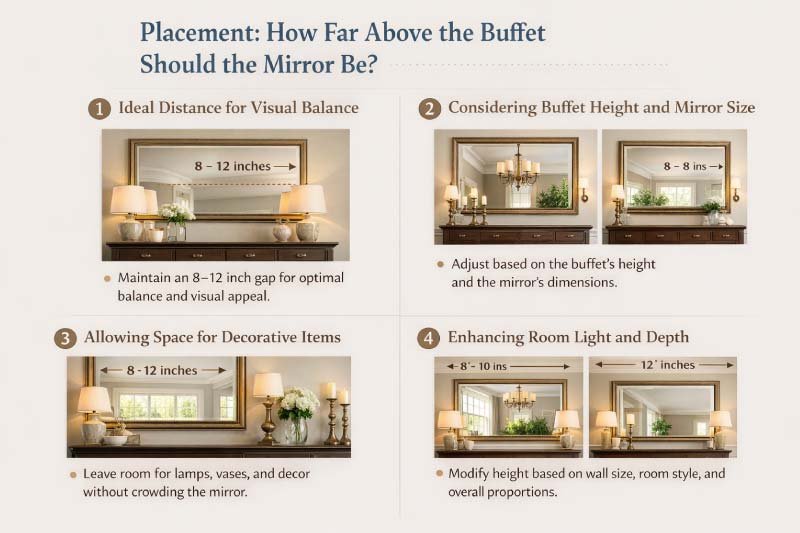
The recommended distance between a buffet and a mirror is typically 8 to 12 inches. This spacing creates harmony, allowing the mirror to feel connected without crowding the buffet. It also ensures decorative accents on the buffet remain visible and uncluttered, preserving an elegant and proportional display across the wall.
2. Considering Buffet Height and Mirror Size
When determining placement, account for the buffet’s height and the mirror’s dimensions. Taller buffets may benefit from slightly higher mirrors, while shorter buffets can have mirrors closer to the surface. Similarly, larger mirrors may require additional clearance to avoid overwhelming the space, while smaller mirrors look best a little closer to maintain visual cohesion.
3. Allowing Space for Decorative Items
One of the main reasons to maintain 8–12 inches of clearance is to accommodate decorative objects. Vases, lamps, candlesticks, or framed photos sit comfortably on the buffet without touching the mirror. This spacing prevents a crowded look while giving each item and the mirror its own visual importance within the arrangement.
4. Enhancing Room Light and Depth
Proper mirror placement also optimizes light reflection. Placing it slightly above the buffet allows it to catch natural or artificial light effectively, brightening the room. Additionally, the 8–12 inch spacing creates depth, making the dining area feel larger while drawing the eye upward and giving the wall an elegant, layered look.
5. Adjusting for Wall Proportions and Room Style
While the 8–12 inch guideline works for most setups, consider wall size, room proportions, and décor style. In compact spaces, closer placement may feel intimate, while in grander dining rooms, a higher mirror enhances verticality. Adjust spacing subtly to complement your overall aesthetic, ensuring the mirror and buffet form a visually cohesive focal point.
Mirror Placement Based on Buffet Style
The style of your buffet influences the ideal mirror placement above it. Proper spacing ensures visual harmony and prevents clutter or imbalance. This table provides placement guidelines based on different buffet designs, helping you position mirrors in a way that complements both the furniture and overall room aesthetics.
| Buffet Base Style | Mirror Placement Recommendation | Notes |
|---|---|---|
| Traditional buffet with molding | 8″–10″ above top | Maintain classic balance |
| Modern/clean lines buffet | 10″–12″ | Creates intentional negative space |
| Buffet with shelf or built‑in lighting | 12″–14″ | Prevents visual clutter |
| Buffet with hutch or upper storage | N/A | Mirror may be replaced by art or open shelving |
Vertical vs Horizontal Mirrors
Choosing the mirror orientation affects both style and spatial perception in your dining room. Horizontal mirrors enhance width and flow, while vertical or square mirrors can emphasize height and elegance. The right orientation creates visual harmony and complements the buffet and overall room design.
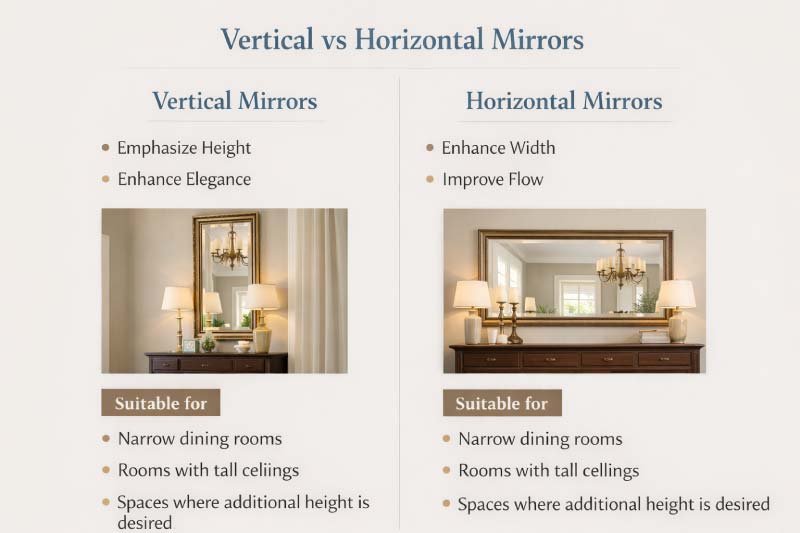
However, vertical or square mirrors can work beautifully in:
-
Narrow dining rooms
-
Rooms with tall ceilings
-
Spaces where additional height is desired
Mirror Shapes & When to Use Them
Choosing the right mirror shape enhances both style and proportion in your dining space. Different shapes can emphasize height, width, or create focal points. This table outlines recommended mirror shapes and their effects, helping you select the perfect form to complement your buffet and overall room design.
| Mirror Shape | Best For | Visual Effect |
|---|---|---|
| Rectangular horizontal | Wide buffets | Widening effect |
| Vertical rectangular | Tall walls | Adds height |
| Round | Modern or transitional dining rooms | Soften straight lines |
| Oval | Classic or vintage aesthetics | Elegant, gentle curves |
| Multi‑panel or grid | Large walls without furniture | Architectural interest |
| Irregular/abstract | Eclectic or artistic spaces | Unique focal point |
Frame Style: Coordinate with Dining Room Decor
The mirror frame is more than a border—it sets the tone for your dining room. Choosing the right frame enhances style, complements furniture, and reinforces your design theme, whether traditional, modern, rustic, or minimalist. A carefully selected frame unifies the space.
-
Matching wood tones for a coordinated, warm look
-
Metal frames for contemporary or industrial interiors
-
Antiqued mirrors for vintage or rustic settings
-
Frameless mirrors for minimalist spaces
Mirror Frame Materials & Dining Room Styles
Mirror frame material can dramatically influence your dining room’s style and atmosphere. Matching the frame to your décor enhances cohesion, while contrasting finishes add visual interest. This table highlights recommended frame materials for different dining styles, helping you choose a mirror that complements both your buffet and overall room aesthetic.
| Frame Material | Best Suited To | Notes |
|---|---|---|
| Wood (matching buffet) | Traditional, Farmhouse | Keeps room cohesive |
| Black metal | Modern, Industrial | Adds graphic contrast |
| Brass or gold | Glam, Classic | Reflective warmth |
| Silver or chrome | Contemporary | Sleek and bright |
| Distressed wood | Rustic, Cottage | Adds texture |
| No frame | Minimalist | Clean and simple |
Design Ideas & Practical Tips
Incorporating a buffet mirror is both an art and a science. Small adjustments in placement, layering, and styling can dramatically enhance your dining room’s atmosphere. These practical tips and design ideas help you make the most of your mirror, ensuring it’s both functional and visually striking.
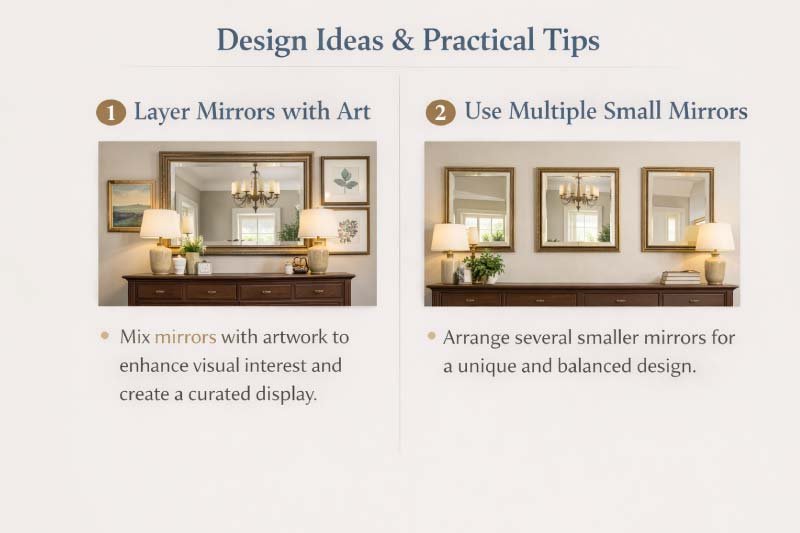
1. Layer Mirrors with Art
Combining mirrors with artwork adds dimension and personality to your dining room walls. Thoughtful layering enhances visual interest, highlights focal points, and creates a curated, gallery-style display. Strategic placement ensures the mirror remains the centerpiece, complementing rather than competing with surrounding décor.
2. Use Multiple Small Mirrors
Arranging several smaller mirrors can create a dynamic and stylish alternative to a single large piece. This approach adds visual interest, allows for creative layouts, and maintains proportional balance above the buffet. Proper spacing and alignment ensure cohesion, symmetry, and an elegant, well-curated look.
Multi‑Mirror Arrangements (Width Planning)
Multi‑mirror arrangements offer flexibility and style above your buffet, but proper sizing is key for a balanced look. This table provides recommended configurations and combined widths based on buffet size, ensuring proportional spacing and visual cohesion. Following these guidelines prevents overcrowding while creating an engaging, harmonious wall display.
| Buffet Width | Multi‑Mirror Configuration | Combined Width Goal |
|---|---|---|
| 48″ | 3 × 14″ round | ~42″ total (~88%) |
| 60″ | 2 × 24″ squares | ~48″ total (80%) |
| 72″ | 3 × 20″ rectangles | ~60″ total (83%) |
| 84″ | 2 × 30″ rectangles | ~60″ total (71%) |
| 96″ | 3 × 24″ ovals | ~72″ total (75%) |
Note: When using multiple pieces, spacing between each should be about 2″–4″ to avoid visual fragmentation.
Common Mistakes to Avoid
Even the most stylish buffet mirror can lose impact if basic placement and proportion rules are ignored. Understanding common pitfalls helps you prevent visual imbalance, cluttered walls, or mismatched décor, ensuring your mirror enhances the dining room rather than detracts from it.
- Too Small
Mirrors that are overly narrow or short can look like an afterthought.
- Too Large
Mirror that spans the entire wall, touches the ceiling, or overlaps architectural features can feel heavy or disorienting.
- Wrong Height
If placed too low, it may reflect buffet décor more than the room. Too high — and it disconnects from the furniture below.
Adhering to the placement charts above helps avoid these pitfalls.
Read More:
Maintenance & Practical Considerations
Buffet mirrors not only enhance style but also require practical upkeep. Regular cleaning and mindful placement help maintain their reflective beauty while preventing damage from everyday use. Understanding potential splashes, smudges, and fingerprints ensures your mirror stays both functional and visually appealing over time.

-
Water when filling decanters
-
Food splatter during buffets
-
Fingerprints from serving
Read More:
Quick tips to keep them sparkling:
Keeping buffet mirrors clean and gleaming doesn’t have to be a chore. Simple, consistent maintenance techniques ensure the reflective surface remains flawless and enhances your dining room’s ambiance. These easy tips help prevent streaks, dust buildup, and everyday smudges, keeping your mirrors looking their best.
-
Use a glass cleaner or mixture of vinegar + water
-
Clean with microfiber cloths to avoid streaks
-
Dust frame edges weekly
Read More:
Real Scenario Examples
Seeing design principles in action helps translate theory into practical solutions. Real-world examples illustrate how buffet mirrors of various sizes, shapes, and styles can be applied to different dining spaces, ensuring proportion, style, and functionality are all optimized for your home.
Example 1: Small Condo Dining Area
-
Buffet width: 36″
-
Ideal mirror width range: 22″–27″
-
Ceiling height: 8′ → mirror height: 24″
-
Mirror style: Round frameless for modern feel
Example 2: Large Open Plan Dining
-
Buffet width: 84″
-
Mirror width range: 50″–63″
-
Ceiling height: 10′ → mirror height: 42″
-
Mirror style: Wide rectangular with metal frame
Read More:
Final Checklist Before You Buy
A buffet mirror can transform your dining room, but careful planning ensures it enhances both function and style. This checklist guides you through key measurements, proportions, and décor considerations, helping you select a mirror that perfectly complements your space while maintaining visual balance.
-
Measure your buffet width
-
Multiply by 0.60–0.75 for mirror width target
-
Check wall height and decide mirror height
-
Decide on shape & frame based on your décor style
-
Plan space above buffet (8″–12″ recommended)
-
Consider surrounding décor (lighting, art, shelving)
This ensures your dining room feels balanced, intentional, and aesthetically pleasing.
Conclusion
Choosing the perfect buffet mirror size transforms not just the wall above your furniture — it changes the energy of your entire dining space. By following proportion guidelines, understanding placement recommendations, and selecting styles that harmonize with your décor, you’ll create a dining room that feels both functional and beautiful.
Whether you prefer classic rectangular mirrors, dramatic round designs, or creative multi‑mirror arrangements, there’s a perfect size for every buffet — and this guide gives you the tools to find it confidently.
Read More:
Furniture Sizes Guide 2026: Find the Perfect Dimensions for Every Room

I am Engineer Hassan, a professional engineer with over 15 years of experience in measurements, design accuracy, and furniture, appliance, and home product sizing. Through Size Helper, I provide research-based guides and trending 2026 home design ideas for living rooms, bedrooms, sofas, wall décor, fashion, and sports—helping users make confident, informed decisions. Every guide is written with real expertise, verified data, and a commitment to quality, usability, and style.