
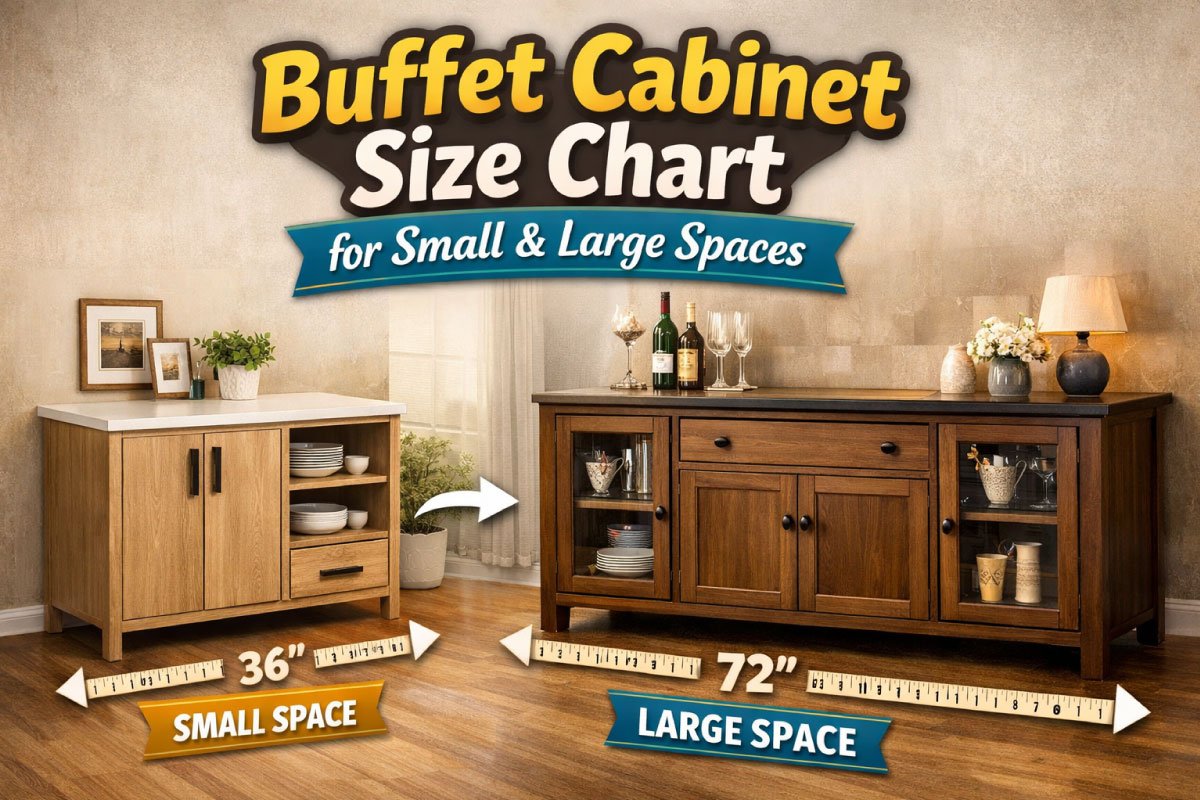
A buffet cabinet is more than just a piece of furniture—it’s a functional centerpiece that blends storage and style. From housing dinnerware to displaying décor, a well-chosen buffet can enhance the flow and aesthetics of a dining room, living area, or even a hallway. Selecting the right buffet cabinet size is crucial to ensure it fits the available space without overpowering the room or looking dwarfed.
Whether you’re decorating a compact apartment or a sprawling home, understanding standard buffet cabinet dimensions helps you make an informed choice. This guide covers recommended sizes for small and large spaces, typical cabinet heights, widths, depths, and even drawer configurations to help you pick the perfect buffet.
Why Size Matters for Buffet Cabinets
Choosing the right size for buffet cabinets is crucial for both practicality and aesthetics. The dimensions influence storage capacity, ease of use, and how well the piece fits within a room. From maintaining smooth traffic flow to complementing décor, proper sizing ensures your buffet cabinet is both functional and visually harmonious.
-
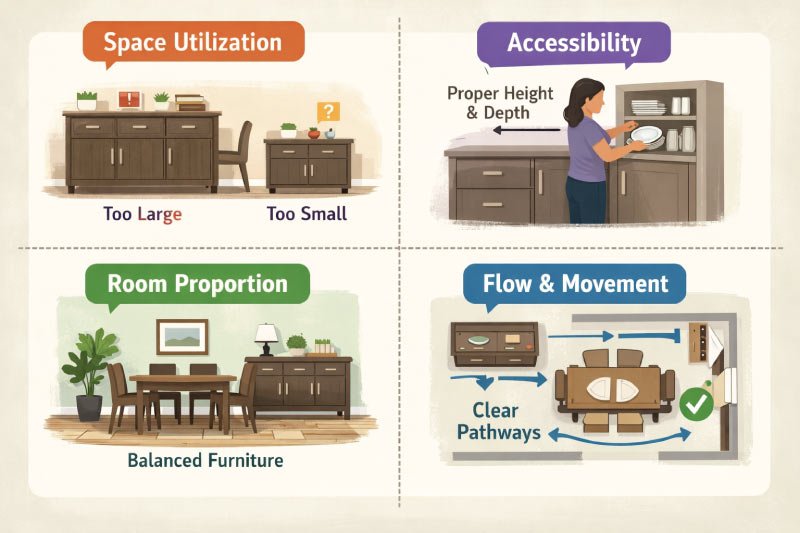
Space utilization: A cabinet too large can crowd a small dining room, while one too small may not provide sufficient storage.
-
Accessibility: Proper height and depth ensure easy access to dishes, glassware, or serving trays.
-
Room proportion: Balanced furniture enhances the overall décor without making the room feel cramped.
-
Flow and movement: Correct placement ensures pathways remain clear and avoids blocking seating or doors.
With these considerations in mind, let’s explore standard buffet cabinet sizes for different spaces.
Standard Buffet Cabinet Sizes
Buffet cabinets come in many shapes and sizes, yet certain standard dimensions serve as useful guidelines. Knowing these typical measurements helps ensure the cabinet fits your space, provides adequate storage, and maintains visual balance. Understanding standard sizes simplifies selection and ensures your buffet complements both function and style.
Standard Buffet Cabinet Dimensions
Choosing the right buffet cabinet ensures both functionality and aesthetic balance in your dining or living space. This table outlines standard dimensions for various cabinet types, helping you select the appropriate width, depth, and height based on room size and intended use.
| Cabinet Type | Width (inches) | Depth (inches) | Height (inches) | Notes |
|---|---|---|---|---|
| Small Buffet | 36–48 | 14–18 | 30–36 | Ideal for compact dining rooms or apartments |
| Medium Buffet | 48–60 | 16–20 | 32–36 | Versatile for standard dining spaces |
| Large Buffet | 60–72 | 18–24 | 34–36 | Suitable for spacious rooms or open floor plans |
| Sideboard / Credenza | 72–84 | 18–24 | 30–36 | Often used in living rooms or wide dining rooms |
| Mini Buffet | 30–36 | 12–16 | 28–32 | Perfect for entryways or small nooks |
Buffet Cabinet Widths by Space Type
Selecting the appropriate width for a buffet cabinet ensures both functionality and aesthetic balance. The right size complements your dining area, provides sufficient storage, and maintains comfortable movement around the space. Width considerations depend on room size, table length, and intended use, balancing proportion with practicality.
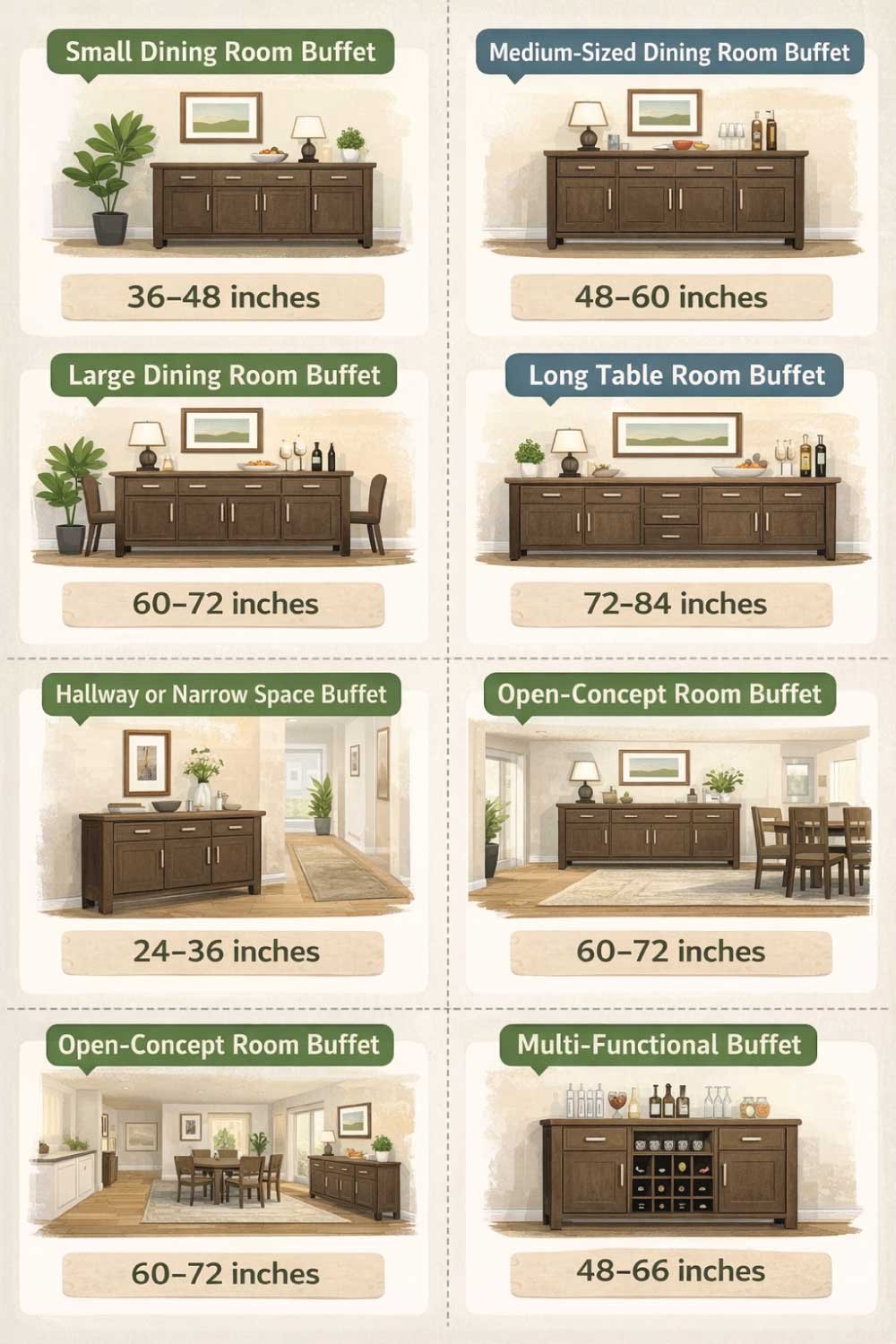
1. Small Dining Room Buffet
For compact dining areas, a width of 36–48 inches works best. This size provides storage without crowding the room, leaving enough space to move freely around the table. Opt for slim profiles with clean lines to visually expand the space while still offering practical cabinet storage.
2. Medium-Sized Dining Room Buffet
In moderately sized rooms, a buffet width of 48–60 inches strikes a balance between presence and functionality. This range accommodates additional storage for dishes, linens, and serveware, while maintaining proportional harmony with the dining table and other furniture pieces.
3. Large Dining Room Buffet
For spacious dining rooms, a buffet width of 60–72 inches creates a strong focal point. The extra length provides ample storage for fine china, glassware, or decorative items. Ensure that the cabinet’s design complements other furnishings without overwhelming the room’s open feel.
4. Long Table Buffet
When paired with an elongated dining table, a buffet of 72–84 inches enhances symmetry and practical use. This width allows multiple serving stations during gatherings while keeping the visual balance aligned with the table, providing a cohesive, elegant dining setup.
5. Hallway or Narrow Space Buffet
For corridors or narrow spaces, a width of 24–36 inches is ideal. Slim but tall designs maximize storage without obstructing walkways. Prioritize vertical storage and minimalist aesthetics to maintain functionality and a visually uncluttered appearance in tight areas.
6. Open-Concept Room Buffet
In open layouts, a buffet width of 60–72 inches works well to anchor the dining zone. This size distinguishes the dining area while providing storage and display surfaces. Consider designs with lower heights to maintain sightlines and preserve the openness of the space.
7. Multi-Functional Buffet
For rooms where the buffet doubles as a bar or sideboard, widths of 48–66 inches are optimal. This range offers storage for both dining essentials and beverages, while providing surface space for serving or decorative arrangements, balancing utility with visual appeal.
Recommended Buffet Cabinet Widths
Selecting the right buffet width is essential for both practicality and visual harmony. This table provides recommended width ranges based on room size, ensuring your cabinet fits comfortably, maximizes storage, and complements the layout—whether in a cozy dining area, a spacious room, or an entryway.
| Room Size | Width Range (inches) | Best Fit |
|---|---|---|
| Small Dining Room | 30–48 | Fits compact spaces without crowding |
| Medium Dining Room | 48–60 | Provides ample storage while maintaining balance |
| Large Dining Room | 60–84 | Creates a statement piece and accommodates large serving needs |
| Open Floor Plan | 72–96 | Ideal as both storage and display, can anchor a zone |
| Hallway / Entryway | 28–36 | Slim design preserves walking space |
Buffet Cabinet Depth Recommendations
The depth of a buffet cabinet plays a key role in functionality and room flow. Choosing the right depth ensures sufficient storage while keeping pathways clear. Properly sized cabinets make items easy to reach, prevent overcrowding, and help maintain a balanced, visually appealing dining or living space.
Buffet Cabinet Depth Chart
Depth plays a crucial role in a buffet cabinet’s functionality and placement. This chart highlights standard depth ranges for different cabinet styles, helping you choose the right size for narrow spaces, standard rooms, or large storage needs, while ensuring accessibility and a balanced appearance.
| Cabinet Style | Depth (inches) | Ideal Use |
|---|---|---|
| Slim / Narrow | 12–14 | Hallways, small dining rooms, narrow spaces |
| Standard | 16–18 | Most dining rooms and living spaces |
| Deep / Storage | 18–24 | Large rooms, storing bulky dishes, or tableware |
| Multi-Functional | 14–20 | Combines display and storage, suitable for mixed use |
| Buffet with Hutch | 16–20 | Hutch provides extra vertical storage without consuming floor space |
Buffet Cabinet Heights for Comfort and Function
The height of a buffet cabinet directly influences comfort, usability, and aesthetic harmony. Properly proportioned cabinets make serving convenient, provide easy access to storage, and align with surrounding furniture. Selecting the right height ensures both functional efficiency and visual balance, enhancing the overall flow and usability of your dining or living area.
Recommended Buffet Heights
Choosing the right buffet height enhances both usability and room harmony. This table outlines standard height ranges for various functions, from compact mini buffets to large storage pieces, ensuring comfortable access, optimal serving convenience, and a proportionate fit within dining rooms, entryways, or open-plan spaces.
| Height (inches) | Functionality | Notes |
|---|---|---|
| 28–30 | Mini buffet / low profile | Fits beneath windows, small rooms |
| 30–32 | Standard buffet | Comfortable for serving food and accessing drawers |
| 32–34 | Medium buffet | Ideal for medium-sized dining rooms |
| 34–36 | Large buffet | Maximizes storage, often used in expansive rooms |
| 36+ | Specialty / counter height | Can double as a serving counter or bar |
Choosing Buffet Cabinets for Small Spaces
Selecting the right buffet cabinet for small spaces requires balancing storage needs with room flow. The ideal cabinet maximizes functionality without overcrowding, allowing easy movement and maintaining an open feel. Thoughtful choices in width, depth, height, and design can make even compact areas highly practical and visually appealing.
-
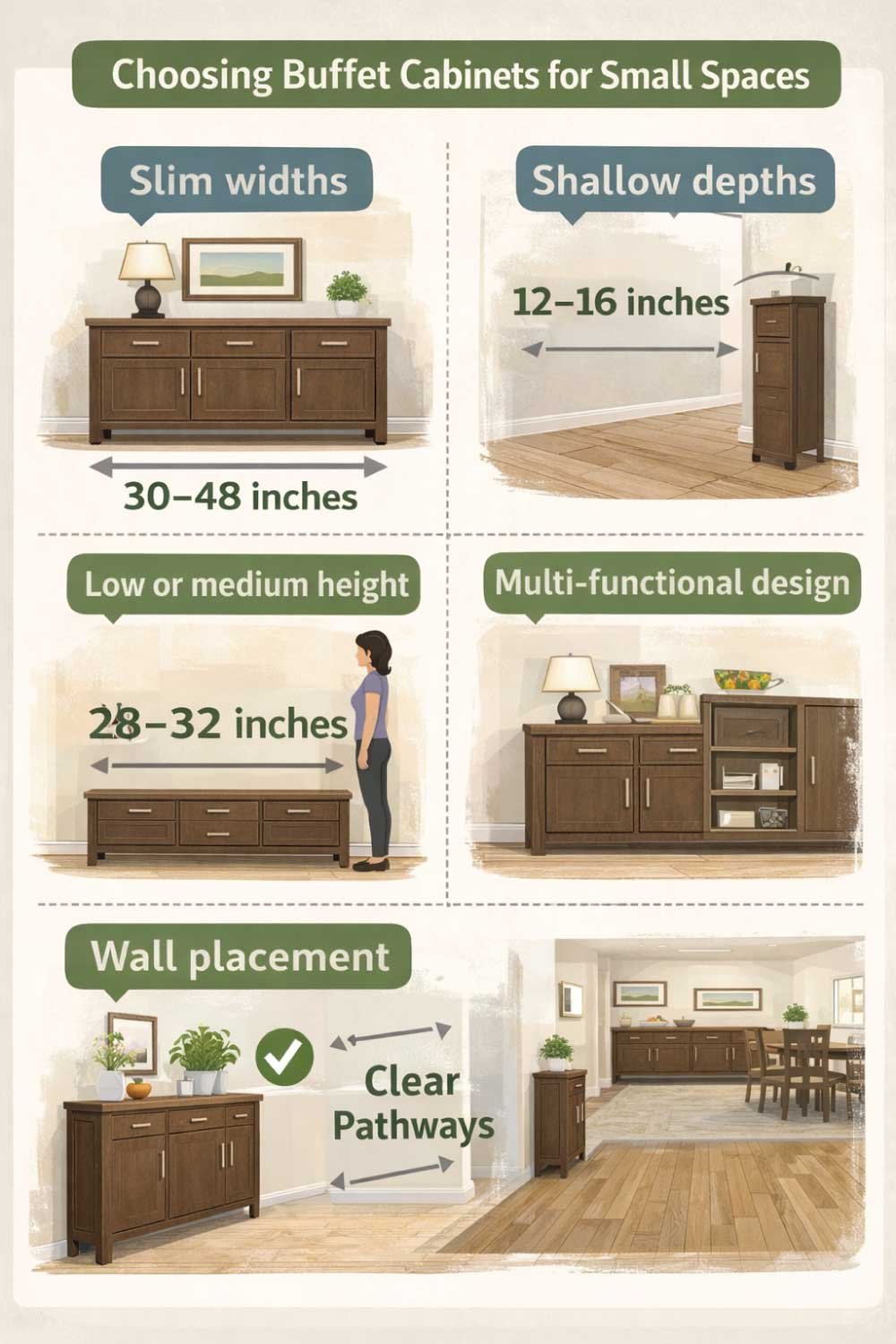
Slim widths: Cabinets between 30–48 inches avoid overcrowding.
-
Shallow depths: 12–16 inches prevents obstruction in tight spaces.
-
Low or medium height: 28–32 inches maintains visual openness.
-
Multi-functional design: Incorporate drawers, shelves, and small display areas.
-
Wall placement: Position against walls to free central floor space.
Small Space Buffet Cabinet Example
Maximizing storage in compact areas requires careful dimension planning. This example illustrates a small-space buffet cabinet, highlighting width, depth, height, and storage features. It demonstrates how to balance functionality, accessibility, and surface space, ensuring the cabinet fits seamlessly without overcrowding hallways or dining areas.
| Feature | Dimension | Notes |
|---|---|---|
| Width | 36 inches | Fits small dining area |
| Depth | 14 inches | Leaves pathway clear |
| Height | 30 inches | Ergonomic for serving |
| Storage | 2 drawers, 2 cabinets | Adequate for dinnerware |
| Surface | 36 sq. in | Enough for decorative items or small buffet setup |
Buffet Cabinets for Large Spaces
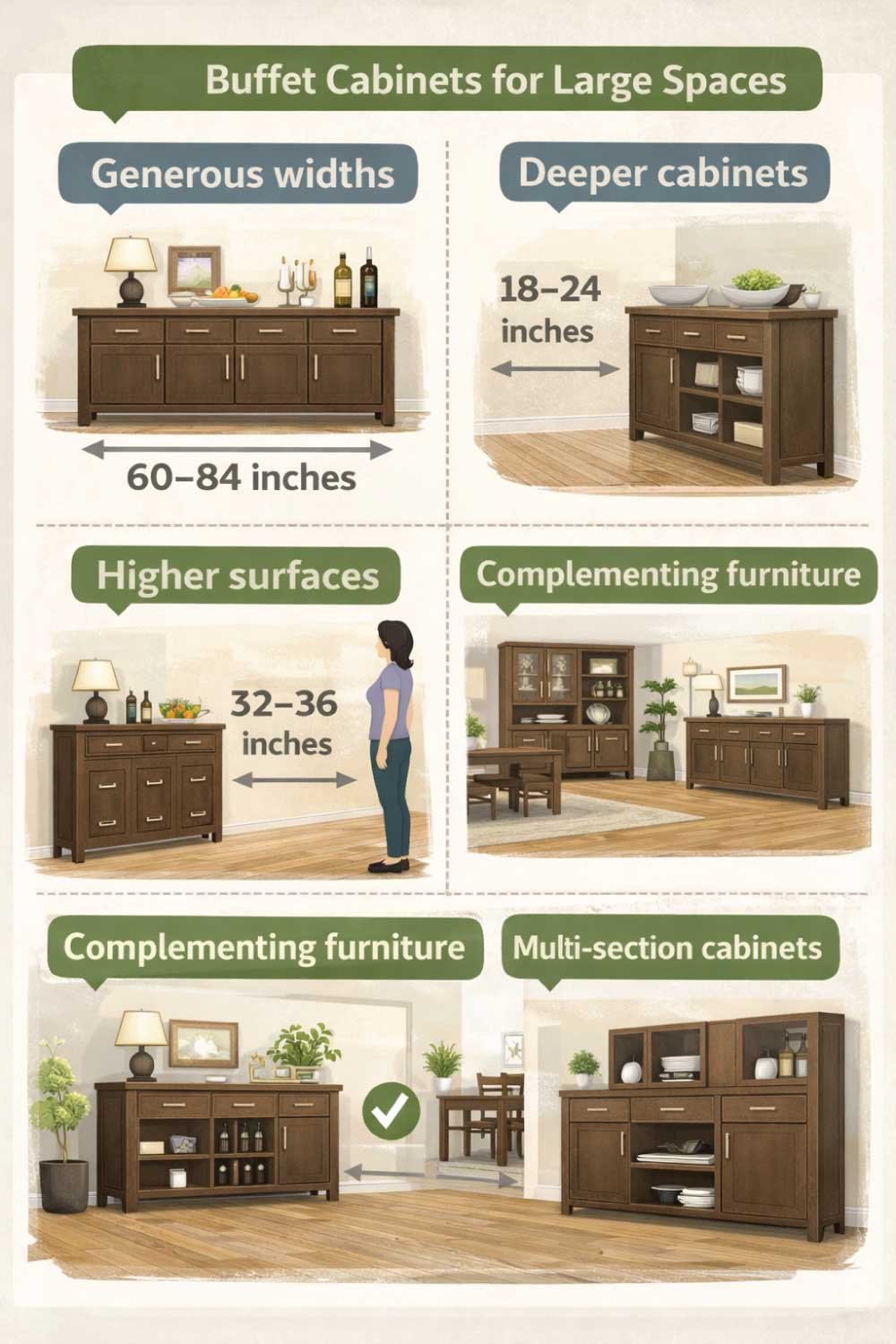
In spacious rooms, buffet cabinets can serve as both functional storage and striking design elements. Larger dimensions allow for ample storage, display, and coordination with other furniture. Thoughtful choices in width, depth, height, and modularity help create a balanced, elegant, and highly practical setup for expansive dining or living areas.
-
Generous widths: 60–84 inches for statement pieces or large storage needs.
-
Deeper cabinets: 18–24 inches provide ample room for large serving trays, tableware, or decorative pieces.
-
Higher surfaces: 32–36 inches maintain comfortable access and visual proportion.
-
Complementing furniture: Pair with matching dining tables, chairs, or hutch units for cohesion.
-
Multi-section cabinets: Multiple compartments or modular units can help organize items effectively.
Also Read:
Special Buffet Cabinet Styles
Buffet cabinets come in a variety of styles to match different spaces and design preferences. From slim units for narrow areas to expansive sideboards for large dining rooms, each style balances storage, accessibility, and aesthetic appeal. Selecting the right style ensures both functionality and harmony within your room’s layout.
-
Classic Buffet: Typically rectangular, with drawers and cabinet doors. Works well in medium rooms.
-
Slim / Narrow Buffet: Ideal for apartments, hallways, or entryways. Emphasizes vertical storage.
-
Buffet with Hutch: Combines base storage with vertical display shelving. Perfect for showcasing dinnerware.
-
Sideboard: Long, low cabinet, often used in expansive dining rooms. Offers maximum storage.
-
Counter-Height Buffet: Taller than standard, can double as bar or serving counter. Suitable for modern open layouts.
Each style’s dimensions should be chosen according to the available space and intended functionality.
Also Read:
Furniture Sizes Guide 2026: Find the Perfect Dimensions for Every Room
Tips for Selecting the Right Buffet Cabinet
Choosing the ideal buffet cabinet requires careful planning to balance functionality, style, and room flow. Measuring your space, considering storage needs, and ensuring visual harmony with existing furniture helps you select a cabinet that is both practical and aesthetically pleasing. Thoughtful choices enhance usability and complement your room’s design.
-
Measure your room: Include wall length, ceiling height, and clearances for walking paths.
-
Leave space for doors and drawers: Ensure cabinets can open fully without obstruction.
-
Consider multi-functional needs: Drawers, cabinets, open shelving, or even wine storage.
-
Match room style: Wood tones, metal accents, or painted finishes should complement existing furniture.
-
Visual proportion: In small rooms, avoid oversized buffet cabinets that overwhelm; in large rooms, avoid tiny pieces that appear lost.
Also Read:
Conclusion
Selecting the right buffet cabinet size requires careful consideration of width, depth, height, and overall room space. Small spaces benefit from slim, shallow units that maximize storage without overcrowding, while large spaces allow for deep, wide cabinets that serve as both functional and decorative elements. With a clear understanding of standard buffet dimensions, you can choose a cabinet that balances aesthetics, accessibility, and practicality, ensuring your dining or living area is both stylish and functional.
By referring to the tables above, homeowners can confidently select buffet cabinets tailored to their space, storage needs, and design preferences. A well-sized buffet not only stores essentials but also elevates the entire room’s visual appeal.
Also Read:

I am Engineer Hassan, a professional engineer with over 15 years of experience in measurements, design accuracy, and furniture, appliance, and home product sizing. Through Size Helper, I provide research-based guides and trending 2026 home design ideas for living rooms, bedrooms, sofas, wall décor, fashion, and sports—helping users make confident, informed decisions. Every guide is written with real expertise, verified data, and a commitment to quality, usability, and style.