
Whether you are building a custom bookshelf, ordering ready‑made furniture, or simply reorganizing your living space, understanding bookshelf depth is critical. Depth plays a key role in functionality, storage capacity, proportion, and aesthetics. This guide breaks down everything you need to know about choosing the right bookshelf depth from standard measurements to special‑purpose shelving, plus helpful tables for quick reference.
What Does “Bookshelf Depth” Mean?
Bookshelf depth refers to the measurement from the front edge of the shelf to the back panel or wall surface. Unlike height and width, which affect how many books or items you can stack, depth dictates what can physically fit on a shelf.
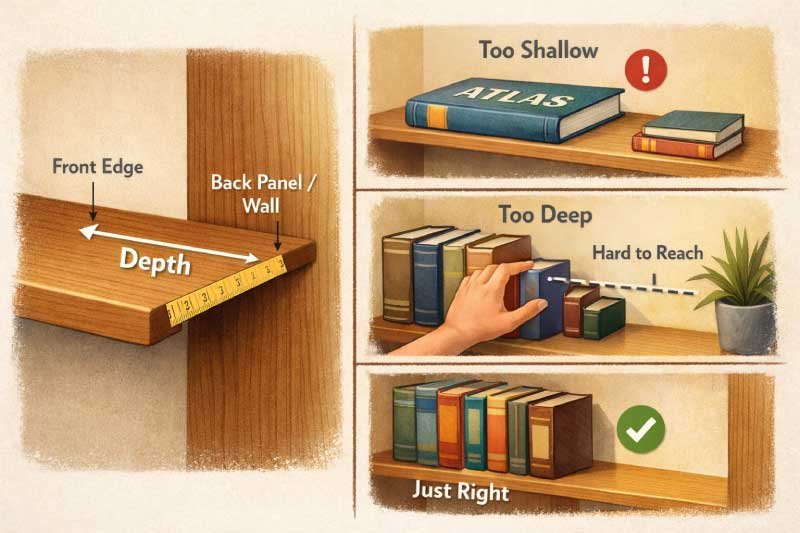
A bookshelf that’s too shallow may not accommodate larger books, while one that’s too deep can waste space or make items hard to reach.
Why Bookshelf Depth Matters
A bookshelf’s depth plays a crucial role in both functionality and room aesthetics. The right depth ensures books fit properly, prevents overcrowding, and maintains balance within your space. Whether for small rooms or large libraries, understanding depth helps you choose shelves that are practical, visually pleasing, and space-efficient.
1. Functionality
Bookshelf depth directly affects how usable your storage is on a daily basis. Choosing the correct depth ensures books sit securely, prevents overhang, and allows flexible use beyond books. From compact paperbacks to statement décor pieces, depth determines what your shelves can comfortably and attractively hold.
Paperbacks — require less depth.
Oversized art books — need more depth.
Display items (decor, plants) — look better on deeper shelves.
2. Proportion & Space Planning
Bookshelf depth plays a major role in how balanced your room feels. Shelves that are too deep can dominate floor space, disrupt walkways, and make small rooms feel cramped. Proper proportion ensures the bookshelf complements surrounding furniture while maintaining visual harmony and comfortable movement.
3. Storage Efficiency
While deeper shelves offer more capacity, they can reduce everyday efficiency if not planned carefully. Excess depth often leads to stacking books or items behind one another, making access difficult and clutter more likely. The right depth keeps everything visible, reachable, and organized without wasted space.
Standard Bookshelf Depth Measurements
Understanding standard bookshelf depths helps you choose shelves that suit both your collection and your room layout. Different uses require different depths, from slim shelves for novels to deeper units for décor or oversized books. Knowing these measurements ensures comfort, accessibility, and efficient space planning.
General Bookshelf Depth Standards
| Shelf Type | Depth (approx.) | Best For |
|---|---|---|
| Shallow / Display | 8–10 inches (20–25 cm) | Small paperbacks, photos, decorative items |
| Standard Bookshelf | 11–12 inches (28–30 cm) | Hardcovers, novels, medium books |
| Deep Bookshelf | 13–16 inches (33–40 cm) | Oversized books, large objects, storage boxes |
| Extra‑Deep / Utility | 17–24+ inches (43–60+ cm) | Storage crates, art supplies, media equipment |
Note: Depth is measured from front to back (not width or height).
Choose Depth Based on What You Store
What you plan to store should guide your bookshelf depth choice. Books, décor, and mixed collections all have different spatial needs, and forcing them onto the same shelf depth can waste space or look cluttered.
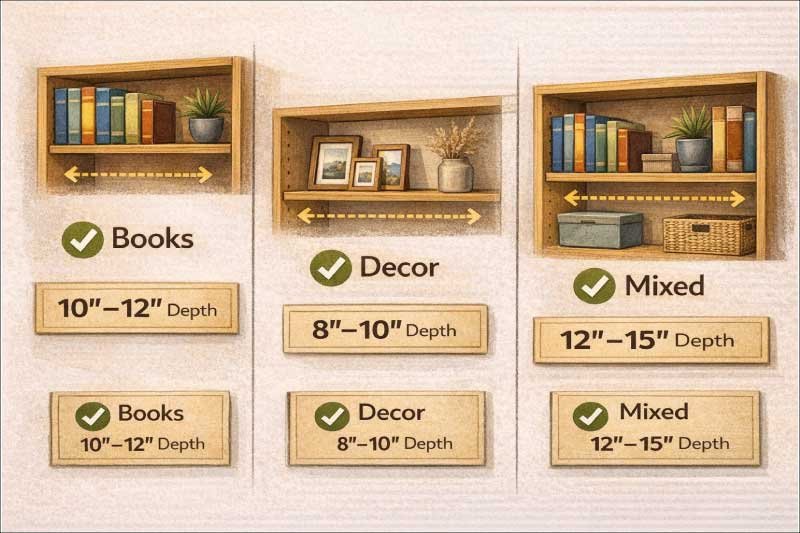
Tailoring depth to contents improves organization, accessibility, and overall visual appeal.
Books & Media Recommended Depth
This table focuses on recommended shelf depths based on specific book and media types. Matching shelf depth to item size prevents overhang, improves organization, and protects materials from damage. Proper depth also enhances accessibility and keeps your bookshelf looking neat and proportionate.
| Item Type | Recommended Shelf Depth | Reason |
|---|---|---|
| Mass‑market paperbacks | 8–10 inches (20–25 cm) | Slim books, shallow fit |
| Trade paperbacks | 10–12 inches (25–30 cm) | Standard size |
| Hardbacks / Textbooks | 12–14 inches (30–35 cm) | Larger bindings |
| Coffee table / art books | 14–18 inches (35–45 cm) | Oversized footprint |
| CDs & DVDs | 7–9 inches (18–23 cm) | Shorter depth works well |
| Vinyl records | 12–14 inches (30–35 cm) | Larger size needs deeper shelf |
Shelf Depth + Height = Versatile Storage
Shelf depth and height work together to define how flexible your storage can be. Depth controls how far items extend back, while height limits what can stand upright. When both are well-balanced, shelves adapt easily to books, décor, and changing storage needs.
Recommended Shelf Height + Depth by Item
This table provides guidelines for both shelf height and depth based on the items you plan to store. Aligning height and depth ensures books and objects fit comfortably, prevents overcrowding, and allows decorative or functional items to display neatly. It’s a practical approach to maximizing storage and visual appeal.
| Stored Item | Shelf Depth | Shelf Height | Notes |
|---|---|---|---|
| Small books | 8–10 in (20–25 cm) | 8–10 in (20–25 cm) | Compact, efficient |
| Medium books | 10–12 in (25–30 cm) | 10–12 in (25–30 cm) | Typical standard |
| Large books | 12–16 in (30–40 cm) | 12–15 in (30–38 cm) | Avoid crowding |
| Decorative objects | 12–18 in (30–45 cm) | Variable | Style over strict rule |
| Baskets & storage bins | 13–18 in (33–45 cm) | 13–18 in (33–45 cm) | Good for multi‑purpose shelves |
Standard Bookshelf Depths by Furniture Type
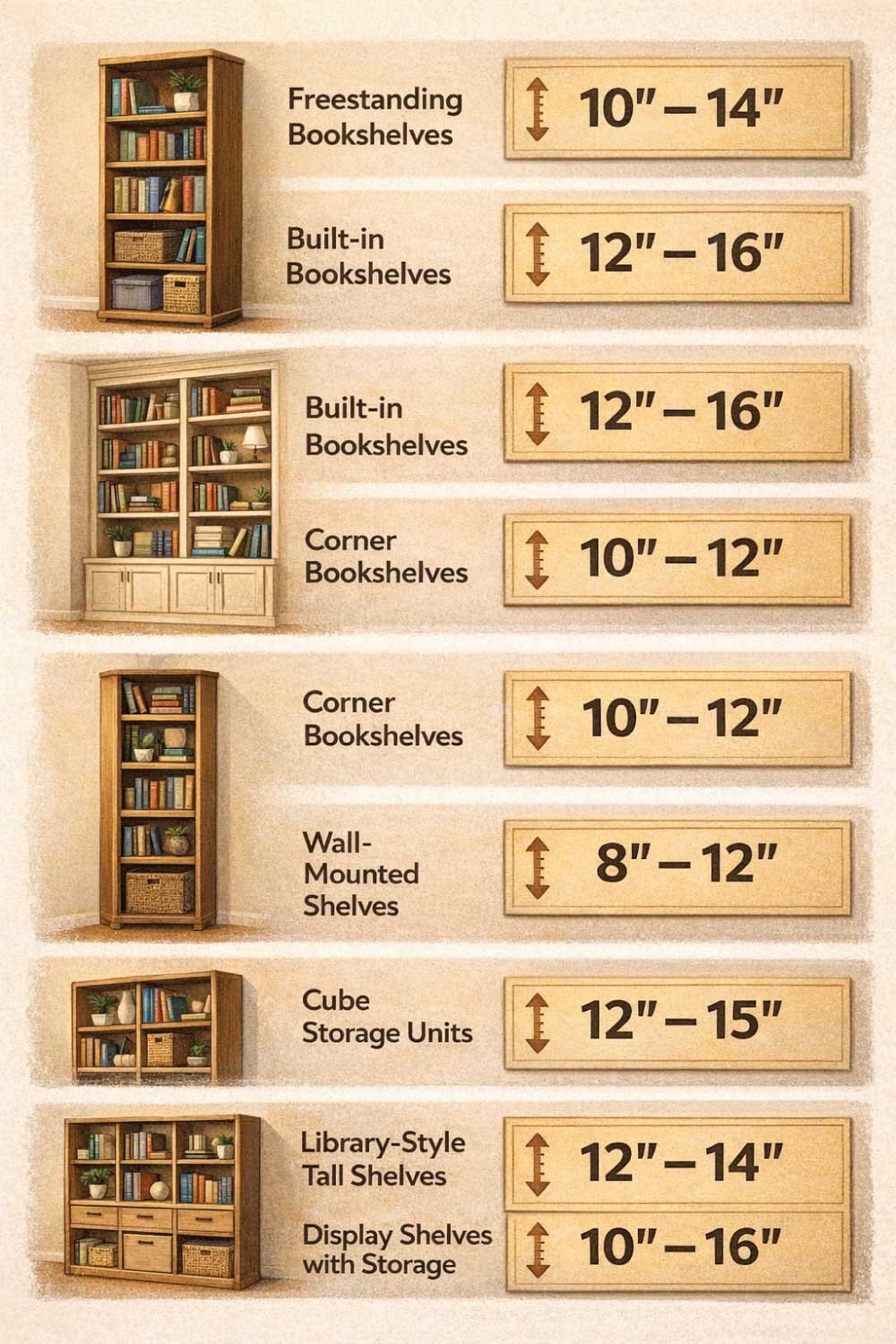
Bookshelves come in a variety of depths depending on their intended use, design, and room placement. Knowing standard depths helps you select furniture that fits your space, holds your books and decor properly, and maintains aesthetic balance. Here’s a breakdown of common bookshelf types and their typical depth ranges for practical guidance.
1- Freestanding Bookshelves:
Freestanding bookshelves are versatile units that can be moved easily. Standard depths typically range from 10 to 14 inches, accommodating most books and small decor. Shallow units save floor space, while deeper units provide more storage for larger books or decorative items, balancing function with room flexibility.
2- Built-In Bookshelves:
Built-in bookshelves are custom-designed for wall installation and often extend from floor to ceiling. Depths usually range from 12 to 16 inches, allowing for both books and display items. They create a seamless look in a room, maximizing storage without consuming unnecessary floor space.
3- Corner Bookshelves:
Corner bookshelves are designed to make use of underutilized corner spaces. Typical depths range from 10 to 12 inches on each wall, offering practical storage without protruding into the room. They are ideal for small rooms, helping maintain an open feel while storing books efficiently.
4- Wall-Mounted Shelves:
Wall-mounted shelves save floor space and add a decorative element to any room. Depths generally range from 8 to 12 inches, sufficient for paperbacks, framed photos, or small plants. They are not ideal for very heavy books but provide flexible placement options at varying heights.
5- Cube Storage Units:
Cube storage units are modular shelves often used for books, baskets, or decorative items. Standard depths are around 12 to 15 inches, providing a balanced interior space for both tall and wide items. They are especially popular in kids’ rooms or modern living areas.
6- Library-Style Tall Shelves:
Tall, library-style bookshelves are designed for extensive book collections. Depths typically range from 12 to 14 inches, ensuring stability and accommodating larger volumes. These units are often placed against walls and can reach significant heights, requiring careful measurement for ceiling clearance.
7- Display Shelves with Storage:
Display shelves combine open shelving with closed storage or drawers. Depths usually range from 10 to 16 inches, depending on whether the unit prioritizes decor display or functional storage. This type allows for versatility, balancing the need for aesthetics with practical organization.
Also Read:
Furniture Type vs. Typical Depth
This table compares common furniture types with their typical shelf depths and intended uses. Understanding these ranges helps you choose the right unit for your space, ensuring functionality and proportion. From slim wall shelves to deep media centers, selecting appropriate depth keeps items accessible and maintains a balanced, organized look.
| Furniture Type | Common Depth Range | Purpose |
|---|---|---|
| Wall‑mounted shelves | 6–10 in (15–25 cm) | Small items, photos |
| Floor bookshelves | 11–14 in (28–35 cm) | Books, mixed items |
| Built‑in shelves | 12–18 in (30–45 cm) | Custom use, larger items |
| Corner shelving | 10–14 in (25–35 cm) | Space‑efficient storage |
| Media centers | 15–24 in (38–60 cm) | TVs, consoles, large storage |
Choose the Right Depth — Step by Step
Selecting the ideal bookshelf depth doesn’t have to be guesswork. By evaluating what you store, your room size, and visual balance, you can make a practical and stylish choice. Following a step-by-step approach ensures your shelves are both functional and harmonious with your space.
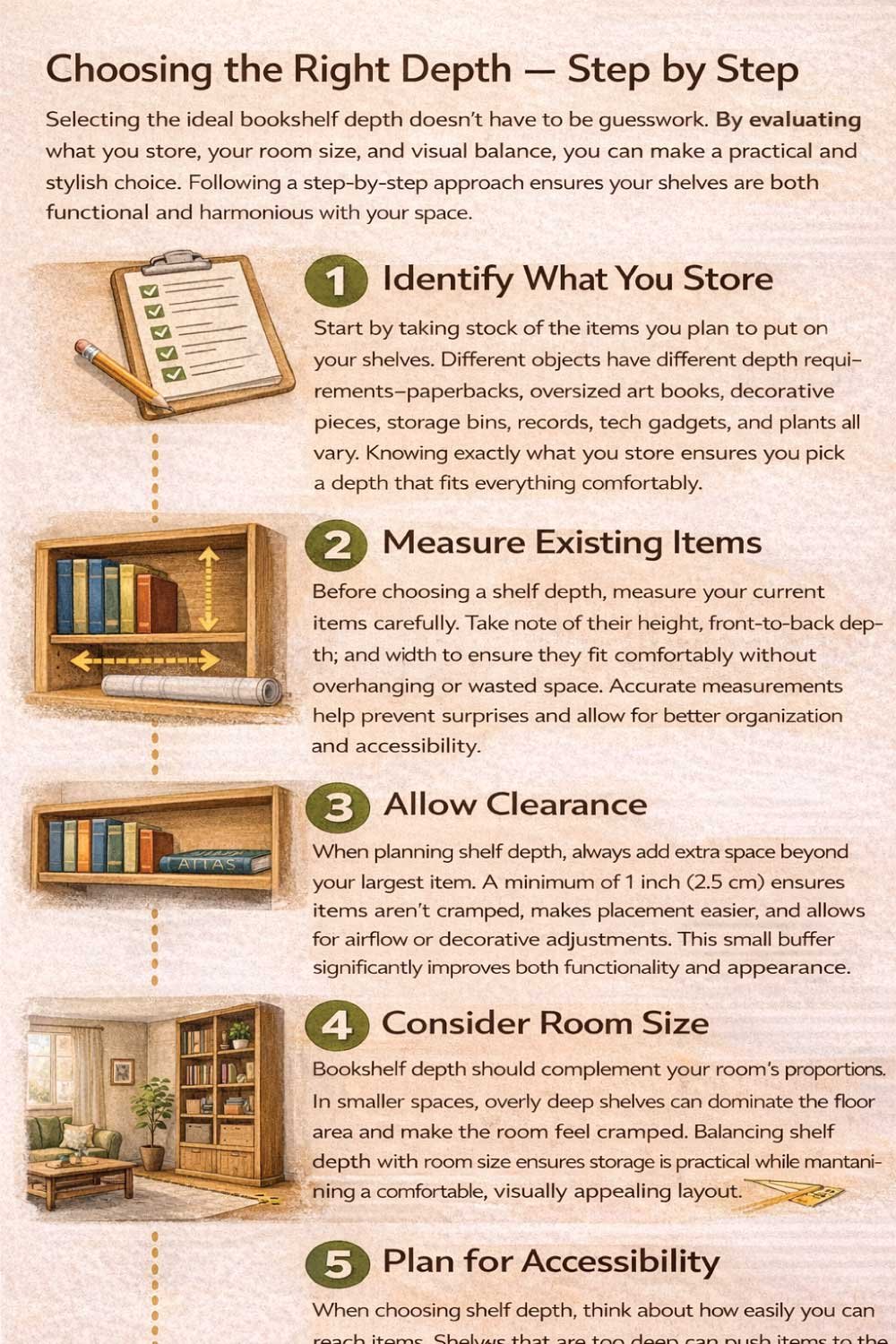
Step 1: Identify What You Store
Start by taking stock of the items you plan to put on your shelves. Different objects have different depth requirements—paperbacks, oversized art books, decorative pieces, storage bins, records, tech gadgets, and plants all vary. Knowing exactly what you store ensures you pick a depth that fits everything comfortably.
Step 2: Measure Existing Items
Before choosing a shelf depth, measure your current items carefully. Take note of their height, front-to-back depth, and width to ensure they fit comfortably without overhanging or wasted space. Accurate measurements help prevent surprises and allow for better organization and accessibility.
Step 3: Allow Clearance
When planning shelf depth, always add extra space beyond your largest item. A minimum of 1 inch (2.5 cm) ensures items aren’t cramped, makes placement easier, and allows for airflow or decorative adjustments. This small buffer significantly improves both functionality and appearance.
Step 4: Consider Room Size
Bookshelf depth should complement your room’s proportions. In smaller spaces, overly deep shelves can dominate the floor area and make the room feel cramped. Balancing shelf depth with room size ensures storage is practical while maintaining a comfortable, visually appealing layout.
Step 5: Plan for Accessibility
When choosing shelf depth, think about how easily you can reach items. Shelves that are too deep can push items to the back, making them inconvenient to access. Prioritizing accessibility ensures your storage is functional and keeps everything organized and easy to use.
Also Read:
Common Depth Mistakes to Avoid
Selecting the wrong shelf depth can lead to wasted space, clutter, or impractical storage. Being aware of common pitfalls helps you choose wisely and maintain both functionality and style. Avoid these frequent errors to get the most out of your bookshelf.
-
Choosing depth too deep because it “looks substantial”
-
Forgetting to measure item depth before shelving
-
Mixing deep and shallow shelves without planning
-
Not considering adjustable shelves
-
Ignoring how depth affects accessibility
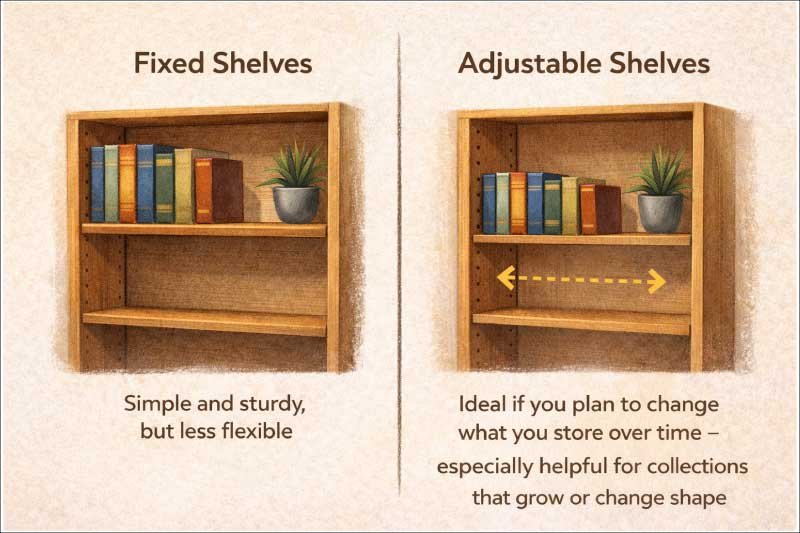
Adjustable vs. Fixed Shelves
Choosing between fixed and adjustable shelves impacts both flexibility and durability. Fixed shelves are stable and simple, perfect for consistent storage needs. Adjustable shelves provide versatility, allowing you to accommodate growing collections or items of varying sizes, making them ideal for evolving storage requirements.
-
Fixed Shelves: Simple and sturdy, but less flexible.
-
Adjustable Shelves: Ideal if you plan to change what you store over time — especially helpful for collections that grow or change shape.
Also Read:
Depth vs. Aesthetics — Rules of Thumb
Bookshelf depth not only affects storage but also the overall look of a room. Designers suggest balancing depth with style and function to create visually appealing spaces that serve their purpose. Choosing the right depth enhances both the room’s aesthetics and practicality.
-
Shallower depth for minimalistic, light look
-
Deeper depth for heavy storage rooms or walk‑in libraries
-
Matching depth to room function (home office vs. living room)
Aesthetic Style vs. Recommended Depth
| Style | Recommended Shelf Depth | Visual Impact |
|---|---|---|
| Minimalist | 8–11 in (20–28 cm) | Clean, unobtrusive |
| Traditional | 11–14 in (28–35 cm) | Balanced and classic |
| Industrial | 12–16 in (30–40 cm) | Strong, functional |
| Rustic | 10–14 in (25–35 cm) | Cozy and deep |
| Modern eclectic | 10–16 in (25–40 cm) | Flexible, bold |
Special Considerations
Some shelving situations require extra thought beyond standard depth guidelines. Consider factors like heavy or fragile items, electronic equipment, or open shelving near walkways. Accounting for these special needs ensures safety, durability, and ease of use, while keeping your bookshelf both functional and visually balanced.
1- Corner Shelving
Corner bookshelves need careful depth planning to fit both walls comfortably. Too deep, and items become hard to reach; too shallow, and storage is wasted. A depth of 10–14 inches (25–35 cm) typically provides the best balance between usability and space efficiency.
2- Media Shelving
Shelves for TVs, consoles, and media equipment require extra depth to accommodate electronics, wiring, and accessories.
Adequate depth ensures devices sit securely and remain accessible while maintaining a clean, organized look. Planning for proper depth prevents overcrowding and allows for future upgrades.
3- Floating Shelves
Floating shelves are designed for a light, open look, making shallow depths ideal. They work best for displaying books, décor, or small plants without overwhelming the wall.
Proper depth keeps items secure while maintaining an airy, minimalist aesthetic.
Also Read:
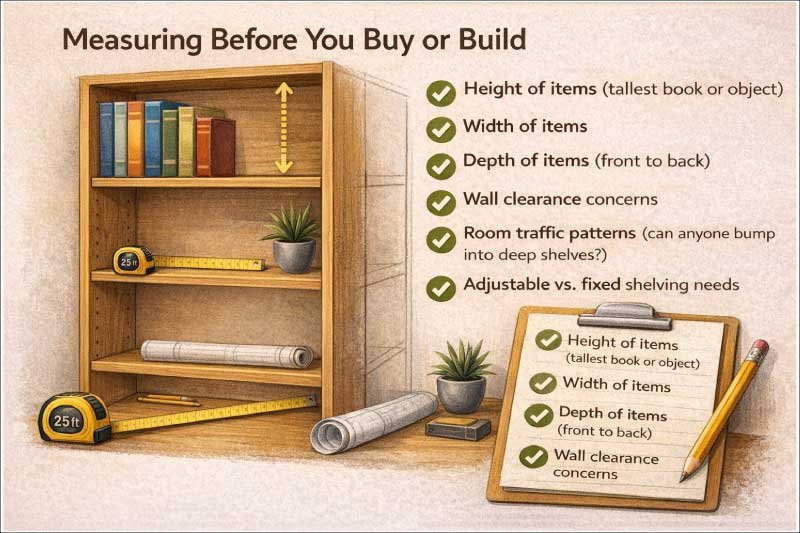
Measuring Before You Buy or Build
Accurate measurements are key to selecting the right bookshelf depth. Taking precise dimensions ensures your shelves fit both your items and your space, preventing wasted space or awkward placement. Planning ahead makes installation smoother and keeps your storage functional and visually balanced.
-
Height of items (tallest book or object)
-
Width of items
-
Depth of items (front to back)
-
Wall clearance concerns
-
Room traffic patterns (can anyone bump into deep shelves?)
-
Adjustable vs. fixed shelving needs
Also Read:
Furniture Sizes Guide 2026: Find the Perfect Dimensions for Every Room
Best Practices for Maximum Efficiency
Optimizing shelf depth goes beyond measurements — organization and strategy make a big difference. Proper grouping, labeling, and thoughtful placement of deeper shelves ensure items remain accessible, visually appealing, and easy to maintain. Small adjustments like lighting can further enhance usability and display.
-
Tip 1: Group like items together by size before shelving.
-
Tip 2: Use bins or baskets on deep shelves to avoid unused space.
-
Tip 3: Label shelves if used for storage categories.
-
Tip 4: For mixed use, place deeper shelves near the bottom — easier reach and stability.
-
Tip 5: Use lighting (LED strips) on deeper shelves so items in the back aren’t lost in shadow.
Final Thoughts
Choosing the right depth for your bookshelf is more than a measurement — it’s about making your space work for you. Whether you’re organizing a cozy reading nook, packing textbooks in a study, or displaying your favorite décor pieces, depth matters.
Understanding depth standards helps you avoid clutter, wasted space, and unnecessary redesign. With the tables above and clear measuring tips, you can plan shelving confidently and precisely.

I am Engineer Hassan, a professional engineer with over 15 years of experience in measurements, design accuracy, and furniture, appliance, and home product sizing. Through Size Helper, I provide research-based guides and trending 2026 home design ideas for living rooms, bedrooms, sofas, wall décor, fashion, and sports—helping users make confident, informed decisions. Every guide is written with real expertise, verified data, and a commitment to quality, usability, and style.