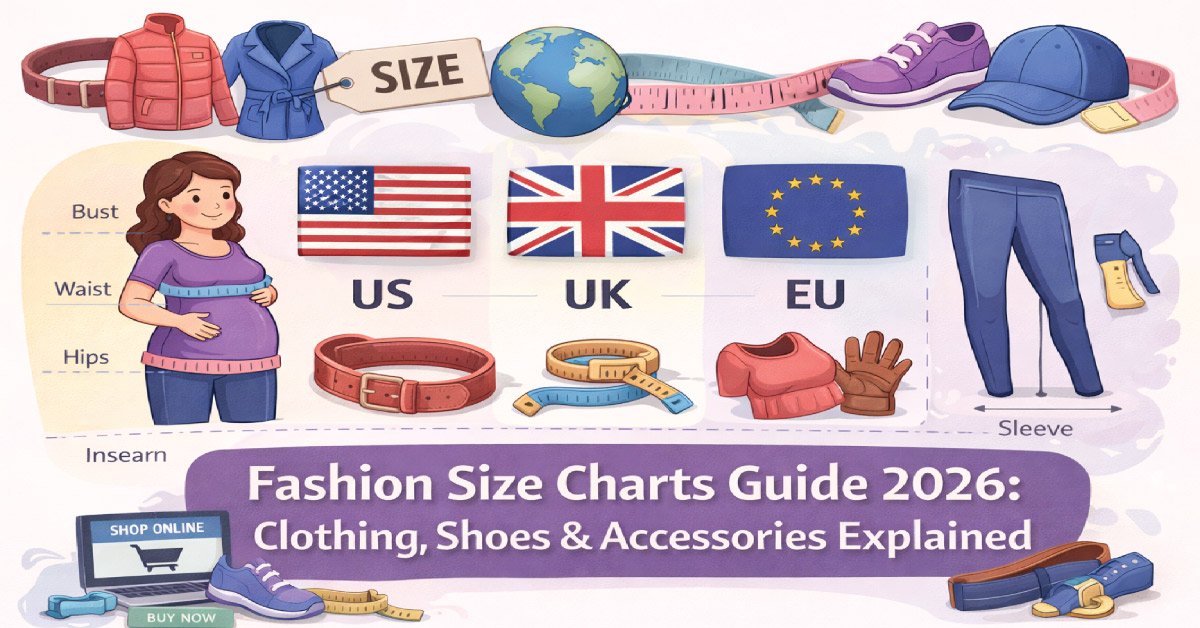
Understanding fashion sizing is crucial for online shopping, gifting, or even tailoring your wardrobe. Inconsistent sizing between brands and regions can create confusion, leading to ill-fitting clothes, shoes, or accessories. This Fashion Size Charts Guide 2026 is your ultimate resource to decode standard measurements, international conversions, and tips for perfect fit.
Whether you are shopping for men, women, or children, this guide includes clothing, shoes, and accessory sizes, helping you confidently select items that fit comfortably and look stylish.
Why Fashion Size Charts Matter
Understanding fashion size charts is essential for every shopper. They ensure you pick the right fit, avoid sizing mistakes, and make international shopping simpler. With accurate measurements, you can maintain comfort, style, and proper tailoring. This guide covers all standard categories, including tops, bottoms, dresses, shoes, hats, gloves, belts, and jewelry, with US, UK, EU, and Asia size conversions.
Avoid Returns: Correct sizing reduces returns due to misfit.
International Shopping: Size conversions help when buying globally.
Comfort & Style: Proper fit improves appearance and mobility.
Tailoring: Knowing measurements helps when getting clothes altered.
This guide covers all standard categories, including tops, bottoms, dresses, shoes, hats, gloves, belts, and jewelry, with US, UK, EU, and Asia size conversions.
Women’s Clothing Sizes
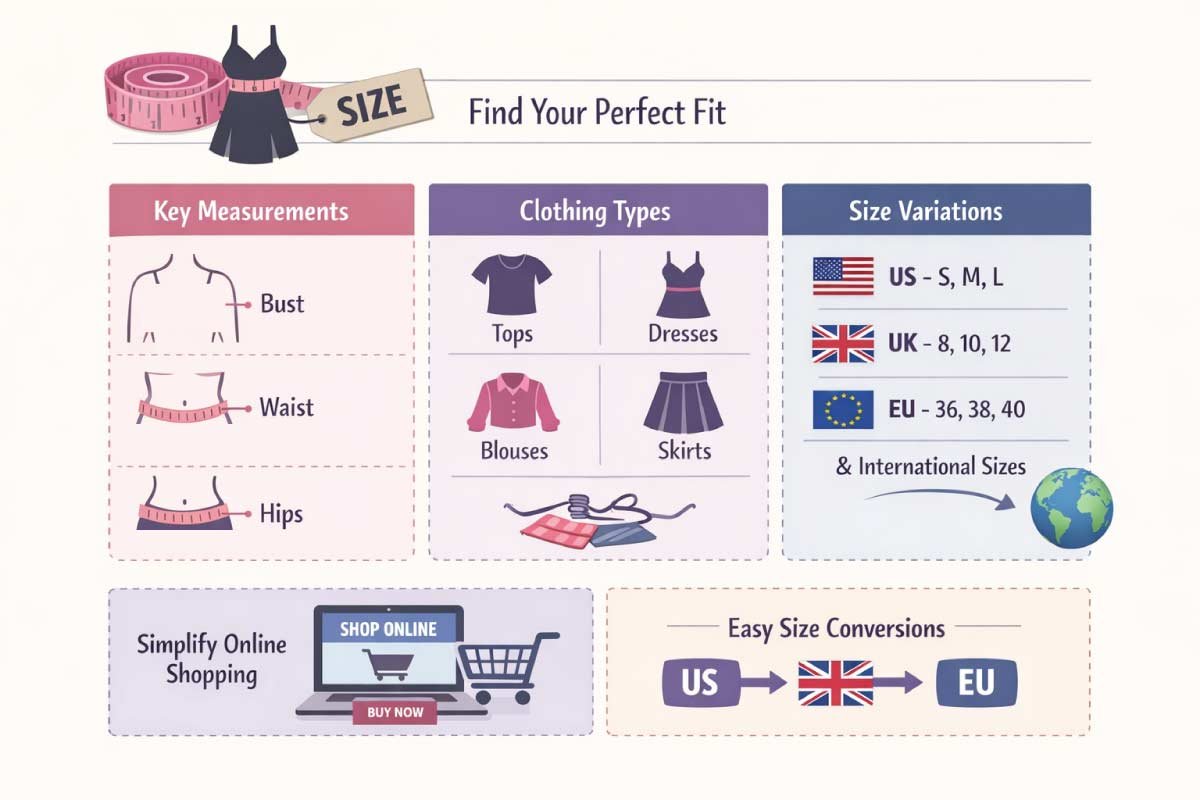
Finding the right women’s clothing size is essential for comfort, style, and confidence. Sizes vary by region and garment type, including tops, blouses, dresses, and more. Knowing accurate measurements ensures the perfect fit, simplifies online shopping, and helps with US, UK, EU, and international size conversions.
1- Tops & Blouses
Choosing the right top or blouse starts with accurate bust, waist, and hip measurements. Proper sizing ensures comfort, style, and flattering fit. Consider looser sizing for knitwear and check US, UK, and EU conversions for perfect fashion fit.
| Size (US) | Bust (in/cm) | Waist (in/cm) | Hips (in/cm) | EU Size | UK Size |
|---|---|---|---|---|---|
| XS | 31–32 in / 79–81 cm | 23–24 in / 58–61 cm | 33–34 in / 84–86 cm | 32–34 | 6–8 |
| S | 33–34 in / 84–86 cm | 25–26 in / 63–66 cm | 35–36 in / 89–91 cm | 36–38 | 10–12 |
| M | 35–36 in / 89–91 cm | 27–28 in / 69–71 cm | 37–38 in / 94–97 cm | 40–42 | 14 |
| L | 37–39 in / 94–99 cm | 29–31 in / 74–79 cm | 39–41 in / 99–104 cm | 44–46 | 16–18 |
| XL | 40–42 in / 102–107 cm | 32–34 in / 81–86 cm | 42–44 in / 107–112 cm | 48–50 | 20 |
Tips:
- Measure bust at the fullest point.
- Use looser sizing for knitwear.
2- Dresses
Dress sizes vary by bust, waist, and hip measurements. Knowing your size ensures comfort, style, and the correct dress length, whether mini, midi, or maxi. Stretch fabrics and A-line cuts provide flexibility. Includes US, UK, and EU size conversions.
| Size (US) | Bust | Waist | Hips | EU Size | UK Size |
|---|---|---|---|---|---|
| XS | 31–32 in | 23–24 in | 33–34 in | 32–34 | 6–8 |
| S | 33–34 in | 25–26 in | 35–36 in | 36–38 | 10–12 |
| M | 35–36 in | 27–28 in | 37–38 in | 40–42 | 14 |
| L | 37–39 in | 29–31 in | 39–41 in | 44–46 | 16–18 |
| XL | 40–42 in | 32–34 in | 42–44 in | 48–50 | 20 |
Tips:
- Check length measurements for maxi vs midi vs mini dresses.
- A-line and stretch fabrics provide more flexibility in fit.
3- Bottoms (Pants & Skirts)
Bottoms sizing depends on accurate waist, hip, and inseam measurements. Correct fit enhances comfort and style, while stretch fabrics allow some flexibility. This guide covers US, UK, and EU conversions for pants, skirts, and tailored bottoms.
| Size (US) | Waist | Hips | Inseam (in/cm) | EU Size | UK Size |
|---|---|---|---|---|---|
| 0–2 | 24–25 in / 61–63 cm | 34–35 in / 86–89 cm | 30 in / 76 cm | 32–34 | 4–6 |
| 4–6 | 26–27 in / 66–69 cm | 36–37 in / 91–94 cm | 30–32 in / 76–81 cm | 36–38 | 8–10 |
| 8–10 | 28–29 in / 71–74 cm | 38–39 in / 97–99 cm | 32 in / 81 cm | 40–42 | 12–14 |
| 12–14 | 30–31 in / 76–79 cm | 40–41 in / 102–104 cm | 32–34 in / 81–86 cm | 44–46 | 16–18 |
| 16–18 | 32–34 in / 81–86 cm | 42–44 in / 107–112 cm | 34 in / 86 cm | 48–50 | 20 |
Tips:
- Measure waist at the narrowest point and hips at the widest point.
- Stretch fabrics can allow one size flexibility.
Also Read:
Men’s Clothing Sizes
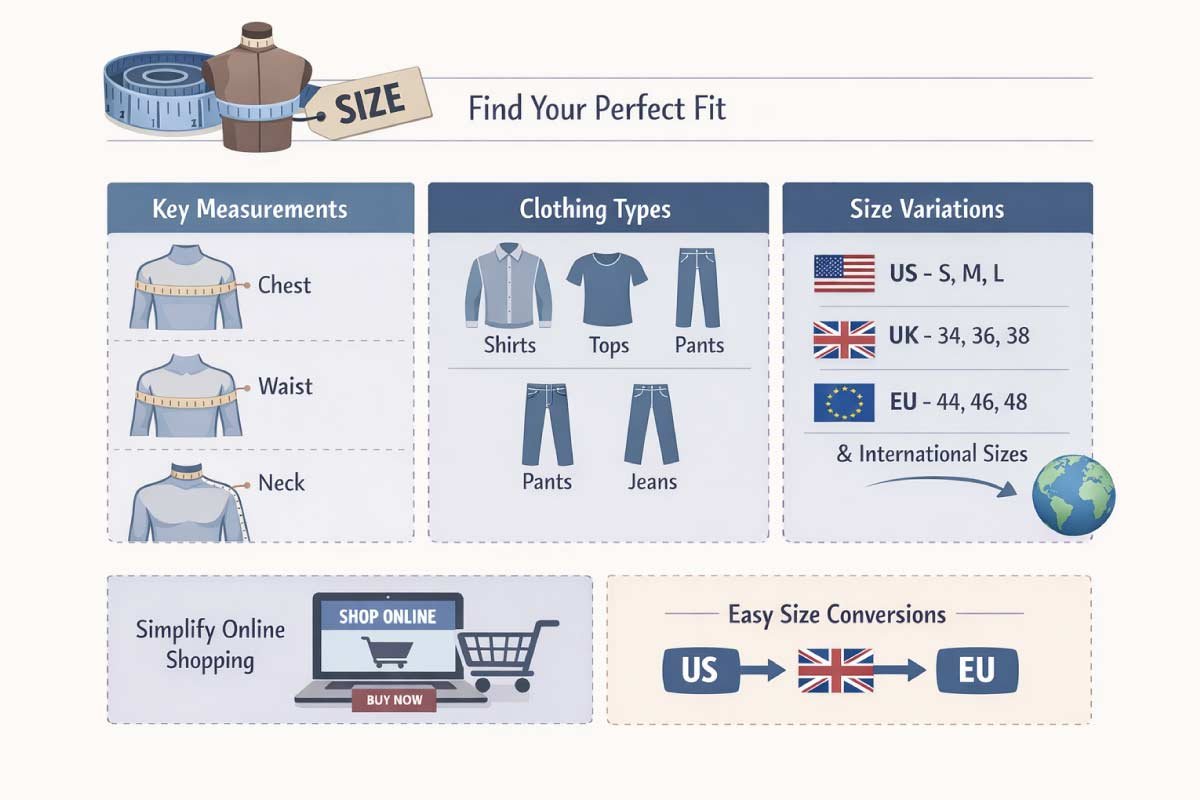
Understanding men’s clothing sizes is crucial for the perfect fit, comfort, and style. Sizes are based on chest, waist, neck, and sleeve measurements, covering shirts, tops, pants, and jeans. Accurate measurements simplify online shopping and ensure correct US, UK, EU, and international size conversions.
1- Shirts & Tops
Men’s shirt sizing depends on chest, waist, and neck measurements. Proper fit ensures comfort, style, and ease of movement. Always allow 2–3 inches of chest ease and check US, UK, and EU size conversions for accurate men’s fashion fit.
| Size (US) | Chest (in/cm) | Waist (in/cm) | Neck (in/cm) | EU Size | UK Size |
|---|---|---|---|---|---|
| XS | 34–36 in / 86–91 cm | 28–30 in / 71–76 cm | 14 in / 36 cm | 44–46 | 34–36 |
| S | 36–38 in / 91–97 cm | 30–32 in / 76–81 cm | 14.5 in / 37 cm | 46–48 | 36–38 |
| M | 39–41 in / 99–104 cm | 33–35 in / 84–89 cm | 15 in / 38 cm | 50–52 | 40 |
| L | 42–44 in / 107–112 cm | 36–38 in / 91–97 cm | 16 in / 41 cm | 54–56 | 42 |
| XL | 45–47 in / 114–119 cm | 39–41 in / 99–104 cm | 17 in / 43 cm | 58–60 | 44 |
Tips:
- Shirts should allow 2–3 inches of ease around chest for comfort.
- Measure neck at the base where collar sits.
2- Pants & Jeans
Men’s pants and jeans sizing relies on waist and inseam measurements. Accurate sizing ensures proper fit, comfort, and style. Measure waist above the hips and inseam for correct length. Includes US, UK, and EU size conversions for all men’s bottoms.
| Size (US) | Waist | Inseam | EU Size | UK Size |
|---|---|---|---|---|
| 28 | 28 in / 71 cm | 30 in / 76 cm | 44 | 28 |
| 30 | 30 in / 76 cm | 32 in / 81 cm | 46 | 30 |
| 32 | 32 in / 81 cm | 32–34 in / 81–86 cm | 48 | 32 |
| 34 | 34 in / 86 cm | 32–34 in / 81–86 cm | 50 | 34 |
| 36 | 36 in / 91 cm | 34 in / 86 cm | 52 | 36 |
Tips:
- Measure waist just above the hips.
- Inseam ensures pant length fits without dragging or bunching.
Also Read:
Children’s Clothing Sizes
Children’s clothing sizes depend on age, height, and weight, but accurate measurements ensure the best fit. From newborns to toddlers and young kids, knowing chest, waist, and height dimensions helps parents shop confidently. This guide covers US, EU, and international children’s size conversions for stress-free purchasing.
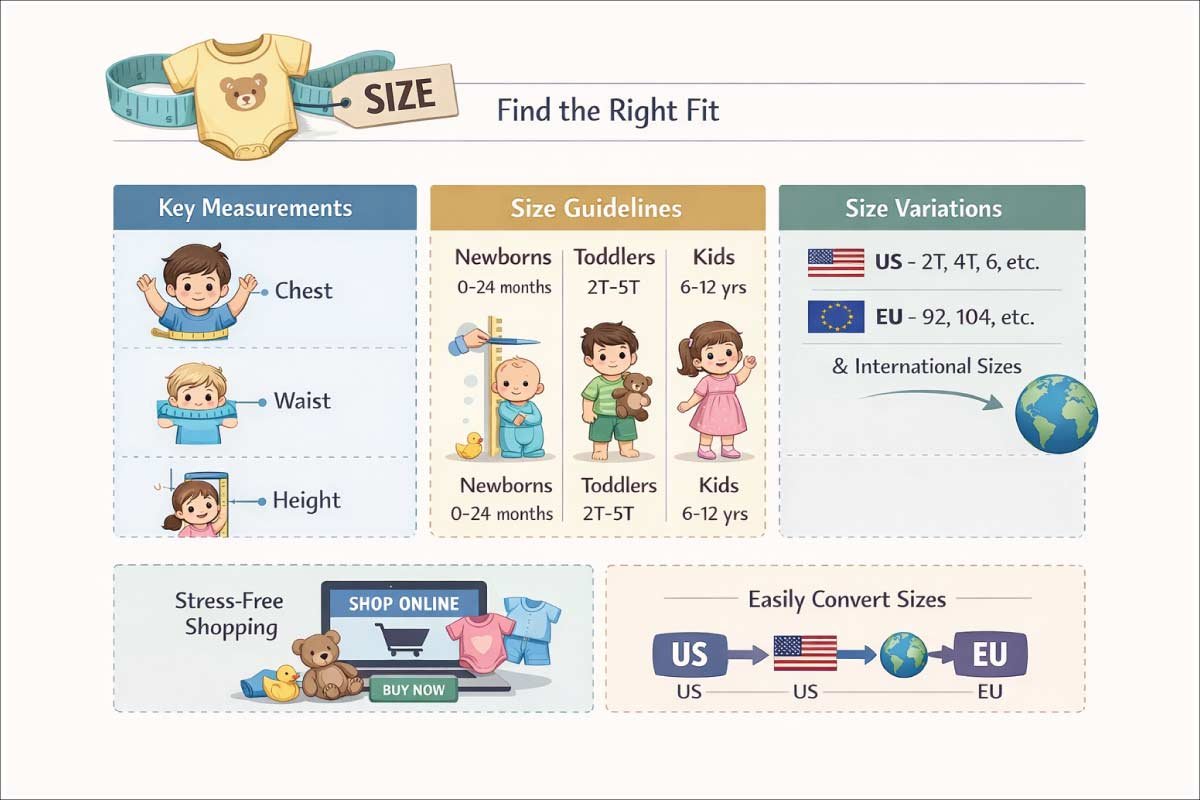
| Age | Height (in/cm) | Chest (in/cm) | Waist (in/cm) | EU Size | US Size |
|---|---|---|---|---|---|
| 0–3 months | 21–24 in / 53–61 cm | 16–17 in / 41–43 cm | 16–17 in / 41–43 cm | 50 | NB |
| 3–6 months | 24–26 in / 61–66 cm | 17–18 in / 43–46 cm | 17–18 in / 43–46 cm | 56 | 3M |
| 6–12 months | 26–29 in / 66–74 cm | 18–19 in / 46–48 cm | 18–19 in / 46–48 cm | 68 | 6M |
| 1–2 years | 29–33 in / 74–84 cm | 19–20 in / 48–51 cm | 18–19 in / 46–48 cm | 80 | 12–24M |
| 3–4 years | 34–38 in / 86–97 cm | 21–22 in / 53–56 cm | 20–21 in / 51–53 cm | 98–104 | 3–4Y |
Tips:
- Measure height and chest for accuracy.
- Choose slightly larger sizes for growth room.
Shoes & Footwear
Shoe sizes vary widely across regions, making international size conversions essential for the perfect fit. Accurate measurements of length and width ensure comfort, prevent blisters, and improve performance. This guide covers US, UK, EU, and global shoe size charts for men, women, and kids.
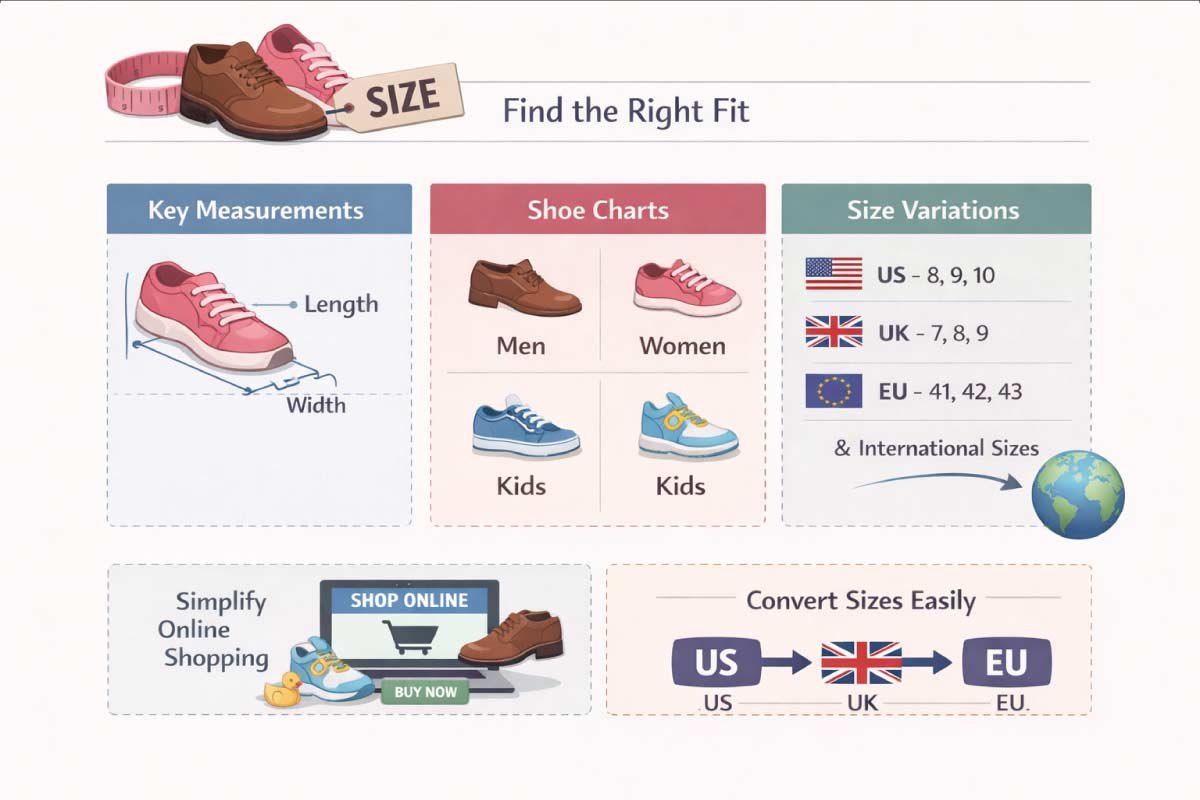
| US Men | US Women | UK | EU | Inches | CM |
|---|---|---|---|---|---|
| 6 | 7.5 | 5.5 | 39 | 9.25 | 23.5 |
| 7 | 8.5 | 6.5 | 40 | 9.625 | 24.5 |
| 8 | 9.5 | 7.5 | 41 | 9.937 | 25.5 |
| 9 | 10.5 | 8.5 | 42 | 10.25 | 26 |
| 10 | 11.5 | 9.5 | 43 | 10.562 | 27 |
Tips:
- Measure both feet and use the larger foot for sizing.
- Consider socks or insoles when selecting shoes.
Also Read:
Accessories (Belts, Hats, Gloves) Sizes
Proper sizing for accessories ensures comfort, style, and functionality. Belts, hats, and gloves must fit correctly to avoid discomfort and maintain appearance. This guide provides accurate measurements and international size conversions, helping you choose the perfect belts, hats, and gloves for men, women, and children.
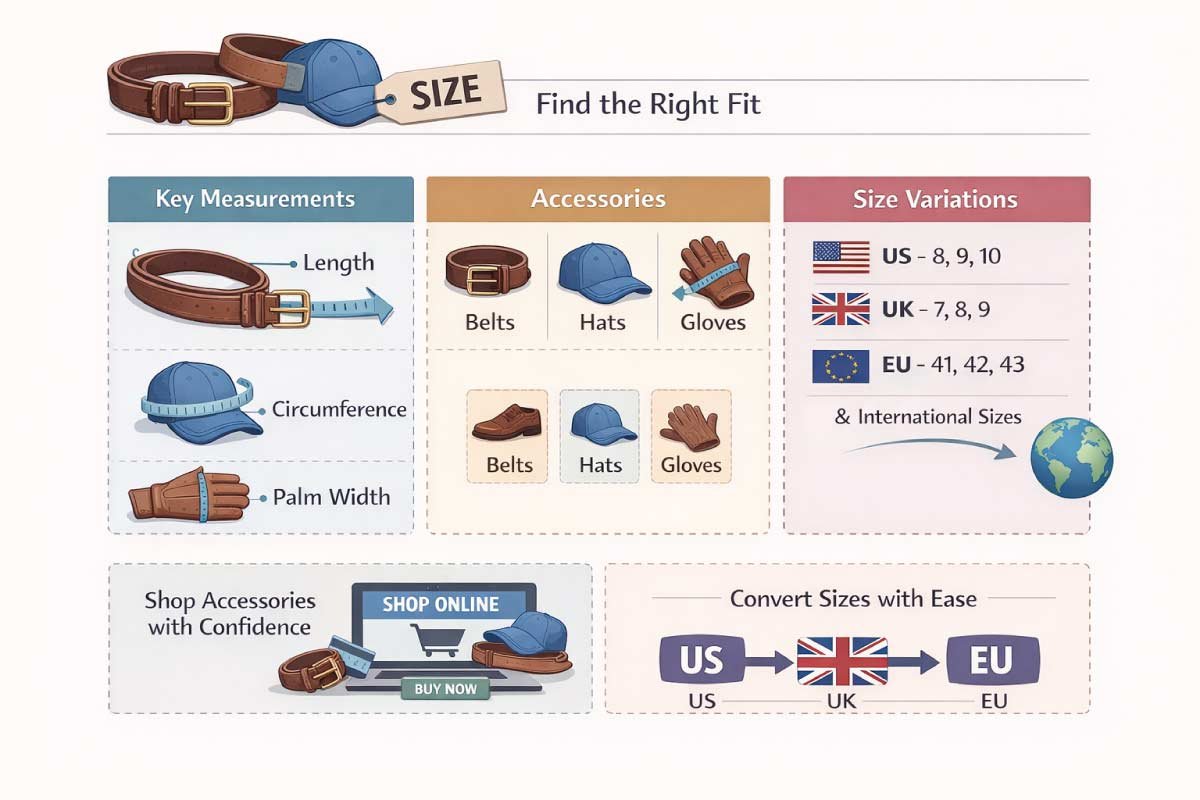
1- Belts
Belts must fit comfortably around the waist while allowing for buckle overlap. Correct measurement ensures both style and functionality, whether for casual or formal wear. This guide includes US, UK, and EU size conversions, helping you choose the right belt length for men, women, and children.
| Size | Waist (in/cm) | Notes |
|---|---|---|
| S | 28–32 in / 71–81 cm | Add 2 inches for buckle overlap |
| M | 32–36 in / 81–91 cm | Standard length for medium waists |
| L | 36–40 in / 91–102 cm | Long sizes for larger waists |
| XL | 40–44 in / 102–112 cm | Extra-long or custom adjustments |
2- Hats
Hat sizing depends on accurate head circumference measurements to ensure comfort, style, and secure fit. Measure around the forehead just above the ears for precision. This guide covers US, UK, and EU conversions, helping you select the perfect hat for men, women, and children.
| Size | Circumference (in/cm) |
|---|---|
| S | 21–22 in / 53–56 cm |
| M | 22–23 in / 56–58 cm |
| L | 23–24 in / 58–61 cm |
| XL | 24–25 in / 61–64 cm |
3- Gloves
Glove sizing is based on hand circumference measured above the knuckles for optimal comfort and dexterity. Proper fit improves warmth and usability. This guide includes US, UK, and EU size conversions, making it easy to choose the right gloves for men, women, and children.
| Size | Hand Circumference (in/cm) |
|---|---|
| XS | 6.5–7 in / 16–18 cm |
| S | 7–7.5 in / 18–19 cm |
| M | 7.5–8 in / 19–20 cm |
| L | 8–8.5 in / 20–22 cm |
| XL | 8.5–9 in / 22–23 cm |
Tips:
- Measure hand circumference above knuckles for gloves.
- Hat size measured at forehead circumference, just above ears.
Also Read:
Activewear & Sports Clothing Sizes
Activewear and sports clothing require a comfortable, flexible fit for optimal performance and movement. Sizes are slightly more forgiving than regular fashion wear. Accurate measurements of bust, chest, waist, hips, and inseam ensure proper fit for yoga, running, gym, and other athletic activities, with US and EU size conversions.
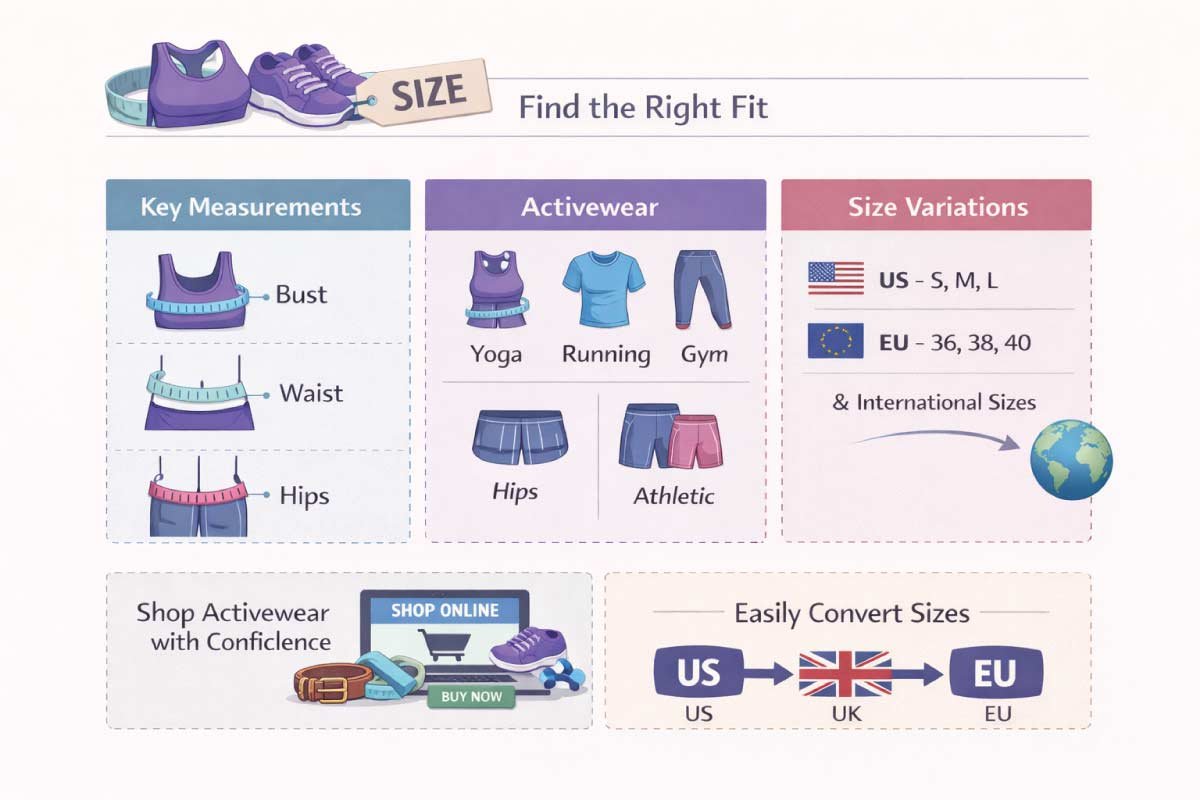
| Size (US) | Bust / Chest | Waist | Hips | EU Size | Notes |
|---|---|---|---|---|---|
| XS | 31–33 in / 79–84 cm | 23–25 in / 58–64 cm | 33–35 in / 84–89 cm | 32–34 | Yoga, running, or gym wear |
| S | 34–35 in / 86–89 cm | 26–27 in / 66–69 cm | 36–37 in / 91–94 cm | 36–38 | Light layering |
| M | 36–37 in / 91–94 cm | 28–29 in / 71–74 cm | 38–39 in / 97–99 cm | 40–42 | Most standard adult sizes |
| L | 38–40 in / 97–102 cm | 30–32 in / 76–81 cm | 40–42 in / 102–107 cm | 44–46 | Slightly looser for comfort |
| XL | 41–43 in / 104–109 cm | 33–35 in / 84–89 cm | 43–45 in / 109–114 cm | 48–50 | Plus-size activewear |
Tips:
- Consider stretch fabric and adjustable waistbands.
- Check inseam and sleeve length for full range of motion.
Plus Size Clothing
Plus-size clothing is designed to provide comfort, style, and a flattering fit for curvier body types. Accurate bust, waist, and hip measurements are essential when shopping online or in-store. This guide covers US, UK, EU, and international plus-size charts for tops, dresses, and more.
| Size (US) | Bust | Waist | Hips | EU Size | UK Size |
|---|---|---|---|---|---|
| 1X | 42–44 in / 107–112 cm | 34–36 in / 86–91 cm | 44–46 in / 112–117 cm | 48–50 | 20–22 |
| 2X | 45–47 in / 114–119 cm | 37–39 in / 94–99 cm | 47–49 in / 119–124 cm | 52–54 | 24–26 |
| 3X | 48–50 in / 122–127 cm | 40–42 in / 102–107 cm | 50–52 in / 127–132 cm | 56–58 | 28–30 |
| 4X | 51–53 in / 130–135 cm | 43–45 in / 109–114 cm | 53–55 in / 135–140 cm | 60–62 | 32–34 |
| 5X | 54–56 in / 137–142 cm | 46–48 in / 117–122 cm | 56–58 in / 142–147 cm | 64–66 | 36–38 |
Tips:
- Focus on fit, comfort, and stretch fabrics.
- Consider garment type (tops vs dresses) for size selection.
Maternity Clothing Sizes
Maternity clothing is designed to provide comfort, style, and flexibility as your body changes during pregnancy. Accurate bust, waist, and hip measurements help expectant mothers choose the right size for tops, dresses, and pants. This guide covers US, UK, EU, and international maternity size charts.
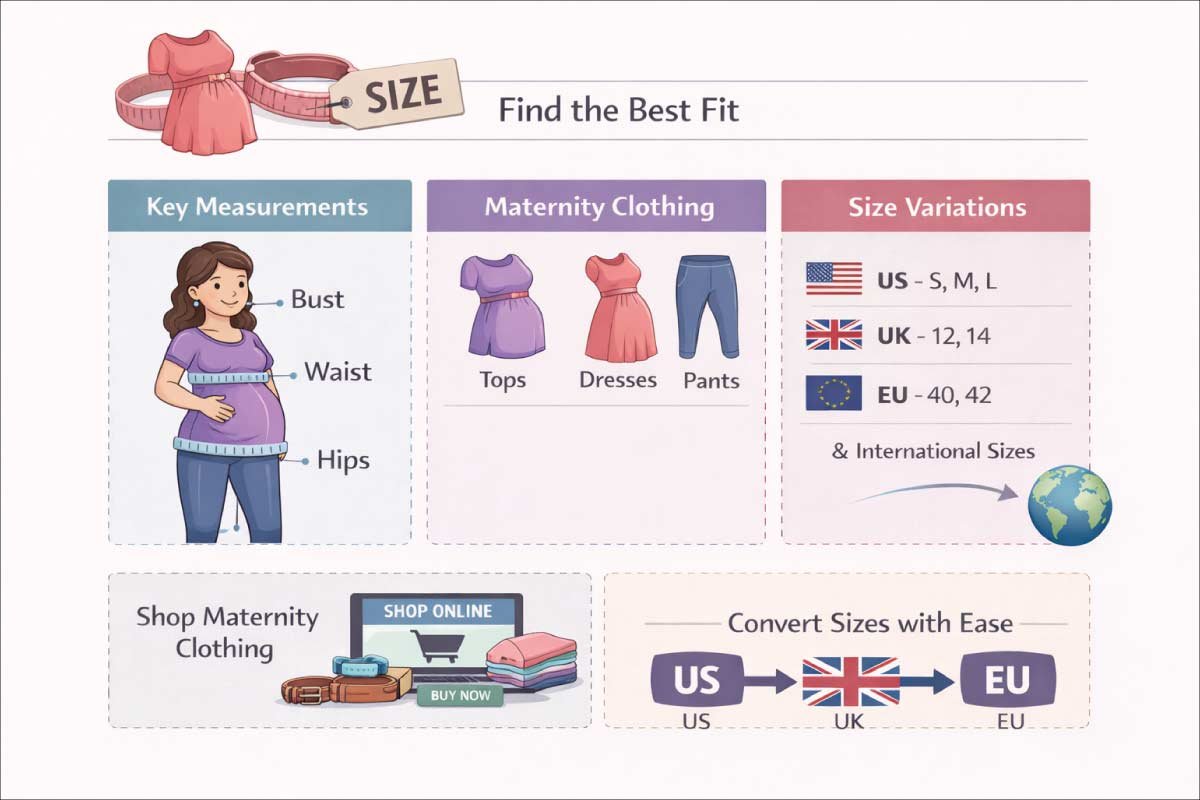
| Size | Pre-Pregnancy Size | Bust | Waist | Hips | Notes |
|---|---|---|---|---|---|
| S | 2–4 | 34–36 in / 86–91 cm | 26–28 in / 66–71 cm | 36–38 in / 91–97 cm | Early pregnancy tops, dresses |
| M | 6–8 | 36–38 in / 91–97 cm | 28–30 in / 71–76 cm | 38–40 in / 97–102 cm | Mid-pregnancy clothing |
| L | 10–12 | 39–41 in / 99–104 cm | 31–33 in / 79–84 cm | 41–43 in / 104–109 cm | Stretchy dresses and pants |
| XL | 14–16 | 42–44 in / 107–112 cm | 34–36 in / 86–91 cm | 44–46 in / 112–117 cm | Larger maternity sizes for comfort |
| XXL | 18–20 | 45–47 in / 114–119 cm | 37–39 in / 94–99 cm | 47–49 in / 119–124 cm | For later pregnancy stages |
Tips:
- Consider adjustable waistbands or elastic panels.
- Stretch fabrics allow more flexibility and comfort.
Outerwear & Coats
Proper outerwear sizing ensures comfort, mobility, and layering over other clothing. Accurate measurements of chest, waist, hips, sleeve, and shoulder width help you choose jackets, coats, and parkas that fit perfectly. This guide includes US, UK, EU, and international size conversions for all outerwear types.
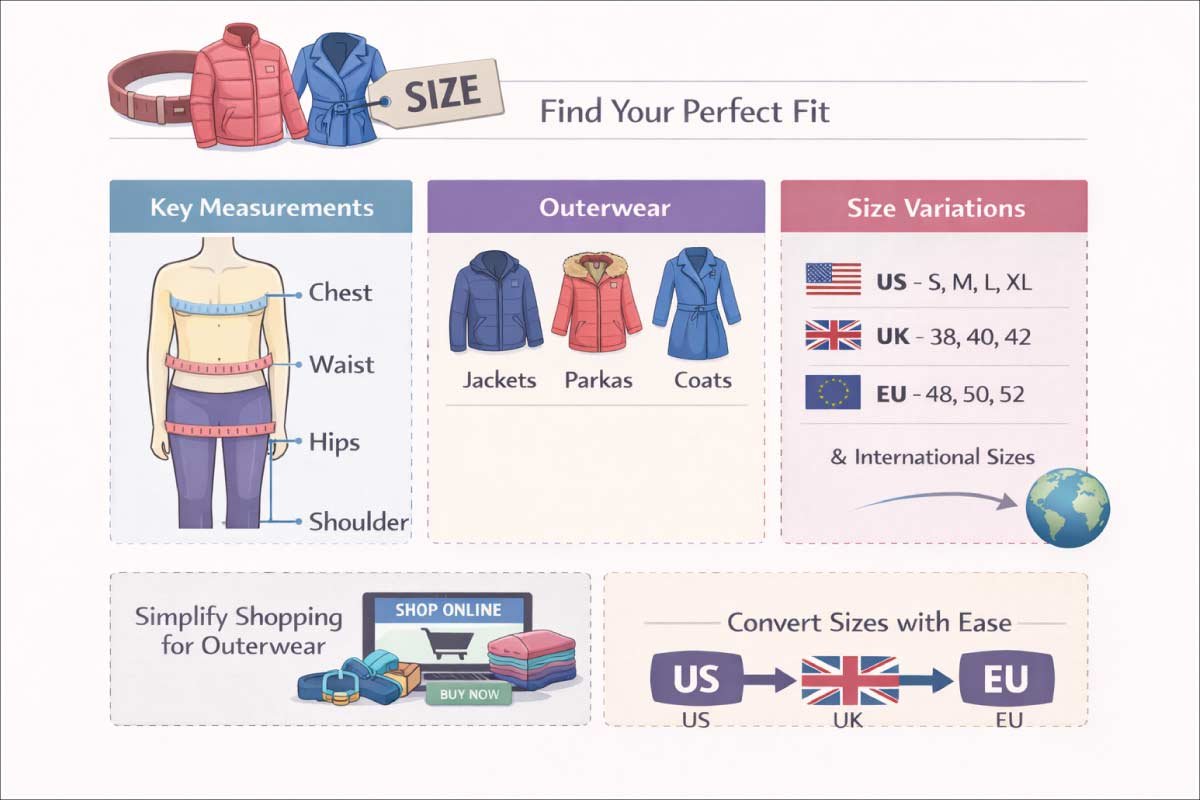
| Size (US) | Chest / Bust | Waist | Hips | EU Size | UK Size | Notes |
|---|---|---|---|---|---|---|
| XS | 31–33 in / 79–84 cm | 24–26 in / 61–66 cm | 33–35 in / 84–89 cm | 32–34 | 6–8 | Light jackets |
| S | 34–36 in / 86–91 cm | 27–28 in / 69–71 cm | 36–37 in / 91–94 cm | 36–38 | 10–12 | Spring/fall jackets |
| M | 37–39 in / 94–99 cm | 29–31 in / 74–79 cm | 38–40 in / 97–102 cm | 40–42 | 14 | Winter coats with layers |
| L | 40–42 in / 102–107 cm | 32–34 in / 81–86 cm | 41–43 in / 104–109 cm | 44–46 | 16–18 | Heavy coats, parkas |
| XL | 43–45 in / 109–114 cm | 35–37 in / 89–94 cm | 44–46 in / 112–117 cm | 48–50 | 20 | For extra layering |
Tips:
- Measure bust/chest to ensure layering room.
- Consider sleeve length and shoulder width for comfort.
Fashion Size Tips for 2026
Getting the right fit in 2026 starts with accurate measurements of chest, waist, hips, inseam, and feet. Always consult brand-specific size charts, allow ease for comfort, check international conversions, and consider growth room for children’s clothing. These tips ensure perfect fit, style, and comfort across all fashion categories.
Always measure yourself for chest, waist, hips, inseam, and feet.
Refer to brand-specific size charts, as sizing may vary.
Allow some ease in fitted garments for comfort.
For online shopping, check international conversions carefully.
Use growth room for children’s clothing.
How to Read and Understand Size Charts Correctly
Understanding fashion size charts is the key to buying clothes, shoes, and accessories that truly fit. With variations across brands, regions, and garment types, knowing how to interpret measurements ensures comfort, style, and confidence. Whether shopping online or in-store, learning how to read bust, waist, hip, chest, inseam, and foot measurements will prevent returns, make international shopping easier, and help you select the perfect size every time.
Key Points to Read Size Charts Correctly:
Know Your Measurements: Always measure chest, bust, waist, hips, inseam, and feet accurately. Use a soft tape measure and record numbers in both inches and centimeters.
Check Brand Variations: Sizes differ between brands; consult their specific size charts before purchasing.
Understand Fit & Ease: Decide if you prefer a slim, regular, or relaxed fit and allow extra inches for comfort in fitted garments.
Use International Conversions: Compare US, UK, EU, and Asia sizes to ensure correct selection when shopping globally.
Refer to Garment Type: Knitwear, stretch fabrics, activewear, and dresses may require slightly different sizing approaches.
Children & Growth: For kids, account for growth room when choosing sizes to maximize longevity and comfort.
By following these steps, you can confidently navigate any fashion size chart and ensure a perfect fit.
Conclusion
Fashion sizing can be confusing, but this Fashion Size Charts Guide 2026 simplifies the process for clothes, shoes, and accessories. By using standard measurements and conversion tables, you can confidently choose garments and accessories that fit perfectly, whether shopping locally or internationally.
Proper sizing ensures comfort, style, and confidence, helping you avoid returns and enjoy your wardrobe to the fullest.
Also Read:
