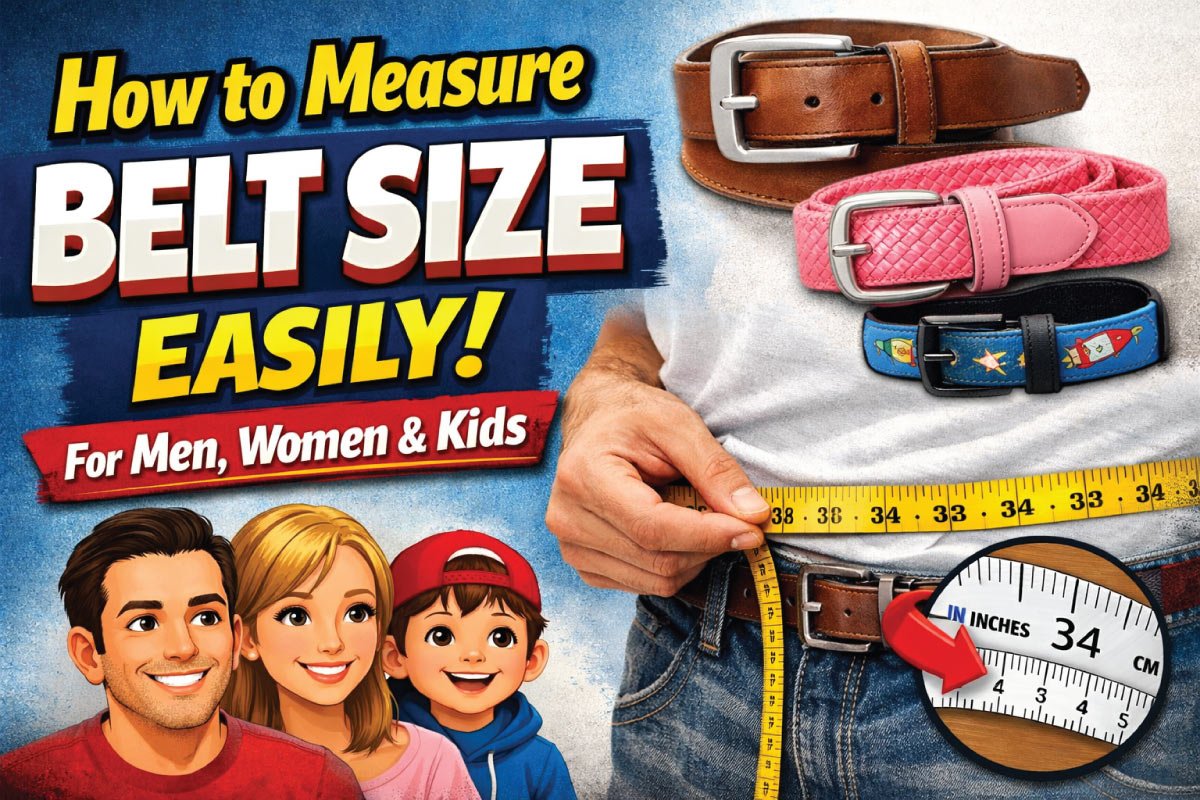
Finding the right belt size sounds simple—until you buy one that’s too tight, too loose, or just feels uncomfortable after a few hours. A belt is not just a functional accessory; it completes an outfit and helps your clothes fit properly. Whether you are shopping online, buying a gift, or replacing an old belt, knowing the correct belt size can save you time, money, and frustration.
In this detailed guide, you will learn how to find your belt size accurately for men, women, and kids, using simple methods that actually work. I will also share practical sizing tips, common mistakes to avoid, and two easy-to-read tables to help you choose the perfect fit every time.
Why Knowing Your Correct Belt Size Matters
A properly sized belt does more than hold your pants up. It affects comfort, appearance, and even posture. A belt that’s too small strains the buckle and holes, while a belt that’s too large looks sloppy and wears out faster.
Key benefits of choosing the right belt size include:
Better comfort throughout the day
A cleaner, more polished look
Longer belt lifespan
No need for extra holes or returns
With online shopping becoming the norm, learning how to measure your belt size correctly is more important than ever.
Belt Size vs Pant Size: Are They the Same?
This is one of the most common questions people ask and the answer is not exactly. Pant size gives you a general idea, but belt size usually runs 1–2 inches larger than your waist or pant size. Brands, belt styles, and materials can also affect sizing.
For example:
If you wear size 34 pants, your belt size is often 36.
If you wear size 32 pants, your belt size is usually 34.
However, this rule is not perfect. The most accurate method is always measuring, which we’ll cover next.
How to Measure Your Belt Size (The Most Accurate Method)
Finding your correct belt size becomes much easier when you follow a proper measuring method instead of guessing based on clothing size. These two simple approaches are practical, accurate, and commonly used by professionals to ensure the belt fits comfortably and looks balanced.
Method 1: Measure an Existing Belt
This is the easiest and most reliable way.
If you already own a belt that fits you well, this method gives the most accurate result. It removes guesswork and works for almost every belt style, making it ideal for online shopping or replacing a favorite belt with the same fit.
Steps:
-
Lay your belt flat on a table or floor
Make sure the belt is straight and not twisted, as curves or bends can affect the measurement accuracy. -
Measure from the tip of the buckle (where the prong meets the buckle)
Start measuring at the inside edge of the buckle, not the end, to match standard belt sizing. -
Measure up to the hole you use most often
This hole represents your true comfort fit and is more accurate than measuring the full belt length. -
That measurement (in inches or cm) is your belt size
Use this number directly when choosing a new belt size from brand size charts.
This method works well for men, women, and kids.
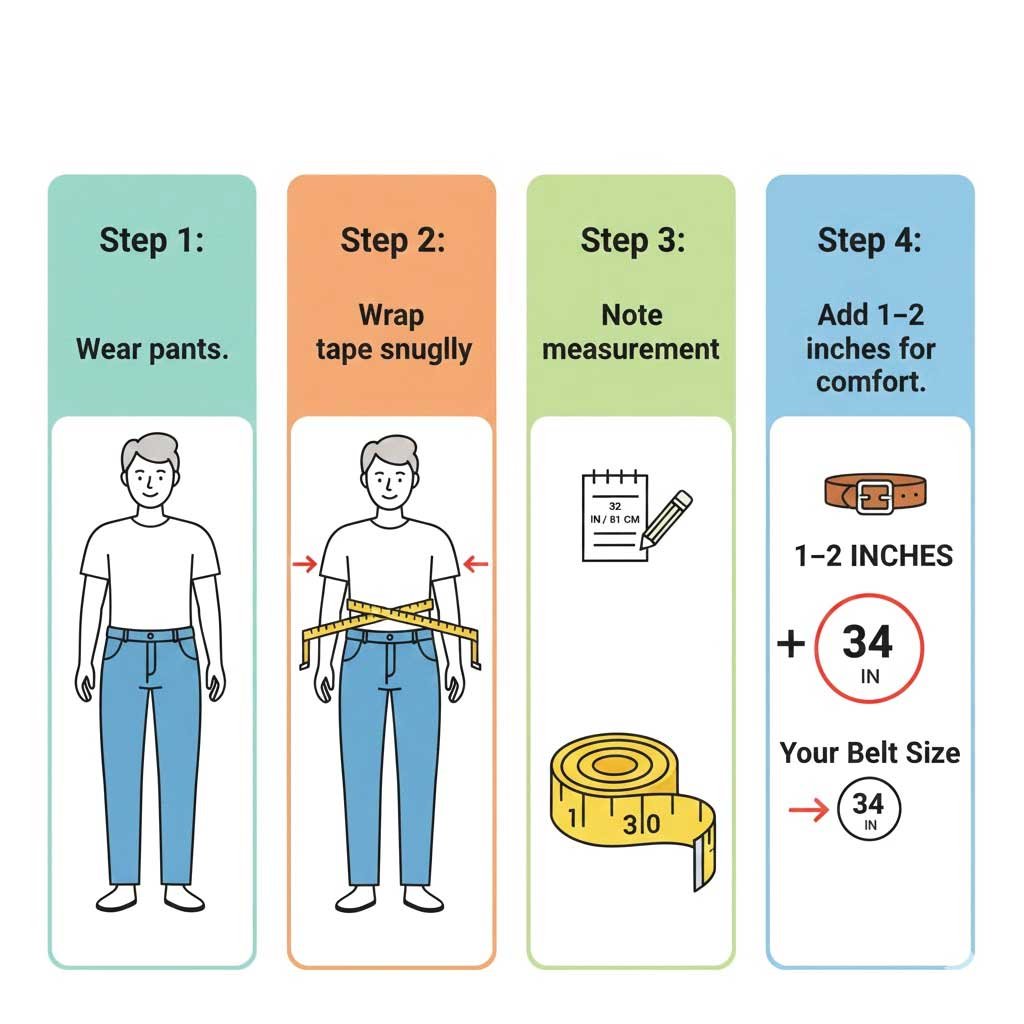
Method 2: Measure Your Waist or Hips
If you don’t have a belt handy, this method works too.
This approach is useful when buying your first belt or shopping as a gift. While slightly less precise than measuring an existing belt, it still provides a reliable estimate when done correctly.
Steps:
-
Wear the pants you plan to use the belt with
Different pants sit at different levels, so measuring over the actual clothing improves accuracy. -
Use a soft measuring tape around your waist or hips (where the belt sits)
Keep the tape snug but not tight to avoid an uncomfortable fit later. -
Note the measurement
Record the number carefully in inches or centimeters for easy size comparison. -
Add 1–2 inches for comfort
This extra space allows natural movement and ensures the belt doesn’t feel restrictive.
This gives you a close estimate, especially helpful when shopping online.
Also Read:
Men’s Belt Size Guide
General Tips for Men:
Choose a belt 2 inches larger than your pant size
The ideal fit uses the middle hole of the belt
Leather belts may stretch slightly over time
Men’s Belt Size Conversion Table
| Pant Size (Waist) | Recommended Belt Size |
|---|---|
| 28–30 | 32 |
| 31–32 | 34 |
| 33–34 | 36 |
| 35–36 | 38 |
| 37–38 | 40 |
| 39–40 | 42 |
| 41–42 | 44 |
This table helps you quickly convert pant size to belt size without guessing.
Women’s Belt Size Guide
Women’s belt sizing can be slightly more complex because belts are worn at various points on the body, such as the natural waist, hips, or over dresses and coats. Each placement affects fit and comfort, making accurate measurement especially important.
Key Factors That Affect Women’s Belt Size:
Several important factors influence women’s belt sizing and how a belt fits overall. Clothing type, where the belt is worn on the body, and the belt’s width or style all play a role in comfort, appearance, and proper sizing.
Outfit type (jeans, dress, tunic, coat)
Waist vs hip placement
Belt width and style
How to Measure for Women:
For jeans or trousers: measure where belt loops sit
For dresses or high-waist styles: measure your natural waist
For hip belts: measure around the hips
Women’s Belt Size Chart
| Waist/Hip Measurement (inches) | Belt Size |
|---|---|
| 24–26 | Small (S) |
| 27–29 | Medium (M) |
| 30–33 | Large (L) |
| 34–37 | X-Large |
| 38–41 | XX-Large |
Always check brand-specific sizing, as women’s fashion sizing can vary more than men’s.
Also Read:
Kids’ Belt Size Guide
Kids grow quickly, so selecting the right belt size should focus more on comfort, flexibility, and adjustability rather than achieving a perfect fit. A slightly adjustable belt allows room for growth, ensures daily comfort, and reduces the need for frequent replacements.
Tips for Measuring Kids’ Belt Size:
Measure their waist while wearing school pants or jeans
Choose belts with multiple holes or adjustable designs
Consider elastic or braided belts for younger kids
Kids’ Belt Size Chart by Age
| Age Range | Waist Size (inches) | Belt Size |
|---|---|---|
| 3–5 yrs | 20–22 | 22–24 |
| 6–8 yrs | 22–24 | 24–26 |
| 9–11 yrs | 25–27 | 26–28 |
| 12–14 yrs | 28–30 | 30–32 |
This chart provides a helpful starting point, but measuring is always best.
Belt Hole Placement: What’s the Ideal Fit?
A well-fitting belt should fasten comfortably on the middle hole rather than the first or last. This position provides balanced adjustment on both sides, allowing you to tighten or loosen the belt easily as your body or clothing layers change.
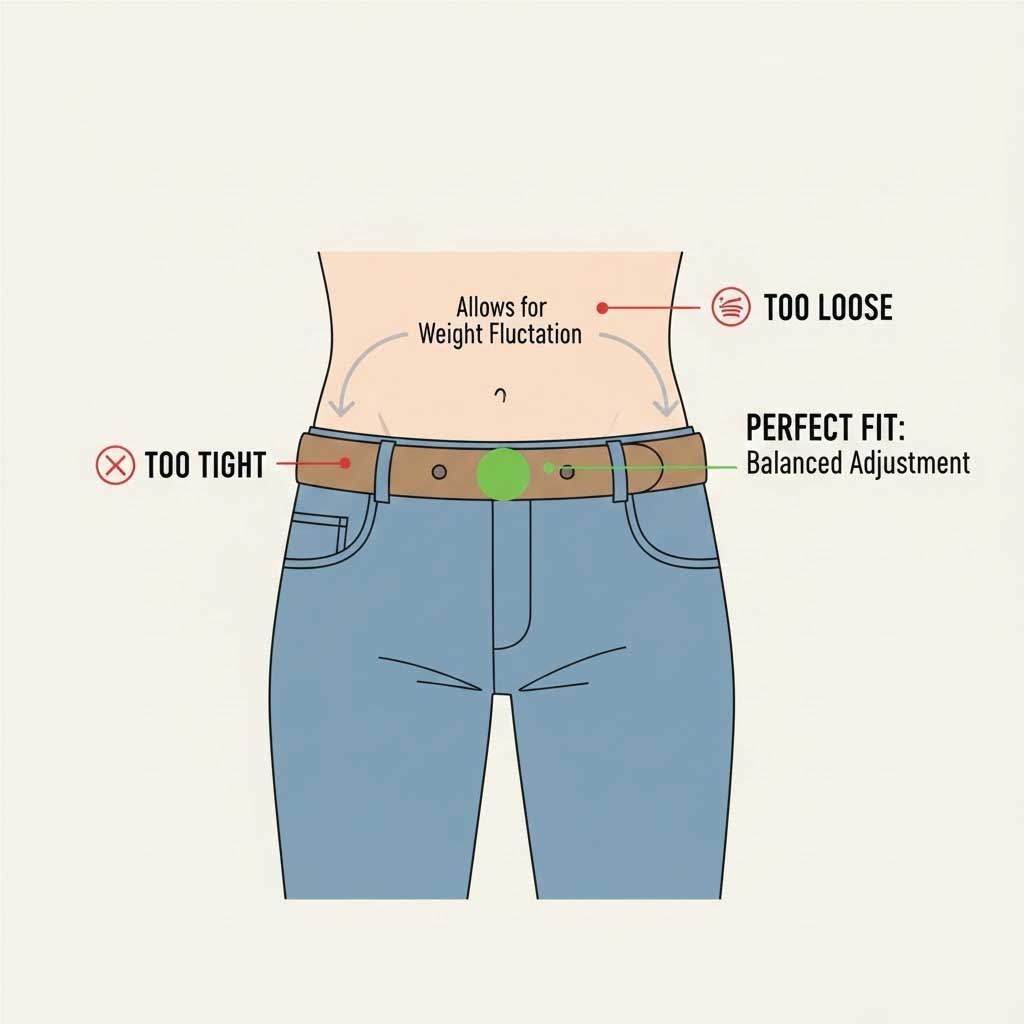
If your belt fits only on the first or last hole:
It’s likely the wrong size
It may look awkward
It can wear out faster
When shopping, look for belts with 5 to 7 holes evenly spaced.
Common Belt Sizing Mistakes to Avoid
Assuming pant size = belt size
Measuring the entire belt length instead of buckle-to-hole
Ignoring where the belt will be worn (waist vs hips)
Buying “one-size-fits-all” belts without adjustability
Avoiding these mistakes ensures a better fit and longer belt life.
Also Read:
Buying a Belt Online: Pro Tips
Online shopping makes belt sizing tricky, but these tips help:
- Always check the brand’s size chart
- Read customer reviews for fit feedback
- Look for adjustable or cut-to-fit belts
- Choose belts with easy returns
If you’re between sizes, it’s usually safer to go one size up.
Final Thoughts: Finding the Perfect Belt Size Made Easy
Finding the perfect belt size is simpler than many think and doesn’t require guesswork or repeated trial and error. By measuring an existing belt or your waist accurately, you can determine the ideal fit for men, women, and kids.
Always use sizing charts as a helpful guide rather than a strict rule, and consider factors such as belt style, placement, and comfort. Aim to fasten the belt on the middle hole for optimal adjustment.
A well-sized belt enhances comfort, supports proper posture, and completes your outfit, making even a small measurement effort highly worthwhile.
