Recliners are no longer exclusive to adults. Modern furniture designers recognize the importance of comfortable, ergonomic seating for children. A child size recliner is designed specifically for young users, offering a cozy space to read, play, or relax. Selecting the right recliner involves understanding standard dimensions, age-appropriate designs, materials, and safety features. This guide provides an in-depth overview of everything parents and caregivers need to know when choosing a recliner for their child.
Importance of Child Size Recliners
Children spend significant time sitting, whether reading, watching TV, or playing games. Using furniture that suits their size is crucial for:
Posture Support: Properly sized recliners prevent slouching and back pain.
Safety: Oversized furniture can increase the risk of falls.
Comfort: Appropriately sized recliners encourage children to enjoy reading or relaxing.
Independence: A child can sit and recline without assistance.
Pro Tip: Always ensure that the recliner height allows a child’s feet to touch the floor while seated for stability.
Standard Dimensions for Child Size Recliners
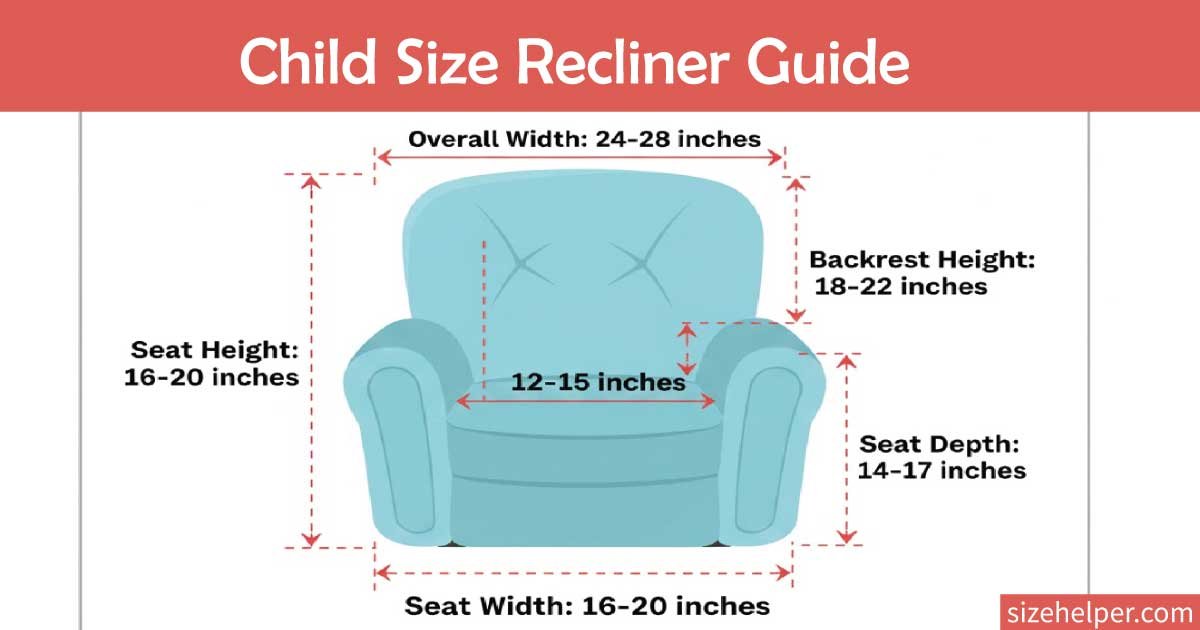
Child recliners come in various sizes based on age groups. While adult recliners are large, children’s versions are compact and ergonomic. Below is a standard size chart:
| Age Group | Seat Width (inches/cm) | Seat Depth (inches/cm) | Seat Height (inches/cm) | Overall Height (inches/cm) | Reclined Length (inches/cm) |
|---|---|---|---|---|---|
| 2–4 years | 14–16 in (35–40 cm) | 12–14 in (30–35 cm) | 10–12 in (25–30 cm) | 22–26 in (55–65 cm) | 32–36 in (80–90 cm) |
| 5–7 years | 16–18 in (40–45 cm) | 14–16 in (35–40 cm) | 12–14 in (30–35 cm) | 26–30 in (65–75 cm) | 36–40 in (90–100 cm) |
| 8–12 years | 18–20 in (45–50 cm) | 16–18 in (40–45 cm) | 14–16 in (35–40 cm) | 30–36 in (75–90 cm) | 40–44 in (100–110 cm) |
Explanation of Terms:
Seat Width: The distance between the armrests. Should allow comfortable arm movement.
Seat Depth: Distance from the backrest to the front of the seat. Ensures proper thigh support.
Seat Height: From floor to top of seat cushion. Ideal for feet to touch the ground.
Overall Height: Total height from floor to top of recliner backrest.
Reclined Length: Length when fully reclined, important for stretching and relaxing.
Types of Child Recliners
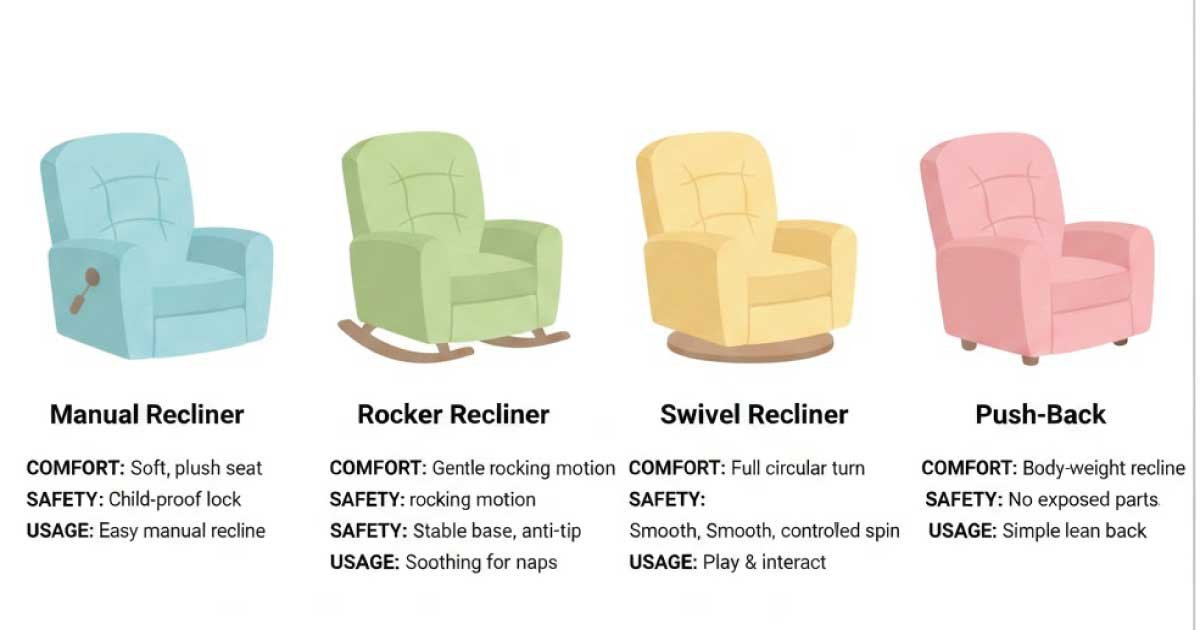
Child recliners are specially designed seating options that combine comfort, safety, and fun for young users. Available in multiple styles, these recliners support different activities such as reading, watching TV, relaxing, or napping. Understanding each type helps parents choose the most suitable recliner based on space, usage, and a child’s comfort needs.
a) Manual Recliners
Manual child recliners operate using a simple lever or side handle, allowing children or parents to adjust the reclining position easily. They offer reliable comfort without electrical components, making them lightweight, budget-friendly, and easy to move or place in bedrooms, playrooms, or living areas.
b) Rocker Recliners
Rocker recliners combine reclining comfort with a gentle rocking motion that helps calm and soothe young children. This design is ideal for quiet activities like reading, storytelling, or napping. The smooth rocking action provides relaxation while maintaining stability and safety for everyday use.
c) Swivel Recliners
Swivel child recliners allow full 360-degree rotation, giving children freedom to turn and move without standing up. These recliners are perfect for playrooms and family rooms, offering interactive comfort. A sturdy, balanced base ensures safety while allowing flexible movement and easy access.
d) Push-Back Recliners
Push-back recliners feature a simple, lever-free design that reclines when a child gently leans backward. This intuitive mechanism makes them easy for kids to use independently. With fewer moving parts, push-back recliners offer a clean look, improved safety, and hassle-free operation.
Material and Upholstery Considerations
Children’s furniture must balance comfort, durability, and ease of maintenance. Popular options include:
| Material | Pros | Cons | Best For |
|---|---|---|---|
| Leather | Durable, easy to clean, luxurious | Expensive, can be cold in winter | Older kids, formal living areas |
| Faux Leather | Affordable, easy to clean | Less breathable, may peel over time | Playrooms, casual use |
| Fabric | Soft, comfortable, many color options | Stains easily, may wear faster | Bedrooms, reading corners |
| Microfiber | Soft, stain-resistant, durable | Limited color patterns | Everyday use, family rooms |
| Cotton Blend | Breathable, hypoallergenic | Absorbs stains, may fade | Younger children, cozy spaces |
Tip: Choose fabrics that are machine-washable or easy to wipe down, as children are prone to spills.
Safety Features to Consider
Safety should always be the top priority when selecting a child recliner, as children may recline suddenly, climb on furniture, or use it without supervision. A well-built recliner reduces the risk of injuries by focusing on stability, smooth motion, and child-safe materials designed for everyday use.
Safety is a priority for child recliners. Look for the following:
Stable Base: A wide base reduces the risk of tipping.
Smooth Reclining Mechanism: Avoid sharp edges or sudden drops.
Non-Toxic Materials: Upholstery and filling should be free from harmful chemicals.
Rounded Corners: Prevent injuries from bumps and knocks.
Weight Limit Compliance: Check manufacturer guidelines.
Pro Tip: Always supervise toddlers while using a recliner.
Also Read:
Ergonomic Design Tips
Ergonomic design ensures that a child recliner supports healthy posture during sitting, reading, or screen time. Since children are still growing, improper seating can lead to discomfort or strain. Paying attention to ergonomic features helps promote spinal alignment, comfort, and long-term physical well-being.
Proper ergonomics ensure comfort and healthy posture for children:
Lumbar Support: A slight curve in the lower back area encourages correct posture.
Armrest Height: Should allow elbows to rest comfortably without shoulder strain.
Seat Cushioning: Medium firmness supports posture while remaining soft.
Backrest Angle: Slight recline (100–110°) is ideal for reading or TV.
Child Recliner Accessories
Accessories enhance both the comfort and functionality of a child recliner, making it more engaging and practical for everyday use. From snack-friendly features to storage solutions, the right accessories help keep the space organized while improving a child’s overall sitting and relaxation experience.
Enhancing a child recliner can improve functionality and engagement:
| Accessory | Purpose |
|---|---|
| Cup Holders | Convenient for drinks or snacks |
| Removable Covers | Easy cleaning and maintenance |
| Toy Storage Pockets | Organizes books, toys, or devices |
| Footrests | Adjustable for growing children |
| Lap Blankets | Adds comfort for reading or movie time |
How to Measure for the Perfect Fit
Choosing the correct recliner size requires careful measurement of both your child and the available room space. Proper sizing ensures comfort, safety, and ease of use while preventing issues like dangling feet, restricted reclining, or overcrowded rooms.
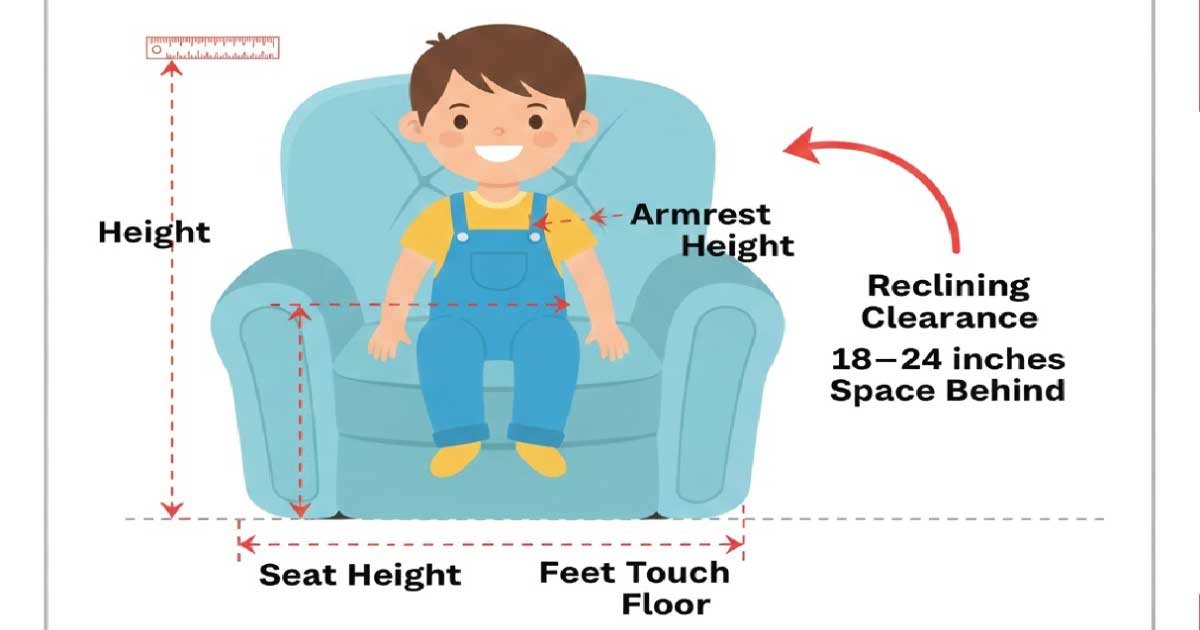
Choosing the right recliner requires precise measurements of your child and available space. Follow these steps:
Measure Child Height & Weight: Match to recommended recliner age group.
Check Seat Height: Ensure feet touch the floor when sitting.
Measure Room Space: Allow at least 18–24 inches behind the recliner for full recline.
Test Armrest Height: Should allow natural elbow bend at 90°.
Pro Tip: Allow extra space if the recliner will be used for napping or movie sessions.
Also Read:
Child Recliner vs. Adult Recliner
Although child and adult recliners may look similar, their dimensions, safety features, and weight capacities are very different. Child recliners are specifically designed for smaller bodies and safer use, making them a better option than downsized adult furniture.
| Feature | Child Recliner | Adult Recliner |
|---|---|---|
| Seat Width | 14–20 in (35–50 cm) | 22–30 in (55–75 cm) |
| Seat Depth | 12–18 in (30–45 cm) | 18–22 in (45–55 cm) |
| Seat Height | 10–16 in (25–40 cm) | 16–20 in (40–50 cm) |
| Weight Capacity | 50–150 lbs (22–68 kg) | 200–350 lbs (90–160 kg) |
| Safety Considerations | Extra padding, rounded edges | Less critical for edges |
Popular Brands and Models (for Reference)
Reputable brands design child recliners with safety standards, durable materials, and ergonomic proportions in mind. Reviewing popular brands helps parents understand available styles, features, and quality benchmarks before making a purchase decision.
Delta Children Recliner: Compact, ergonomic design for toddlers and preschoolers.
Little Cozy Chairs: Soft fabric with storage pockets.
Melissa & Doug Upholstered Chair: Fun designs, child-friendly upholstery.
Baby Relax Recliners: Swivel and rocking options for older children.
Maintenance Tips
Regular maintenance helps extend the lifespan of a child recliner while keeping it clean and safe. Since children often eat, play, and relax in their chairs, consistent care prevents fabric wear, mechanical issues, and hygiene problems over time.
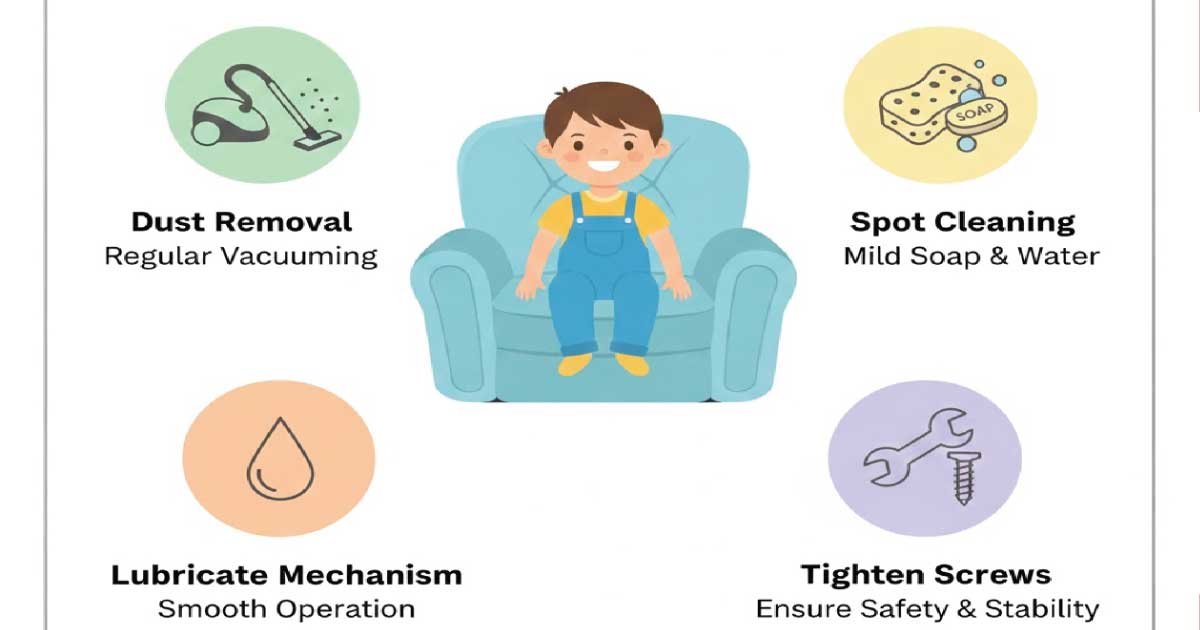
Regular care ensures a recliner lasts longer:
Vacuum Fabric Regularly: Remove dust and crumbs.
Spot Clean Spills: Use mild soap and water.
Check Reclining Mechanism: Lubricate joints if needed.
Inspect for Loose Screws: Tighten periodically for safety.
Recommended Room Layout
A well-planned room layout improves both safety and comfort when using a child recliner. Proper spacing allows smooth reclining, prevents collisions, and creates a cozy, functional area for reading, relaxing, or screen time activities.
Proper positioning enhances safety and comfort:
Keep recliner away from walls to allow full recline.
Place soft rug or carpet beneath to prevent slipping.
Ensure adequate lighting for reading or crafting.
Arrange other furniture with at least 2 feet of clearance around the chair.
Visualization Chart: Child Recliner Room Layout
| Element | Recommended Distance From Recliner |
|---|---|
| Wall Behind Chair | 18–24 inches (45–60 cm) |
| Side Tables | 12–18 inches (30–45 cm) |
| TV or Screen | Eye level when seated |
| Rug Edges | Extend 12–18 inches beyond chair |
Cost Considerations
The cost of a child recliner varies depending on materials, construction quality, and added features. Understanding price ranges helps parents balance budget with safety, comfort, and durability while avoiding unnecessary upgrades.
Child recliners range in price depending on materials, features, and brand:
| Material/Feature | Price Range (USD) |
|---|---|
| Basic Fabric Recliner | $80–$150 |
| Faux Leather | $120–$220 |
| Leather | $200–$350 |
| Rocker/Swivel Mechanism | +$50–$100 |
| Additional Accessories (cup holder, toy storage) | +$20–$50 |
Final Tips for Parents
Choosing the right child recliner is about more than appearance—it’s about safety, comfort, and long-term usability. Keeping your child’s size, habits, and growth in mind ensures the recliner remains a supportive and enjoyable part of their daily routine.
-
Always match the recliner to your child’s age and size.
-
Prioritize safety and ergonomics over aesthetics.
-
Choose durable, easy-to-clean materials.
-
Encourage responsible use to prevent wear and accidents.
-
Consider recliners with growth features like adjustable footrests for long-term use.
Also Read:
Conclusion
A child size recliner is more than just a miniature version of an adult chair; it is a thoughtfully designed piece of furniture that ensures comfort, safety, and proper posture for children. By understanding standard dimensions, material options, ergonomic considerations, and maintenance, parents can select the perfect recliner that fits both their child’s needs and the room layout. Investing in the right recliner promotes comfort, independence, and a lifelong habit of good posture.
Selecting the correct child recliner can transform a child’s playroom, bedroom, or reading nook into a space that is both functional and fun, encouraging relaxation, reading, and healthy posture habits from an early age.
