
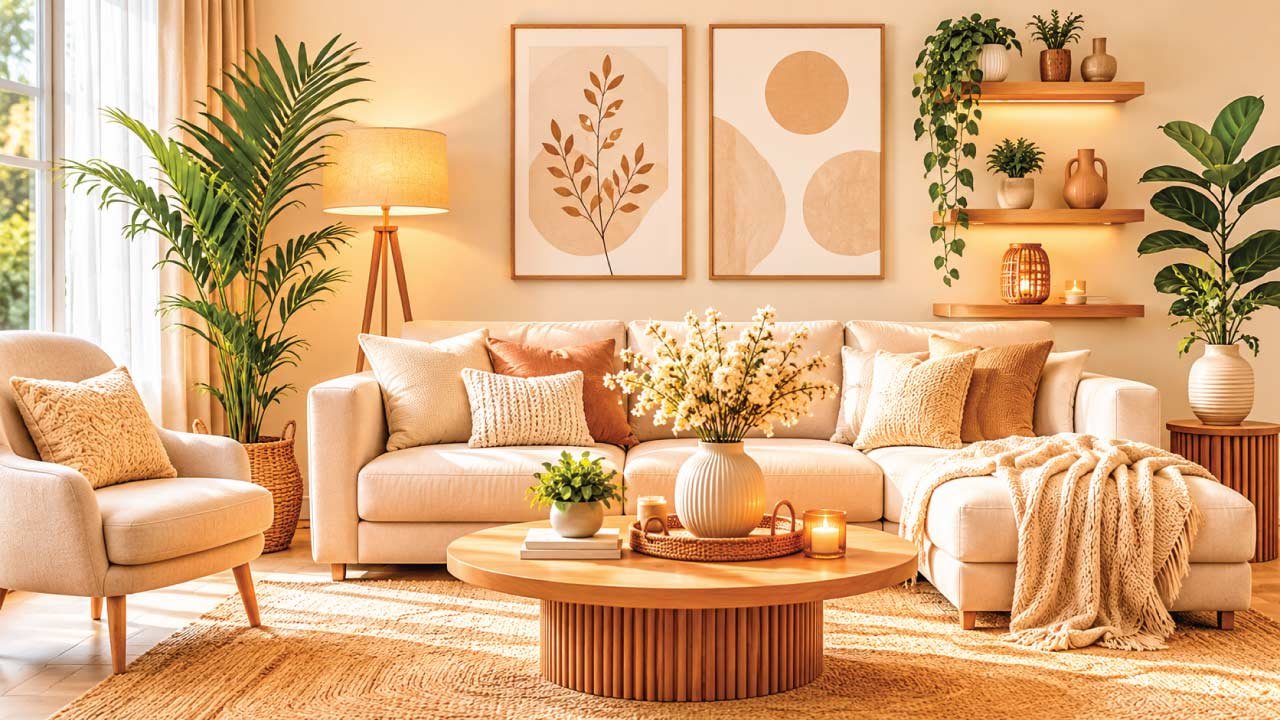
Beige living rooms have quietly become one of the most enduring trends in interior design. Often mistaken for “simple” or “safe,” beige is actually one of the most versatile foundations for creating a space that feels warm, elegant, and effortlessly timeless.
When styled correctly, a beige living room can feel layered, luxurious, and deeply inviting rather than plain or monotone.Whether you love modern minimalism, soft luxury, or cozy neutral interiors, these 12 beige living room decor ideas will help you transform your space into something beautifully balanced and stylish.
Table of Contents
Toggle1. Build a Layered Neutral Palette
A beige living room becomes visually rich and sophisticated when it avoids a single flat tone and instead embraces layered neutrals. Using multiple shades within the same color family creates depth, softness, and quiet elegance while maintaining a calm and unified atmosphere that feels naturally balanced and timeless.
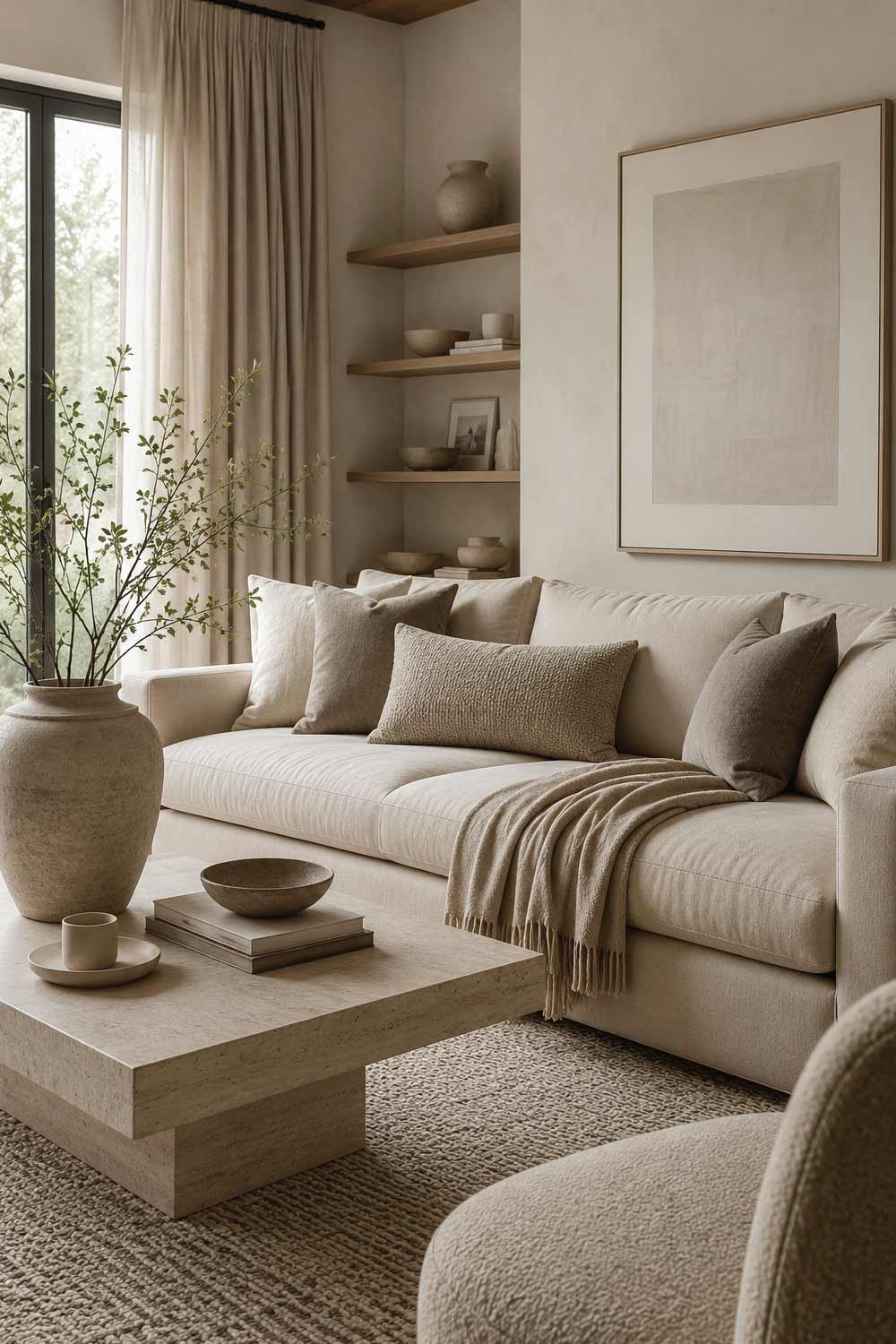
- Combine sand and ivory tones for a soft and harmonious visual foundation.
- Use taupe shades to add gentle depth without breaking neutral flow.
- Include cream accents for brightness and airy visual openness.
- Add warm gray to introduce subtle contrast and refined structure.
- Avoid single-tone beige setups that appear flat and visually dull.
- Layer tones across furniture, walls, and textiles for natural variation.
- Maintain consistency to ensure cohesive and soothing interior harmony.
This tonal variation creates depth while maintaining a calm, cohesive look. The key is subtle contrast enough to define shapes and surfaces without breaking the soothing neutral flow of the room.
Personal Experience
I once redesigned a beige living room using layered neutrals instead of a single shade. The addition of ivory cushions, taupe rugs, and warm gray accents created a much more refined, dimensional space that felt calm yet visually engaging.
2. Mix Beige with Warm Whites
Pairing beige with warm whites creates a light, airy, and elegant living room that feels both grounded and spacious. Warm whites soften beige tones, preventing heaviness while enhancing brightness. This combination works especially well in modern interiors where balance between comfort and openness is essential for a refined atmosphere.
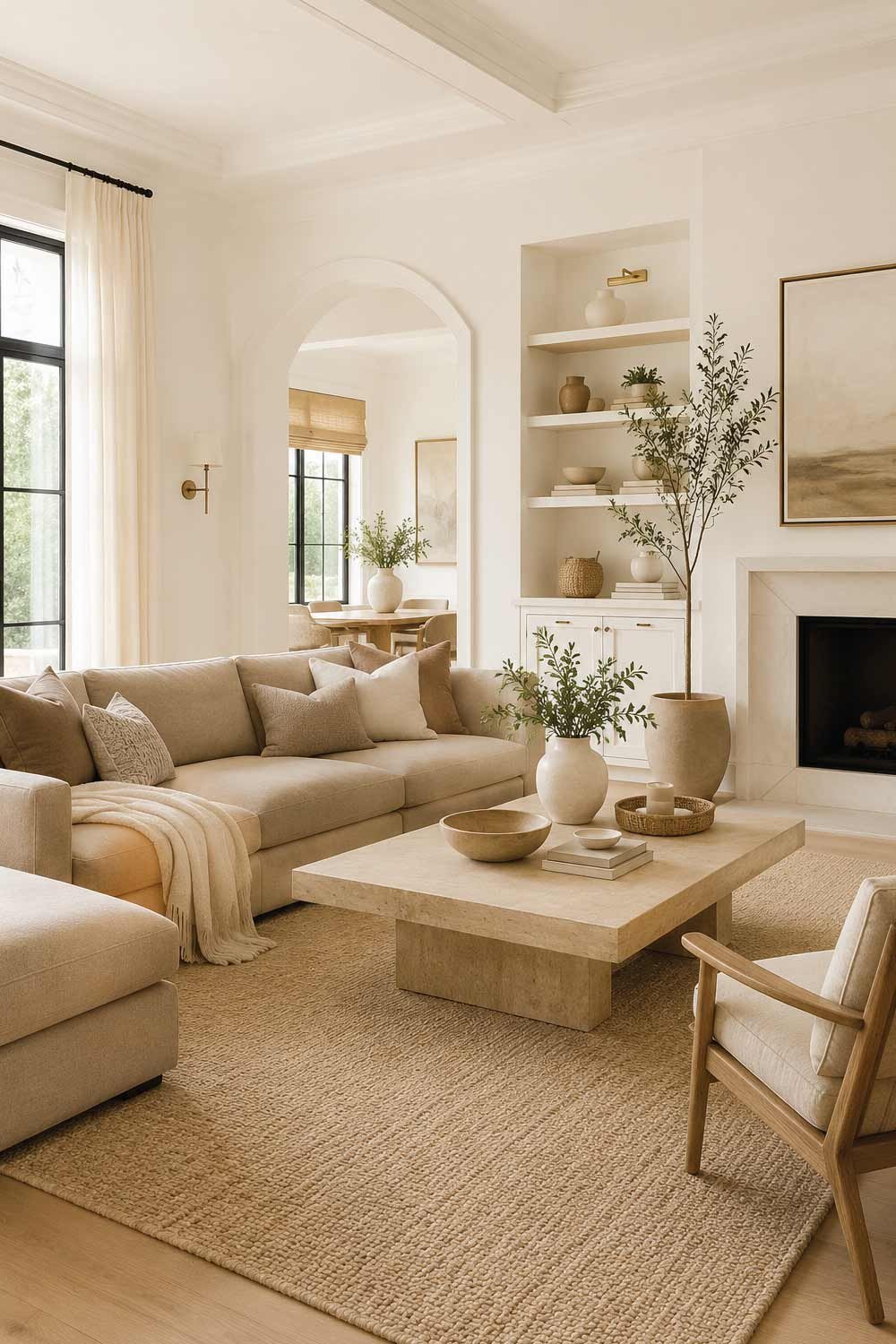
- Use warm white on ceilings to enhance height and visual openness.
- Apply beige tones on main furniture for grounded and cozy base.
- Incorporate warm white walls for soft and reflective light balance.
- Avoid stark white shades that create harsh contrast with beige tones.
- Use beige rugs to anchor seating areas within light surroundings.
- Combine both tones gradually for smooth visual transition and harmony.
Use warm white for ceilings, trim, or larger furniture pieces, while beige anchors the main elements like sofas, rugs, and walls. This combination keeps the room bright while still feeling grounded and cozy.
Personal Experience
In one interior project, I used warm white walls with beige furniture elements. The result was a bright yet cozy living space that felt open during the day and softly grounded in the evening, maintaining consistent visual comfort throughout.
3. Add Natural Wood Elements
Natural wood is essential in beige interiors because it enhances warmth, texture, and organic beauty. The natural grain of wood introduces subtle variation that prevents beige spaces from feeling too plain. It also strengthens the connection to nature, making the living room feel grounded, inviting, and timelessly elegant.
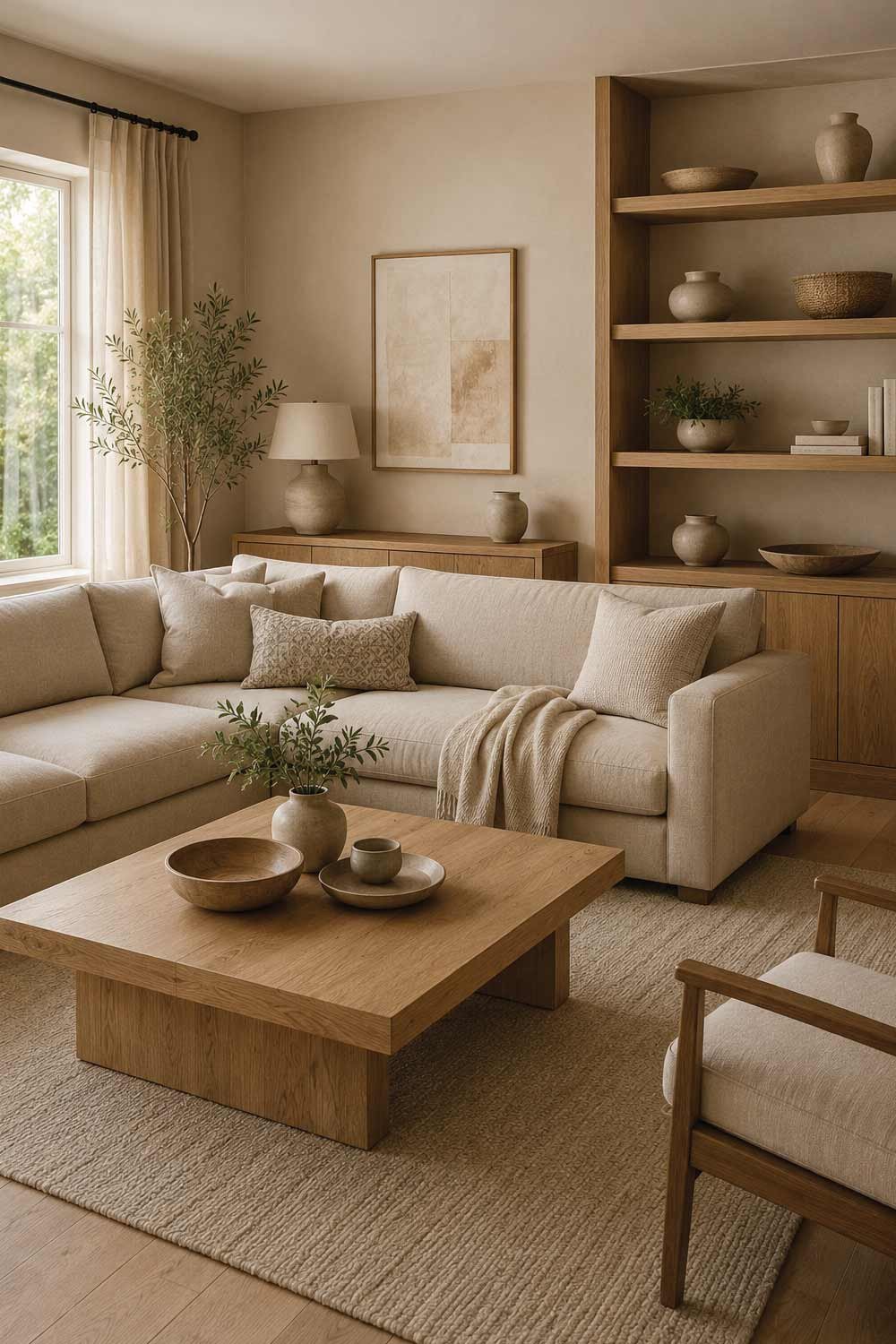
- Use light oak wood for soft and airy modern interior styling.
- Choose walnut finishes for deeper warmth and rich visual contrast.
- Incorporate ash wood for balanced and neutral natural texture appeal.
- Add wooden coffee tables for functional and aesthetic focal points.
- Use shelving units to combine storage with natural design warmth.
- Include wooden flooring for continuous and cohesive interior flow.
Incorporate wood through coffee tables, shelving, sideboards, or flooring. The organic grain of wood adds natural variation, helping the room feel more lived-in and sophisticated.
Personal Experience
In a beige-themed living room, I added a light oak coffee table and shelving unit. The natural wood tones instantly made the space feel warmer and more grounded, enhancing the softness of the overall neutral palette beautifully.
4. Focus on Soft, Textured Fabrics
Texture is crucial in beige interiors because it prevents the space from feeling flat or monotonous. Soft fabrics add depth, comfort, and visual interest while maintaining the calm neutral palette. Layering different materials creates a cozy, inviting atmosphere that feels refined yet relaxed and naturally balanced.
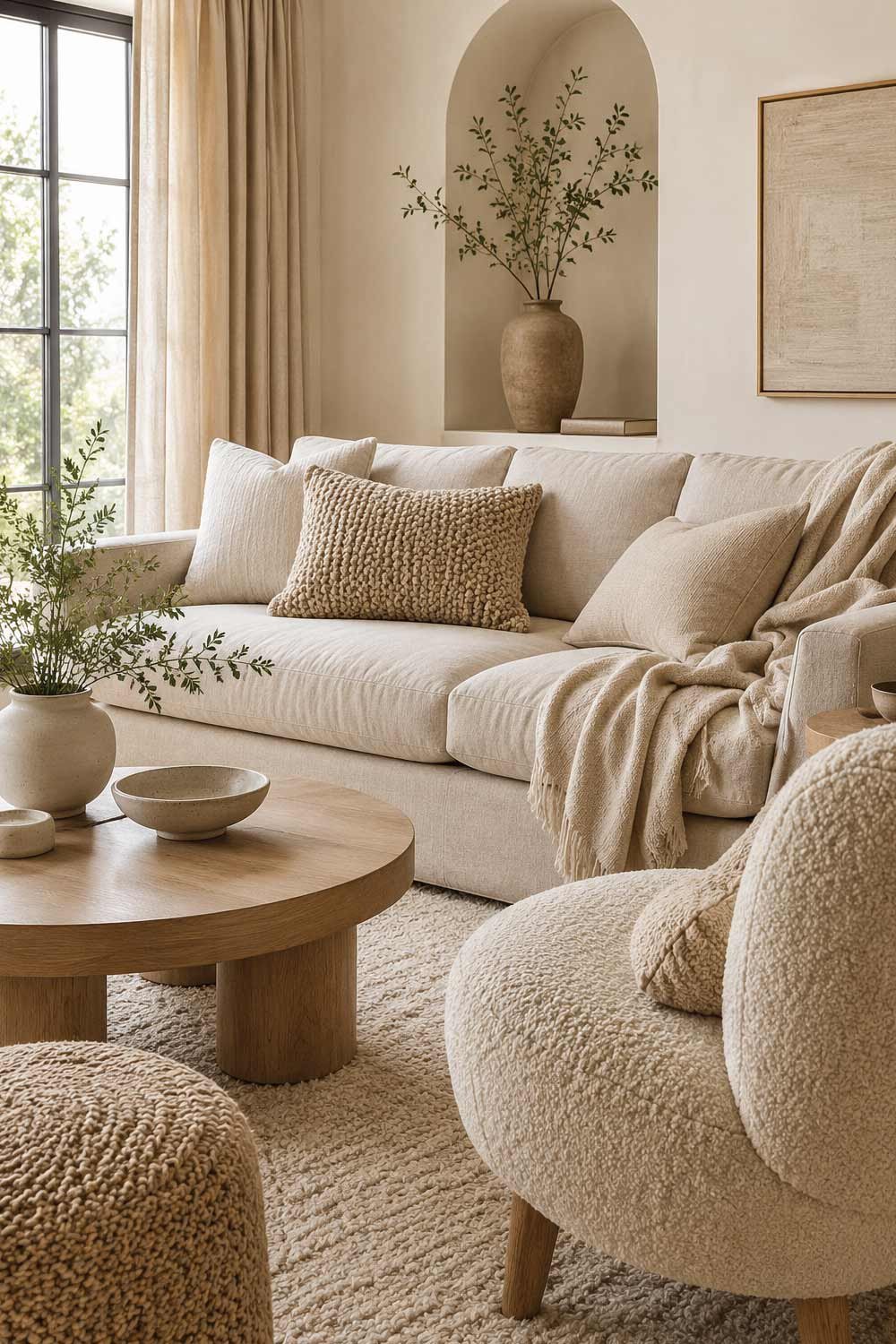
- Use linen sofas for breathable and naturally elegant seating comfort.
- Add bouclé chairs for soft texture and modern tactile richness.
- Include wool throws for warmth and cozy layered styling appeal.
- Use knitted cushions for added softness and visual depth contrast.
- Mix cotton fabrics for lightweight and versatile texture balance.
Think linen sofas, knitted throws, or boucle accent chairs. These materials add subtle visual interest while keeping the overall aesthetic soft and calming.
Personal Experience
I once styled a beige living room with linen cushions, bouclé chairs, and wool throws. The combination of textures completely transformed the space, making it feel warmer, more inviting, and significantly more visually dynamic without adding clutter.
5. Use Beige as a Backdrop for Statement Furniture
Beige interiors provide the perfect neutral backdrop for showcasing bold and sculptural furniture pieces. Because the palette is calm and understated, it allows standout designs to shine without visual competition. This approach creates a sophisticated balance between simplicity and focal interest in the overall living room design.
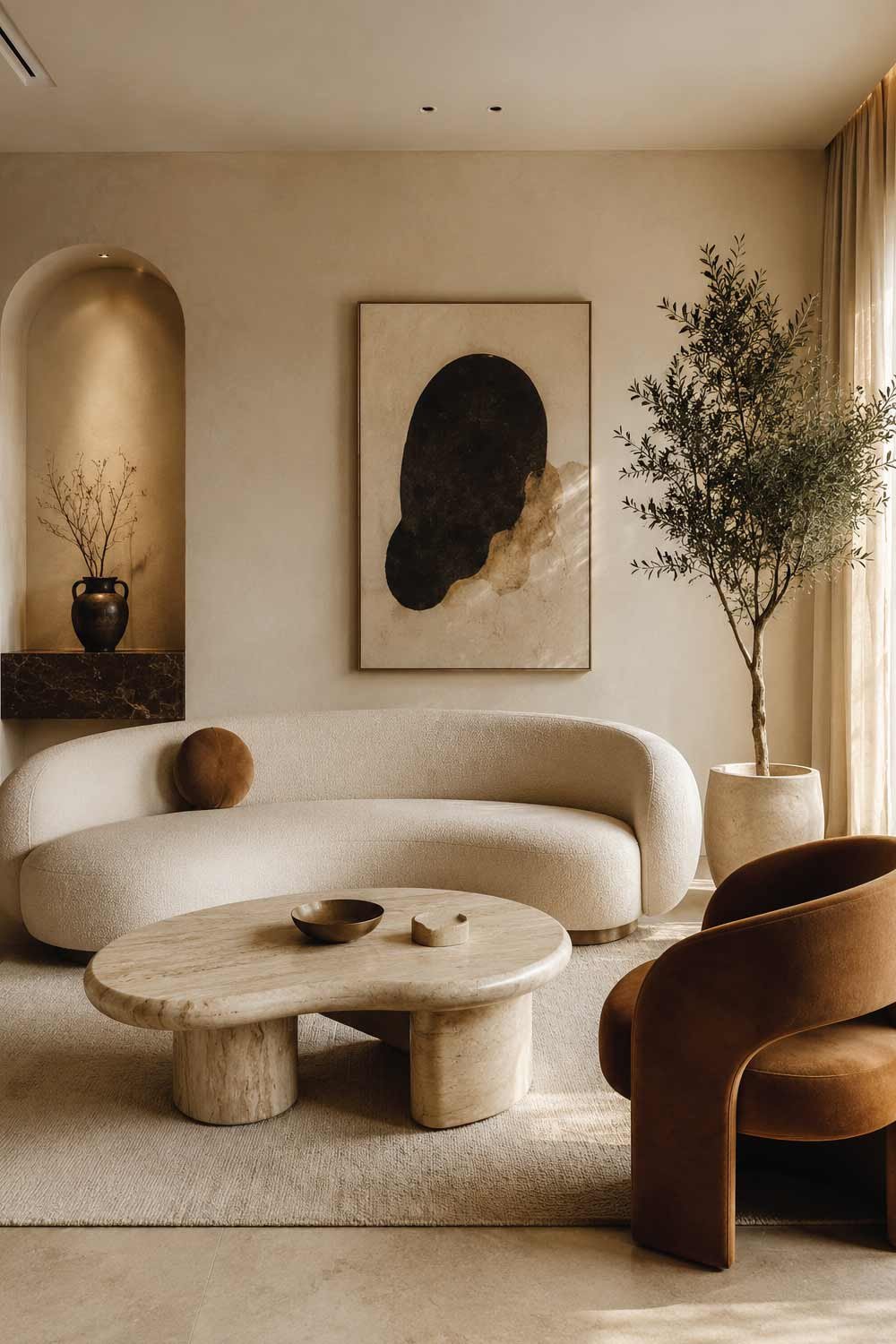
- Use sculptural coffee tables to create strong and elegant focal points.
- Add curved sofas for soft, modern, and visually fluid design impact.
- Choose bold armchairs to introduce contrast within neutral surroundings.
- Keep surrounding decor minimal to emphasize statement furniture pieces.
- Use neutral backgrounds to highlight shape, form, and material beauty.
A sculptural coffee table, a curved sofa, or a bold armchair can become a focal point without overwhelming the space. Keep surrounding elements minimal so the statement piece stands out.
Personal Experience
In a beige living room setup, I introduced a curved accent chair as a focal point. The neutral background allowed its shape to stand out beautifully, turning it into a subtle yet powerful design highlight in the space.
6. Introduce Soft Metallic Accents
Soft metallic accents add refined elegance to beige living rooms without disrupting their calm and neutral foundation. When used subtly, metals introduce warmth, reflection, and a hint of luxury. The key is restraint, ensuring that metallic elements enhance rather than overpower the softness of the overall interior design.
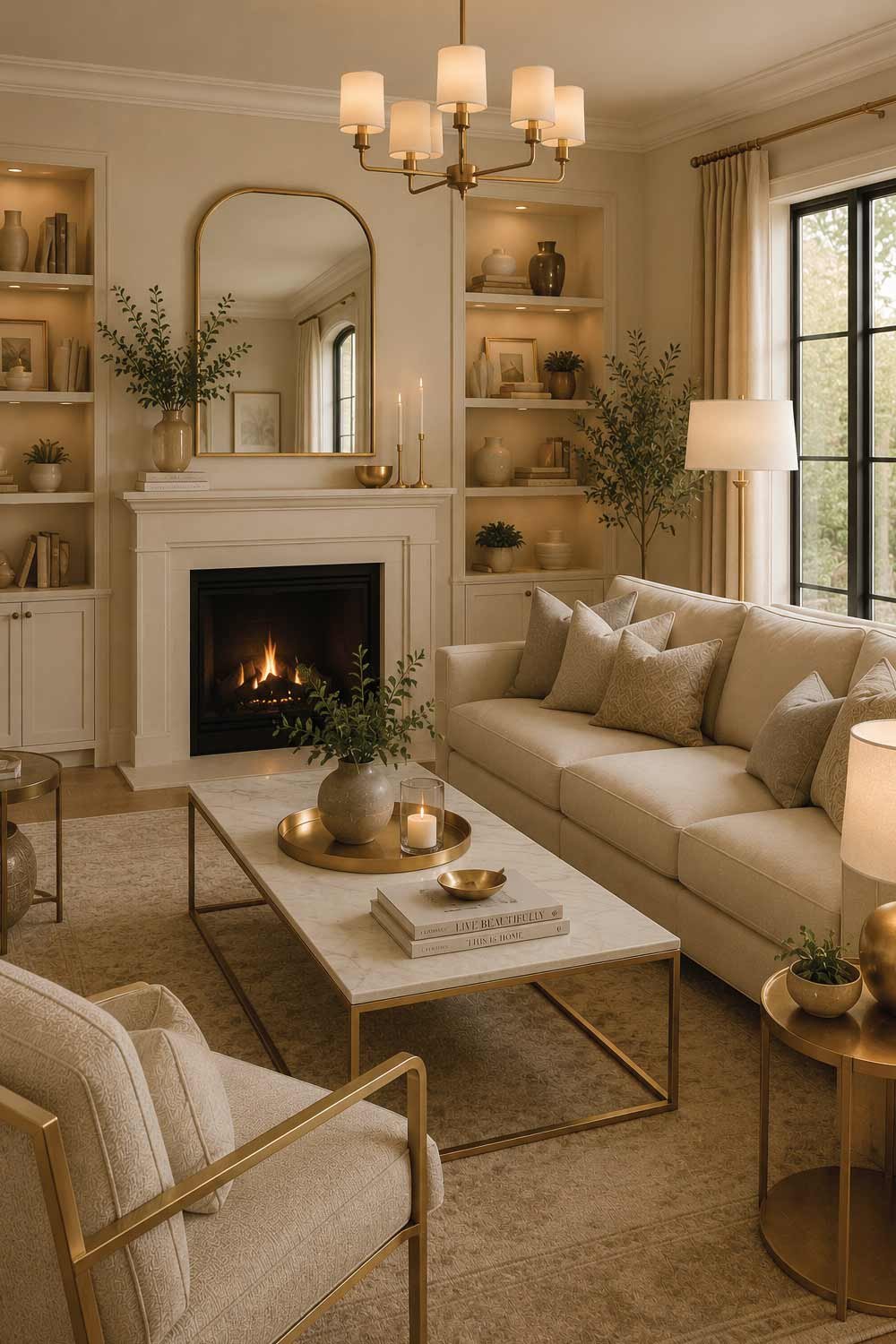
- Use brass finishes for warm and classic interior elegance.
- Add champagne gold accents for subtle luxury and refined glow.
- Choose brushed bronze for soft and understated metallic depth.
- Incorporate metallic lighting fixtures for gentle reflective highlights.
- Use mirror frames to enhance brightness and visual sophistication.
- Add small decor pieces for controlled and balanced metallic touch.
Use them in lighting fixtures, mirror frames, or small decorative items. These subtle reflective touches bring warmth and a hint of luxury to neutral interiors.
Personal Experience
In a beige-themed living room, I added brass lighting fixtures and a few gold accents. The result was a subtle but noticeable upgrade in elegance, giving the space a soft glow that enhanced its warm and sophisticated atmosphere.
Also Read:
7. Keep the Layout Light and Open
Beige interiors feel most elegant when the layout is open, breathable, and free from visual clutter. Overcrowding the space can weaken the calming effect of neutral tones. A well-spaced arrangement allows beige to express its natural softness while maintaining balance, flow, and a sense of effortless sophistication throughout the living room.
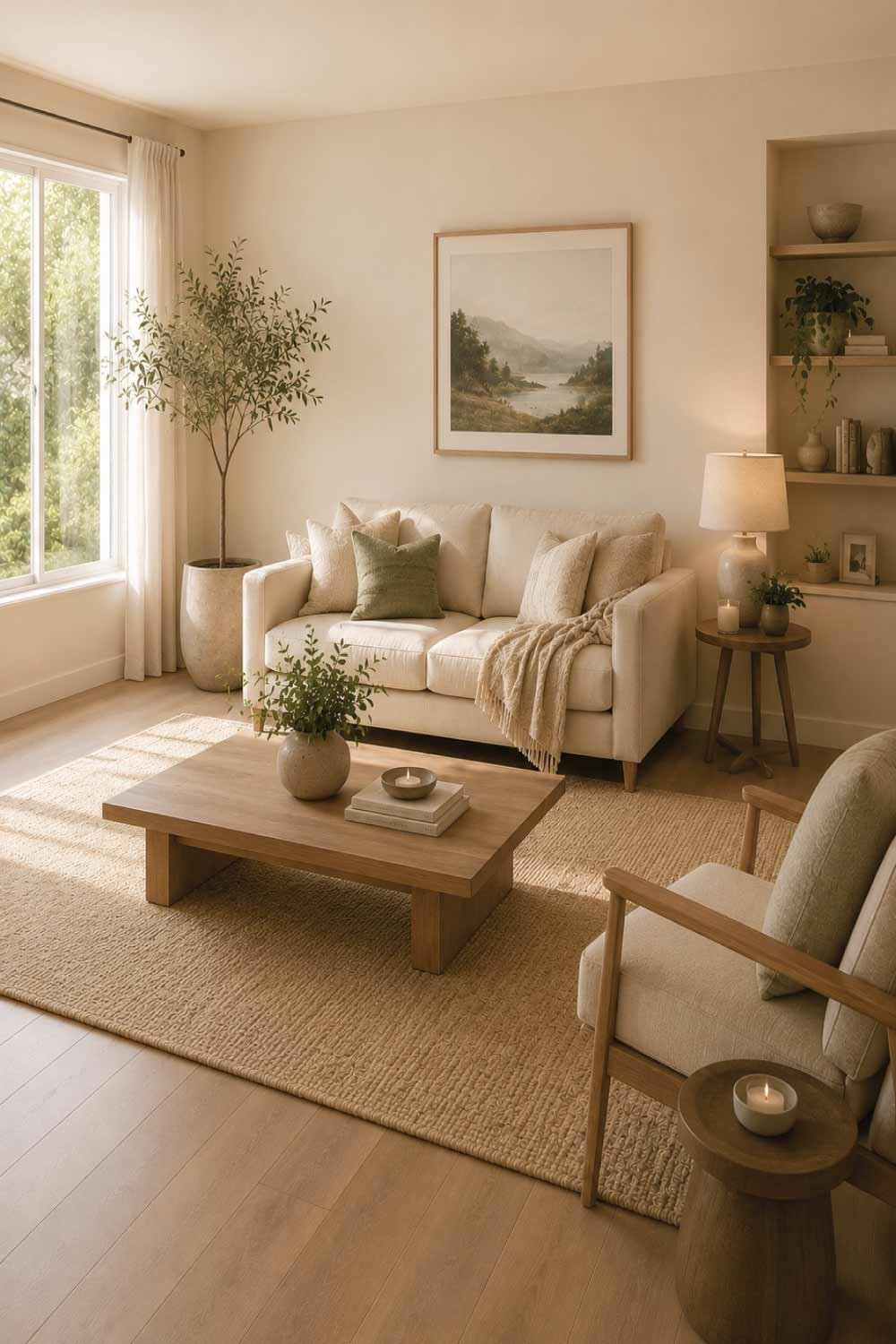
- Avoid overcrowding furniture to maintain spacious and breathable room design.
- Leave consistent gaps between pieces for smooth visual movement flow.
- Use fewer large furniture items instead of many small scattered pieces.
- Maintain clear walking paths to enhance comfort and functional usability.
- Position seating to encourage open conversation and balanced spatial harmony.
Leave space between pieces to allow the eye to move freely. This creates a sense of calm and spaciousness, reinforcing the airy feel that beige naturally provides.
Personal Experience
I once simplified a heavily furnished beige living room by removing extra chairs and decor pieces. The space immediately felt calmer and more elegant, with improved flow and a stronger sense of openness that highlighted the beige palette beautifully.
8. Add Depth with Layered Rugs
Layering rugs is a great way to introduce texture and dimension into a beige living room. Combine different tones within the beige family or mix materials like jute, wool, or woven cotton.Layered rugs add dimension, warmth, and texture to beige living rooms without disrupting the neutral harmony.
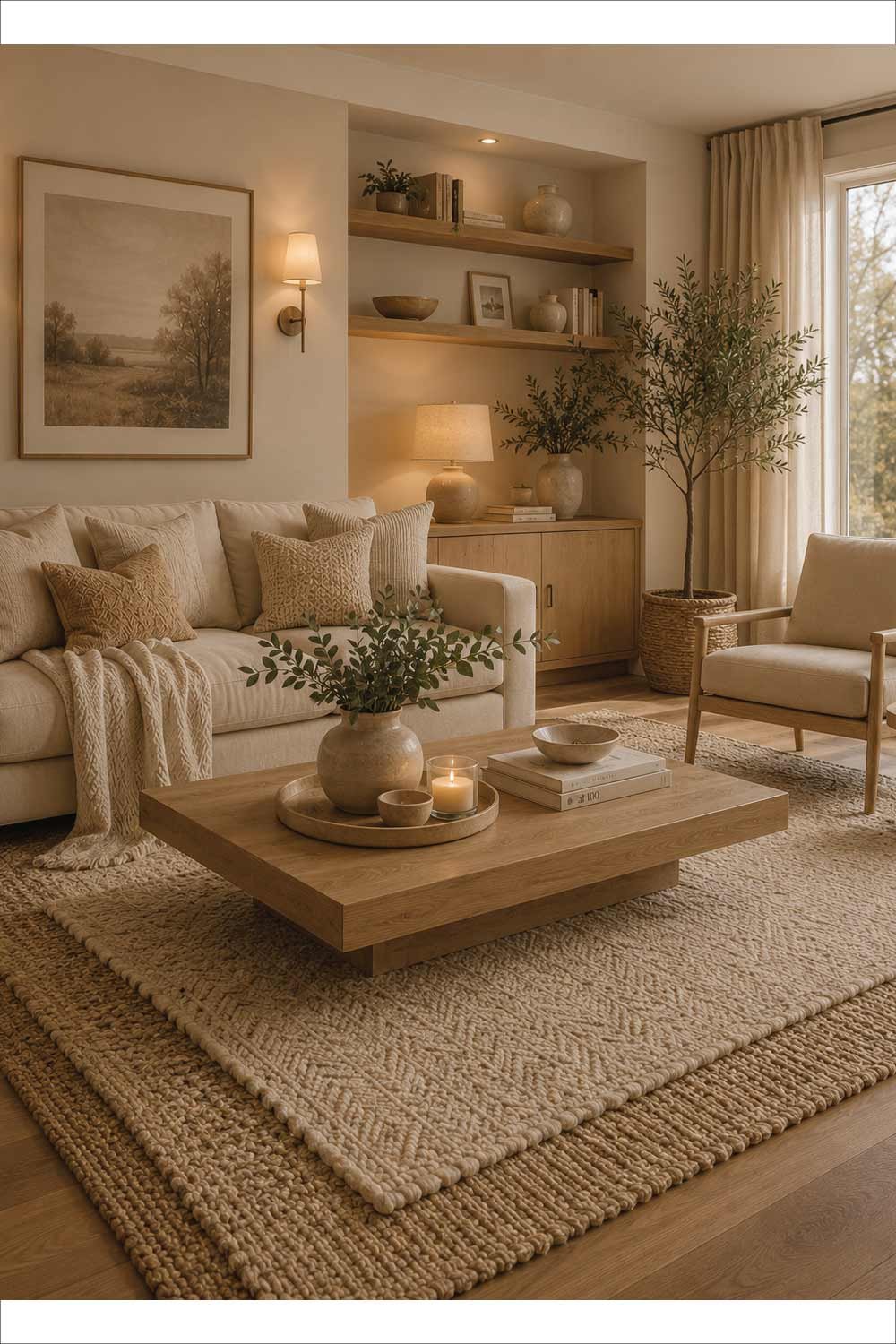
By combining different materials and subtle tones, the floor becomes a design feature rather than just a surface. This technique enhances comfort while maintaining the soft, cohesive aesthetic that defines beige interiors.
- Use large neutral rugs as a soft and stable base layer foundation.
- Add smaller textured rugs on top for visual depth and contrast.
- Combine materials like jute and wool for natural tactile variation.
- Stick to beige tones for seamless and harmonious layered appearance.
- Avoid bold colors that break the calm neutral design flow.
- Align rug placement carefully to define seating area boundaries clearly.
- Mix subtle textures to enhance warmth without overwhelming visual balance.
- Ensure rug sizes are proportionate for clean and structured layering.
Personal Experience
In a beige living room project, I layered a soft wool rug over a jute base. The combination added depth and warmth underfoot, making the space feel more grounded, cozy, and visually richer without introducing any strong contrasting colors.
Also Read:
12 Trending Creative Living Room Wall Art Ideas for Modern Homes
9. Incorporate Subtle Patterns
While beige spaces are typically minimal, soft patterns can help prevent monotony. Choose understated designs such as stripes, herringbone, or tone-on-tone geometric patterns.
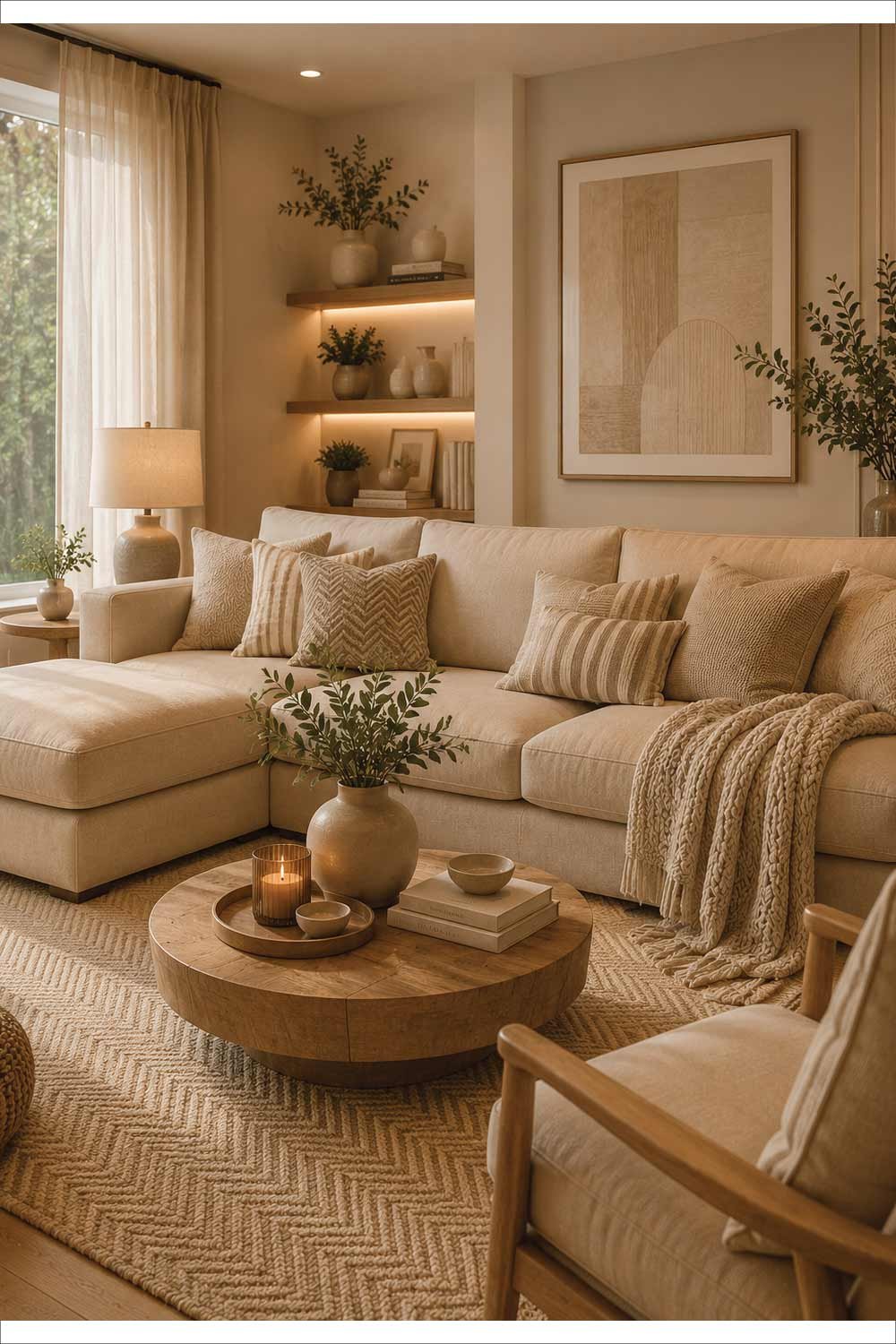
Subtle patterns help prevent beige interiors from feeling monotonous while preserving their calm and elegant nature. When used carefully, patterns introduce gentle movement and visual interest without overpowering the neutral palette. The key is restraint and harmony, ensuring patterns blend naturally with the overall soft and cohesive design language.
- Use tone-on-tone patterns for soft and barely noticeable visual texture.
- Choose stripes for subtle structure and clean linear design flow.
- Add herringbone patterns for refined and timeless interior sophistication.
- Incorporate geometric designs in muted tones for modern elegance.
- Avoid loud or high-contrast patterns that disrupt neutral harmony.
- Limit patterned elements to cushions, rugs, or small accents only.
- Balance patterns with plain surfaces for calm visual breathing space.
- Maintain consistent beige tones to ensure unified and soft aesthetic.
Personal Experience
I once introduced a herringbone-patterned cushion set in a beige living room. It added just enough visual interest to break monotony while still maintaining the calm, cohesive atmosphere of the neutral design.
10. Bring in Natural Light
Natural light is one of the most important elements in beige interiors. It enhances the warmth of the tones and makes the space feel open and welcoming.Natural light is essential in beige interiors because it enhances warmth, softness, and overall spatial clarity.
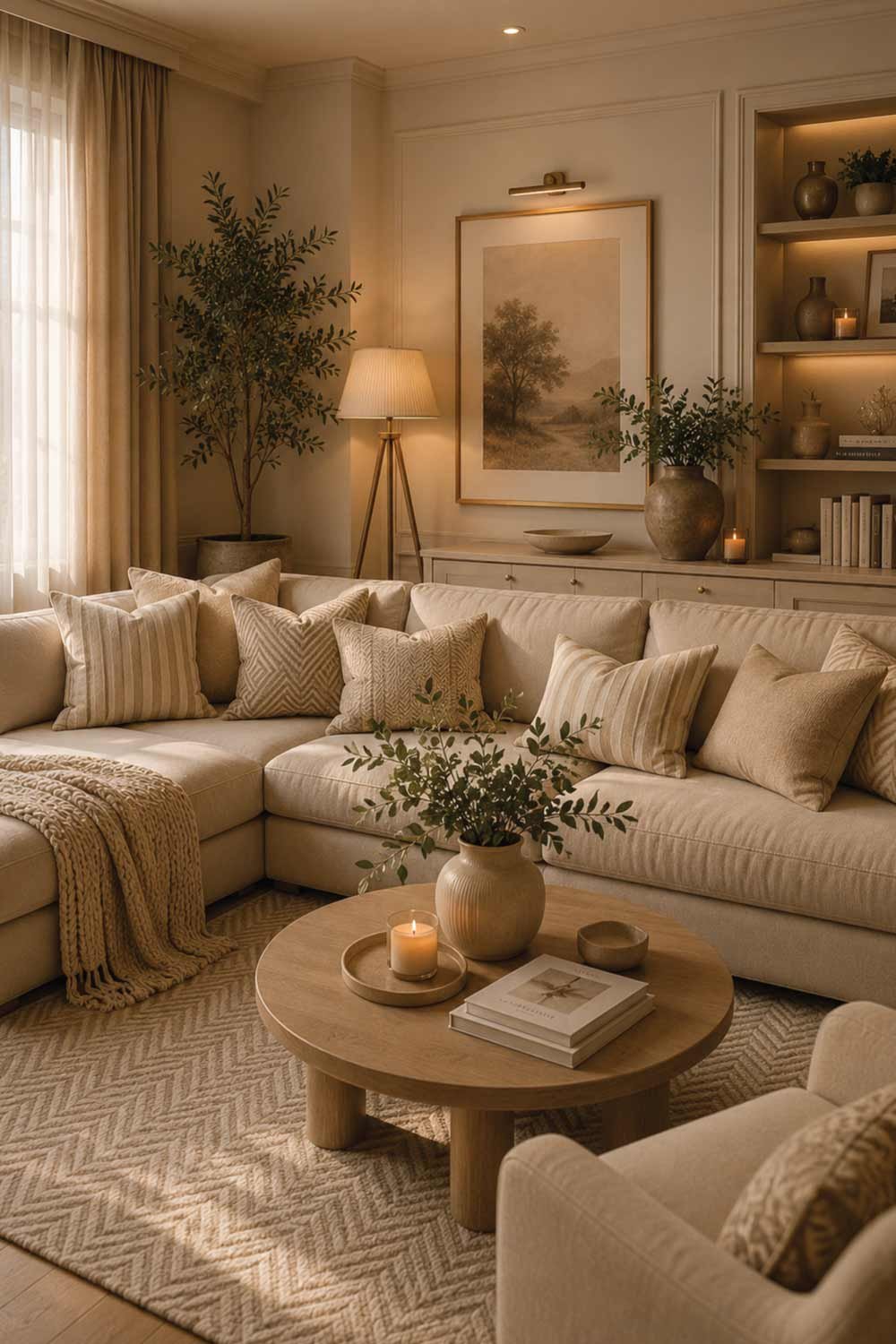
It helps neutral tones appear more vibrant and inviting throughout the day. A well-lit beige living room feels open, airy, and naturally uplifting, making sunlight one of the most important design elements.
- Use sheer curtains to allow soft and diffused daylight into room.
- Avoid heavy drapes that block natural light and reduce brightness.
- Position seating near windows for maximum natural illumination effect.
- Keep windows unobstructed to enhance light flow throughout space.
- Use light-colored walls to reflect and amplify natural sunlight.
- Combine mirrors to distribute daylight evenly across the room.
- Adjust furniture placement to avoid blocking sunlight pathways.
- Maintain clean glass surfaces for optimal light clarity and brightness.
Personal Experience
In a beige-themed living room, I replaced thick curtains with sheer panels. The space immediately felt brighter and more open, and the beige tones looked warmer and more natural under the enhanced daylight.
Also Read:
12 Trending Living Room Décor Ideas to Make Your Home Look Luxurious
11. Add Greenery for Fresh Contrast
Plants bring life and freshness into beige living rooms. Their green tones naturally complement neutral palettes and prevent the space from feeling too uniform.Greenery introduces life, freshness, and natural contrast into beige living rooms.
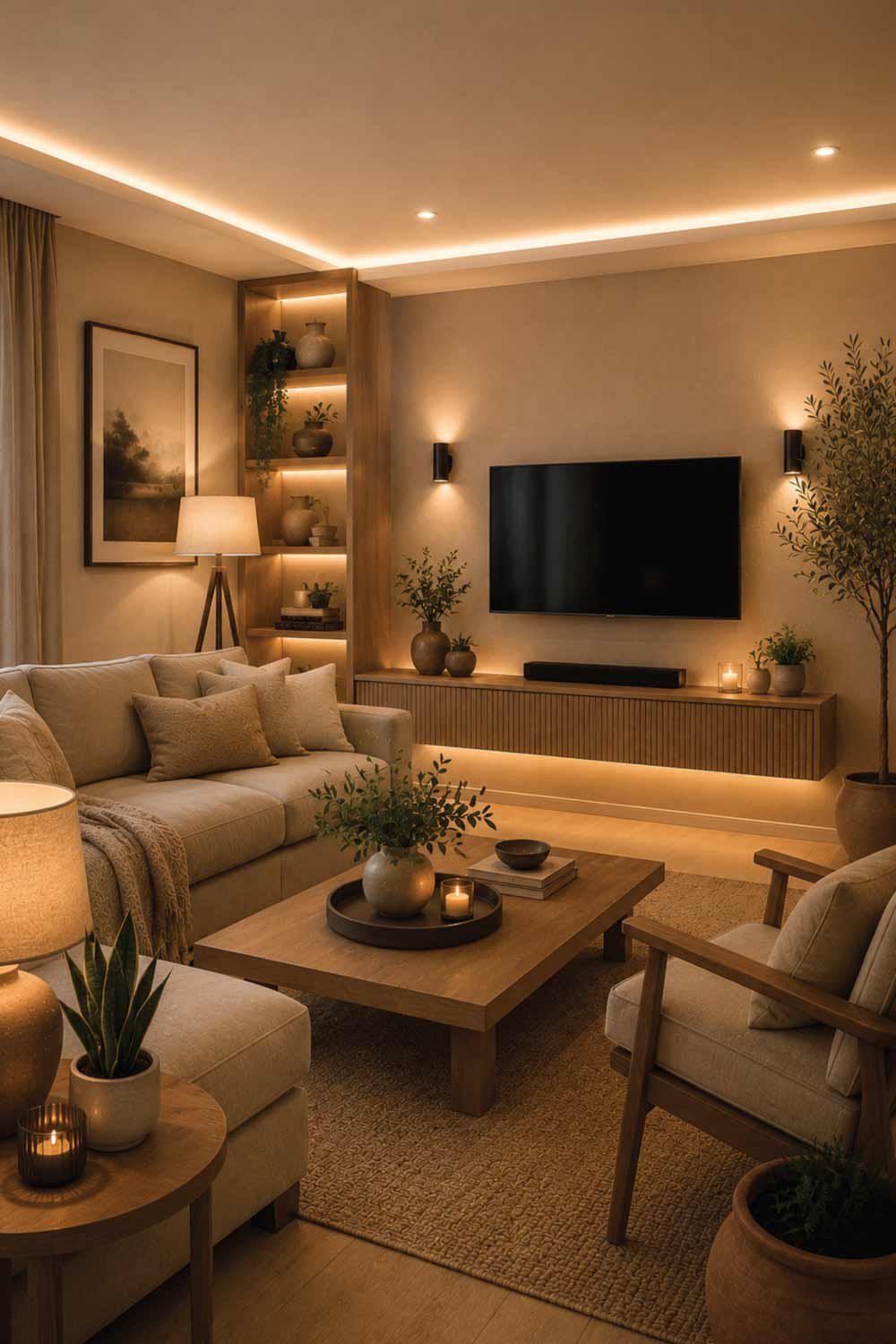
The soft green tones beautifully complement neutral palettes, preventing the space from feeling too uniform or flat. Plants also enhance airiness and emotional comfort, creating a balanced environment that feels both calm and organically vibrant.
- Use olive trees for elegant height and natural sculptural presence.
- Add snake plants for minimal maintenance and structured visual appeal.
- Include fiddle leaf figs for bold leafy texture and freshness.
- Choose simple ceramic pots to maintain neutral aesthetic harmony.
- Use terracotta planters for earthy warmth and natural contrast effect.
- Place plants in corners to soften empty and unused spaces.
- Mix plant sizes for layered and dynamic visual composition.
- Avoid overcrowding to preserve clean and breathable interior layout.
Personal Experience
I added a few indoor plants, including a snake plant and small olive tree, to a beige living room setup. The greenery instantly made the space feel fresher, more balanced, and visually alive without disturbing the neutral calmness.
12. Style with Minimal but Meaningful Décor
Beige interiors achieve their full elegance when styled with simplicity and intention. Minimal but meaningful décor ensures the space remains calm, uncluttered, and visually refined. Each object should contribute purpose and personality, while negative space enhances focus and allows the neutral palette to express its full sophistication.
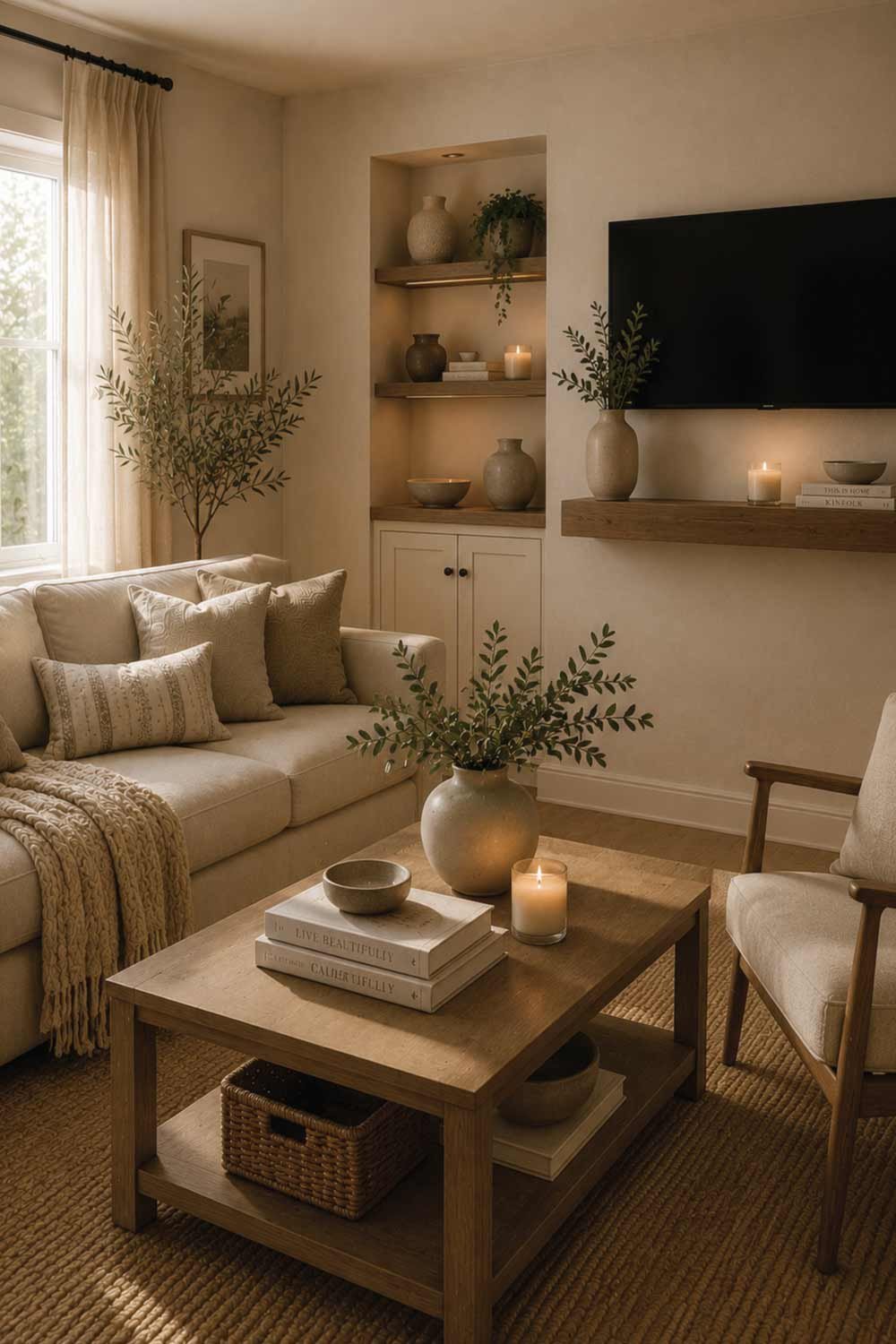
- Choose fewer decor items to maintain calm and uncluttered surfaces.
- Use ceramic vases for simple and elegant decorative expression.
- Stack books for subtle intellectual and visual styling balance.
- Add candles for soft warmth and ambient cozy atmosphere.
- Select sculptural objects for refined and artistic focal points.
Think ceramic vases, stacked books, candles, or sculptural objects. Negative space is just as important as décor it helps highlight each piece and maintains the calm elegance of the room.
Personal Experience
In a beige living room redesign, I reduced décor to only a few ceramic pieces, books, and candles. The simplicity made each item stand out more clearly, creating a calm, elegant, and intentionally styled environment.
Also Read:
12 Trending Aesthetic Living Room Apartment Ideas You Will Love in 2026
Final Thoughts
A beige living room is far from boring when designed thoughtfully. It’s a foundation for creating a space that feels warm, sophisticated, and timeless. The beauty of beige lies in its flexibility it can lean cozy, modern, minimalist, or luxurious depending on how you style it.
By layering textures, incorporating natural materials, and maintaining balance through light and space, you can turn a simple beige palette into a refined and inviting living room that never goes out of style.
