
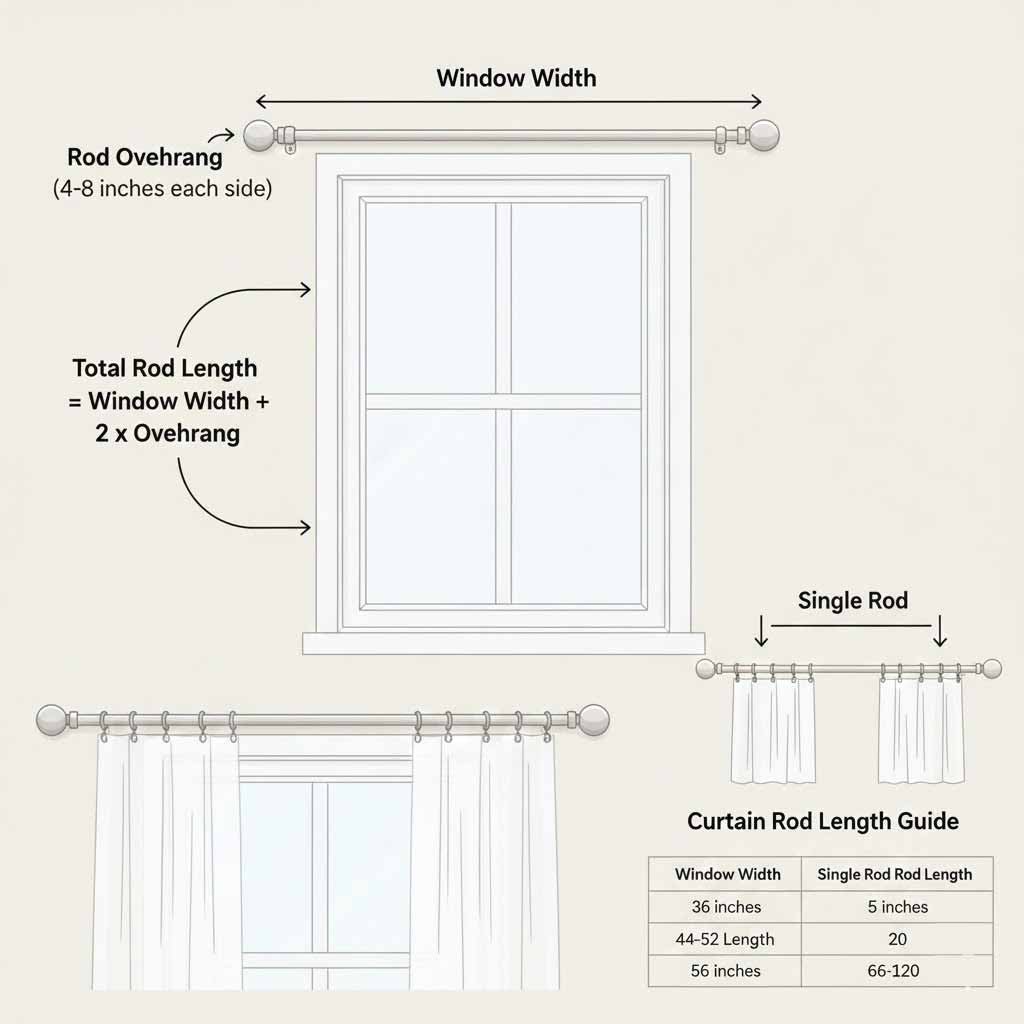
Choosing the right curtain rod might seem simple, but it can dramatically change the look and feel of your room. A curtain rod isn’t just a functional piece; it’s a key element in framing your windows, enhancing décor, and even improving the perception of space. This guide will walk you through everything you need to know about selecting the ideal curtain rod, including understanding measurements, exploring different styles, and using a curtain rod length chart to make an informed decision.
Why Curtain Rod Length Matters
Many homeowners underestimate the impact of curtain rod sizing. Installing a rod that is too short can make your window appear smaller, while a rod that’s too long may overwhelm the wall or make curtains hang awkwardly. Here’s why length matters:
Visual Balance: Properly sized rods create a harmonious look. They ensure curtains fall elegantly without appearing cramped.
Functionality: Correct rod length allows curtains to open and close smoothly without obstruction.
Room Perception: Extending rods beyond the window frame can make the room appear larger and brighter.
Standard Curtain Rod Lengths
Curtain rods come in various lengths, typically adjustable to accommodate multiple window sizes. While every manufacturer may have slight variations, here’s a general breakdown:
24–36 inches: Suitable for small windows, often used in bathrooms, kitchens, or closets.
36–66 inches: Ideal for medium-sized windows found in bedrooms and living rooms.
66–120 inches: Designed for large windows or sliding glass doors.
120–144 inches: Perfect for extra-wide windows or when mounting double curtains.
These adjustable ranges provide flexibility, allowing you to customize the rod length based on your window width and desired curtain style.
How to Measure for Curtain Rods
Before purchasing, measuring your window correctly is crucial. Follow these steps:
Measure the Window Width:
Start by using a reliable measuring tape to record the exact width of your window from one edge to the other. Accurate measurements ensure that your curtain rod fits perfectly and that your curtains hang evenly without looking cramped or oversized.
Decide on Rod Overhang:
Add an extra 4–12 inches on each side of the window frame when planning your rod placement. This overhang allows curtains to fully cover the window when closed and stack neatly to the sides when open, creating a balanced, elegant look.
Determine Rod Placement:
Mount the curtain rod 4–6 inches above the top of the window frame. Placing it slightly higher than the frame creates the illusion of taller windows, enhances room height perception, and ensures curtains drape smoothly without touching furniture or sills.
Check Wall Space:
Before installation, verify that there’s sufficient wall space on either side of the window to accommodate brackets and finials. This is especially important for decorative rods, as proper clearance ensures stability and prevents curtains from looking cramped or uneven.
By following these steps, you can accurately select a rod that complements both your window and room.
Curtain rod length guide
A window curtain rod length chart simplifies the selection process by showing recommended rod sizes based on standard window widths. Below is a general guide:
| Window Width | Recommended Rod Length |
|---|---|
| 24–36 inches | 28–40 inches |
| 36–48 inches | 40–54 inches |
| 48–60 inches | 52–72 inches |
| 60–72 inches | 66–84 inches |
| 72–96 inches | 78–108 inches |
| 96–120 inches | 108–144 inches |
Tips for Using the Chart:
- Always add extra inches for the rod overhang to create a fuller look.
- For multiple panels, ensure the rod length allows curtains to stack comfortably without blocking the window.
Types of Curtain Rods
Choosing the right length is just one part of the equation. You should also consider the rod style that best fits your space:
1. Single Rods
Single rods are the most commonly used curtain rods because they are simple, practical, and versatile. Ideal for lightweight or medium-weight curtains, they are easy to install and adjust. Single rods provide a clean, minimal look and work well for nearly all standard windows, making them a reliable choice for most rooms.
2. Double Rods
Double rods are perfect for layering curtains, such as pairing sheer panels with heavier drapes. They allow you to control light while maintaining privacy and style. When installing double rods, ensure there is sufficient space between the two rods so the curtains hang smoothly without crowding, providing both functionality and a polished appearance.
3. Extendable Rods
Extendable rods are designed to adjust easily, making them ideal for irregular or non-standard window sizes. Their telescoping design allows you to lengthen or shorten the rod without the need for new hardware. This flexibility ensures a perfect fit for any window while offering convenience and adaptability for changing décor over time.
4. Decorative Rods
Decorative rods combine function and style, often featuring ornate finials, elegant shapes, or premium materials like brass or wood. They can serve as a statement piece in a room, complementing the overall décor. Choosing the correct length is important to maintain balance and ensure that the visual appeal of the curtains and rod is harmonious.
Material and Finish Considerations
The material and finish of your curtain rod can influence both aesthetics and functionality:
Metal Rods:
Metal curtain rods are highly durable and provide a sleek, contemporary appearance that complements modern or industrial décor. They are strong enough to support heavy curtains without bending or sagging. Available in various finishes like brushed nickel, black, or bronze, metal rods offer both functionality and stylish elegance for any room.
Wood Rods:
Wood curtain rods bring warmth and a classic, traditional feel to any space. They work beautifully with rustic, vintage, or cozy interiors. Because wood is less flexible than metal, precise measurement is essential to ensure a perfect fit. Available in various stains and finishes, wood rods add natural charm to your windows.
Plastic or Composite Rods:
Plastic or composite curtain rods are lightweight, easy to install, and budget-friendly, making them ideal for smaller windows or temporary setups. While not as durable as metal or wood, they are practical for everyday use. These rods come in various colors and finishes, offering versatility without compromising affordability or convenience.
Finishes range from matte black and brushed nickel to gold and bronze, allowing customization to match furniture and other hardware.
Mounting Tips for Perfect Curtain Rod Placement
Even the right rod can look off if mounted incorrectly. Here’s how to achieve the best results:
Height Placement:
Mount the curtain rod slightly above the window frame, typically 4–6 inches for standard ceilings, to create the illusion of taller windows and a more open, airy room. Proper height placement ensures curtains drape elegantly, enhances natural light flow, and improves overall room proportions for a polished look.
Side Clearance:
Make sure there’s adequate wall space on both sides of the window so curtains can fully stack back when open. Proper side clearance prevents overcrowding, allows smooth curtain operation, and maintains visual balance. This ensures that your curtains don’t block light or appear cramped, enhancing both function and aesthetics.
Bracket Support:
Heavy or layered curtains require strong bracket support to prevent sagging or bending. For wider windows, consider installing a middle support bracket for stability. Proper bracket placement ensures the curtain rod remains level, supports the curtain weight evenly, and maintains the polished, professional look of your window treatment.
Special Considerations for Wide or Odd-Shaped Windows
Wide windows or unique shapes like bay or arched windows can be tricky. In these cases:
- Use extendable rods or multiple rods for even support.
- Consider custom rods for arch-top windows.
- For bay windows, use corner connectors or flexible rods to maintain smooth curtain movement.
Curtain Rod Length and Curtain Type
The type of curtain you choose can affect rod length decisions:
Sheer Curtains:
Sheer curtains are lightweight and flexible, allowing light to filter through while providing privacy. Because they are delicate and tend to drape loosely, slightly longer curtain rods are recommended to achieve a fuller, elegant look and smooth stacking when opened.
Blackout Curtains:
Blackout curtains are thick and heavy, designed to block light completely. These curtains require sturdy, high-quality rods with strong brackets to support their weight. Proper rod selection ensures smooth operation, prevents sagging, and maintains a polished, secure appearance for long-term use.
Panel Width:
When selecting curtain rods, consider the width of each panel. Standard panels are about 50 inches wide, but wider panels or layered setups require longer rods to allow proper stacking. Adequate rod length ensures curtains hang neatly and cover the window effectively.
Common Mistakes to Avoid
Choosing Too Short a Rod: Curtains may look cramped or fail to cover the window completely.
Ignoring Overhang: Overhang is essential for aesthetic appeal and functionality.
Using Weak Rods for Heavy Curtains: A rod that bends or sags will ruin the look and may damage walls.
Mismatched Finials or Rod Style: Ensure decorative ends match the curtain style and room décor.
Benefits of Referring to a Curtain Rod Length Chart
A curtain rod length chart is more than just a quick reference. Its benefits include:
Accuracy: Ensures you purchase the correct rod length without guessing.
Time-Saving: Reduces multiple trips to the store for exchanges.
Design Consistency: Helps maintain uniformity when installing multiple windows in a room.
DIY vs. Custom Rods
DIY Rods:
DIY curtain rods are widely available, adjustable, and budget-friendly, making them ideal for standard-sized windows. Their versatility allows you to quickly fit common window widths without custom orders, providing an easy, cost-effective solution while still maintaining a neat, stylish appearance in any room.
Custom Rods:
Custom curtain rods are designed for irregular or oversized windows, offering precise length and style tailored to your space. While they can be more expensive, custom rods ensure a flawless fit, perfect operation, and a polished, professional look that complements any interior décor.
Tips for Layered Window Treatments
When layering curtains, rod selection becomes crucial:
Double Rods for Function and Style:
Double rods allow you to layer curtains effectively, pairing sheer inner panels with opaque outer drapes. This setup provides flexibility in controlling light, enhancing privacy, and adding visual depth, while creating a stylish, elegant window treatment for any room.
Extra Length for Decorative Overlap:
When layering curtains, ensure the curtain rod is long enough to allow panels to overlap without crowding. Adequate rod length ensures that each layer drapes smoothly, stacks neatly when open, and maintains a balanced, visually appealing appearance in your window décor.
Consider Weight:
Layered curtains can be heavier than single panels, so choose a sturdy rod that can support the combined weight. Proper rod strength prevents sagging or bending, ensuring smooth operation and a polished, professional look for your window treatments.
Curtain Rod Accessories
Accessories enhance functionality and style:
Brackets: Ensure stability for single or double rods.
Finials: Decorative end caps that complete the look.
Rings and Hooks: Smooth operation for sliding curtains.
Holdbacks and Tiebacks: Control curtain positioning and add elegance.
Conclusion
Choosing the correct curtain rod length is a simple step that can transform your room’s appearance. Using a curtain rod length chart ensures precision, avoids unnecessary trial and error, and guarantees that your curtains hang beautifully. Remember to account for window size, curtain type, overhang, and rod style for a polished and functional window treatment.
By understanding measurements, rod types, and mounting techniques, anyone can achieve a balanced, aesthetically pleasing setup that enhances both light control and interior décor. Whether you opt for adjustable rods, decorative finials, or custom-made solutions, a little planning goes a long way in creating a window display that truly elevates your space.
FAQs:
How do I measure my window for a curtain rod?
To measure for a curtain rod, first measure the width of your window frame. Then, decide how far you want the rod to extend beyond each side—usually 4–12 inches. Finally, add the overhang to the window width to determine the ideal rod length. This ensures curtains hang properly and frame your window elegantly.
How much should a curtain rod extend beyond the window?
A curtain rod should extend beyond the window frame by 6–12 inches on each side, depending on your room and curtain style. Extra length allows curtains to stack neatly when open, maximizing natural light. It also ensures full coverage for privacy when closed and creates a more visually balanced and elegant appearance.
What are standard curtain rod sizes?
Curtain rods come in standard lengths like 28–48 inches for small windows, 48–84 inches for medium, 66–120 inches for large, and 120–170 inches for extra-wide windows. Adjustable rods provide flexibility, while decorative rods may require extra length for finials. Always measure your window and add overhang to choose the correct size.
Can I use one curtain rod for multiple windows?
Yes, you can use a single, extra-long rod for multiple windows, especially if they are adjacent. Ensure the rod is strong enough to support the combined curtain weight and uses multiple brackets for stability. This creates a continuous, elegant look while allowing smooth curtain operation across all windows.
How high above the window should I mount the rod?
Curtain rods are typically mounted 4–6 inches above the window frame for standard-length curtains. For floor-to-ceiling curtains, consider placing the rod closer to the ceiling to make windows appear taller. Proper height placement enhances room proportions and ensures curtains hang gracefully without touching or dragging on furniture or the floor.
Do curtain rod types affect the length I need?
Yes, the rod type impacts length. Single rods are straightforward, while double rods need extra consideration for layered curtains. Decorative rods with finials require additional space beyond the window width. Adjustable rods offer flexibility, but heavy-duty or extendable rods must match window measurements plus overhang to maintain functionality and visual balance.
