

I used to think “luxury interior design” meant spending a fortune on designer furniture and marble everything. But over time—after a few home makeovers, a couple of Pinterest rabbit holes, and more paint samples than I’d like to admit—I realized luxury is less about price tags and more about how a space feels.
A truly luxurious living room feels intentional. Calm. Balanced. It’s the kind of space where nothing feels random, even if it’s actually a mix of affordable pieces and a few investment items.
So today, I am sharing 12 luxury interior design living room ideas that I have personally used, tested, or taken serious inspiration from while designing my own space and helping friends with theirs.
Table of Contents
Toggle1. Start with a Neutral, Layered Color Palette
The first time I tried to “go luxury,” I made the mistake of using too many bold colors at once. Instead of feeling elegant, the room ended up looking busy and a bit chaotic. Nothing felt connected, and the space lost its calm atmosphere.
What completely changed my approach was switching to a layered neutral palette. Think warm whites, soft taupes, muted grays, and creamy beige tones. Luxury interiors almost always rely on restraint rather than loud color choices.
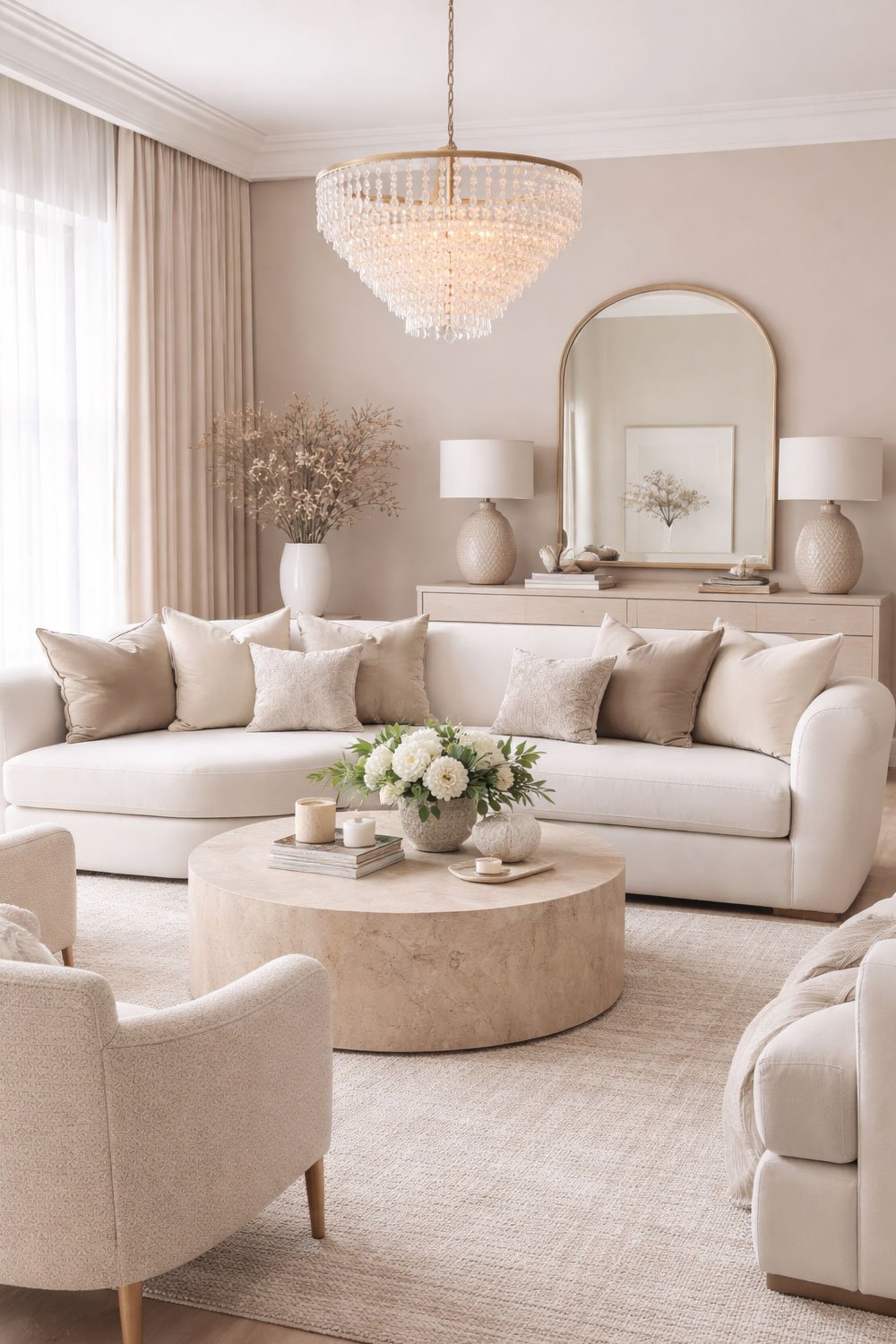
Now, instead of flat white walls, I prefer soft warm neutrals that subtly shift throughout the day with natural light. This adds depth and softness to the room without overwhelming it, making everything feel more intentional and balanced.
Why it works:
Creates a calm, cohesive base
Makes furniture and décor stand out
Feels timeless, not trendy
2. Invest in a Statement Sofa (This Is Non-Negotiable)
If there’s one lesson I learned the hard way, it’s that a cheap-looking sofa can drag down an entire room, no matter how well-decorated everything else is. It becomes the visual anchor, whether you want it to or not.
When I finally upgraded to a well-structured, deep, neutral-toned sofa, the difference was immediate. The entire living room felt more polished, cohesive, and high-end without changing anything else.
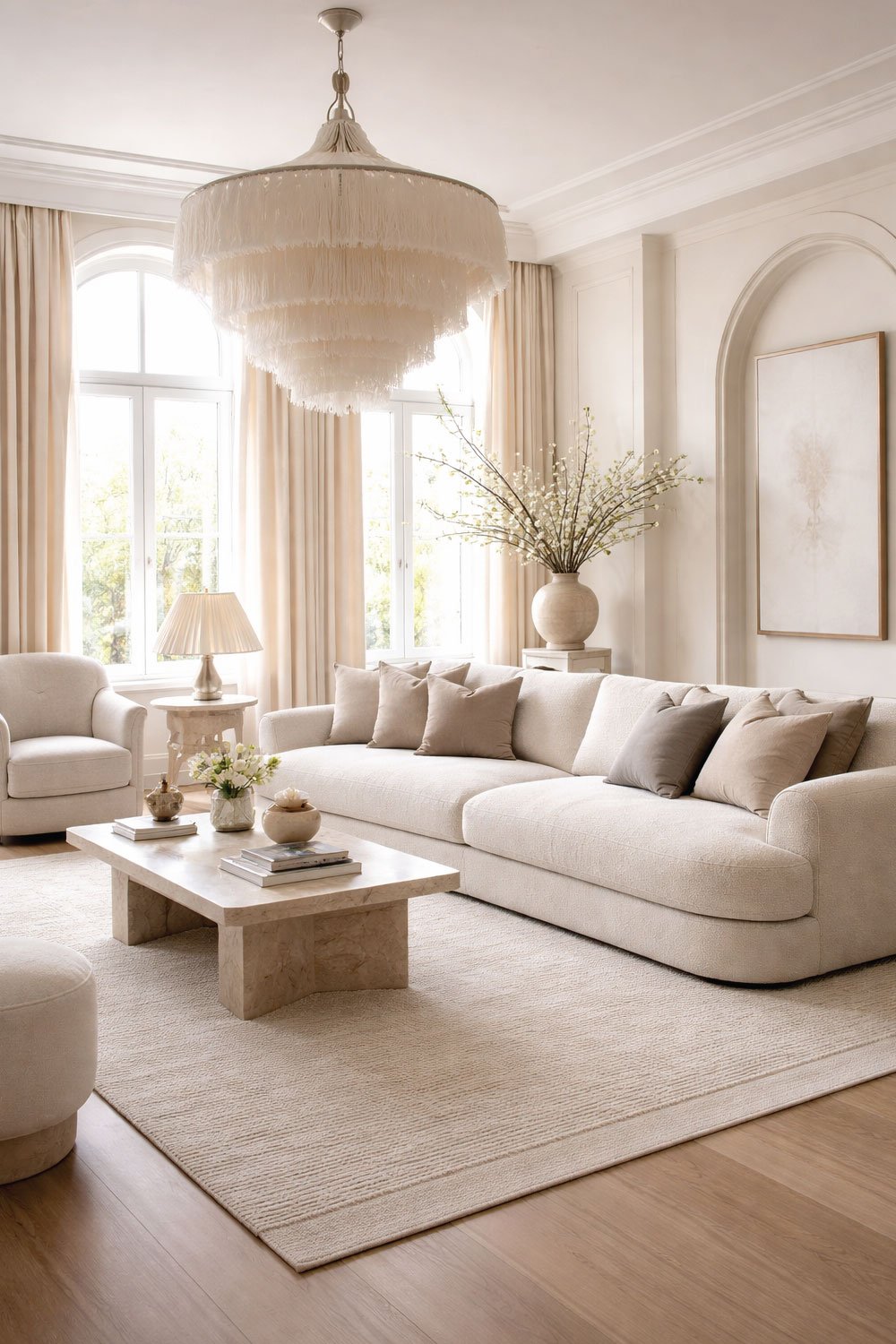
Luxury living rooms almost always revolve around a strong centerpiece sofa. Look for clean lines or elegant curves, high-quality fabric like linen blends or velvet, and timeless muted tones that don’t overpower the space.
Look for:
Clean lines or elegant curves
High-quality fabric (linen blends, velvet, or performance textiles)
Neutral or rich muted tones
3. Layer Lighting Like Designers Do
For a long time, I relied on a single overhead ceiling light, and my living room always felt flat and slightly unfinished. It was bright, but not warm or inviting.
Everything changed when I learned to layer lighting properly. I started combining ambient lighting for general brightness, task lighting like reading lamps, and accent lighting such as wall sconces or soft LED highlights.
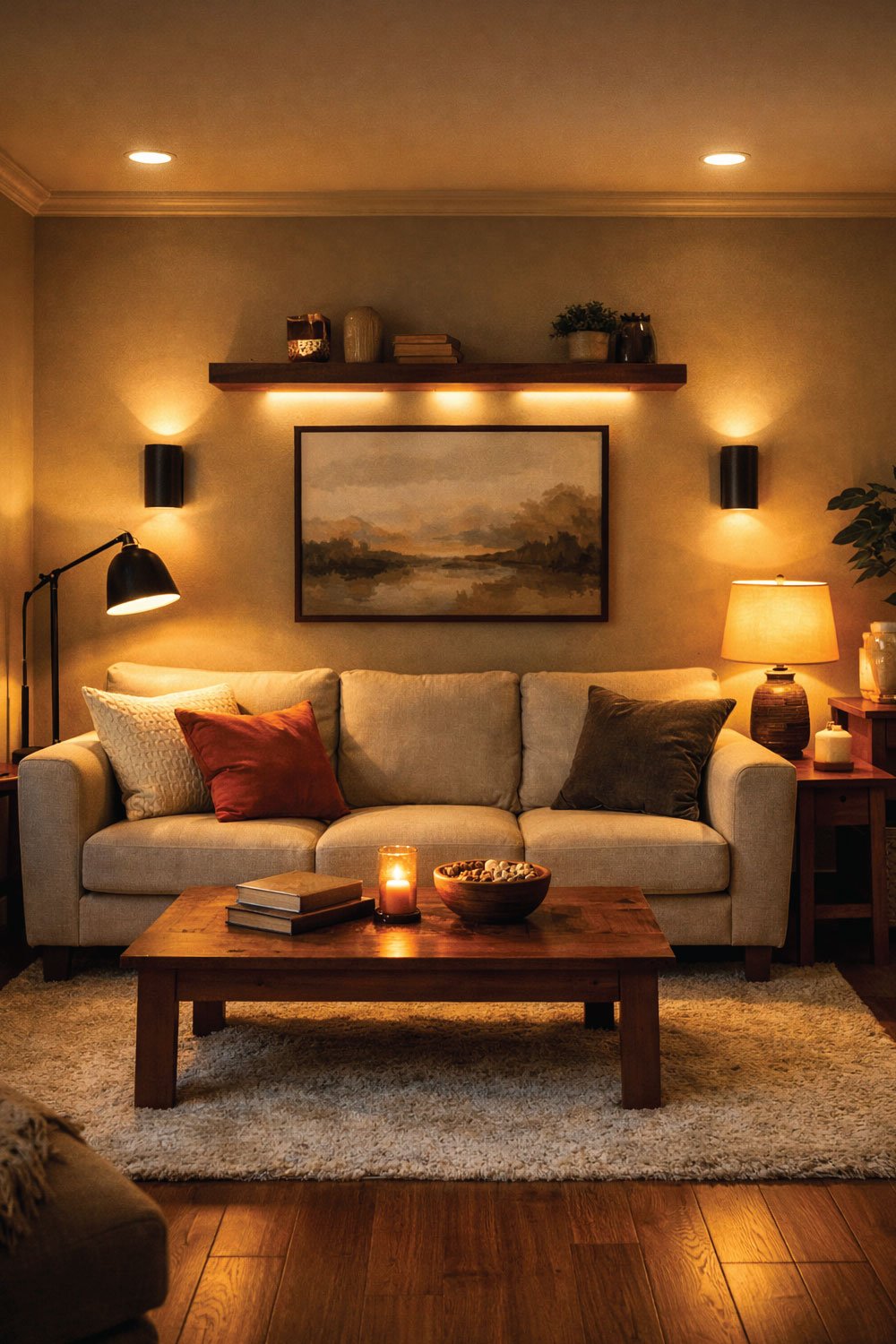
When I added just two warm table lamps in the corners of my living room, the transformation was instant. The space felt softer, more dimensional, and surprisingly more expensive—without changing a single piece of furniture.
Now I always layer lighting:
Ambient (ceiling or recessed lights)
Task (reading lamps)
Accent (wall sconces or LED highlights)
When I added two warm table lamps in my living room corners, the transformation was instant. Everything felt softer and more expensive.
4. Add Floor-to-Ceiling Curtains
This is one of the simplest luxury tricks I’ve ever used, and it never fails to make a room feel more refined. Curtains alone can completely change the perception of space.
I remember my first attempt—I hung curtains right above the window frame, and while it looked okay, it didn’t feel impressive. Later, I rehung them closer to the ceiling and let them fall all the way to the floor.
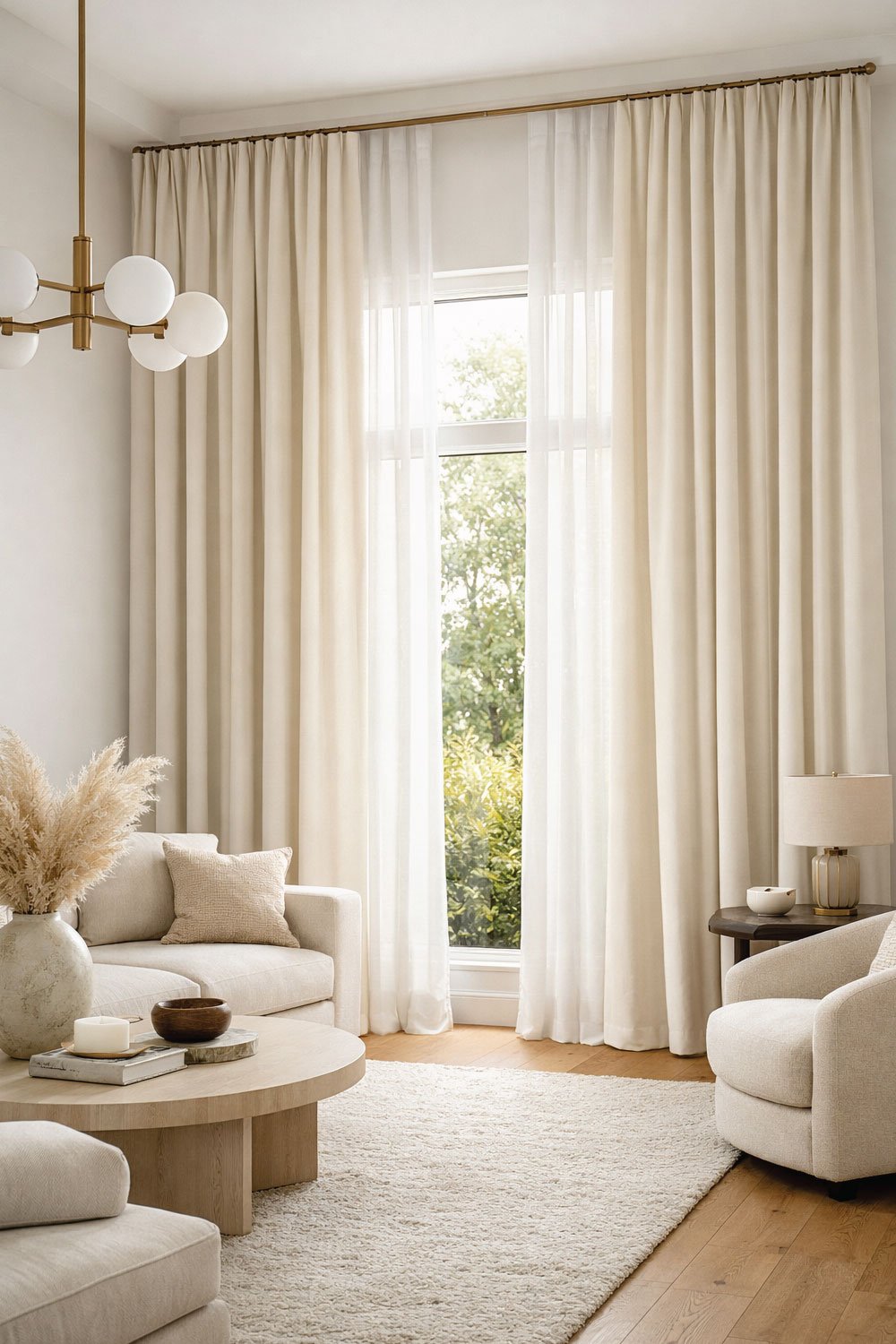
The difference was dramatic. The room instantly felt taller, more elegant, and more intentionally designed. For a high-end look, I now always choose fabrics like linen, velvet, or heavy cotton, which add softness and richness to the space.
Pro tip:
Stick with linen, velvet, or heavy cotton fabrics for that high-end feel.
5. Use Large-Scale Art Instead of Small Frames
I used to fill my walls with small, scattered frames because I thought more pieces would make the space feel more personal. Instead, it did the opposite. The walls felt busy, cluttered, and oddly less intentional, even though each piece meant something to me.
What I noticed in luxury interiors is that they almost always take the opposite approach—fewer but much larger art pieces. There’s a sense of confidence in leaving negative space and letting one piece carry the visual weight of the room.
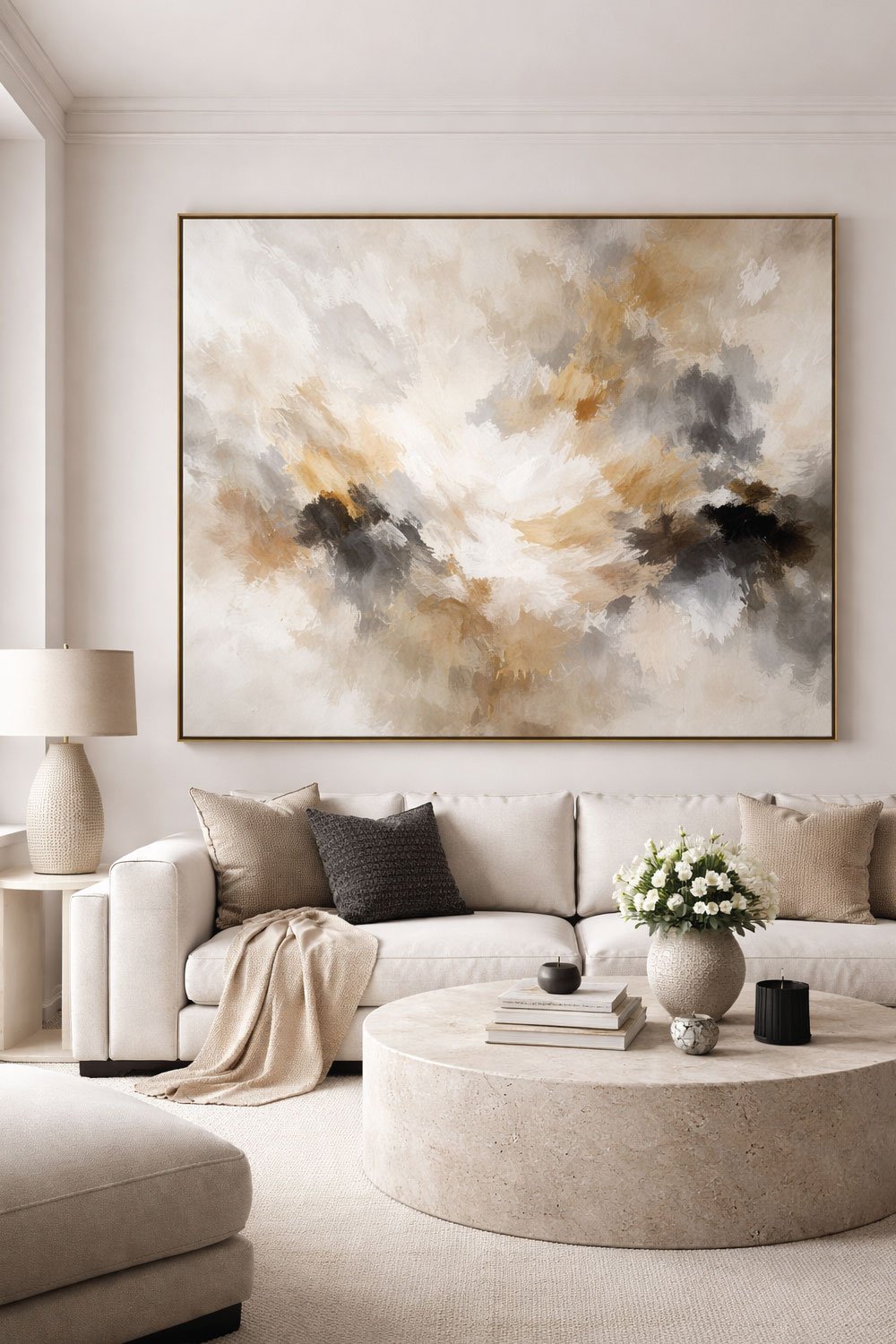
When I finally switched to one oversized abstract canvas above my sofa, the entire room changed instantly. It felt more curated, more cohesive, and more thoughtfully designed without adding anything else.
The rule I follow now is simple: one large statement piece always beats a collection of small frames.
Rule I follow now:
One big piece beats ten small ones.
6. Incorporate Natural Materials
One thing that stood out to me in high-end homes I visited was the consistent use of natural materials. Wood, stone, linen, wool, and leather appeared everywhere—not in a forced way, but in a balanced and intentional mix.
When I introduced more natural textures into my own living room, the difference was immediate. A wooden coffee table with visible grain and a few organic décor pieces made the space feel warmer and more grounded almost instantly.
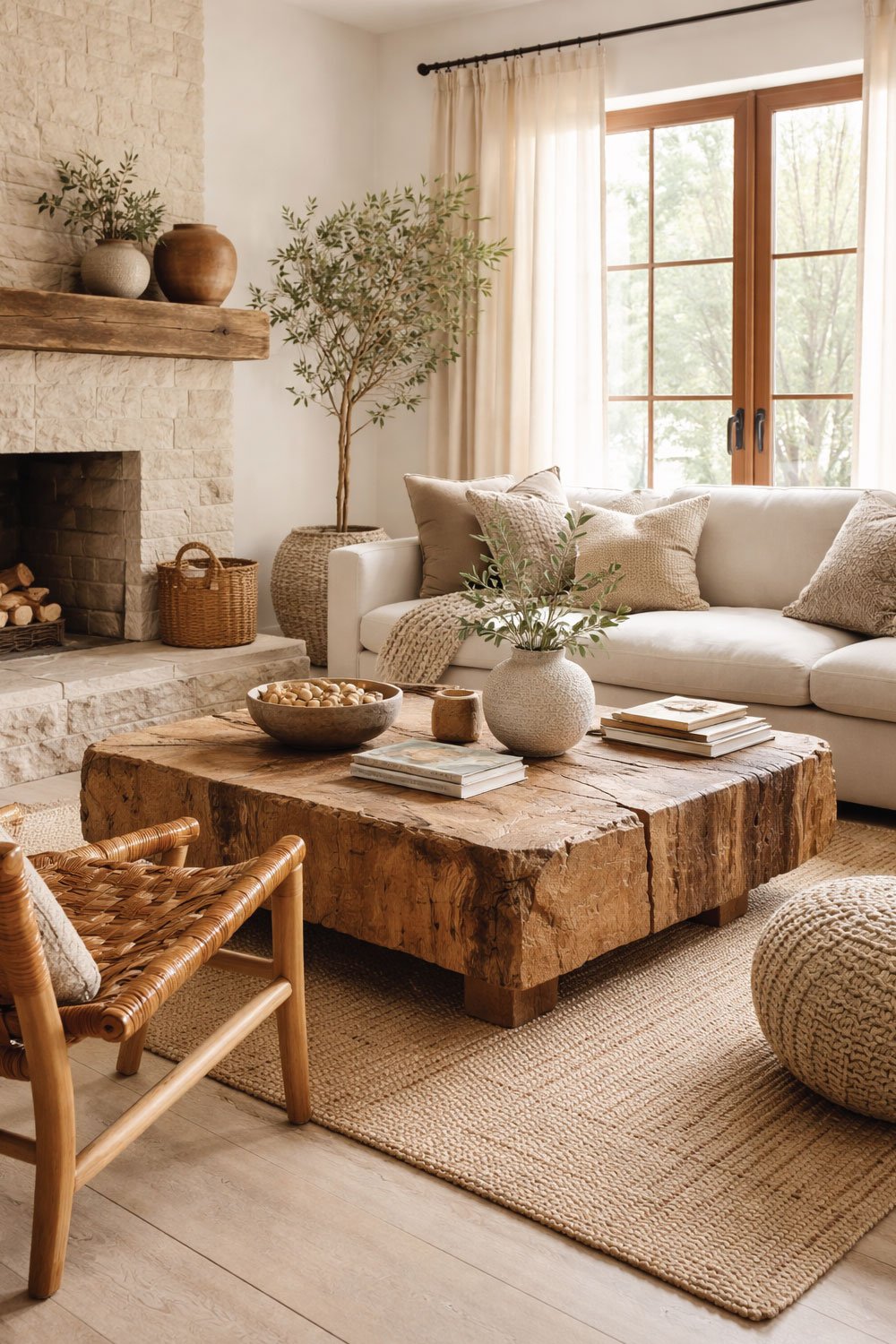
What I learned is that luxury doesn’t come from perfection or artificial shine. Instead, it often comes from natural imperfection—materials that feel real, tactile, and slightly unique from one another.
That contrast is what makes a room feel rich, layered, and lived-in in the best possible way.
Also Read:
7. Add Sculptural or Statement Lighting
Lighting in luxury interiors is never just functional—it’s treated as a design feature in its own right. It shapes the mood of the entire space and often acts like a piece of art.
I experienced this firsthand when I replaced a simple ceiling fixture with a sculptural pendant light. It immediately became the focal point of the room, and people noticed it the moment they walked in.
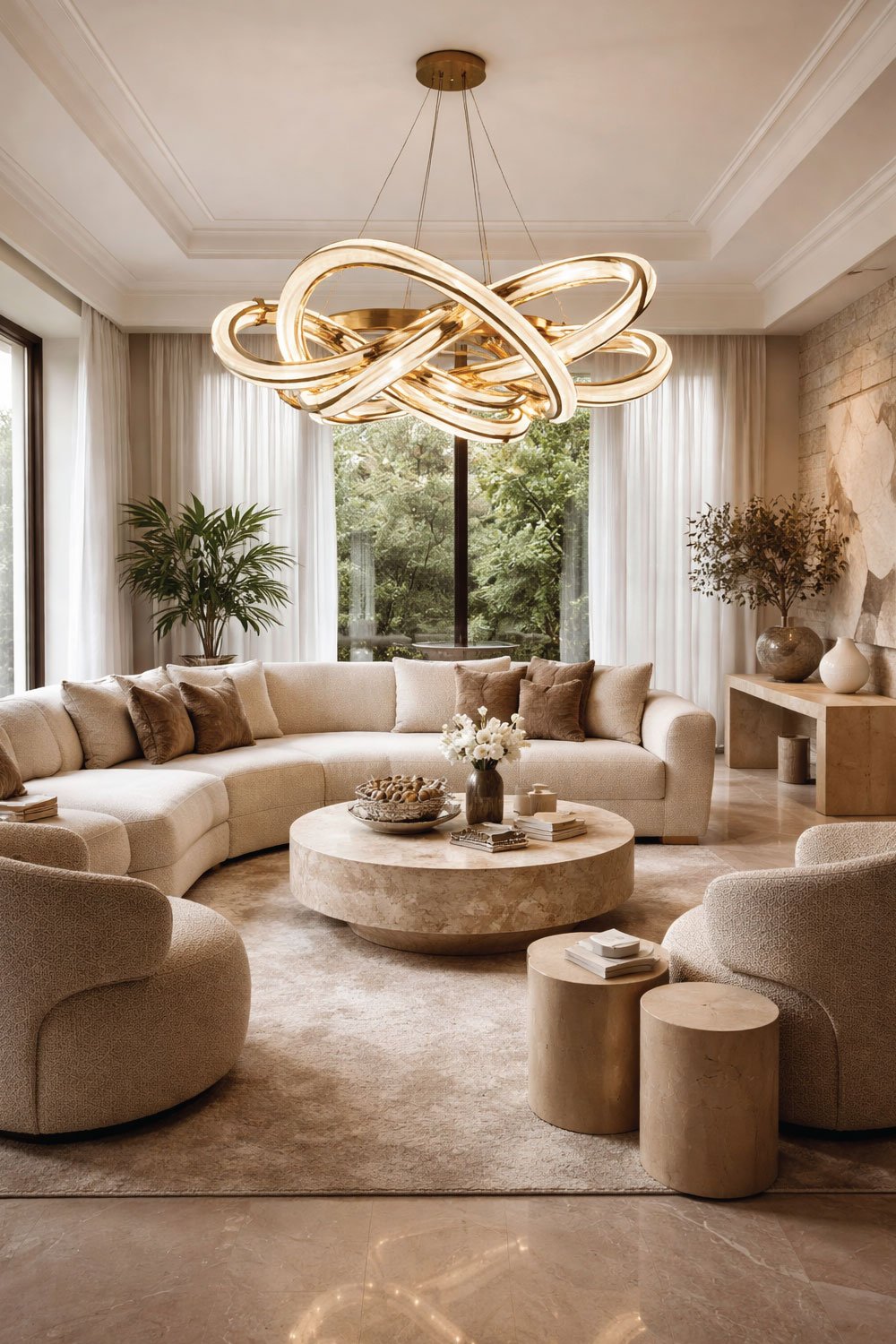
Even on a smaller budget, choosing just one bold lighting element can completely elevate a living room. It adds personality and creates a sense of intentional design without needing to change everything else.
The key is to treat lighting as décor, not just utility.
8. Keep Surfaces Intentionally Minimal
One habit I had to unlearn was over-decorating every available surface. I used to think that filling shelves, tables, and corners made a room feel “finished,” but it actually made everything feel heavy and cluttered.
Luxury living rooms have a different rhythm. They don’t feel empty, but they also don’t feel crowded. Instead, they feel balanced—like the space is allowed to breathe.
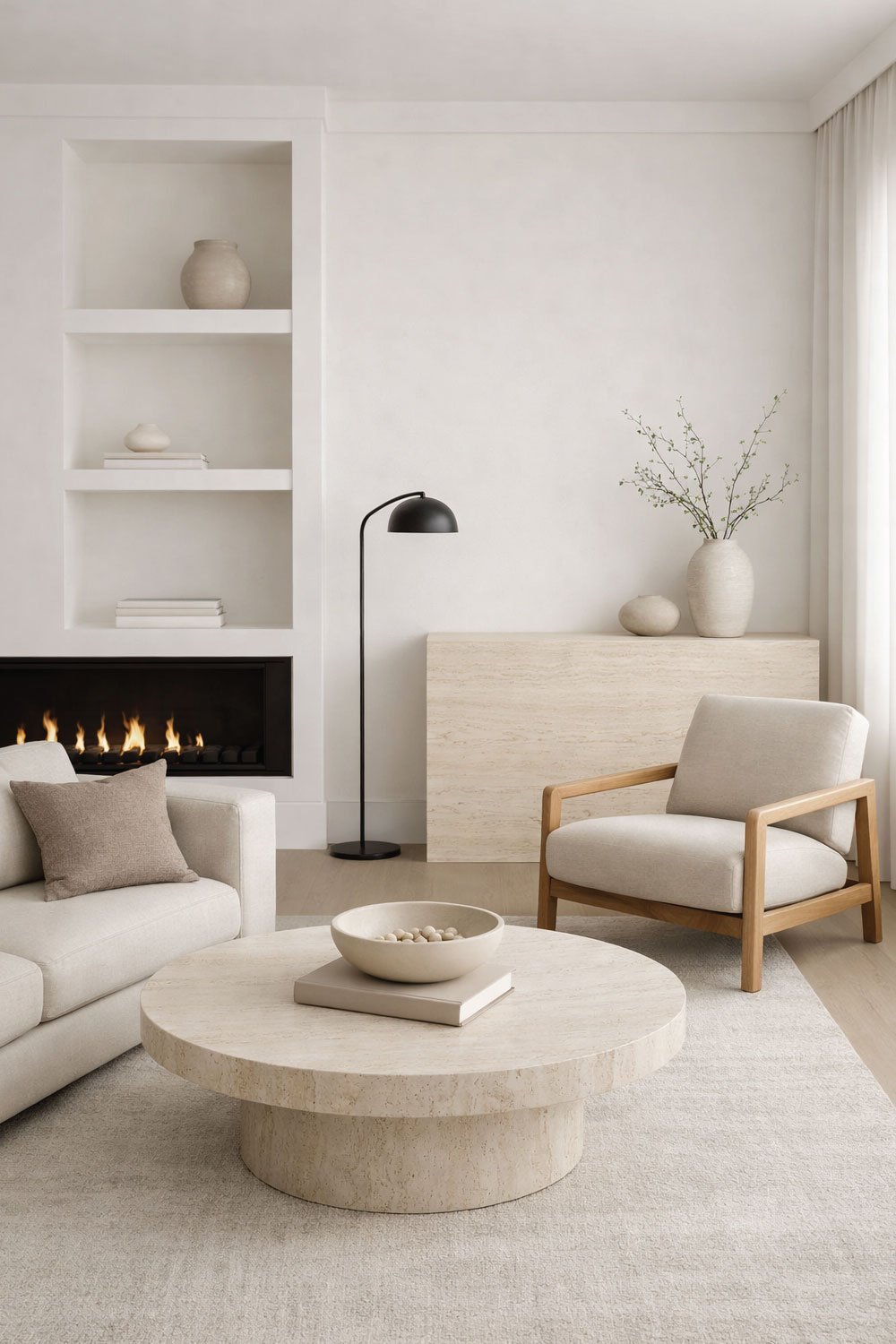
Now I follow a simple rule: every surface must have room to rest. That means fewer items on coffee tables, more intentional styling on shelves, and leaving negative space where the eye can pause.
This shift alone made my living room feel calmer, cleaner, and far more high-end.
Also Read:
9. Mix Textures, Not Just Colors
This was a real turning point in how I think about interior design. I used to focus almost entirely on color palettes, assuming that was what made a room feel “designed.” But something always felt flat, even when the colors worked well together.
Then I started layering textures instead of adding more colors. Soft velvet cushions, chunky knit throws, smooth marble surfaces, and matte ceramic pieces began working together in a much more interesting way.
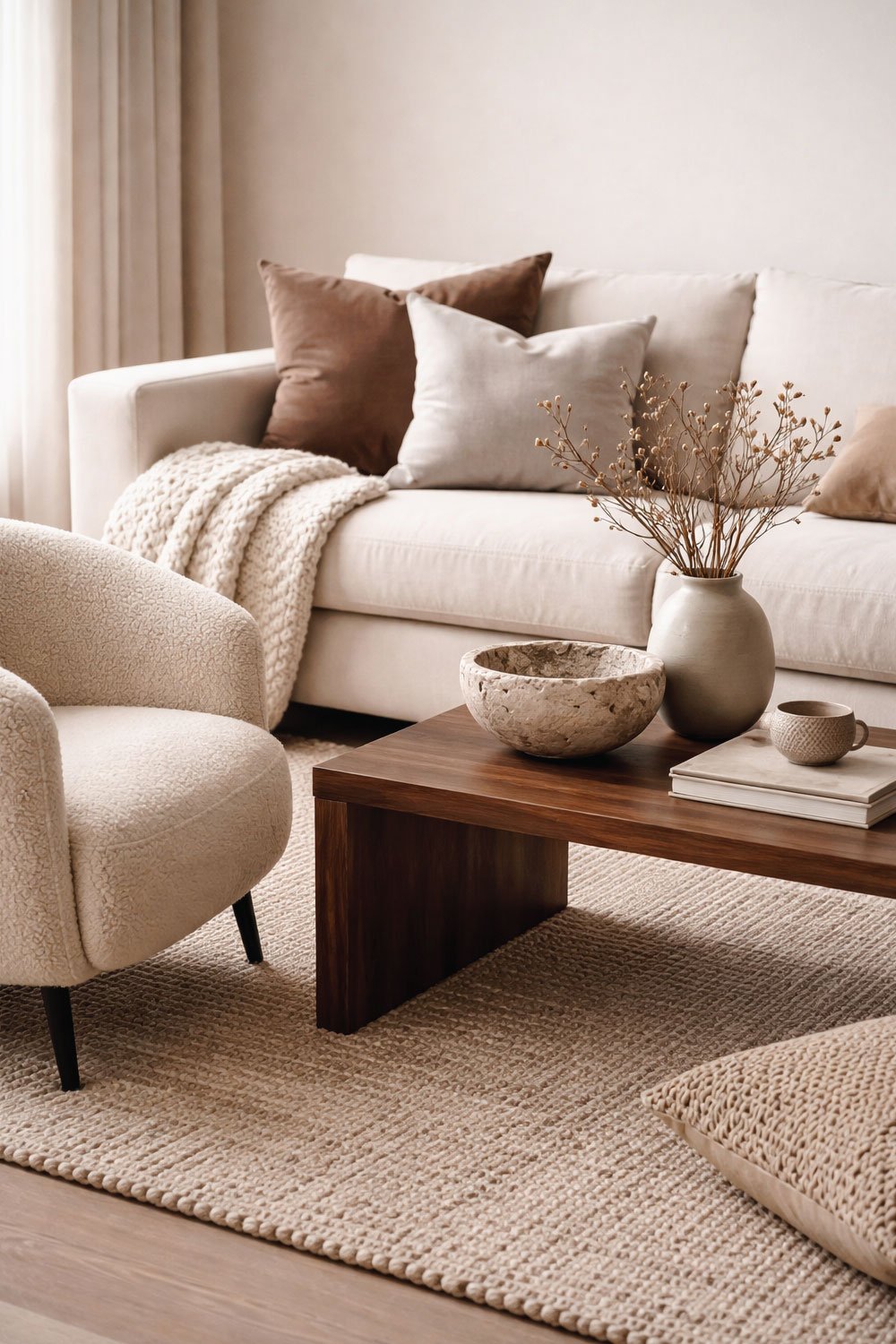
Even in a neutral room, texture completely changes the atmosphere. It adds depth, contrast, and a quiet richness that color alone can’t achieve. The space starts to feel more intentional and visually balanced.
One of my favorite combinations is a boucle chair placed next to a sleek wooden table—the contrast alone makes the room feel instantly more designer-level.
Instead of adding more colors, I started layering textures:
Soft velvet cushions
Chunky knit throws
Smooth marble or stone surfaces
Matte ceramics
Even in a neutral room, texture makes everything feel rich and layered.
When I added a boucle chair next to a sleek wooden table, the contrast instantly felt designer-level.
Also Read:
10. Introduce a Touch of Black for Contrast
Adding black accents might sound simple, but it’s one of the most powerful tricks I’ve learned for creating a luxury feel. It instantly grounds a space and adds definition where things might otherwise feel too soft or washed out.
At first, I avoided black completely because I thought it would feel too harsh or heavy. But once I introduced small elements like black picture frames and a matte black floor lamp, everything else in the room started to stand out more.
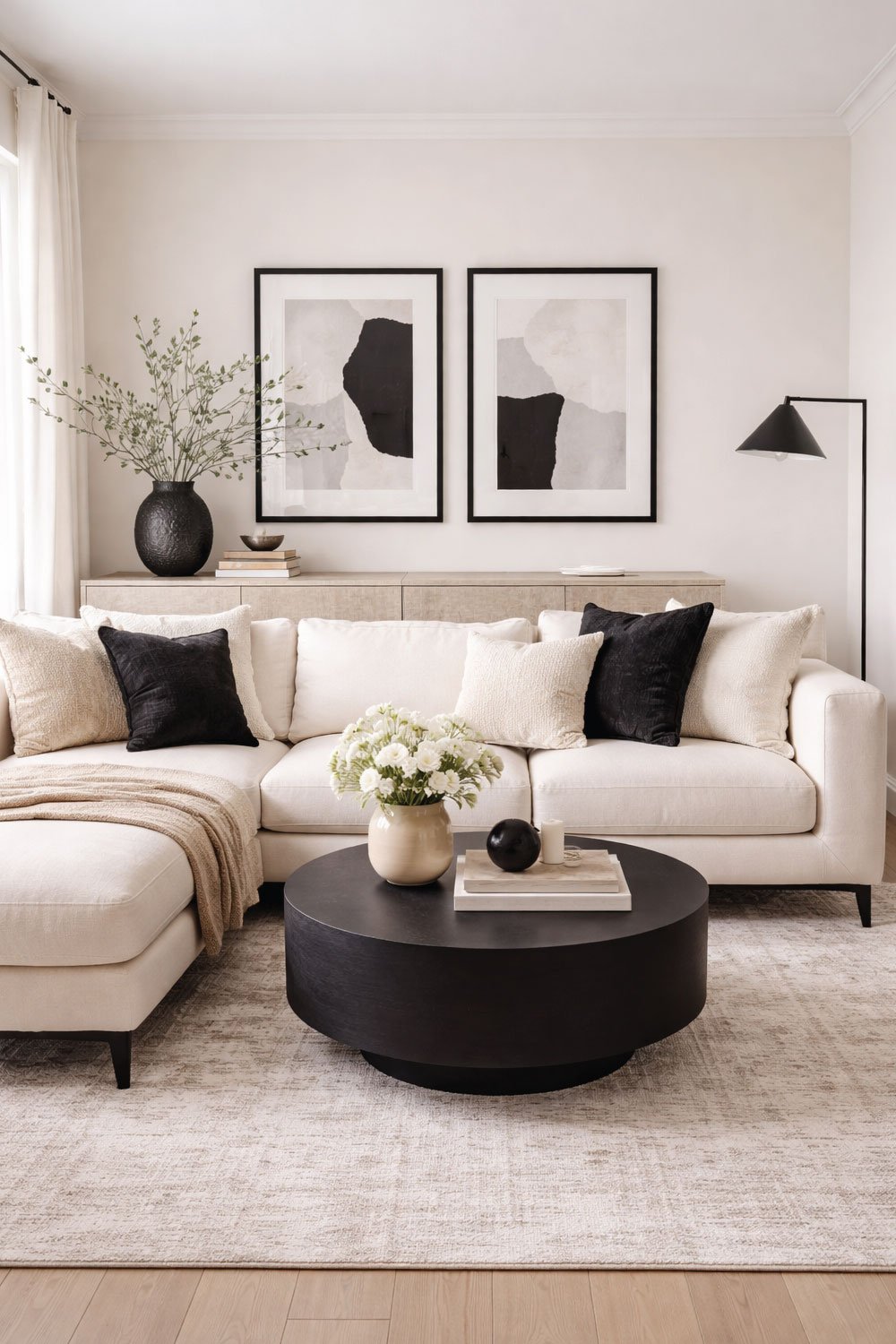
Black works almost like a visual anchor. It sharpens the overall design and makes surrounding colors feel more intentional and refined.
I often think of it like eyeliner for a room—it subtly defines everything without overpowering it.
Also Read:
11. Create a Focal Point
Every luxury living room I’ve ever admired has one thing in common: a clear and intentional focal point. Without it, a room can feel scattered or visually uncertain.
In my own living room, I chose the fireplace wall as the main focal point. From there, everything else—furniture placement, lighting, and even artwork—naturally started to align around it.
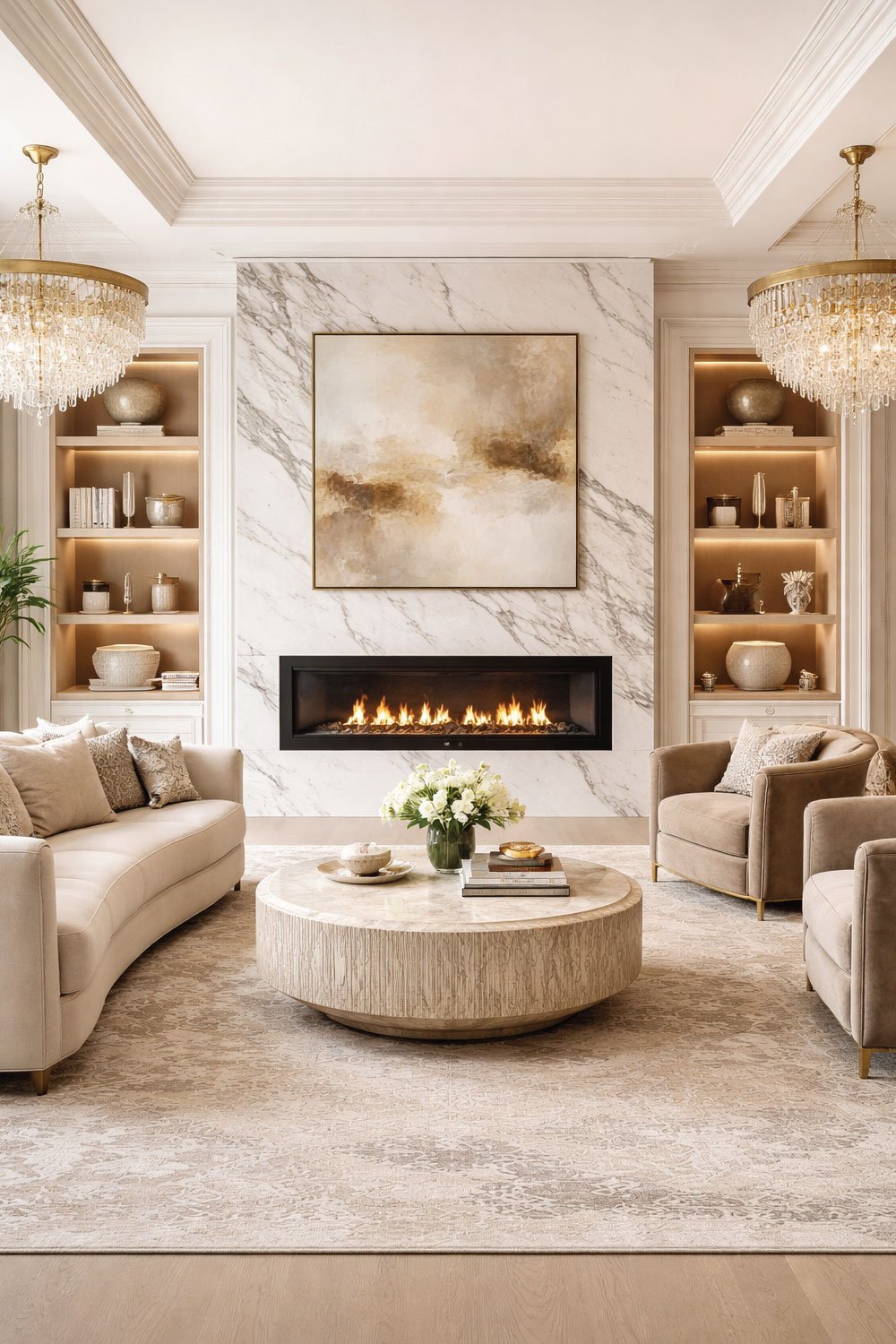
I’ve noticed that without a focal point, rooms tend to feel like they’re floating without direction. But when one is established, the entire space feels more grounded and thoughtfully designed.
Other strong focal points can include a feature wall, a large window with a view, a statement sofa arrangement, or a bold piece of artwork that draws the eye immediately.
Other options include:
A feature wall
A large window with a view
A statement sofa setup
A bold artwork piece
12. Add Personal but Curated Decor
This is where a lot of people misunderstand luxury design—they assume it means stripping away personality. In reality, the most high-end spaces often feel personal, just very carefully edited.
My own living room only started to feel truly elevated when I stopped over-decorating and began selecting meaningful pieces more intentionally. A small travel souvenir sculpture, a few carefully chosen books, and a framed black-and-white family photo made a big difference.
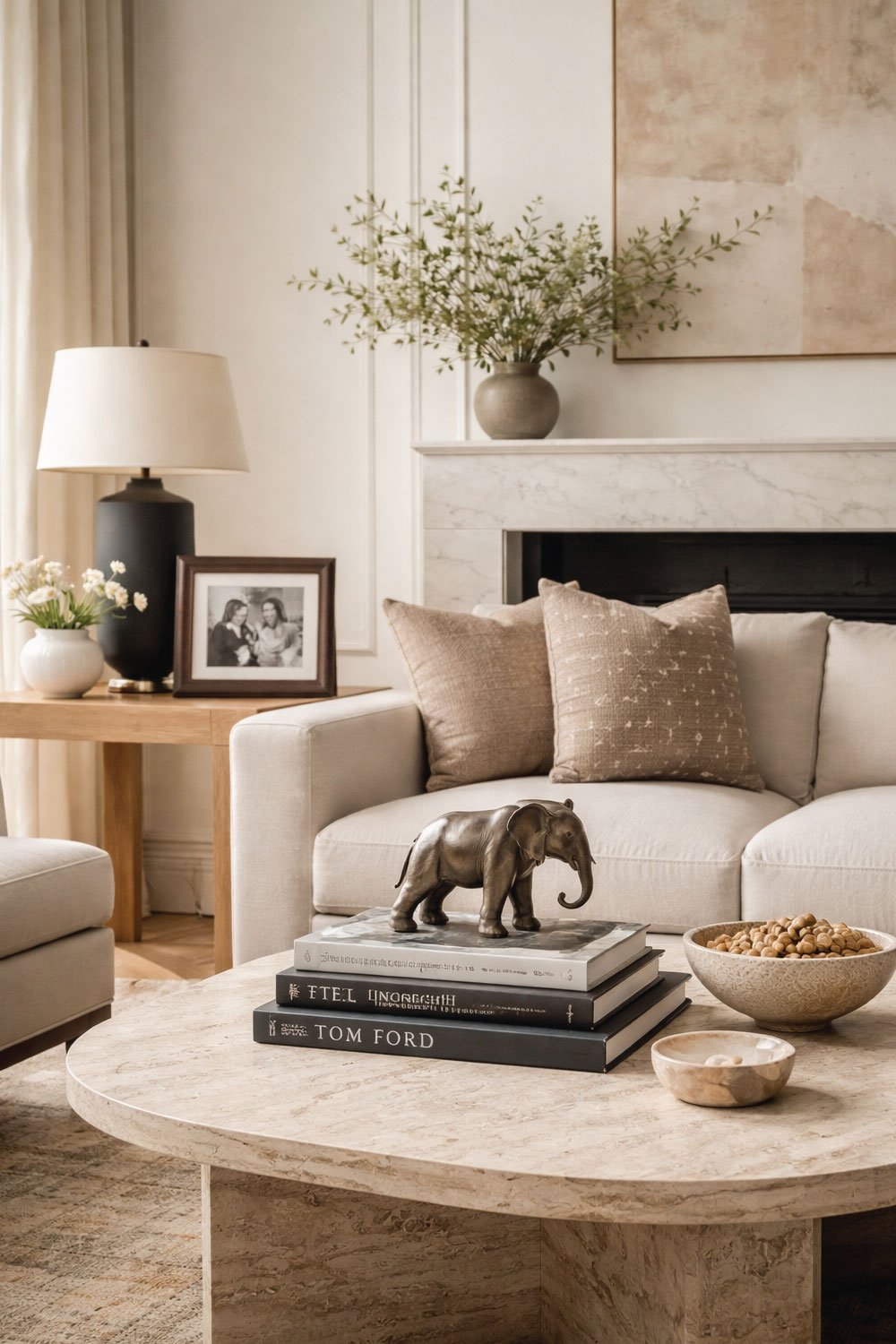
The key is curation, not accumulation. Not everything you own needs to be displayed—only the items that add either meaning, beauty, or both.
When done right, personal décor doesn’t clutter the space; it gives it depth, warmth, and authenticity that no store-bought styling can replace.
A travel souvenir sculpture
A few meaningful books
A framed black-and-white family photo
The key is curation. Not everything you own should be on display—only what adds meaning or beauty.
Also Read:
Final Thoughts:
After redesigning my living room more times than I can count, I’ve realized something important: luxury interior design isn’t about copying Pinterest boards perfectly or buying expensive furniture.
It’s about creating a space that feels calm, intentional, and deeply comfortable to live in.
When I walk into my living room now, I don’t just see furniture and décor—I feel a sense of balance. And that, more than anything, is what makes a space feel truly luxurious.
If you are starting your own redesign, don’t rush it. Start with one change, lighting, curtains, or color and build slowly. That’s how real, lasting luxury comes together.

I am Engineer Hassan, a professional engineer with over 15 years of experience in measurements, design accuracy, and furniture, appliance, and home product sizing. Through Size Helper, I provide research-based guides and trending 2026 home design ideas for living rooms, bedrooms, sofas, wall décor, fashion, and sports—helping users make confident, informed decisions. Every guide is written with real expertise, verified data, and a commitment to quality, usability, and style.