
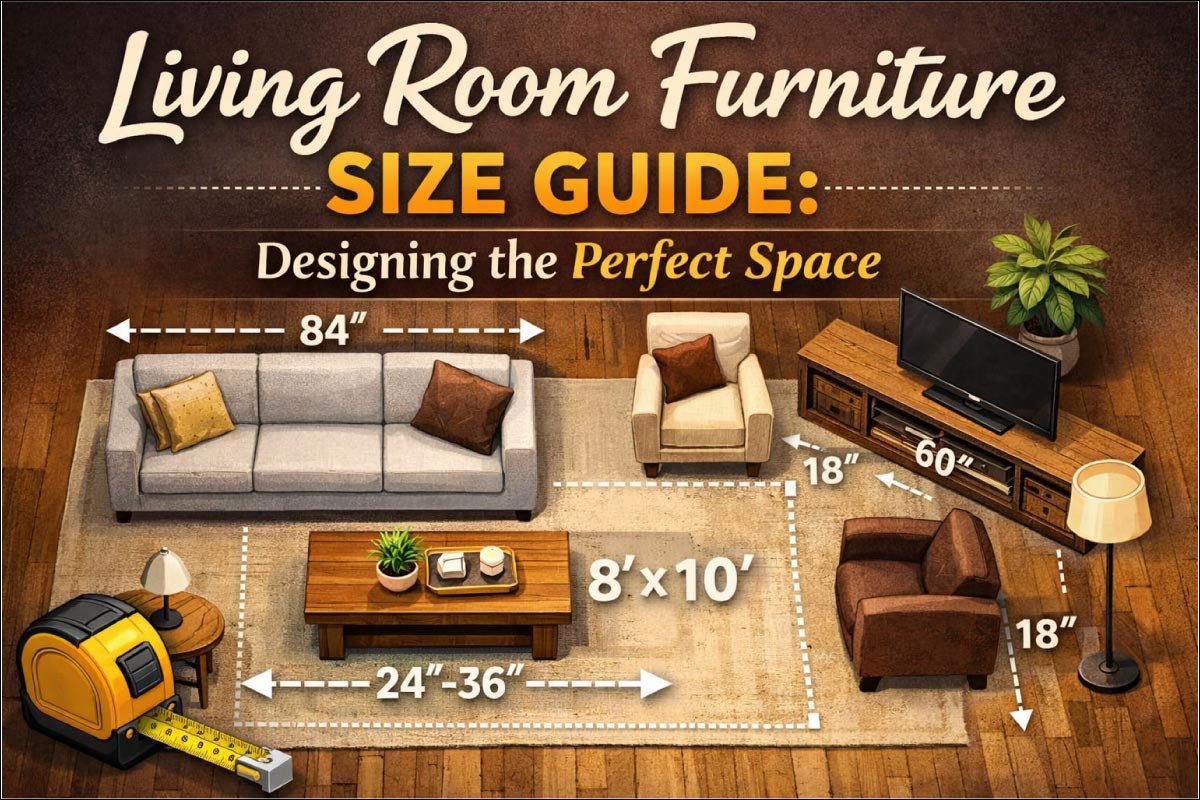
Designing a living room can be exciting but also challenging, especially when it comes to choosing furniture that fits perfectly. A well-planned living room balances aesthetics, comfort, and functionality.
One of the most crucial aspects of this balance is furniture size. Choosing furniture that is too large can make your space feel cramped, while furniture that is too small can leave your room looking empty and disconnected.
This guide will walk you through everything you need to know about living room furniture sizes, including sofas, coffee tables, chairs, media consoles, and side tables. We’ll also provide practical tables with standard dimensions and recommendations to help you plan your ideal layout.
Understand Your Living Room Space
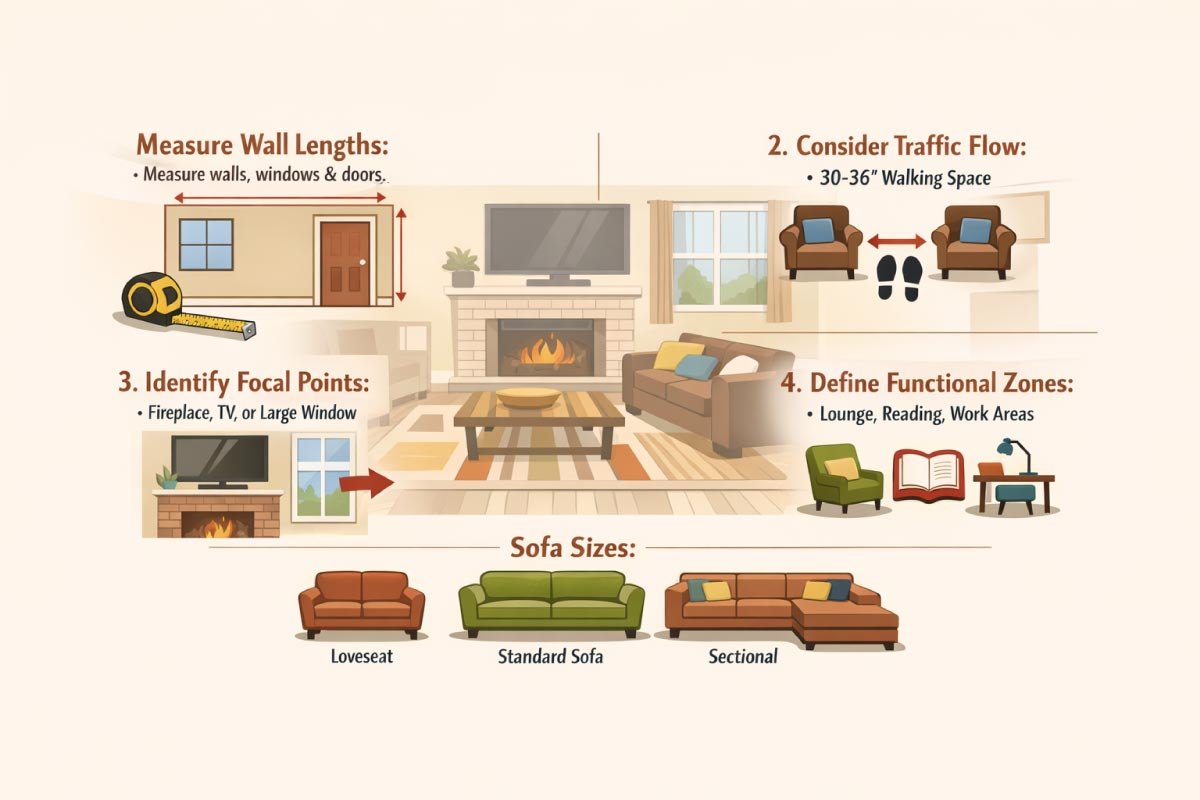
Before selecting furniture, understanding your living room space is crucial. Proper measurements, traffic flow, and identifying focal points ensure both comfort and style. By defining functional zones, you can create a harmonious layout that accommodates daily activities while enhancing the room’s visual appeal.
-
Measure Wall Lengths: Measure the length and width of each wall. Include windows, doors, radiators, and architectural features.
-
Consider Traffic Flow: Leave enough space for walking paths. A minimum of 30–36 inches between furniture pieces is recommended for smooth movement.
-
Identify Focal Points: This could be a fireplace, TV, or large window. Furniture arrangement should complement your focal point rather than block it.
-
Define Functional Zones: Separate areas for lounging, reading, or working with appropriate furniture sizes.
Sofa Sizes
| Sofa Type | Width (inches) | Depth (inches) | Height (inches) | Seating Capacity |
|---|---|---|---|---|
| Loveseat | 52–72 | 30–40 | 30–36 | 2 people |
| Standard Sofa | 72–96 | 32–40 | 30–36 | 3 people |
| Sectional Sofa | 90–144 | 35–40 | 30–36 | 4–6 people |
| Apartment Sofa | 60–72 | 28–36 | 30–36 | 2–3 people |
Tips for Choosing Sofa Size:
-
Leave 12–18 inches between the sofa and walls to create breathing space.
-
For sectionals, consider modular pieces that can be rearranged to fit your room.
-
The depth of seating affects comfort; deeper sofas are cozy but can be overwhelming in small rooms.
Coffee Table Dimensions
Coffee tables are both functional and aesthetic anchors in your living room, balancing style with practicality. Selecting the right height, shape, and size ensures easy access, smooth traffic flow, and harmonious proportions with your sofa. Understanding standard dimensions helps you create a cohesive and comfortable seating area.
| Table Shape | Width (inches) | Length (inches) | Height (inches) | Notes |
|---|---|---|---|---|
| Rectangular | 18–24 | 36–48 | 16–18 | Fits most sofas |
| Square | 24–36 | 24–36 | 16–18 | Best for compact spaces |
| Round | 30–48 | 30–48 | 16–18 | Great for flow in tight areas |
| Oval | 30–36 | 48–60 | 16–18 | Ideal for sectionals or long sofas |
Tips:
-
The table should be 16–18 inches from sofa seat height.
-
Maintain 12–18 inches between the coffee table and surrounding seating for comfortable movement.
-
Choose shapes that complement your sofa layout.
Armchairs & Accent Chairs

Armchairs and accent chairs enhance seating options while defining style and conversation areas in your living room. Choosing the right size ensures comfort, balance, and proper spacing with sofas and tables. Standard dimensions and thoughtful placement help create a harmonious, functional, and inviting environment.
| Chair Type | Width (inches) | Depth (inches) | Height (inches) | Notes |
|---|---|---|---|---|
| Armchair | 28–40 | 30–36 | 30–40 | Standard size |
| Club Chair | 32–38 | 32–36 | 30–38 | Cozy and compact |
| Recliner | 32–40 | 36–42 | 38–42 | Requires clearance for reclining |
| Accent Chair | 24–32 | 28–34 | 30–36 | Ideal for corners or reading nooks |
Tips:
-
Leave at least 24 inches between chairs and coffee tables.
-
Consider proportions relative to your sofa; oversized chairs with a tiny sofa can look awkward.
-
Recliners and swivel chairs need extra clearance for movement.
TV & Media Console Sizes
Selecting the right TV or media console balances functionality, style, and viewing comfort. Proper dimensions ensure your TV sits at eye level, while providing storage for devices and accessories. Understanding standard console sizes helps create a visually balanced setup that complements your room layout and enhances your entertainment experience.
| TV Size (inches) | Console Width (inches) | Console Height (inches) | Console Depth (inches) | Notes |
|---|---|---|---|---|
| 32–43 | 36–48 | 20–24 | 12–16 | Small rooms |
| 50–55 | 50–60 | 24–28 | 14–18 | Medium rooms |
| 60–65 | 60–72 | 26–30 | 16–20 | Large rooms |
| 70+ | 72–84 | 28–32 | 16–20 | Open layouts |
Tips:
-
The center of the TV screen should be at eye level when seated (approx. 42–48 inches from floor).
-
Choose a console that extends beyond TV width by 4–6 inches on each side for balanced aesthetics.
-
Depth should accommodate devices while leaving ventilation space.
Discover More:
Side Tables & End Tables
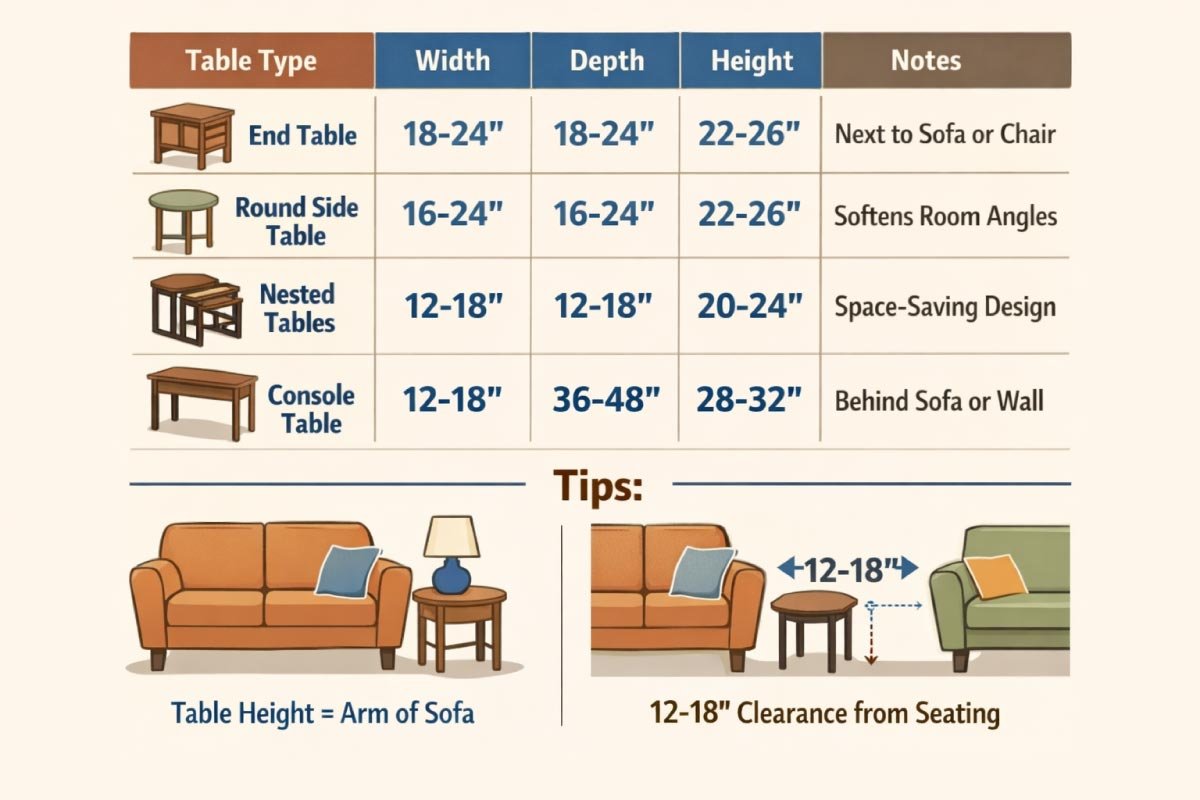
Side and end tables provide both functionality and style, offering surfaces for drinks, lamps, and décor while enhancing room flow. Choosing the right size ensures they complement sofas and chairs without overcrowding. Standard dimensions and proper placement create a balanced, convenient, and visually appealing living space.
| Table Type | Width (inches) | Depth (inches) | Height (inches) | Notes |
|---|---|---|---|---|
| End Table | 18–24 | 18–24 | 22–26 | Standard next to sofa or chair |
| Round Side Table | 16–24 | 16–24 | 22–26 | Softens angles of room layout |
| Nested Tables | 12–18 | 12–18 | 20–24 | Flexible, space-saving |
| Console Table | 12–18 | 36–48 | 28–32 | Great behind sofas or walls |
Tips:
-
Table height should be equal to or slightly lower than the arm of the sofa/chair.
-
Maintain 12–18 inches clearance between table and seating.
Discover More:
Complete Guide to Perfect Buffet Mirror Sizes for Dining Rooms
Rug Size Considerations
| Room Type | Rug Size (inches) | Placement Notes |
|---|---|---|
| Small Living Room | 4×6, 5×7 | Place under front legs of sofa/chairs |
| Medium Living Room | 6×9, 8×10 | All seating partially on rug for cohesiveness |
| Large Living Room | 9×12, 10×14 | Entire seating area on rug for balance |
| Sectional Arrangement | 8×10, 9×12 | Make sure rug extends beyond sectional edges |
Tips:
-
Rugs should extend 18–24 inches beyond furniture edges for a well-framed look.
-
Avoid undersized rugs that make furniture look disconnected.
Discover More:
Creating a Balanced Layout
Creating a balanced layout transforms your living room into a functional and inviting space. By thoughtfully arranging furniture, considering visual weight, and maintaining clear walkways, you can achieve harmony and flow. Proper placement enhances conversation areas and ensures every piece complements the room’s overall design.
-
Anchor with the Sofa: Position your largest piece first, usually against a wall or facing a focal point.
-
Layer Tables and Chairs: Place coffee tables, side tables, and chairs around the sofa for conversation zones.
-
Maintain Walkways: Keep 30–36 inches of space between furniture for comfortable movement.
-
Consider Visual Weight: Large, dark furniture can dominate a small space. Mix sizes and shapes for visual harmony.
-
Use the 2/3 Rule: A room should ideally have 2/3 of its furniture along walls and 1/3 in the center to avoid clutter.
Discover More:
Final Tips for Choosing Furniture Sizes
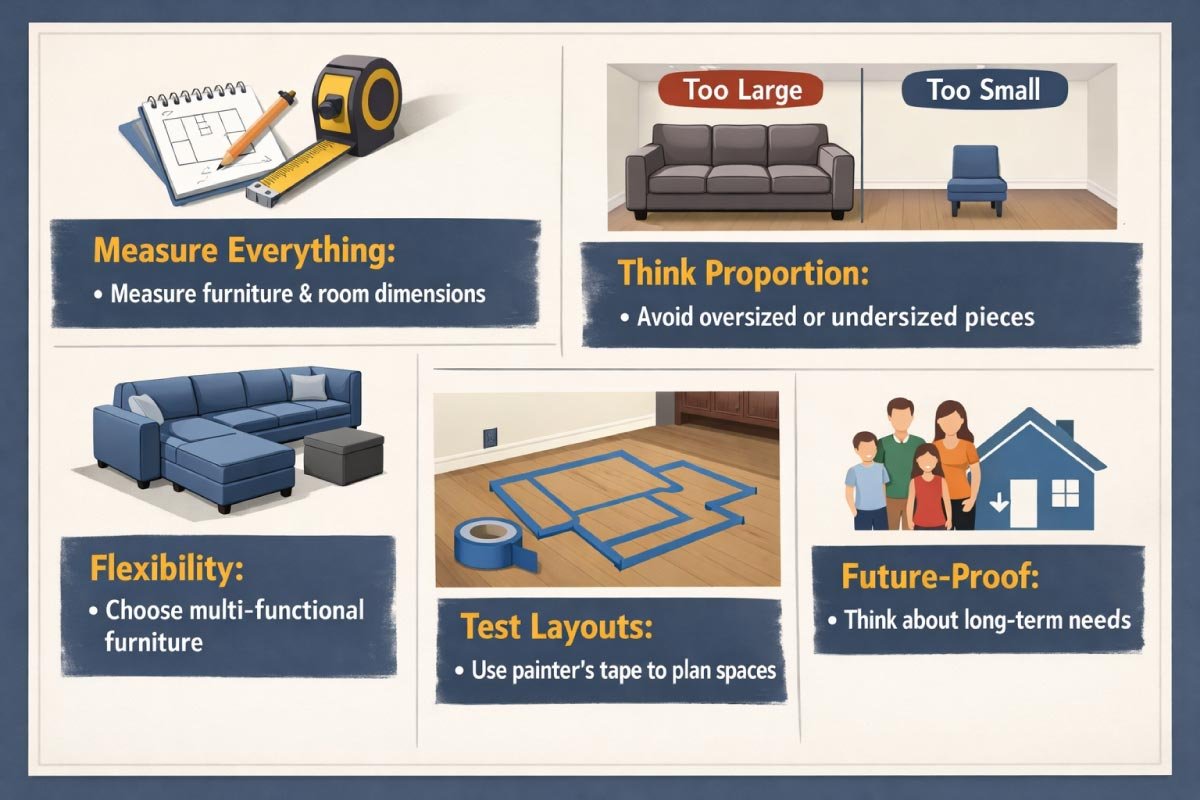
Selecting the right furniture sizes ensures comfort, style, and functionality in any room. By measuring carefully, considering proportion, and planning for flexibility, you can create a space that works today and adapts for the future. Testing layouts helps visualize the final arrangement before committing.
-
Measure Everything: Always measure furniture and room dimensions before purchasing.
-
Think Proportion: Larger pieces in small rooms make the space feel crowded. Smaller pieces in large rooms feel empty.
-
Flexibility: Consider modular or multi-functional furniture for small or changing spaces.
-
Test Layouts: Use painter’s tape to mark furniture footprints before buying.
-
Future-Proof: Think about long-term needs, family size, and lifestyle when selecting furniture dimensions.
Conclusion
Selecting the right furniture sizes is essential to creating a functional, comfortable, and stylish living room. By understanding standard dimensions for sofas, tables, chairs, and media consoles, you can ensure your room feels balanced and inviting.
Remember to measure carefully, consider traffic flow, and visualize your layout before purchasing. With this living room furniture size guide and the accompanying tables, you now have the tools to design a space that looks cohesive, feels comfortable, and works perfectly for your lifestyle.
Discover More:
