
A well‑chosen mirror above a sideboard can transform a room, opening it up, adding light, and tying together décor elements. But choosing the right size is not always obvious. Too big, and the mirror overwhelms the wall. Too small, and it looks disconnected from the furniture beneath. In this guide, we’ll walk through everything you need to know to pick the perfect sideboard mirror size for any room in your home.
We’ll cover:
-
Why mirror size matters
-
How to measure properly
-
Recommended sizes for different room types
-
Shape and proportion tips
-
Real sizing examples
Why Mirror Size Matters
Choosing the right mirror size for a sideboard isn’t just about style—it’s about balance, proportion, and how the whole room feels. A well-sized mirror visually anchors the furniture, reflects light to brighten the space, and helps the wall look intentionally designed. Too small feels disconnected; too large can overwhelm.
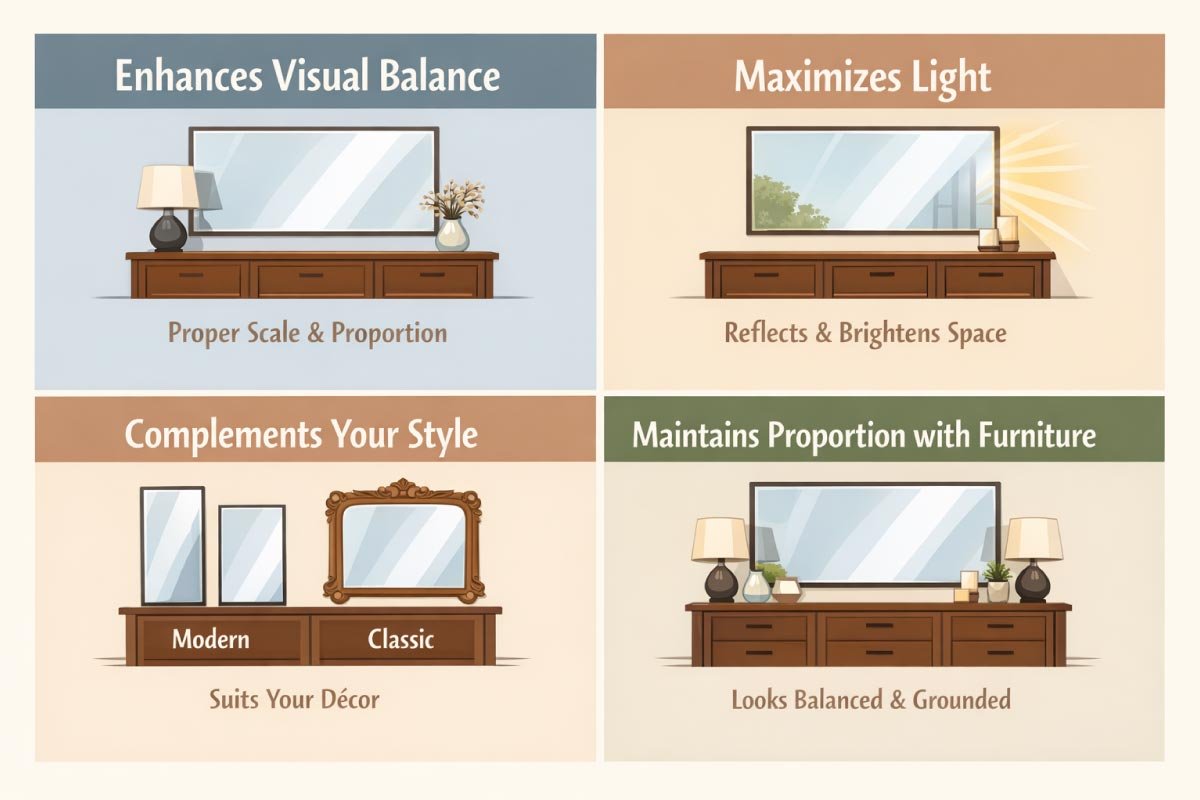
1. Enhances Visual Balance
Mirror size is a key part of getting the proportions right. When the mirror matches the scale of the sideboard, it looks intentional and well-designed, not randomly placed. A properly sized mirror also helps the wall feel complete without overpowering nearby décor, lighting, or artwork.
2. Maximizes Light
A mirror can act like an extra light source by bouncing daylight from windows and glow from lamps or chandeliers back into the room. When the mirror is sized well, it reflects more of what you want—light, openness, and depth—helping small or dim dining spaces feel brighter and more spacious.
3. Complements Your Style
Mirror proportions strongly influence the mood of your dining space. A slim, clean-lined mirror supports modern or minimalist décor, while a wider or taller mirror can feel more classic, bold, or luxurious. When the mirror’s size matches your furniture and wall scale, your style looks deliberate and visually cohesive.
4. Maintains Proportion with Furniture
A mirror should feel connected to the piece beneath it, not floating too small or looming too large. When the scale relates well to your sideboard, buffet, or console, the setup looks grounded and polished. Proper proportion also helps surrounding items—lamps, vases, and art—stay visually balanced.
How to Measure Before You Buy
General Sizing Rules for Sideboard Mirrors
Getting mirror size right is easier when you follow a few tried-and-true design rules. These guidelines help you match the mirror to your sideboard proportions, maintain comfortable wall spacing, and avoid a “floating” or overcrowded look. Use them as a starting point, then adjust based on ceiling height, room scale, and décor style.
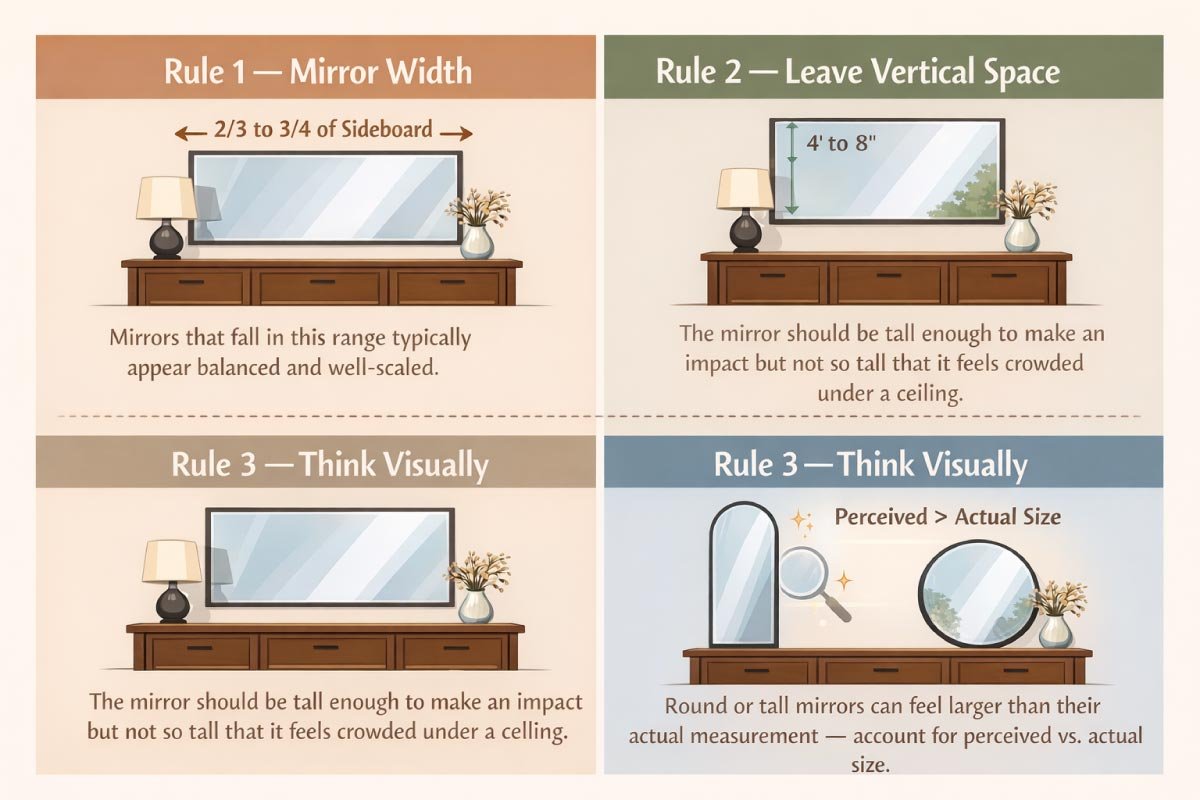
- Rule 1 — Mirror Width = 2/3 to 3/4 of Sideboard
Mirrors that fall in this range typically appear balanced and well‑scaled.
- Rule 2 — Leave Vertical Space
The mirror should be tall enough to make an impact but not so tall that it feels crowded under a ceiling.
- Rule 3 — Think Visually
Round or tall mirrors can feel larger than their actual measurement — account for perceived vs. actual size.
Mirror Width Recommendations Based on Sideboard Width
| Sideboard Width | 2/3 Width Mirror | 3/4 Width Mirror | Visual Impact |
|---|---|---|---|
| 36″ (91 cm) | 24″ (61 cm) | 27″ (69 cm) | Small but balanced |
| 48″ (122 cm) | 32″ (81 cm) | 36″ (91 cm) | Optimal for living/dining |
| 60″ (152 cm) | 40″ (102 cm) | 45″ (114 cm) | Great for larger rooms |
| 72″ (183 cm) | 48″ (122 cm) | 54″ (137 cm) | High impact statement |
Best practice: Aim for a mirror width between two‑thirds and three‑quarters the width of your sideboard.
Room‑Specific Mirror Size Guidelines
Different rooms place different visual demands on a mirror. Dining rooms, living spaces, and entryways all benefit from mirrors sized to suit their function, traffic flow, and ceiling height. Choosing room-appropriate proportions ensures the mirror enhances the space without overpowering furniture or competing with lighting and artwork.
Recommended Mirror Heights Based on Room Type
Choosing the perfect mirror height can transform your room, enhancing light, space, and visual harmony. Different rooms have distinct functional and aesthetic needs, so understanding the ideal placement ensures balance and style. Whether in a dining room, bedroom, hallway, or bathroom, selecting the right height maximizes both practicality and décor impact.
1. Dining Room Mirrors
In dining rooms, mirrors should be positioned approximately 8–12 inches above the buffet or console. This height reflects light and creates the illusion of more space without interfering with tabletop décor. It also complements hanging art or lighting fixtures, maintaining a balanced and welcoming ambiance during meals or gatherings.
2. Living Room Mirrors
For living rooms, a mirror’s center should generally be at eye level, around 60–65 inches from the floor. This height ensures it serves as both a decorative focal point and a functional reflection tool. Placing mirrors above sofas or mantels enhances room brightness while preserving proportional harmony with furniture and wall décor.
3. Bedroom Mirrors
In bedrooms, full-length mirrors are best positioned so the top is roughly 6–8 inches below the ceiling and the bottom just above the floor. This placement allows for easy dressing and outfit checks while maintaining wall balance. Wall-mounted or wardrobe mirrors should remain accessible yet visually integrated with surrounding décor.
4. Hallway Mirrors
Hallway mirrors should generally be hung with the center at eye level, approximately 60 inches from the floor. Narrow hallways benefit from vertically elongated mirrors to maximize the perception of depth and light. Positioning should avoid obstructing traffic flow while adding a sense of openness to tight or windowless spaces.
5. Bathroom Mirrors
Bathroom mirrors are ideally mounted with the bottom edge 40 inches from the floor, accommodating average sink heights. Larger mirrors may extend upward to 70–75 inches for full visibility. Proper height ensures comfortable use for grooming and reflects light efficiently, while leaving room for lighting fixtures above or alongside the mirror.
6. Entryway Mirrors
Entryway mirrors work best when the center is around 60 inches from the floor. This height allows guests to check appearance quickly while entering or leaving the home. Pairing the mirror with a console table or decorative elements below enhances functionality and aesthetic appeal, creating a welcoming and stylish first impression.
7. Home Office Mirrors
In home offices, mirrors should be hung slightly higher than eye level, around 65–70 inches from the floor. This placement minimizes glare on computer screens while still reflecting light and making the room feel larger. Smaller decorative mirrors can be grouped on walls to add visual interest without distracting from workspace efficiency.
| Room Type | Recommended Mirror Height | Why It Works |
|---|---|---|
| Entryway/Foyer | 36″ – 42″ (91–107 cm) | Tall mirrors create welcoming vertical emphasis |
| Dining Room | 30″ – 40″ (76–102 cm) | Reflects light without overwhelming the space |
| Living Room | 30″ – 48″ (76–122 cm) | Works well as a focal point above buffet or console |
| Hallway | 24″ – 36″ (61–91 cm) | Slim mirrors fit narrow walls |
| Bedroom | 30″ – 42″ (76–107 cm) | Functional if used as a vanity area |
Tip: In dining rooms, a slightly wider mirror creates a more dramatic reflection of chandeliers and artwork.
Mirror Size vs. Ceiling Height
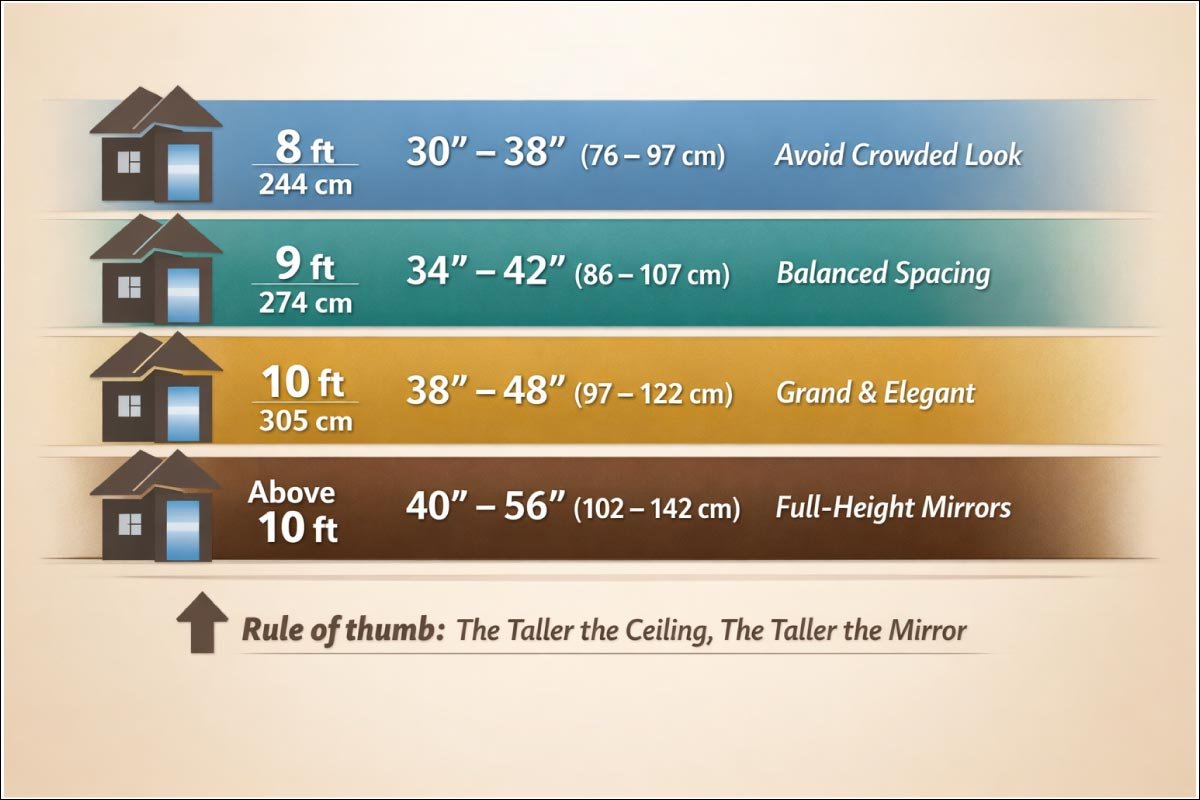
Table 3 illustrates how ceiling height guides your mirror’s vertical size. Choosing a mirror that complements the room’s height ensures balanced proportions and prevents visual overcrowding. Use the suggested ranges to create harmony—shorter mirrors for standard ceilings, taller options for high or grand spaces, achieving both elegance and functionality.
| Ceiling Height | Ideal Mirror Height | Notes |
|---|---|---|
| 8 ft (244 cm) | 30″ – 38″ (76–97 cm) | Avoid overly tall mirrors; may feel crowded |
| 9 ft (274 cm) | 34″ – 42″ (86–107 cm) | Balanced vertical spacing |
| 10 ft (305 cm) | 38″ – 48″ (97–122 cm) | Taller mirrors look grand and elegant |
| Above 10 ft | 40″ – 56″ (102–142 cm) | Perfect for full‑height mirror installations |
Rule of thumb: The taller the ceiling, the taller the mirror can comfortably be.
Mirror Shapes – What Works With What
Different rooms place different visual demands on a mirror. Dining rooms, living spaces, and entryways all benefit from mirrors sized to suit their function, traffic flow, and ceiling height. Choosing room-appropriate proportions ensures the mirror enhances the space without overpowering furniture or competing with lighting and artwork.
1. Rectangular Mirrors
Rectangular mirrors work well in traditional, transitional, or classic décor styles. Their clean lines emphasize structure and symmetry, making walls feel longer or ceilings higher. They pair beautifully with sideboards, buffets, or mantels, creating a balanced, polished look while providing ample reflective surface for light and room depth.
2. Round / Oval Mirrors
Round and oval mirrors introduce gentle curves that soften the rigid lines of furniture like sideboards or buffets. Their shape adds visual interest and a touch of elegance, while also creating the illusion of more space. These mirrors are ideal for balancing angular décor and making a room feel airy.
3. Square Mirrors
Square mirrors provide a sense of symmetry and order, making them perfect for modern, minimalist, or geometric-inspired interiors. Their balanced shape aligns naturally with sideboards or console tables, creating a cohesive and structured look. They work especially well when paired with angular décor elements for a clean, contemporary feel.
Shape vs. Recommended Widths (Based on a 60″ Sideboard)
Table 4 helps match mirror shapes with ideal widths and heights for a 60″ sideboard. Each shape creates a distinct visual effect—rectangular and square mirrors emphasize structure and symmetry, while round and oval options soften the space and add elegance. Choose based on your décor style and desired focal impact.
| Mirror Shape | Recommended Width | Height Range | Visual Effect |
|---|---|---|---|
| Rectangular | 40″ – 45″ | 30″ – 40″ | Balanced, classic |
| Round | 38″ – 42″ diameter | 38″ – 42″ | Soft, enlarges space visually |
| Oval | 38″ – 44″ | 34″ – 42″ | Elegant, vertical emphasis |
| Square | 36″ – 44″ | 36″ – 44″ | Modern, symmetrical |
Design Insight: Round and oval mirrors work especially well in organic or layered décor themes. Rectangular or square shapes enhance clean lines and symmetry.
Also Read:
Placement & Hanging Tips
Proper placement ensures your mirror not only looks great but also functions effectively. Height, wall spacing, and alignment with furniture all influence visual balance and room flow. A well-hung mirror enhances light reflection, complements décor, and feels integrated rather than awkwardly positioned. Consider both practical and aesthetic factors when deciding where to hang it.
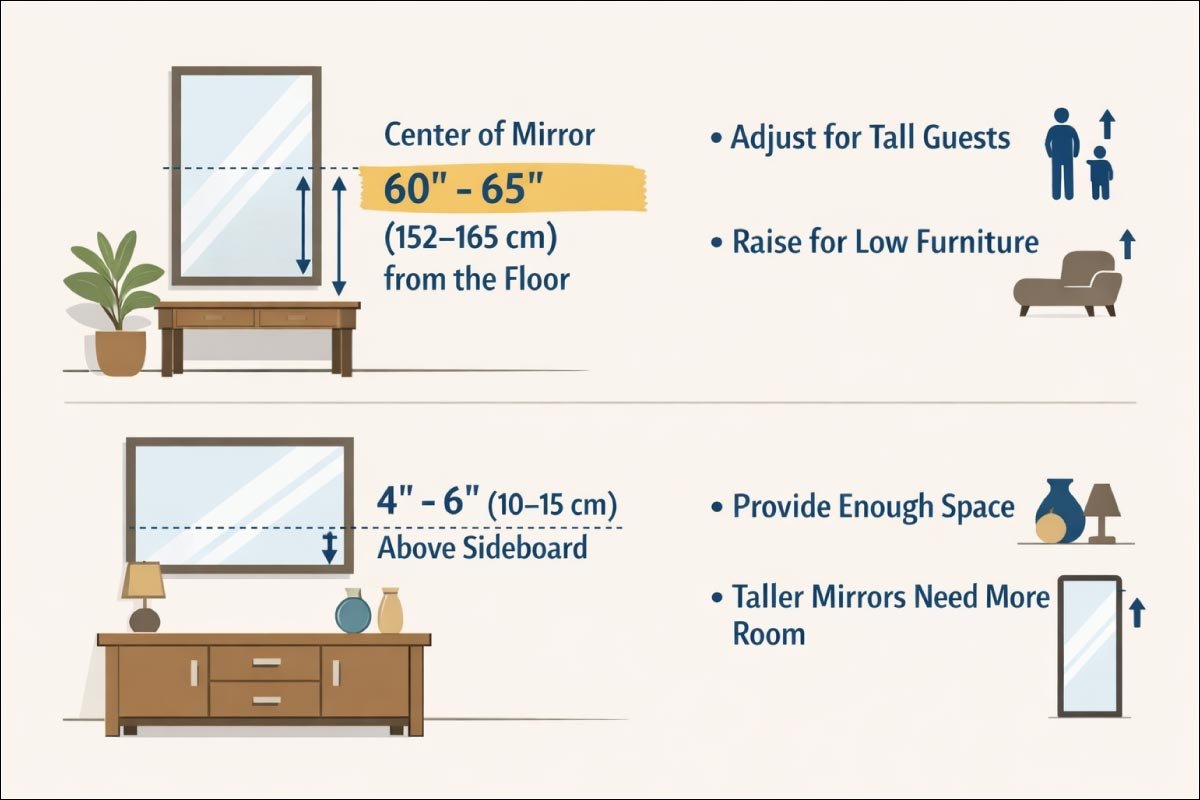
1. Hanging Height Rule
To achieve a balanced and comfortable view, position the mirror so its center sits around 60″–65″ (152–165 cm) from the floor, which aligns with average eye level. Adjust the height slightly if your furniture is unusually low or high, or if taller individuals frequently use the space, ensuring both function and style.
-
Hang the mirror so its center is approximately 60″ – 65″ (152–165 cm) from the floor for average eye level.
-
If you have tall guests or low furniture, adjust accordingly.
2. Clearance Above the Sideboard
Maintain a gap of 4–6 inches (10–15 cm) between the sideboard’s surface and the mirror’s bottom edge. This spacing keeps the arrangement visually light and allows room for décor items like lamps or vases. For taller mirrors, consider slightly more clearance to avoid a crowded or heavy appearance.
-
Leave at least 4–6 inches (10–15 cm) between the top of the sideboard and bottom of the mirror.
-
Taller styles may need more clearance to prevent visual clutter.
Also Read:
Sizing Examples (Real‑World Scenarios)
Seeing mirrors in context makes choosing the right size easier. These examples illustrate how different mirror shapes and proportions work with sideboards of varying widths, heights, and styles. By studying real-world setups, you can visualize balance, scale, and placement, helping you select a mirror that enhances both furniture and room ambiance.
Example 1 — Small Dining Room
For a cozy dining area with a 48″ sideboard and an 8 ft ceiling, a mirror about 32″–36″ wide and 30″–36″ high works best. This size balances the wall and furniture, leaving space around the edges for decorative items like plates or artwork, while preventing the mirror from feeling cramped or dominant.
Furniture: 48″ sideboard
Ceiling Height: 8 ft
Best Mirror Size: ~32″ – 36″ wide x 30″ – 36″ high
Why: Fits wall without overpowering; leaves room around edges for plates/art.
Example 2 — Large Living Room
In a spacious living room with a 72″ sideboard and 10 ft ceilings, a mirror around 48″–54″ wide and 38″–48″ high provides the right balance. This size complements the larger wall and furniture scale, making the mirror a striking focal point while maintaining harmony with surrounding décor.
Furniture: 72″ sideboard
Ceiling Height: 10 ft
Best Mirror Size: ~48″ – 54″ wide x 38″ – 48″ high
Why: Larger proportions match the wall scale and create a focal point above the sideboard.
Example 3 — Narrow Hallway Setup
For a slim 36″ console in a 9 ft ceiling hallway, a mirror about 28″–32″ wide and 30″–36″ high works perfectly. This size maintains clear walking space while reflecting light and adding visual depth, ensuring the hallway feels open and inviting without overwhelming the narrow footprint.
Furniture: Slim 36″ console
Ceiling Height: 9 ft
Best Mirror Size: ~28″ – 32″ wide x 30″ – 36″ high
Why: A narrow mirror preserves circulation space but still adds light and depth.
Also Read:
Mirror Frame & Style Considerations
The frame can dramatically impact how a mirror looks and feels in your space. A chunky frame can make a statement, while a thin or minimal frame keeps the focus on reflection and light. Choosing the right style and finish ensures your mirror complements both the sideboard and overall room décor.
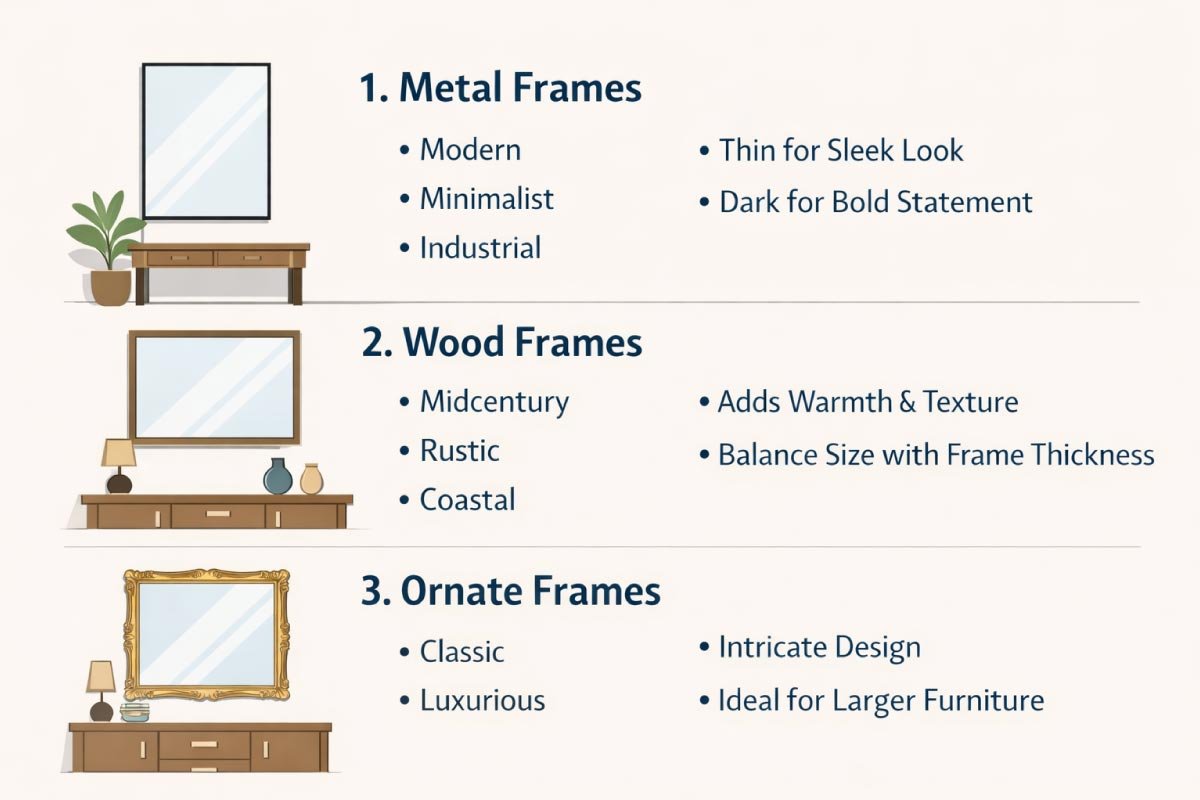
1. Metal Frames
Metal-framed mirrors suit industrial, modern, or minimalist interiors perfectly. Slim metal edges create a sleek, airy appearance, while darker or thicker metals can add a bold, architectural statement. This frame type balances clean lines and reflective surfaces, enhancing both contemporary and eclectic dining spaces.
2. Wood Frames
Wood frames add warmth, texture, and a natural element to any space, making them ideal for midcentury, coastal, or rustic interiors. A thicker wooden frame can make the mirror feel more substantial, so slightly increasing the mirror’s size ensures it remains balanced and proportional above your sideboard or console.
3. Ornate Frames
Ornate frames bring elegance and visual drama, making them perfect for classic or luxurious interiors. They pair best with larger sideboards or consoles, where the mirror’s size can balance the intricate detailing. This prevents the frame from overpowering the space while still creating a striking focal point.
Also Read:
Final Pro Tips for Perfect Hanging
Achieving a flawless mirror placement requires planning and attention to detail. Measure carefully, visualize the layout with temporary markings, and account for both style and safety. Considering grouped mirrors or appropriate hardware ensures your mirror looks intentional, stays secure, and enhances the overall design of your dining or living space.
- Always measure twice.
- Use painter’s tape to mark mirror size on the wall before purchase.
- Consider multiple mirrors grouped together instead of a single oversized mirror for more artistic impact.
- Don’t forget the hardware weight — choose appropriate anchors or studs.
Also Read:
