
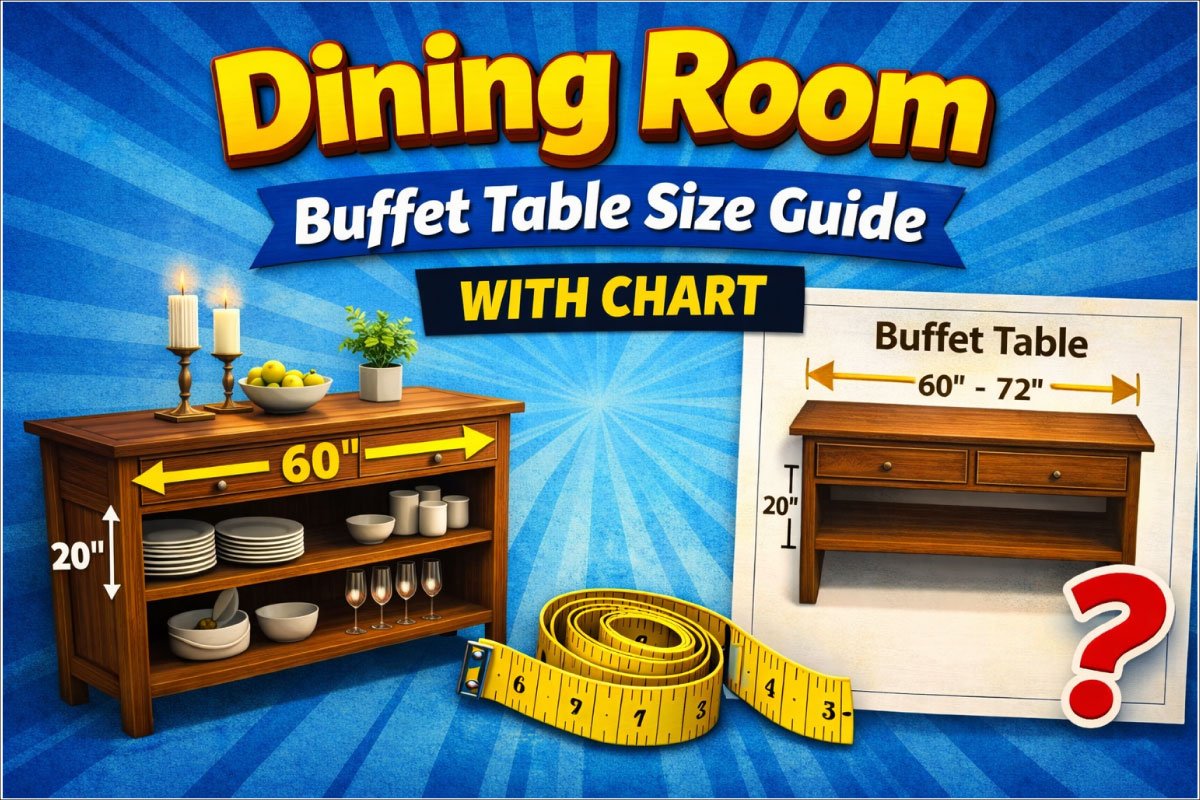
A buffet table is an essential piece of furniture in any dining room. It serves both functional and aesthetic purposes—providing storage for dining essentials such as dinnerware, cutlery, and linens, while also offering extra surface space for serving food or displaying decorative items. Choosing the right buffet table size is crucial, as it ensures the piece fits comfortably within your dining room layout and complements your existing furniture.
In this guide, we’ll cover standard buffet table dimensions, ideal sizes for different dining room spaces, height considerations, and tips for arranging your buffet for maximum efficiency. Additionally, we’ve included six comprehensive charts to make your selection process easier.
Understand Standard Buffet Table Dimensions
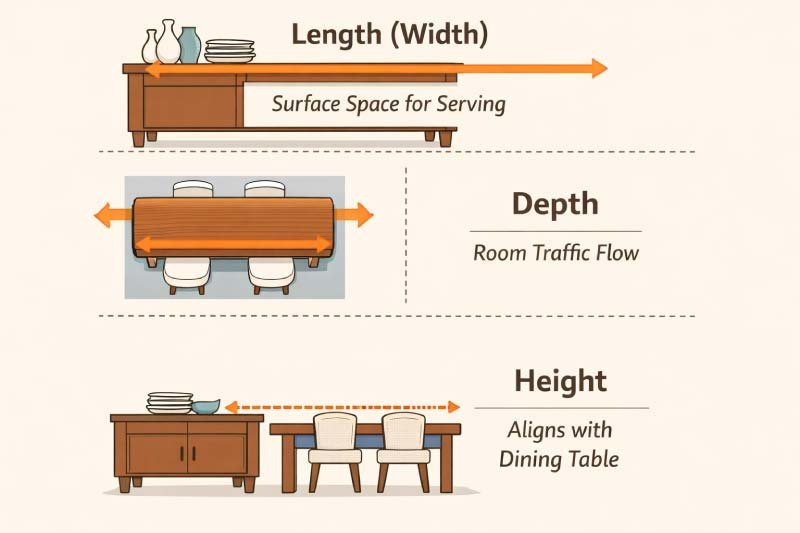
Choosing the right buffet table starts with understanding its standard dimensions. Size affects both functionality and room flow. By considering length, depth, and height, you can ensure your buffet provides adequate storage, complements your dining area, and makes serving effortless.
-
Length (Width): Determines how much surface space you have for serving or display.
-
Depth: Impacts how far the table extends into the room, affecting traffic flow.
-
Height: Should align with your dining table height for ease of access.
Standard Buffet Table Dimensions
Choosing the right buffet table size is essential for both functionality and style. A properly sized buffet ensures enough storage and serving space without overcrowding your dining area. The following table outlines standard buffet dimensions, helping you select the perfect size for small, medium, large, or extra-large dining spaces.
| Buffet Type | Length (inches) | Depth (inches) | Height (inches) | Notes |
|---|---|---|---|---|
| Small Buffet | 36–48 | 14–18 | 30–34 | Perfect for compact dining areas |
| Medium Buffet | 48–60 | 16–20 | 30–36 | Fits most dining rooms comfortably |
| Large Buffet | 60–72 | 18–24 | 32–36 | Ideal for hosting large gatherings |
| Extra-Large Buffet | 72–96 | 20–24 | 32–36 | Requires a spacious dining room |
Buffet Table Height Guide
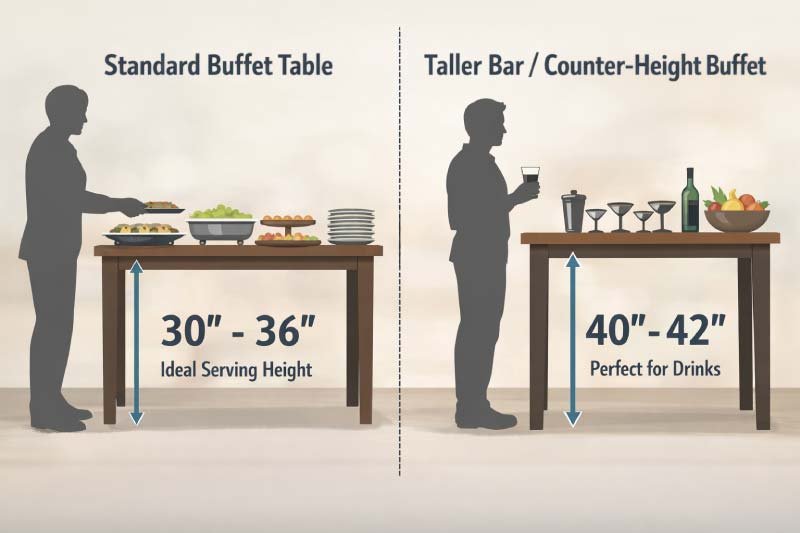
The height of your buffet table is particularly important for comfort and functionality. A standard buffet table height generally ranges from 30 to 36 inches, which allows easy access to serve food while standing. If you plan to use the buffet as a bar or counter for drinks, consider a taller design.
Buffet Table Height Recommendations
Selecting the right buffet table height enhances comfort and usability. Different purposes require different heights, whether for standard dining, serving, or a drinks station. The table below provides recommended heights to ensure your buffet is functional, accessible, and stylish, catering to a variety of dining and entertaining needs.
| Purpose | Ideal Height (inches) | Notes |
|---|---|---|
| Standard Dining Use | 30–34 | Matches standard dining table height |
| Buffet & Serving | 32–36 | Offers comfortable surface for serving dishes |
| Bar or Drinks Station | 36–42 | Allows standing guests to use it as a counter |
| Custom Height | 28–40 | For specialized use or accessibility requirements |
Choosing Buffet Table Size Based on Room Dimensions
Selecting the right buffet table size largely depends on your dining room dimensions and the number of people it accommodates. For a balanced layout, you should leave 36 inches of clearance around the buffet to allow smooth movement.
Recommended Buffet Table Sizes by Room Space
Choosing a buffet table that fits your room ensures both practicality and aesthetic balance. The size of your dining space influences the ideal buffet dimensions, from compact units for small rooms to expansive tables for larger areas. The following table recommends buffet sizes based on room square footage for optimal fit and function.
| Room Size (sq ft) | Recommended Buffet Length | Recommended Depth | Notes |
|---|---|---|---|
| Small (100–150) | 36–48 | 14–16 | Compact and functional |
| Medium (150–250) | 48–60 | 16–20 | Standard size for most dining rooms |
| Large (250–350) | 60–72 | 18–22 | Works well for hosting larger parties |
| Extra-Large (350+) | 72–96 | 20–24 | Fits open-concept dining spaces |
Buffet Table Width Guide
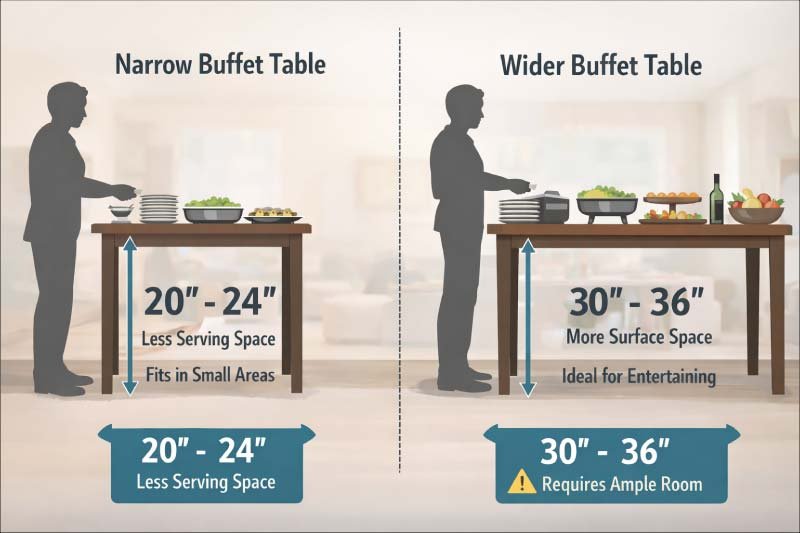
The width of a buffet table is key to balancing storage, serving space, and room flow. A wider table offers more surface for dishes and décor, ideal for entertaining, but it requires sufficient space to prevent the room from feeling cramped or overcrowded.
Buffet Table Width Guide
Selecting the right buffet width ensures smooth serving and ample space for your guests. The table below recommends buffet widths based on the number of people you typically host, helping you balance functionality and style while accommodating small gatherings or larger entertaining events with ease.
| Number of Guests Served | Recommended Buffet Width (inches) | Notes |
|---|---|---|
| 2–4 | 36–48 | Small gatherings or casual dining |
| 4–6 | 48–60 | Standard buffet size for average dining rooms |
| 6–8 | 60–72 | Suitable for larger gatherings |
| 8+ | 72–96 | For big events or entertaining spaces |
Buffet Depth Considerations
Depth is an often-overlooked factor, but it plays a crucial role in maintaining comfortable movement around the table. Standard buffet depths range from 14 to 24 inches. Shallow buffets work well in narrow rooms, while deeper units provide extra storage space.
Recommended Buffet Depths
Buffet table depth affects both storage capacity and room flow. Choosing the right depth ensures your buffet is practical without overcrowding the space. The table below outlines recommended buffet depths, from compact options for small areas to deeper tables for maximum serving and storage needs.
| Depth (inches) | Ideal Use |
|---|---|
| 14–16 | Compact spaces, minimal storage |
| 16–18 | Standard dining rooms |
| 18–20 | Extra storage for plates, trays, or linens |
| 20–24 | Large buffets for extensive serving & storage |
Buffet Table Styles and Corresponding Sizes
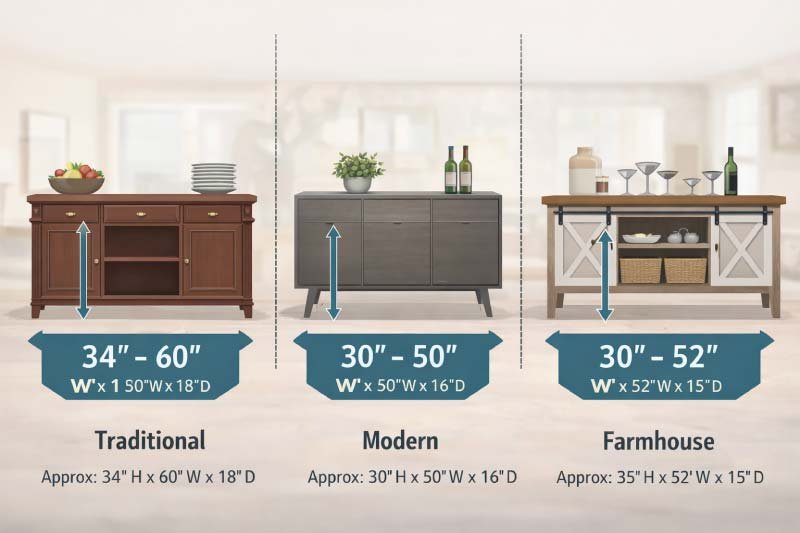
Buffet tables are available in diverse styles, each with its own typical dimensions. Choosing the right style ensures your buffet not only fits the available space but also complements your dining room’s décor, providing both practicality and visual harmony.
Buffet Styles and Standard Sizes
Buffet tables come in a variety of styles, each with dimensions suited to different needs and aesthetics. From traditional to modern, sideboards to hutches, the right style enhances both storage and décor. The table below outlines standard sizes for popular buffet styles, helping you choose the perfect fit for your space.
| Buffet Style | Length (inches) | Depth (inches) | Height (inches) | Notes |
|---|---|---|---|---|
| Traditional | 48–72 | 16–20 | 32–36 | Classic design with drawers & cabinets |
| Modern | 36–60 | 14–18 | 30–34 | Sleek, minimalistic lines |
| Sideboard | 48–60 | 16–20 | 30–34 | Low profile, fits under wall art |
| Hutch Buffet | 60–72 | 18–24 | 36–42 | Adds vertical storage with display shelves |
| Narrow Buffet | 36–48 | 14–16 | 30–34 | Great for narrow hallways or small rooms |
| Extra-Large Buffet | 72–96 | 20–24 | 32–36 | Ideal for grand dining spaces |
Also Read:
Clearance Around Buffet Table
Proper clearance around a buffet table is essential for comfort and functionality. Adequate space prevents congestion, ensures smooth traffic flow, and allows guests to serve themselves easily. Maintaining recommended distances between the buffet, dining table, and walls enhances both everyday use and special gatherings.
-
36 inches: Minimum clearance for walking comfortably behind chairs.
-
42–48 inches: Ideal for buffet-style serving during parties.
-
60 inches or more: Necessary for open-concept layouts with high traffic.
Also Read:
Buffet Table Functionality Tips
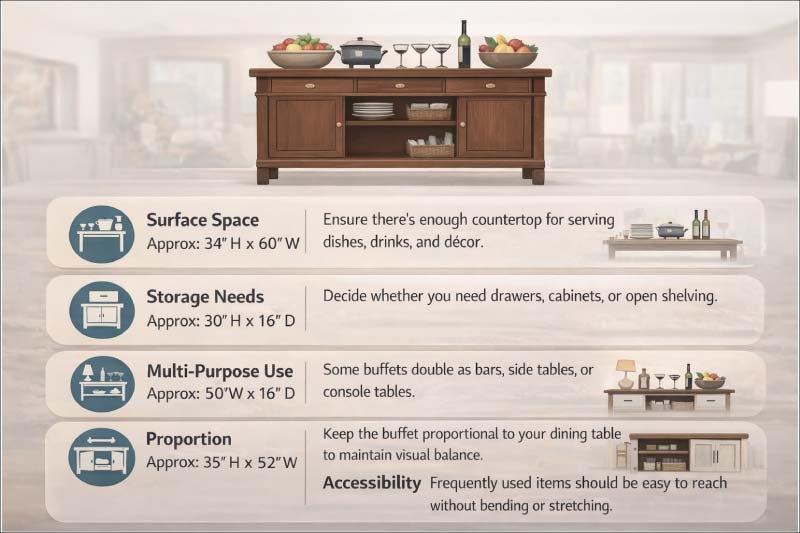
Selecting the right buffet table size is only part of the equation. To make the most of your space, consider surface area, storage options, multi-purpose uses, and accessibility. Thoughtful planning ensures your buffet is both practical for daily use and elegant for entertaining.
-
Surface Space: Ensure there’s enough countertop for serving dishes, drinks, and décor.
-
Storage Needs: Decide whether you need drawers, cabinets, or open shelving.
-
Multi-Purpose Use: Some buffets double as bars, side tables, or console tables.
-
Proportion: Keep the buffet proportional to your dining table to maintain visual balance.
-
Accessibility: Frequently used items should be easy to reach without bending or stretching.
Also Read:
Ideal Buffet Table Layouts
Where you place your buffet table affects both room flow and usability. Different layouts suit different dining spaces, from compact rooms to expansive areas. Choosing the right placement ensures easy access, efficient serving, and a harmonious balance between furniture and movement in your dining area.
-
Against the Wall: Most common placement; ensures traffic flow remains clear.
-
Parallel to Dining Table: Works well in long, narrow dining rooms.
-
Island or Centerpiece: In very large rooms, buffets can act as a central serving station.
Also Read:
Conclusion
Selecting the right buffet table size involves balancing aesthetics, functionality, and space constraints. By considering length, depth, height, and style, you can choose a buffet that complements your dining room, enhances storage, and creates a welcoming environment for family and guests. The charts provided above make it easier to visualize dimensions and make informed decisions tailored to your space.
Also Read:
