
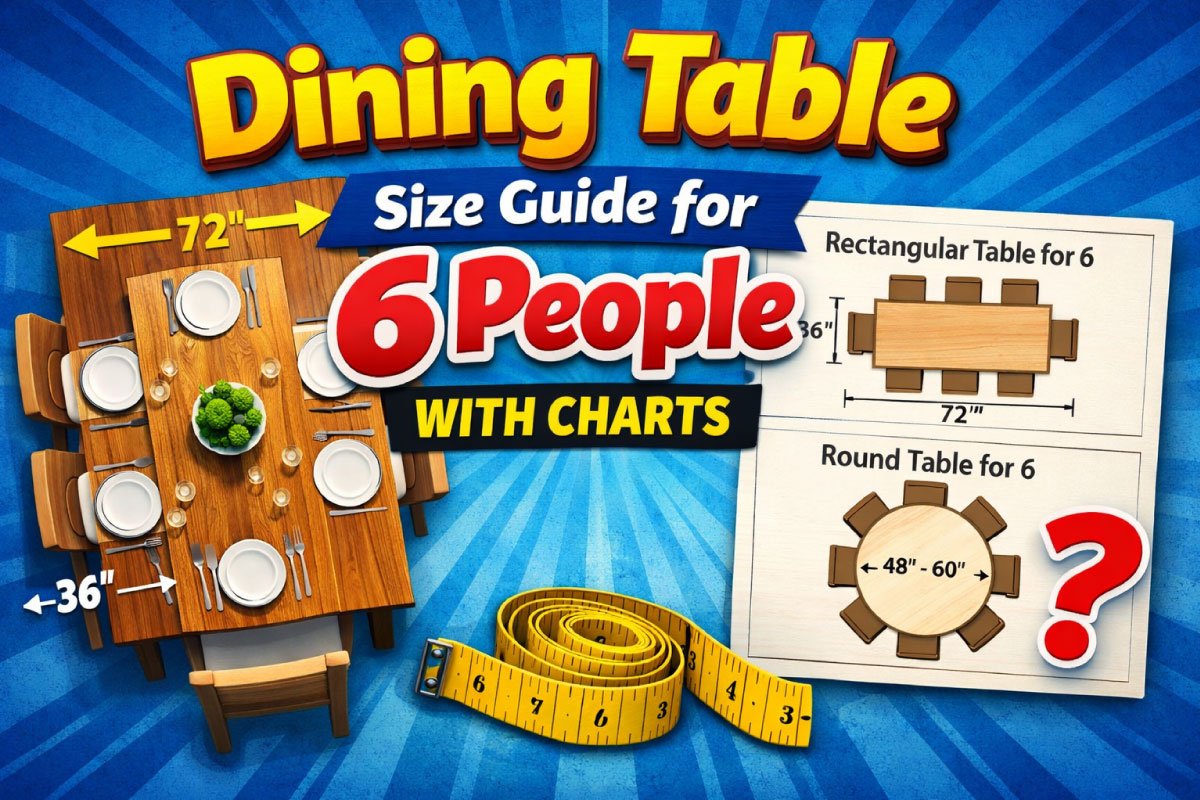
Choosing the perfect dining table for your family or guests can be surprisingly challenging. The ideal table should balance comfort, functionality, and aesthetics while fitting seamlessly into your dining space. For families of six, selecting the right table size ensures everyone has enough room to dine comfortably without feeling cramped. In this guide, we will explore standard dimensions, shape considerations, clearance requirements, and seating arrangements, complete with charts to make your decision easier.
Why Table Size Matters
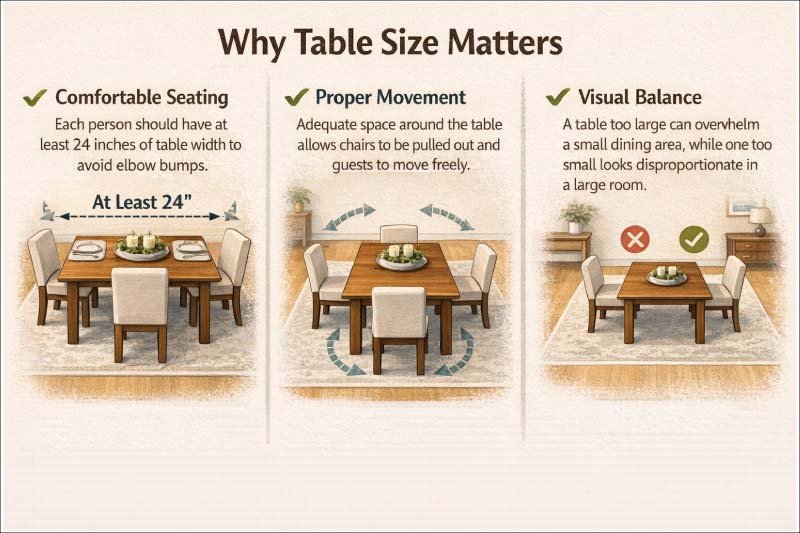
Choosing the right dining table size is essential for both function and aesthetics. The ideal table ensures guests are comfortable, can move freely, and complements the room’s proportions. Proper sizing enhances mealtime experiences, prevents crowding, and creates a visually balanced and inviting dining space for every occasion.
-
Comfortable seating: Each person should have at least 24 inches of table width to avoid elbow bumps.
-
Proper movement: Adequate space around the table allows chairs to be pulled out and guests to move freely.
-
Visual balance: A table too large can overwhelm a small dining area, while one too small looks disproportionate in a large room.
Standard Dining Table Dimensions for 6 People
Choosing the right dining table size ensures comfort and functionality for six people. Tables vary in shape—rectangular, square, or round—and each shape has ideal dimensions to allow enough elbow room, chair spacing, and dining space. Here are the typical standards:
Standard Dining Table Dimensions for 6 People
Choosing the right dining table for six people ensures comfort, functionality, and style. Table shape and size affect seating, space flow, and conversation dynamics. This guide outlines standard dimensions for rectangular, round, square, and oval tables, helping you select the perfect fit for your dining area while maximizing comfort and usability.
| Table Shape | Length (inches) | Width (inches) | Height (inches) | Notes |
|---|---|---|---|---|
| Rectangular | 60–72 | 36–42 | 28–30 | Most common choice, flexible seating |
| Round | 48–60 | 48–60 | 28–30 | Encourages conversation, best for small spaces |
| Square | 48–60 | 48–60 | 28–30 | Symmetrical look, may limit flexibility |
| Oval | 72–84 | 36–42 | 28–30 | Offers elegance, extra seating space |
Key takeaway: For six people, a rectangular table around 60 inches long and 36–40 inches wide is ideal. Round tables require slightly more diameter to accommodate six comfortably.
Shape Considerations
The shape of a dining table affects both aesthetics and functionality. Rectangular tables are versatile for most spaces, round tables encourage conversation, and square tables suit smaller rooms. Choosing the right shape ensures comfort, efficient space use, and a balanced look for your dining area.
1. Rectangular Tables
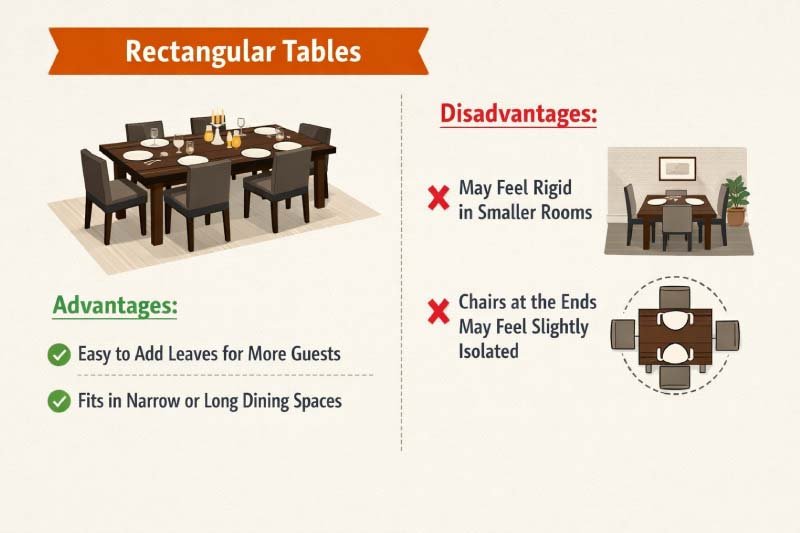
The shape of a dining table influences both style and practicality. Rectangular tables fit most spaces and offer maximum seating, round tables foster conversation and intimacy, while square tables work well in compact rooms. Selecting the right shape ensures comfort, efficient space use, and a visually balanced dining area.
Advantages:
-
Easy to add leaves for more guests
-
Fits in narrow or long dining spaces
Disadvantages:
-
May feel rigid in smaller rooms
-
Chairs at the ends may feel slightly isolated
2. Round Tables
Round tables are ideal for fostering conversation, as their shape allows everyone to face each other without obstruction. They create a cozy, inclusive dining experience and work well in both small and large spaces, though planning for size and clearance is important.
Advantages:
-
Encourages interaction
-
No sharp corners
Disadvantages:
-
Larger diameter needed to seat six comfortably
-
Takes up more floor space than rectangular tables
3. Square Tables
Square tables bring a sense of balance and style to dining areas, making them visually appealing and suitable for intimate gatherings. Their uniform shape ensures equal seating for all, though careful sizing is needed to avoid feeling cramped or limiting extra seating options.
Advantages:
-
Compact, ideal for square rooms
-
All diners have equal seating
Disadvantages:
-
Can feel cramped if width is less than 48 inches
-
Harder to add extra seating
4. Oval Tables
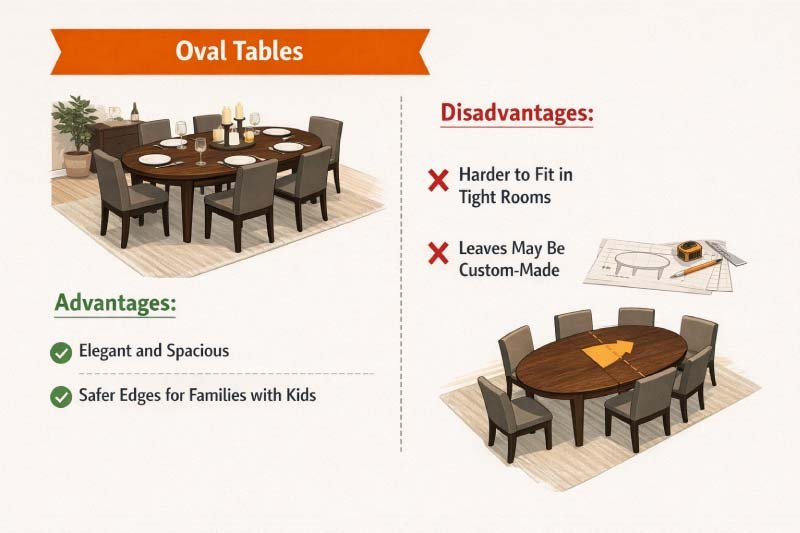
Oval tables blend the practicality of rectangular designs with the gentle curves of round tables, creating an elegant and family-friendly dining option. They offer generous seating while softening the room’s look, though careful planning is needed for placement and potential leaf extensions.
Advantages:
-
Elegant and spacious
-
Safer edges for families with kids
Disadvantages:
-
Harder to fit in tight rooms
-
Leaves may be custom-made
Seating Space Recommendations
Ensuring adequate seating space is key for comfort and ease during meals. Proper spacing allows diners to move freely, dine comfortably, and avoid feeling cramped. Planning around these dimensions helps make any table arrangement both functional and inviting.
-
Width per person: 24–30 inches
-
Depth per person: 14–18 inches
Recommended Table Space per Person
When planning a dining table for six, it’s important to consider the space each person needs for comfort. Proper width and depth per diner prevent crowding and allow for relaxed dining. This table provides recommended space allocations for rectangular, round, square, and oval tables to ensure an enjoyable mealtime experience.
| Table Type | Width per Person (inches) | Depth per Person (inches) | Notes |
|---|---|---|---|
| Rectangular | 24–30 | 14–18 | Allows elbow room |
| Round | 28–30 | 14–18 | Larger diameter needed |
| Square | 24–28 | 14–18 | Comfortable for all diners |
| Oval | 24–30 | 14–18 | Elegant with more elbow space |
Clearance and Room Space
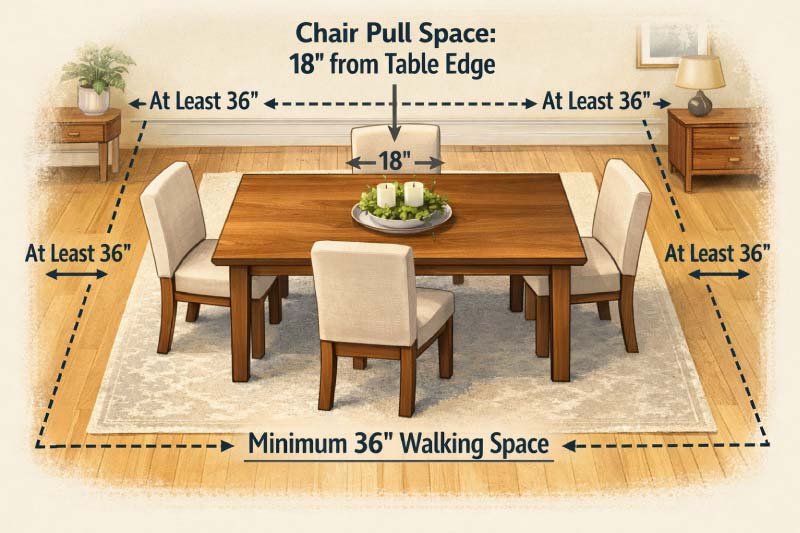
When selecting a dining table, the surrounding space is just as important as the table itself. Proper clearance ensures comfort, easy movement, and a balanced room layout. Consider both chair space and walking paths to create a functional and inviting dining area.
-
Chair pull space: 18 inches from table edge to allow chairs to be pulled out
-
Walking space around table: Minimum 36 inches for traffic flow
Ideal Room Size for 6-Person Dining Table
Selecting the right room size for a six-person dining table is crucial for comfort and movement. Adequate clearance around the table ensures chairs can be pulled out easily and traffic flows smoothly. This table outlines ideal room dimensions for different table shapes, helping you plan a functional and inviting dining area.
| Table Shape | Table Size (inches) | Room Size (inches) | Notes |
|---|---|---|---|
| Rectangular | 60×36 | 120×96 | 36-inch clearance around table |
| Rectangular | 72×40 | 132×104 | Comfortable in larger rooms |
| Round | 54 diameter | 108×108 | Allows 36-inch clearance |
| Square | 54×54 | 108×108 | Symmetrical, cozy setup |
| Oval | 72×40 | 132×104 | Elegant, spacious |
Tip: Measure your dining space before purchasing a table, keeping in mind chairs and clearance.
Discover More:
Complete Guide to Perfect Buffet Mirror Sizes for Dining Rooms
Table Height Considerations
Choosing the right table height is key for comfortable dining and proper posture. Standard dining tables range from 28–30 inches, pairing well with chairs that have 18–20 inch seat heights. Small adjustments with cushions or adjustable chairs can ensure everyone sits comfortably.
Standard Dining Table and Chair Heights
Choosing the right table and chair heights is essential for comfortable dining. Proper proportions ensure diners have enough legroom and maintain good posture. This table highlights standard heights for dining tables, chairs, benches, and bar-height options, helping you create an ergonomic and enjoyable seating arrangement for six people.
| Item | Height (inches) | Notes |
|---|---|---|
| Dining table | 28–30 | Comfortable for most adults |
| Chair seat height | 18–20 | Allows legroom under table |
| Bench seating | 17–19 | Works well with rectangular tables |
| Bar-height tables | 40–42 | Not recommended for standard 6-person setup |
Discover More:
Extending a 6-Person Table
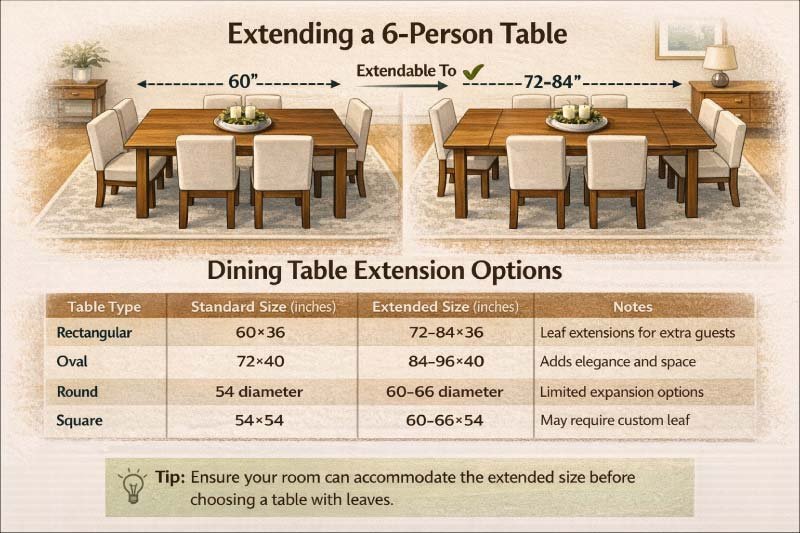
For those who frequently host gatherings, flexibility is essential. Many 6-person tables offer extendable options, allowing you to accommodate extra guests without crowding. Using table leaves or foldable extensions ensures your dining space remains functional and versatile for larger meals.
Dining Table Extension Options
Dining table extensions offer flexibility for accommodating extra guests without compromising comfort. Different table shapes have varying extension options, from leaf inserts for rectangular and oval tables to limited expansion for round and square designs. This table provides standard and extended sizes to help you plan for both everyday use and special occasions.
| Table Type | Standard Size (inches) | Extended Size (inches) | Notes |
|---|---|---|---|
| Rectangular | 60×36 | 72–84×36 | Leaf extensions for extra guests |
| Oval | 72×40 | 84–96×40 | Adds elegance and space |
| Round | 54 diameter | 60–66 diameter | Limited expansion options |
| Square | 54×54 | 60–66×54 | May require custom leaf |
Tip: Ensure your room can accommodate the extended size before choosing a table with leaves.
Discover More:
Shape vs. Room Type Recommendations
Choosing the right dining table shape is crucial for both aesthetics and functionality. The table’s form affects seating comfort, traffic flow, and the overall feel of your dining space. Matching the table shape to your room type ensures harmony, maximizes space efficiency, and creates an inviting atmosphere for meals and gatherings.
1. Rectangular Tables
Rectangular tables are ideal for long or narrow dining rooms. They allow for maximum seating along the sides while maintaining a clear pathway. Perfect for family dinners or formal gatherings, these tables complement linear room layouts and can accommodate additional chairs at the ends when hosting larger groups.
2. Round Tables
Round tables work best in small or square rooms, creating a cozy and intimate dining experience. Their absence of corners encourages conversation and smooth traffic flow. Ideal for breakfast nooks or casual dining spaces, round tables provide flexibility without overwhelming the room’s dimensions.
3. Square Tables
Square tables suit square-shaped rooms or small apartments. They offer equal seating on all sides and fit neatly into corners or compact areas. Their symmetry creates a balanced look, making them a practical choice for urban living spaces where every inch counts.
4. Oval Tables
Oval tables are excellent for formal dining rooms or open floor plans. Their rounded ends soften the room’s geometry, promoting a flowing layout. Oval shapes provide generous seating without sharp corners, making them ideal for family gatherings and elegant dinner parties.
5. Boat-Shaped Tables
Boat-shaped tables taper slightly at the ends, offering a unique visual appeal and efficient use of space. They suit elongated rooms while maintaining an elegant presence. This shape encourages conversation by bringing diners closer together and is ideal for contemporary or nautical-themed interiors.
6. Expandable/Drop-Leaf Tables
Expandable or drop-leaf tables adapt to varying space requirements. Perfect for small rooms that occasionally host large groups, these tables save space while offering versatility. When folded, they fit compact dining areas; when extended, they accommodate extra guests comfortably.
7. Octagonal Tables
Octagonal tables offer a distinctive, symmetrical look suitable for medium-sized, square, or circular rooms. They create an inviting, social environment by reducing edge distance between diners. Ideal for casual or eclectic interiors, these tables combine style with functional seating efficiency.
Discover More:
Material Considerations
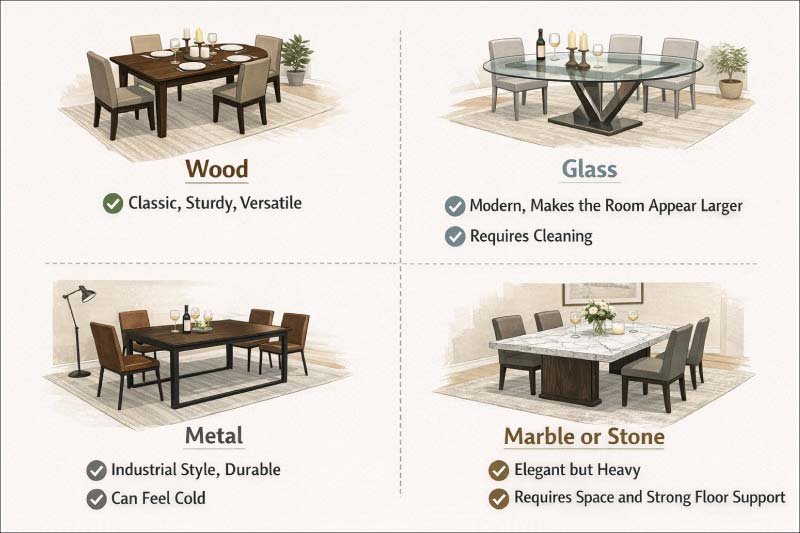
Beyond size, the material of your dining table affects both style and longevity. Choosing the right material balances durability, maintenance, and visual appeal, helping your table complement the room while standing up to daily use.
-
Wood: Classic, sturdy, versatile
-
Glass: Modern, makes the room appear larger, requires cleaning
-
Metal: Industrial style, durable, can feel cold
-
Marble or Stone: Elegant but heavy, requires space and strong floor support
Discover More:
Conclusion
Selecting the right dining table for six people is a balance of space, shape, and style. Rectangular tables are the most versatile, round tables promote conversation, square tables suit smaller spaces, and oval tables offer elegance. Always consider clearance around the table, seating space per person, and potential extensions for guests. Using the charts provided, you can measure your space, select a shape, and confidently choose a table that accommodates six people comfortably.
A well-chosen dining table not only improves comfort during meals but also enhances the overall look and feel of your dining area, making it a space where family and friends gather, celebrate, and create lasting memories.
Discover More:
