
Choosing the correct buffet table size is critical in event planning. The right size ensures smooth guest flow, adequate food display, and a comfortable experience.
Whether it’s for a wedding, corporate event, backyard party, or holiday meal, knowing standard buffet table sizes helps you estimate space, food quantity, and setup logistics.
Why Buffet Table Size Matters
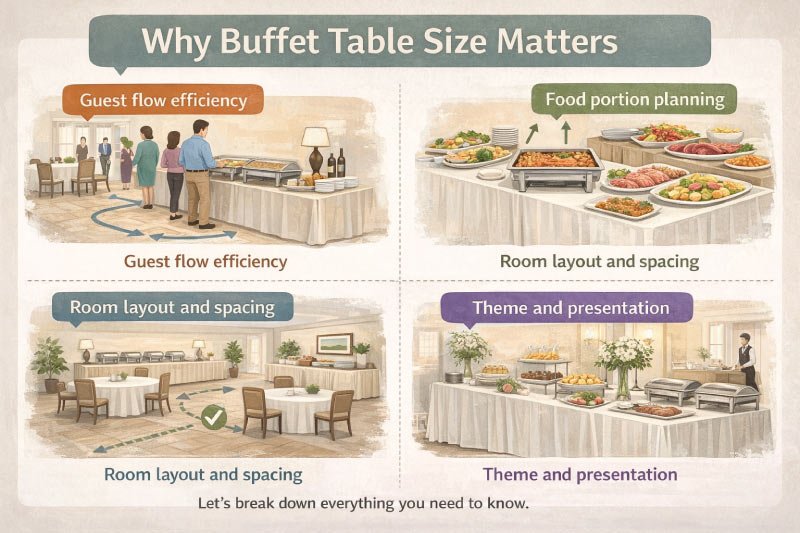
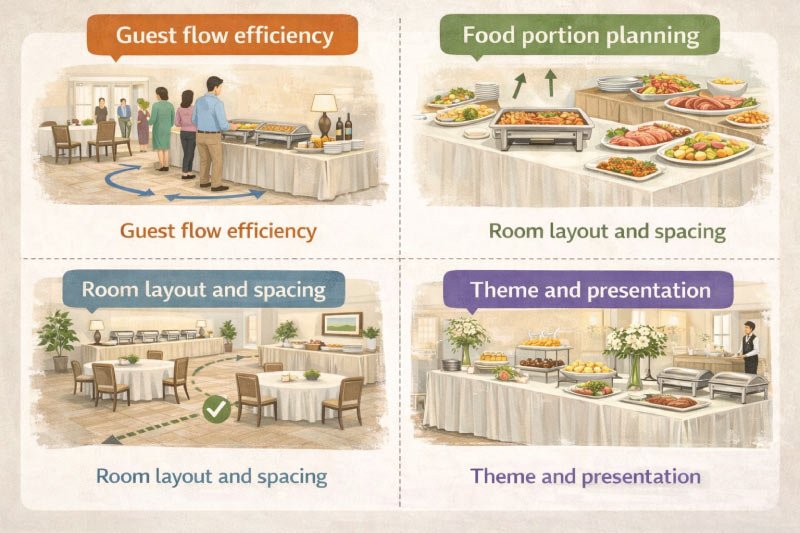
Why buffet table size matters comes down to comfort, function, and presentation. The right dimensions keep guests moving smoothly, prevent overcrowding, and ensure your serving setup fits properly. It also helps you plan portions, balance the room layout, and match your theme with a polished look—while leaving enough clearance for trays, chafers, and accessories.
-
Guest flow efficiency
-
Food portion planning
-
Room layout and spacing
-
Theme and presentation
-
Equipment fit (chafers, trays, sneeze guards)
Let’s break down everything you need to know.
1- Standard Buffet Table Sizes & Capacities
Table Size Overview
This table size overview makes it easy to match the right buffet setup to your event. By comparing standard dimensions, ideal uses, and estimated serving capacity, you can plan smoother traffic flow and ensure enough surface space for food, décor, and serviceware—whether you’re hosting a small gathering or a large, full-service function.
| Table Size | Dimensions (L × W × H) | Recommended Use | Serving Capacity |
|---|---|---|---|
| Small Table | 4 ft × 2.5 ft × 30 in | Appetizers / Desserts | 10–15 guests |
| Standard Buffet | 6 ft × 2.5 ft × 30 in | Main entrée display | 20–30 guests |
| Large Buffet | 8 ft × 2.5 ft × 30 in | Full service buffet | 40–60 guests |
| Double Buffet | 12 ft × 2.5 ft × 30 in | Large events | 60–80 guests |
| Island Buffet | 6 ft × 4 ft × 30 in | Grab‑and‑serve island | 30–50 guests |
| Cocktail Buffet | Round 4 ft (diam.) × 30 in | Standing service | 12–20 guests |
Note: Heights are often adjustable but typically around 30 inches for standard buffet tables.
2- Small Buffet Table (Ideal for Apps & Desserts)
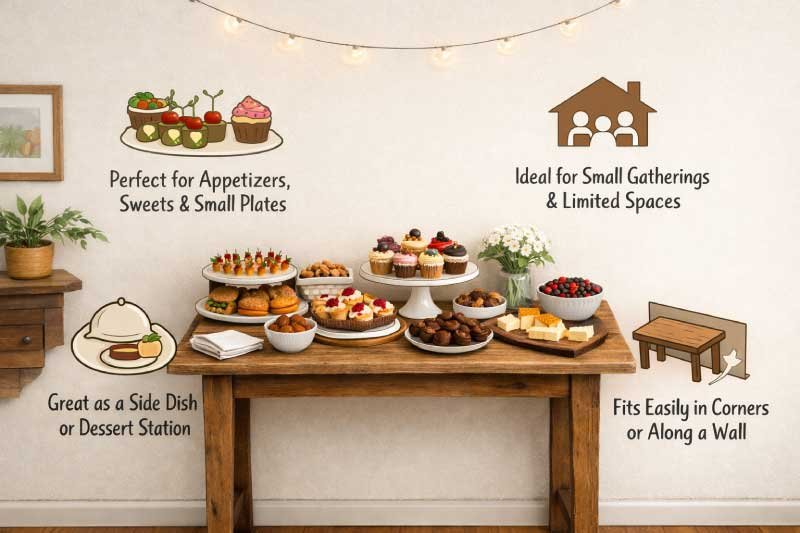
A small buffet table is the go-to choice for light serving needs, especially when you’re focusing on appetizers and desserts. Its compact footprint fits neatly in tight dining areas, apartments, or party corners while still offering enough surface space for trays, plates, and décor. Ideal for casual hosting without crowding the room.
-
Great for appetizers, sweets, and small plates
-
Best for small gatherings and limited spaces
-
Works well as a side dish or dessert station
-
Easy to place in corners or along a wall
Small Buffet Table Measurements
A small buffet table is a smart choice when you need serving space without overcrowding the room. With a compact 4-foot length and standard 30-inch height, it comfortably supports light food service for about 10–15 guests. It’s ideal for appetizers, desserts, or drink stations—especially in tight venues where space-saving matters most.
| Feature | Standard Size |
|---|---|
| Length | 4 feet (48 in) |
| Width | 2.5 feet (30 in) |
| Height | ~30 inches |
| Guests Served | ~10–15 |
| Ideal For | Appetizers, desserts, drinks |
-
Great for smaller parties or add‑on stations
-
Saves space in tight venues
3- Standard Buffet Table (Most Common Event Size)
A standard buffet table is the most popular choice for everyday events because it balances serving space and room flow. It comfortably holds main dishes, sides, condiments, and serving tools without feeling cramped. Whether you’re hosting lunch or dinner, this size makes setup simple, keeps food accessible, and suits most medium-sized guest lists.
Ideal for lunch and dinner buffets
Fits multiple trays, sides, and serving utensils
Works best for medium gatherings and parties
Keeps the serving line organized and accessible
Standard Buffet Table Measurements
A standard 6-foot buffet table is the most versatile option for medium-sized gatherings. Its 72-inch length provides enough surface area for main entrées, salads, and serving accessories while keeping the setup easy to manage. Typically serving around 20–30 guests, it’s a reliable choice for weddings, corporate lunches, birthdays, and other well-attended events.
| Feature | Standard Size |
|---|---|
| Length | 6 feet (72 in) |
| Width | 2.5 feet (30 in) |
| Height | ~30 inches |
| Guests Served | ~20–30 |
| Ideal For | Main entrees, salads |
Works best for weddings, corporate lunches, birthdays.
4- Large Buffet Table (Best for Full Service)
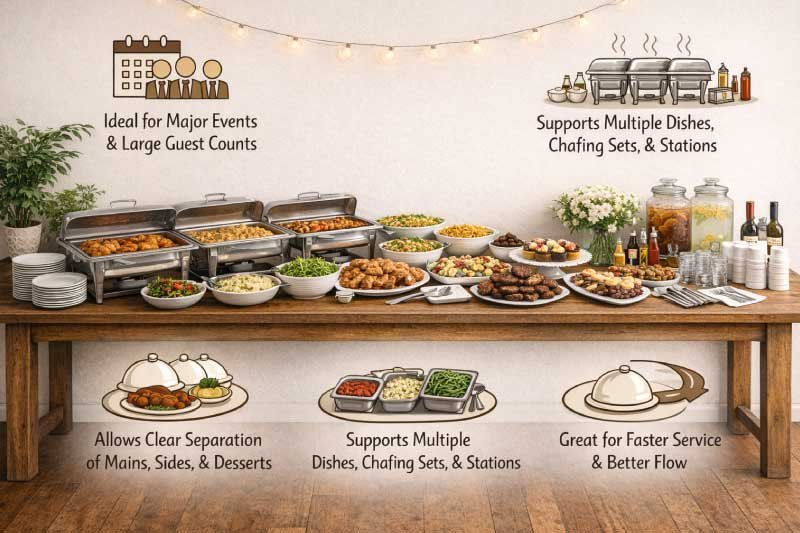
A large buffet table is built for full-service setups where you need maximum space for variety and volume. It’s ideal for weddings, corporate events, and big family gatherings because it can hold multiple mains, sides, desserts, and drink or condiment sections without looking crowded. This size also helps keep serving lines moving smoothly.
-
Best for major events and large guest counts
-
Supports multiple dishes, chafing sets, and stations
-
Allows clear separation of mains, sides, and desserts
-
Great for faster service and better flow
Large Buffet Table Measurements
A large 8-foot buffet table is perfect for bigger gatherings, offering ample space for multiple hot and cold dishes. With a standard width of 2.5 feet and height around 30 inches, it can comfortably serve 40–60 guests. It easily accommodates several chafing dishes, platters, and decorative elements for a full-service buffet setup.
| Feature | Standard Size |
|---|---|
| Length | 8 feet (96 in) |
| Width | 2.5 feet (30 in) |
| Height | ~30 inches |
| Guests Served | ~40–60 |
| Ideal For | Multiple hot and cold dishes |
Can support multiple chafing dishes + décor
5- Double Buffet Table (Big Events)
A double buffet table is perfect for large-scale events where a single table isn’t enough. It provides extensive surface area for multiple dishes, drinks, and stations, allowing guests to serve themselves efficiently. Often arranged against walls or in serving lines, it keeps traffic smooth and food easily accessible for everyone.
-
Ideal for big events and large crowds
-
Can hold multiple mains, sides, desserts, and drinks
-
Often placed against walls or in buffet lines
-
Helps maintain an organized and efficient serving flow
Double Buffet Table Measurements
| Feature | Standard Size |
|---|---|
| Length | 12 feet (144 in) |
| Width | 2.5 feet (30 in) |
| Height | ~30 inches |
| Guests Served | ~60–80 |
| Ideal For | Weddings, large banquets |
-
Best when paired with traffic plan
-
Works well with stations (salads, mains, desserts)
6. Island Buffet Table (Accessible from All Sides)
An island buffet table offers 360-degree access, making it perfect for modern, open-layout spaces. Guests can serve themselves from all sides, reducing wait times and creating a more social, interactive dining experience. Its central placement adds a stylish focal point while maximizing accessibility for multiple dishes and drinks.
-
Ideal for self-serve setups and open layouts
-
Accessible from all sides for efficient guest flow
-
Perfect for contemporary or modern event spaces
-
Can hold mains, sides, desserts, and drinks
Island Buffet Table Measurements
An island buffet table is designed for accessibility from all sides, making it perfect for main stations, drinks, or desserts. Measuring 6 feet long by 4 feet wide and about 30 inches high, it comfortably serves 30–50 guests. Placed centrally, it allows guests to approach from 360°, improving flow and convenience.
| Feature | Standard Size |
|---|---|
| Length | 6 feet (72 in) |
| Width | 4 feet (48 in) |
| Height | ~30 inches |
| Guests Served | ~30–50 |
| Ideal For | Main stations, drinks, desserts |
Place centrally — guests can approach 360°
7- Round Cocktail Buffet Table
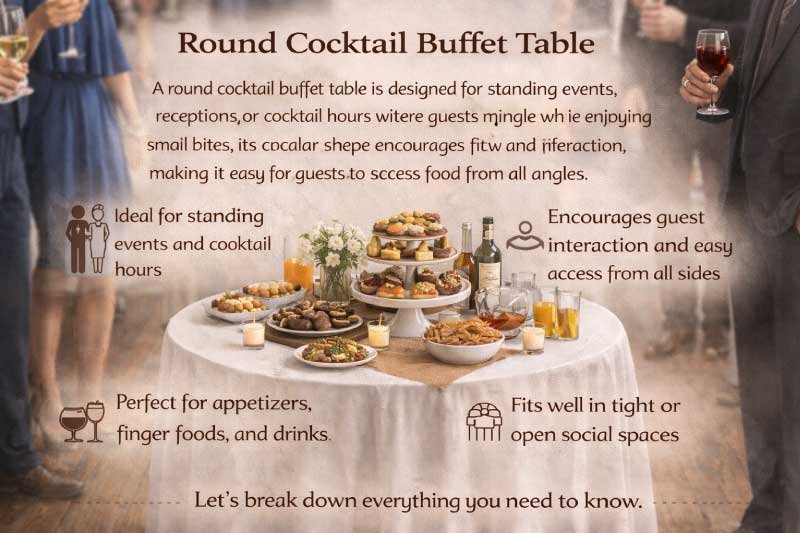
A round cocktail buffet table is designed for standing events, receptions, or cocktail hours where guests mingle while enjoying small bites. Its circular shape encourages flow and interaction, making it easy for guests to access food from all angles. Compact yet functional, it’s perfect for hors d’oeuvres, finger foods, and drinks.
-
Ideal for standing events and cocktail hours
-
Encourages guest interaction and easy access from all sides
-
Perfect for appetizers, finger foods, and drinks
-
Fits well in tight or open social spaces
Cocktail Buffet (Round) Table Measurements
A round cocktail buffet table is ideal for casual gatherings and standing service. With a 4-foot diameter and standard height of about 30 inches, it serves 12–20 guests. Perfect for stations, drinks, or appetizers, its circular design encourages mingling and creates a smooth, social flow throughout the event space.
| Feature | Standard Size |
|---|---|
| Diameter | 4 feet (48 in) |
| Height | ~30 inches |
| Guests Served | ~12–20 |
| Ideal For | Stations, drinks, appetizers |
Encourages mingling and casual flow.
How to Calculate Buffet Table Requirements
Calculating buffet table requirements is essential for planning any event, large or small. Understanding how many guests you’ll serve, the types of dishes, and the available space ensures a smooth dining experience. By assessing these factors, you can choose the right table size, layout, and setup that maximizes convenience, functionality, and guest satisfaction.
1. Assess the Number of Guests
Start by determining the total number of attendees expected. Buffet tables should provide enough space for each guest to serve themselves without congestion. Typically, allow 12–15 inches per person for dining and serving flow. This helps ensure guests can move comfortably and access all dishes without crowding.
2. Estimate the Menu and Dish Count
Consider the variety and number of dishes you plan to serve, including appetizers, mains, sides, and desserts. Each dish requires space on the buffet table for proper presentation. More dishes mean a longer table or multiple tables. Factor in serving utensils and the possibility of replenishing popular items throughout the event.
3. Determine Table Length and Width
Buffet table dimensions should accommodate the dishes and guest traffic. A standard guideline is 30 inches wide for single-sided service and 60 inches for double-sided service. Length varies based on guest count and dish quantity. Ensure there is at least 36 inches of clearance around the table for easy movement and to prevent bottlenecks.
4. Allocate Space for Drinks and Accessories
Buffets often include beverages, condiments, and decorative elements. Designate separate areas for drinks and utensils to avoid crowding the main serving area. This improves flow and organization. Consider small side tables or extensions to house these items while maintaining aesthetic appeal and accessibility for guests.
5. Factor in Room Layout and Flow
The room’s dimensions and layout influence buffet table placement. Avoid corners or narrow spaces that create congestion. Position tables along walls or centrally with clear pathways. Allow at least three feet of circulation space around the table. This ensures guests can serve themselves comfortably and staff can replenish dishes efficiently.
Use this formula:
Guest Count ÷ Serving Capacity per Table = Number of Tables
Example:
You are hosting 150 guests for dinner.
| Table Size | Serving Capacity | Tables Needed |
|---|---|---|
| 6 ft | 25 | 150 ÷ 25 = 6 tables |
| 8 ft | 50 | 150 ÷ 50 = 3 tables |
Always round up to avoid congestion.
Event Room Layout & Table Spacing
Proper table spacing is essential for a comfortable and efficient event layout. Maintaining clear aisles and adequate distance between buffet lines, food tables, and dining areas helps prevent congestion. Following recommended widths—4–6 feet for buffet lines, 3–4 feet between food tables, and 4–5 feet between food and dining tables—ensures smooth guest movement.
| Space Area | Recommended Aisle Width |
|---|---|
| Buffet line | 4–6 ft |
| Between food tables | 3–4 ft |
| Between food & dining tables | 4–5 ft |
This ensures guests can move freely without crowding.
Serving Zones & Configuration Ideas
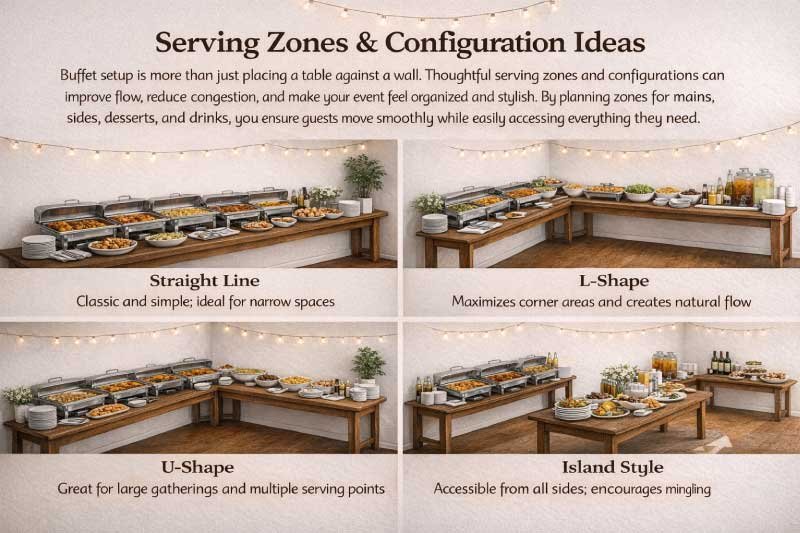
Buffet setup is more than just placing a table against a wall. Thoughtful serving zones and configurations can improve flow, reduce congestion, and make your event feel organized and stylish. By planning zones for mains, sides, desserts, and drinks, you ensure guests move smoothly while easily accessing everything they need.
-
Straight Line: Classic and simple; ideal for narrow spaces
-
L‑Shape: Maximizes corner areas and creates natural flow
-
U‑Shape: Great for large gatherings and multiple serving points
-
Island Style: Accessible from all sides; encourages mingling
-
Stations: Separate food, drinks, and desserts for efficiency
Linear Buffet (Single Line)
A linear buffet is a straightforward, single-line setup ideal for smaller halls or narrow spaces. It keeps the serving area simple and organized, allowing guests to move in one direction while selecting their dishes. This setup works well for medium-sized gatherings where space and flow are considerations.
-
Simple, single-line layout for easy access
-
Best for smaller halls and narrow spaces
-
Guests move left to right, minimizing congestion
-
Keeps serving area organized and efficient
Guests move left to right
U‑Shape Buffet
A U‑shape buffet is perfect for larger spaces and bigger gatherings. Its three-sided layout allows multiple guests to serve themselves simultaneously, reducing wait times and keeping the flow smooth. It’s ideal for separating courses like salads, mains, and desserts while maintaining a visually appealing setup.
-
Three-sided layout for efficient guest flow
-
Best for large spaces and bigger events
-
Separates courses like salads, mains, and desserts
-
Helps reduce waiting lines and congestion
Reduces waiting lines
Island Buffet
An island buffet is a central, freestanding setup that allows guests to access food from all sides, making it perfect for open-plan venues or modern event spaces. This layout encourages mingling, reduces bottlenecks, and ensures everyone can reach dishes easily, creating a smooth and social dining experience.
-
Accessible from all sides for efficient serving
-
Perfect for open-plan venues and modern layouts
-
Encourages guest interaction and mingling
-
Ideal for mains, sides, desserts, and drinks
🇺🇸 Ideal for open‑plan venues
Special Considerations for Food & Equipment
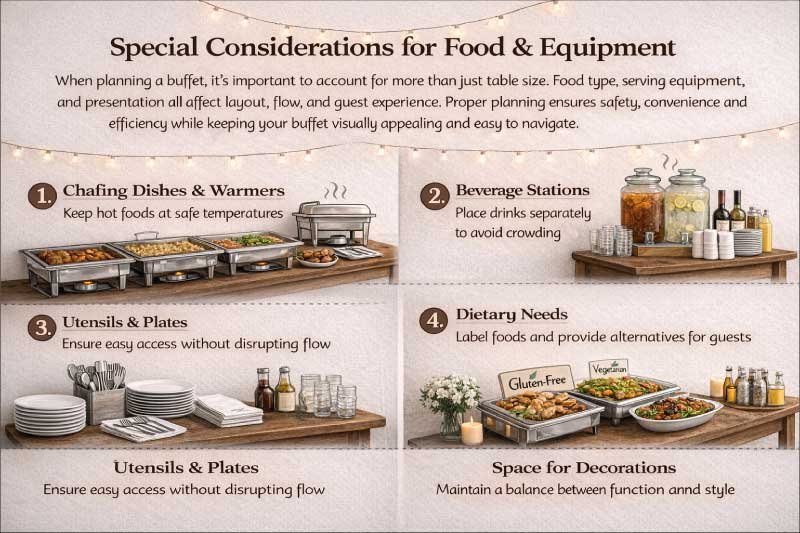
When planning a buffet, it’s important to account for more than just table size. Food type, serving equipment, and presentation all affect layout, flow, and guest experience. Proper planning ensures safety, convenience, and efficiency while keeping your buffet visually appealing and easy to navigate.
-
Chafing Dishes & Warmers: Keep hot foods at safe temperatures
-
Beverage Stations: Place drinks separately to avoid crowding
-
Utensils & Plates: Ensure easy access without disrupting flow
-
Dietary Needs: Label foods and provide alternatives for guests
-
Space for Decorations: Maintain a balance between function and style
1- Chafing Dishes
Chafing dishes are essential for keeping hot foods at safe serving temperatures during a buffet. Standard full-size chafers are approximately 21 inches long, so spacing is key to allow guests to serve comfortably without overcrowding. Proper placement also helps maintain a clean, organized, and visually appealing buffet line.
Standard full‑size chafer = ~21 in long
Leave 4–6 inches between dishes
2- Beverage Stations
Beverage stations work best when placed on a separate table, ideally 4 to 6 feet long, to keep drinks accessible without congesting the main buffet. This setup is especially useful for self‑serve coffee, tea, or cold beverages, allowing guests to serve themselves smoothly while maintaining a clear flow around the food area.
3- Decor & Centerpieces
Decor and centerpieces can enhance the visual appeal of your buffet, but spacing is crucial to keep the setup functional. Leave 3–5 inches between décor and food trays to prevent clutter, ensure guests can reach dishes easily, and maintain a clean, organized presentation that’s both attractive and practical.
4- Sneeze Guards
Sneeze guards are an important consideration for hygiene at buffets, especially in public or catered events. When planning table width, account for an additional 2–4 inches to accommodate the guard without crowding the serving area. This ensures guests can serve safely while maintaining comfortable spacing.
Also Read:
Buffet Cabinet Size Guide with Chart for Small and Large Spaces
Buffet Measurement Cheat Sheet (Quick Reference)
This buffet measurement cheat sheet provides a quick reference for selecting the right table size. For small parties, a 4-foot table works well; standard dinners fit a 6-foot table; large events require 8–12 feet. For high-volume self-serve, choose an island table, and for cocktail or standing service, a 4-foot round table is ideal.
| Purpose | Best Table Size |
|---|---|
| Small parties | 4 ft |
| Standard dinner | 6 ft |
| Large events | 8–12 ft |
| High volume self serve | Island |
| Cocktail / Standing | Round 4 ft |
Also Read:
Decoration & Theming Tips
Decoration and theming can transform a buffet from functional to visually stunning. Thoughtful touches—like coordinated colors, seasonal elements, or themed props—enhance the guest experience while keeping the setup organized. Balance aesthetics with accessibility to ensure food remains easy to reach and the table doesn’t feel cluttered.
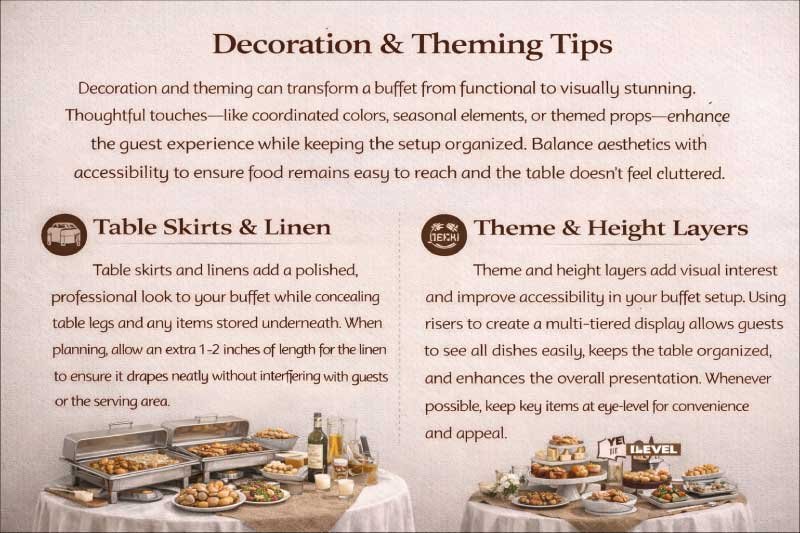
1- Table Skirts & Linen
Table skirts and linens add a polished, professional look to your buffet while concealing table legs and any items stored underneath. When planning, allow an extra 1–2 inches of length for the linen to ensure it drapes neatly without interfering with guests or the serving area.
-
Table skirting hides legs and storage underneath
-
Allow 1–2 inches extra length for linens
2- Theme & Height Layers
Theme and height layers add visual interest and improve accessibility in your buffet setup. Using risers to create a multi-tiered display allows guests to see all dishes easily, keeps the table organized, and enhances the overall presentation. Whenever possible, keep key items at eye-level for convenience and appeal.
-
Create a multi‑tier buffet look using risers
-
Keep food at eye‑level when possible
Also Read:
Food Quantity Planning by Table Size
Food quantity planning helps ensure your buffet stays stocked without overcrowding the table. A 4-foot table offers 8–10 ft² of serving area for ~15–25 plates, while a 6-foot table provides 12–15 ft² for ~30–45 plates. Larger 8- and 12-foot tables support 60–80 and 100+ plates, allowing more variety and minimizing frequent restocking.
| Table Size | Approx Total Serving Area | Suggested Amount |
|---|---|---|
| 4 ft | 8–10 ft² | ~15–25 plates |
| 6 ft | 12–15 ft² | ~30–45 plates |
| 8 ft | 16–18 ft² | ~60–80 plates |
| 12 ft | 24–30 ft² | ~100+ plates |
Larger display promotes variety and reduces restocking.
Also Read:
Furniture Sizes Guide 2026: Find the Perfect Dimensions for Every Room
Tips When Renting Tables
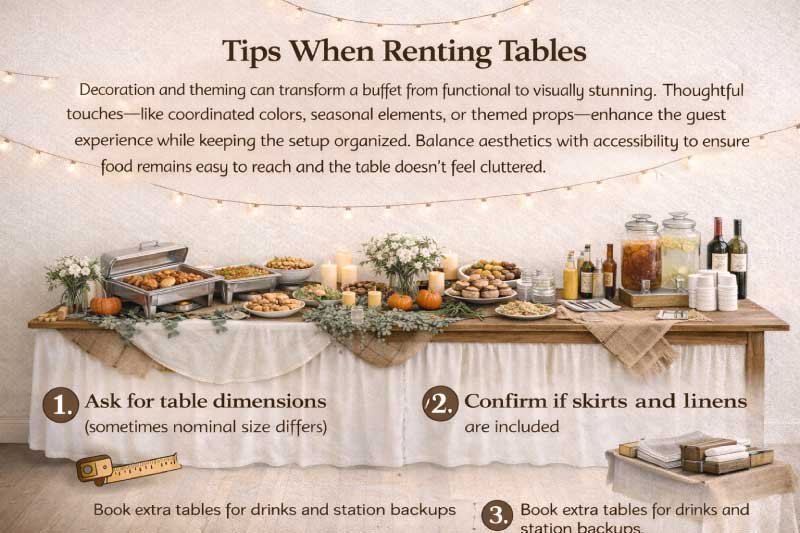
Decoration and theming can transform a buffet from functional to visually stunning. Thoughtful touches—like coordinated colors, seasonal elements, or themed props—enhance the guest experience while keeping the setup organized. Balance aesthetics with accessibility to ensure food remains easy to reach and the table doesn’t feel cluttered.
-
Ask for table dimensions (sometimes nominal size differs)
-
Confirm if skirts and linens are included
-
Book extra tables for drinks and station backups
Also Read:
Typical Buffet Workflow/Checklist
A successful buffet requires careful planning to ensure smooth operation and guest satisfaction. From confirming attendance to arranging equipment and decor, each step contributes to an efficient and visually appealing setup. Following a structured workflow helps prevent last-minute issues, maintain proper flow, and create a seamless dining experience.
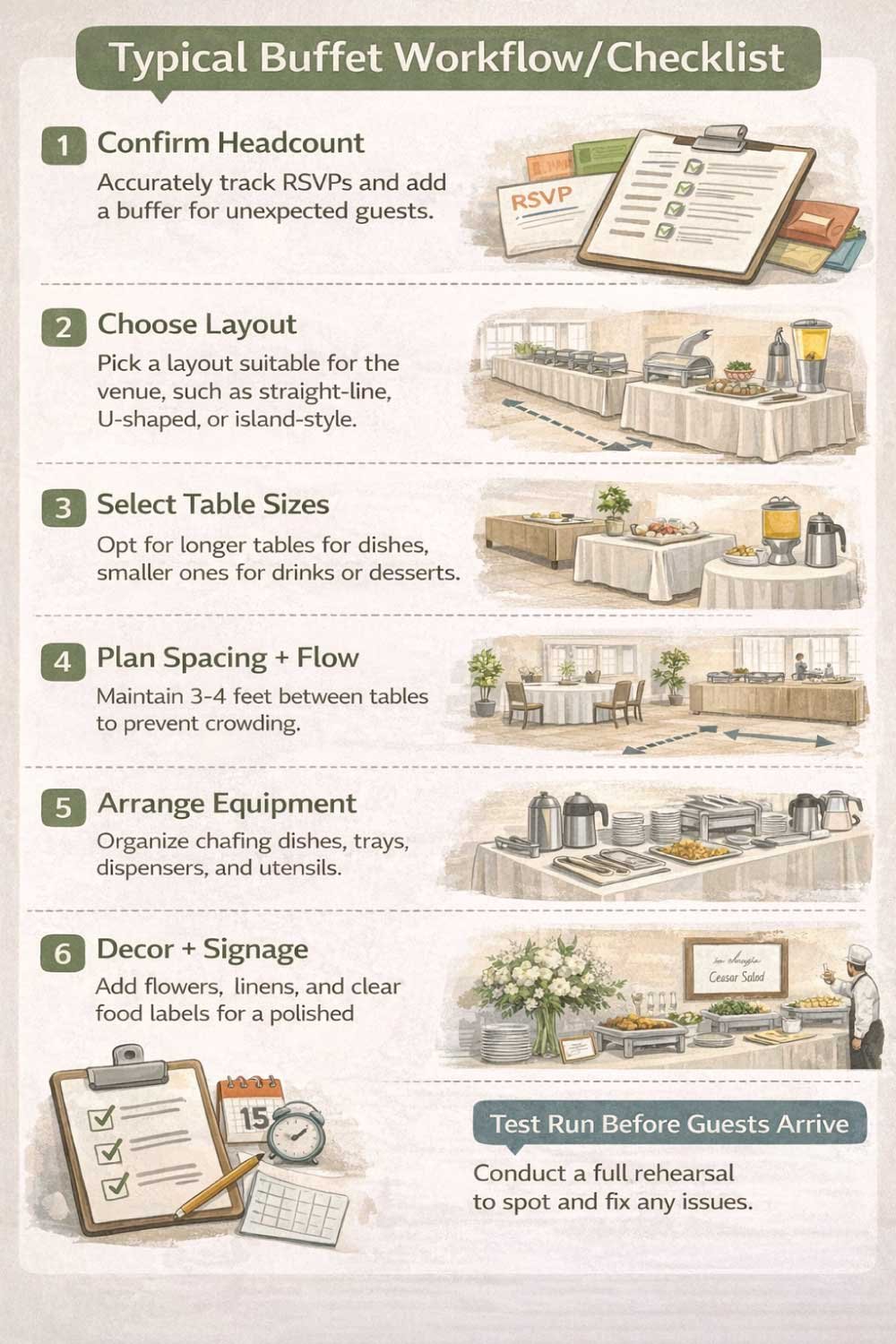
1. Confirm Headcount
Accurately knowing the number of guests ensures enough food, seating, and serving equipment. Confirm RSVPs early and allow a small buffer for unexpected attendees. This step helps in planning portion sizes, preventing waste, and ensuring the buffet accommodates everyone comfortably without overcrowding.
2. Choose Layout
Select a buffet layout that suits the venue and expected guest flow. Options include straight-line, U-shaped, or island-style setups. Consider accessibility from multiple directions, visibility of all items, and ease of movement. A thoughtful layout reduces bottlenecks and creates a natural progression for guests.
3. Select Table Sizes
Choose tables that fit your space and accommodate the menu efficiently. Longer tables work well for multiple dishes, while smaller ones are ideal for desserts or beverages. Ensure tables allow enough room for plates, utensils, and serving trays, balancing functionality with aesthetics.
4. Plan Spacing + Flow
Map out the spacing between tables, stations, and seating areas. Maintain at least 3–4 feet between tables to avoid crowding and allow guests to move freely. Proper flow ensures quick service, reduces congestion, and creates a comfortable dining experience for all attendees.
5. Arrange Equipment
Organize serving equipment like chafing dishes, trays, utensils, and beverage dispensers. Check that all equipment functions correctly and is easy to reach. Proper arrangement prevents delays, keeps food at safe temperatures, and helps staff serve efficiently while maintaining cleanliness.
6. Decor + Signage
Add decorative elements and clear signage to enhance the buffet experience. Use flowers, linens, and themed accents to create a welcoming atmosphere. Signage helps guests identify dishes, dietary restrictions, or allergens, reducing confusion and streamlining the serving process.7.
7. Test Run Before Guests Arrive
Conduct a complete rehearsal before guests arrive to identify potential issues. Check food placement, equipment setup, and guest flow. A test run ensures everything operates smoothly, gives staff practice, and allows adjustments to be made for a polished, stress-free buffet service.
Also Read:
Pro Tips from Event Planners
Event planners recommend smart strategies to make buffets run smoothly and keep guests satisfied. Proper planning of table size, stations, and flow ensures a seamless experience while minimizing stress during service. These pro tips help maintain organization, reduce congestion, and make large gatherings feel effortless.
-
Go bigger than you think — crowd control is easier than restocking mid‑event.
-
Zone stations (salads on one side, mains the other) — reduces line bottlenecks.
-
Keep beverages separate — avoids congestion at the main line.
Conclusion
Understanding buffet table sizes and standard measurements makes your event more organized and enjoyable for guests. Whether you’re hosting 15 or 150 guests, choosing the right buffet table can make or break your flow, aesthetics, and service experience.
If you need help choosing table linens, chafing dishes, or designing a layout plan, feel free to ask!
Also Read:
