

Choosing the right bookshelf is more than just picking a piece of furniture. It’s about balancing functionality, style, and the space you have. A bookshelf can act as storage, a decorative element, or even a room divider.
But if it’s too big, it can overwhelm your room; too small, and it won’t hold everything you need. Understanding perfect bookshelf sizes for small and large rooms ensures your space stays organized, stylish, and comfortable.
This guide will cover everything from dimensions to materials, and include tables to make selecting your ideal bookshelf simple.
Why Bookshelf Size Matters
The size of a bookshelf impacts both practicality and aesthetics. An oversized bookshelf in a small room can make the area feel cramped, while a small bookshelf in a large room can look out of place and underutilized. Key considerations include:
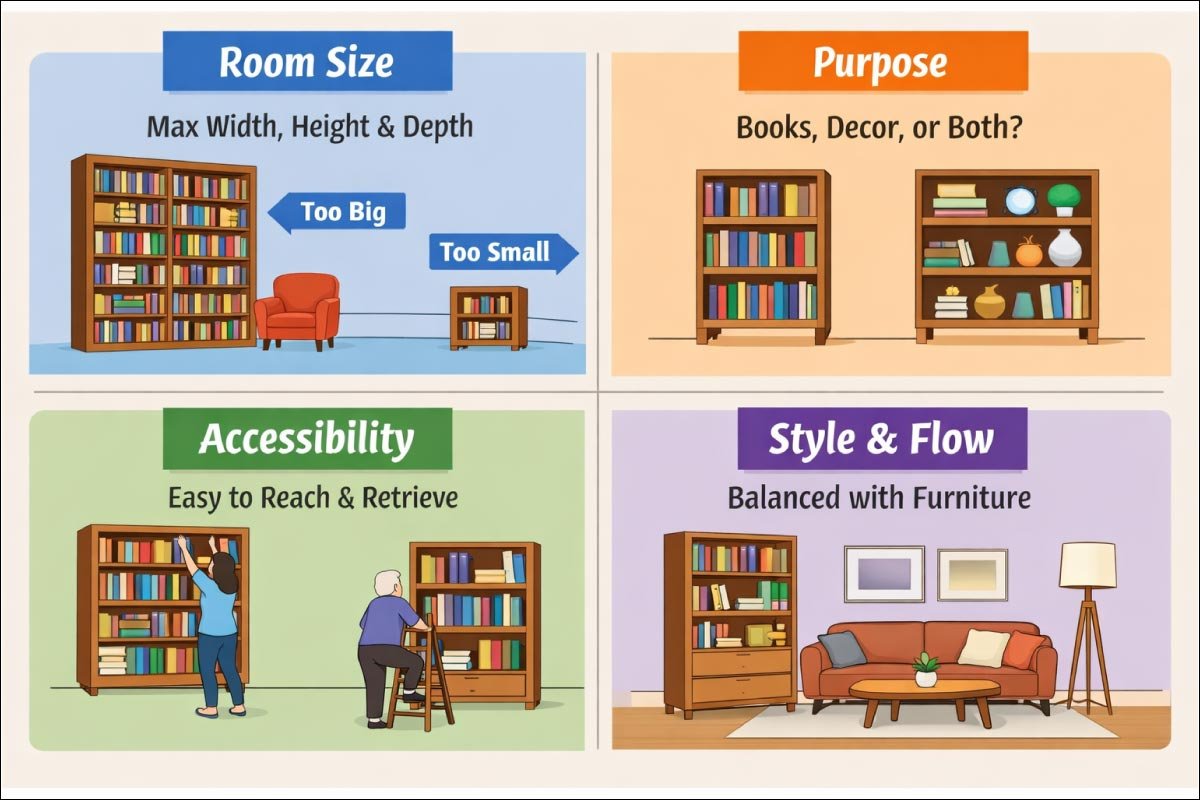
- Room Size: Determines the maximum width, height, and depth of the bookshelf.
- Purpose: Are you storing books, decorative items, or both?
- Accessibility: Ensure shelves are reachable and items easy to retrieve.
- Style & Flow: Balance the bookshelf size with other furniture and visual lines in the room.
Choosing the right bookshelf size is about fit, function, and flow. A well-proportioned bookshelf enhances your room’s functionality and design without taking over.
Standard Bookshelf Dimensions
Choosing the right bookshelf starts with knowing standard dimensions. Height, width, and depth affect storage capacity, room fit, and overall aesthetics.
By understanding common sizes, you can select a bookshelf that balances functionality with style, ensuring your books and decor are displayed neatly and your space remains organized.
1- Height
Bookshelf height influences both storage and room perception. Small rooms benefit from 3–5 feet (36–60 inches) shelves to keep spaces open,
while large rooms can accommodate 6–8 feet (72–96 inches) units, maximizing vertical storage. Choosing the right height ensures balance between practicality and aesthetic appeal.
- Small Rooms: 3–5 feet (36–60 inches)
- Large Rooms: 6–8 feet (72–96 inches)
Tall bookshelves work well for large rooms, while shorter units prevent small rooms from feeling cramped.
2- Width
Bookshelf width affects storage capacity and room harmony. For small rooms, 24–36 inches works well, keeping furniture proportional.
Larger rooms can handle 36–60 inches or more, providing ample storage and visual balance. Selecting the right width ensures the bookshelf fits comfortably without overwhelming the space.
- Small Rooms: 24–36 inches
- Large Rooms: 36–60 inches or more
Width depends on wall space and balance with other furniture.
3- Depth
Bookshelf depth determines what you can store and display. Standard book storage requires 10–12 inches, while decorative items may need 12–16 inches.
Deeper shelves accommodate larger pieces but can dominate smaller rooms, so choosing an appropriate depth balances functionality with space efficiency and overall room aesthetics.
- Books: 10–12 inches
- Decor Items: 12–16 inches
Deeper shelves are useful for large decorative pieces but can overpower small spaces.
Standard Bookshelf Sizes
Choosing the right bookshelf starts with understanding standard sizes for different room types. Height, width, and depth determine storage capacity, room fit, and visual balance.
This table offers a quick reference for small, medium, and large rooms, helping you select a bookshelf that maximizes function without crowding your space.
| Room Size | Height (inches) | Width (inches) | Depth (inches) |
|---|---|---|---|
| Small Room | 36–60 | 24–36 | 10–12 |
| Medium Room | 60–72 | 30–48 | 10–14 |
| Large Room | 72–96 | 36–60 | 12–16 |
This table is a helpful reference when deciding which bookshelf will fit your room without overwhelming it.
Discover More:
Bookshelves for Small Rooms
Maximizing storage in small rooms can be tricky. The right bookshelf balances functionality and space without overwhelming the area.
Choosing designs that optimize height, offer extra storage, and maintain an open feel helps keep your room organized and airy. Consider these tips:
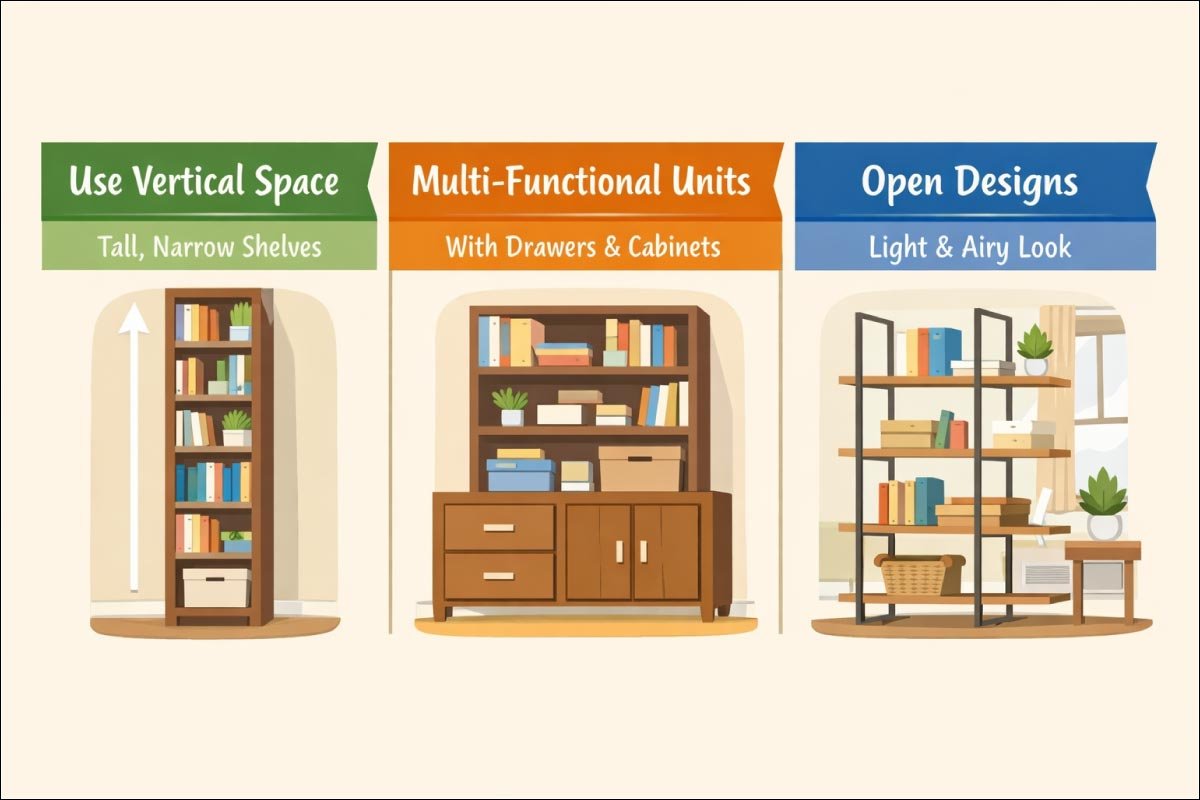
- Use vertical space: Tall, narrow shelves maximize storage without consuming floor space.
- Multi-functional units: Bookshelves with drawers or cabinets provide extra storage.
- Open designs: Reduce visual weight and make the room feel more spacious.
Small Room Bookshelf Examples
When space is limited, choosing the right bookshelf is key. Small room bookshelves come in various shapes and sizes, from narrow tall units to corner and wall-mounted designs.
Each option is designed to optimize storage, keep the room organized, and maintain an open, airy feel without overcrowding the space.
| Bookshelf Type | Height (inches) | Width (inches) | Depth (inches) | Notes |
|---|---|---|---|---|
| Narrow Tall Shelf | 60 | 24 | 10 | Fits small corners |
| Cube Storage Shelf | 48 | 30 | 12 | Can store books & baskets |
| Wall-Mounted Shelves | 36 | 36 | 10 | Keeps floor clear |
| Corner Bookshelf | 60 | 24 | 12 | Maximizes corner space |
These options help maximize storage while keeping the room feeling airy.
Discover More:
Bookshelves for Large Rooms
In spacious rooms, bookshelves can do more than just store books—they can define areas and create visual interest.
Larger units allow flexibility in design, storage, and display, helping you make the most of your space. Consider these tips:
- Tall units: Take advantage of vertical space and create visual impact.
- Wide shelves: Provide ample storage and display space for books, art, or collectibles.
- Double-sided shelves: Ideal for open floor plans as room dividers.
Large Room Bookshelf Examples
For spacious areas, large bookshelves offer both functionality and style. From full wall units to room dividers, these options provide ample storage while enhancing the room’s aesthetic.
They allow for creative displays, organizational flexibility, and statement pieces that complement your décor, making the most of expansive floor space without feeling cluttered.
| Bookshelf Type | Height (inches) | Width (inches) | Depth (inches) | Notes |
|---|---|---|---|---|
| Full Wall Unit | 96 | 60 | 16 | Covers entire wall |
| Wide Freestanding Shelf | 84 | 48 | 14 | Standalone storage |
| Room Divider Shelf | 72 | 48 | 12 | Separates spaces |
| Large Display Shelf | 78 | 60 | 16 | Perfect for decor |
Large rooms allow you to experiment with scale and style without compromising comfort.
Bookshelf Depth & Shelf Spacing
The right depth and shelf spacing ensure your bookshelf is both practical and visually balanced.
Small and large rooms have different requirements, and adjustable designs add flexibility.
Proper measurements help accommodate books, décor, and collectibles without overcrowding or wasting space.
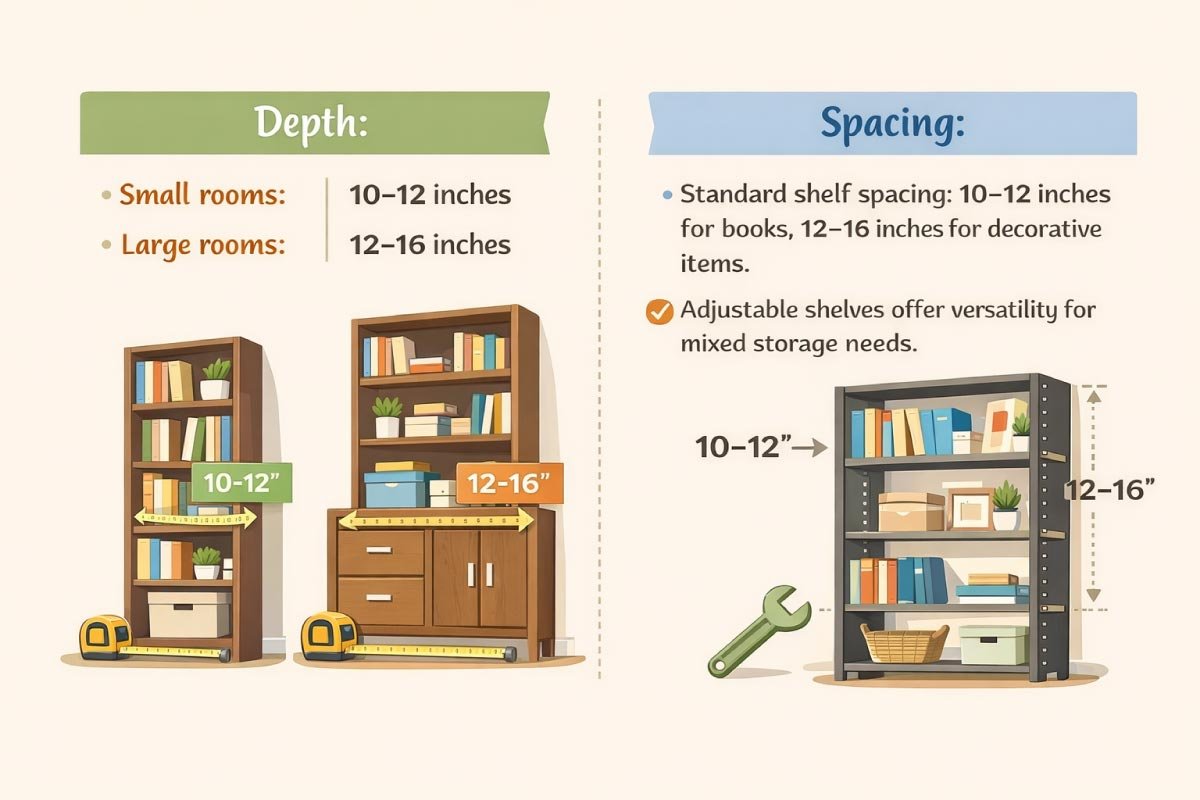
- Depth:
- Small rooms: 10–12 inches
- Large rooms: 12–16 inches
- Spacing:
- Standard shelf spacing: 10–12 inches for books, 12–16 inches for decorative items.
- Adjustable shelves offer versatility for mixed storage needs.
Shelf Depth & Spacing Recommendations
Proper shelf depth and spacing are essential for both functionality and aesthetics. Adjusting these dimensions based on room size ensures efficient storage without overcrowding.
Shallower shelves keep small rooms feeling light, while deeper, well-spaced shelves in larger rooms accommodate bigger items and create a balanced, visually appealing display.
| Room Size | Shelf Depth (inches) | Shelf Spacing (inches) | Notes |
|---|---|---|---|
| Small Room | 10–12 | 10–12 | Keeps room light |
| Medium Room | 12–14 | 12–14 | Balanced storage |
| Large Room | 14–16 | 14–16 | Supports large items |
Choosing the right depth ensures books fit comfortably and decor doesn’t look crowded.
Discover More:
Built-In vs Freestanding Bookshelves
Choosing between built-in and freestanding bookshelves impacts both style and functionality.
Freestanding units offer flexibility, while built-ins provide a custom fit and seamless integration.
Understanding the advantages of each type helps you select the right solution for your room’s size, layout, and storage needs.
- Freestanding Bookshelves:
- Easy to move and replace
- Ideal for renters or flexible layouts
- Can be selected to match standard dimensions
- Built-In Bookshelves:
- Custom dimensions for your room
- Maximizes storage efficiency
- Blends seamlessly with walls, perfect for large rooms
Built-In vs Freestanding Comparison
Choosing between built-in and freestanding bookshelves depends on your priorities.
Freestanding units offer flexibility and affordability, while built-ins provide a custom fit and a strong visual impact.
Comparing installation requirements, cost, and room influence helps you select the style that best balances function, design, and budget for your space.
| Feature | Freestanding | Built-In |
|---|---|---|
| Flexibility | High | Low |
| Custom Size | Medium | High |
| Installation | None | Professional |
| Cost | Affordable | Expensive |
| Room Impact | Moderate | Maximal |
This helps you determine which type suits your space and budget.
Styling & Placement Tips
How you place and style your bookshelf can transform a room. Strategic positioning enhances flow, maximizes space, and highlights your collection.
Thoughtful styling—balancing books and décor—prevents clutter and creates visual harmony, making your bookshelf both functional and a design feature.
- Against the wall: Classic placement for stability and visual balance.
- As a room divider: Use tall shelves in large rooms to separate zones.
- Corner units: Perfect for small rooms to maximize underutilized spaces.
- Symmetry & balance: Keep visual weight balanced with surrounding furniture.
- Decor vs books: Mix decor items with books to avoid a cluttered look.
Bookshelf Placement Guide
Strategic bookshelf placement enhances both functionality and room aesthetics.
Depending on room size and layout, positioning shelves against walls, in corners, or as dividers maximizes storage while maintaining flow.
Choosing the right height and width ensures your bookshelf complements the space, creates focal points, and keeps the room organized and visually appealing.
| Room Type | Placement Suggestion | Ideal Shelf Size | Notes |
|---|---|---|---|
| Small Room | Against Wall | 36–60” H x 24–36” W | Leaves floor space |
| Medium Room | Corner or Wall | 60–72” H x 30–48” W | Balanced storage |
| Large Room | Center / Divider | 72–96” H x 36–60” W | Creates focal point |
| Open Layout | Double-Sided Divider | 72–84” H x 48–60” W | Functional & aesthetic |
Correct placement ensures your bookshelf serves both practical and decorative purposes.
Discover More:
Additional Tips for Choosing the Right Size
Selecting the right bookshelf size requires careful planning. Beyond basic measurements, consider clearance, vertical space, and flexibility to ensure your bookshelf fits seamlessly.
Thoughtful choices enhance storage, style, and room flow, helping you create a space that feels balanced, organized, and visually appealing.
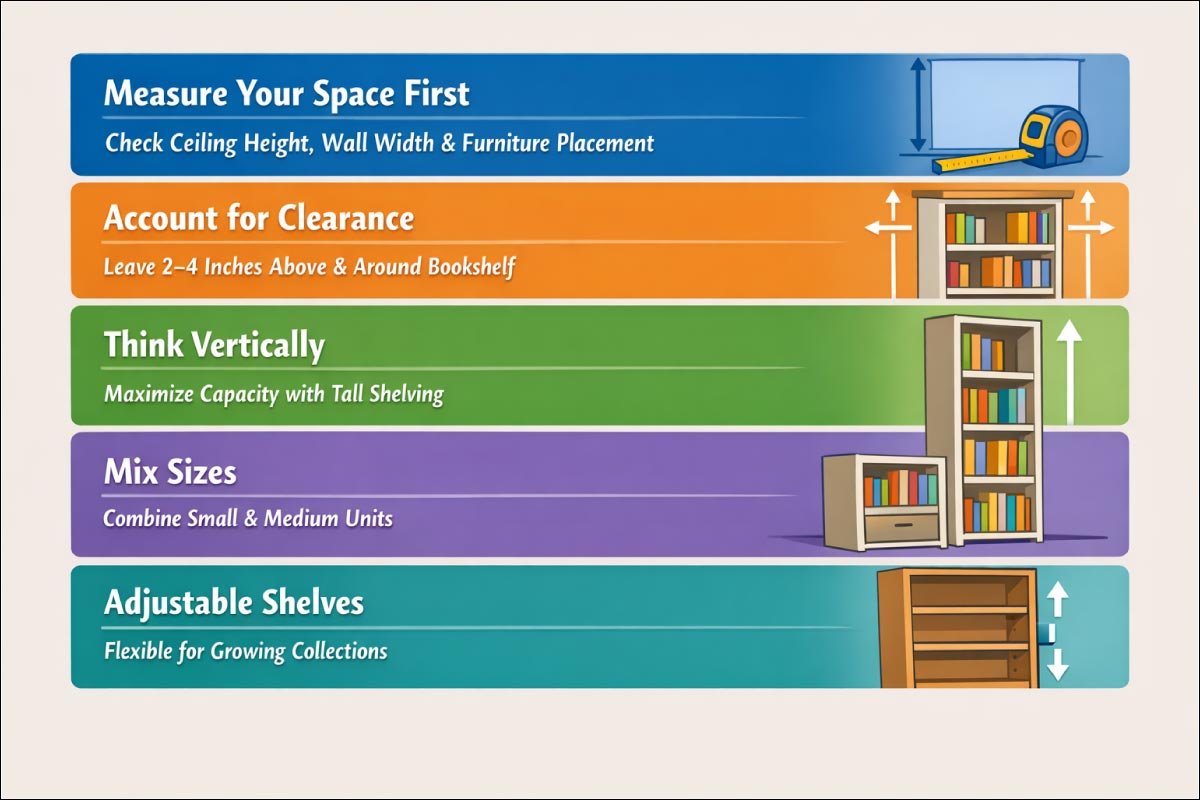
- Measure your space first: Always check ceiling height, wall width, and furniture placement.
- Account for clearance: Leave 2–4 inches above and around the bookshelf to avoid crowding.
- Think vertically: Vertical storage reduces footprint while maximizing capacity.
- Mix sizes: Combining small and medium units can create visual interest and functional storage.
- Adjustable shelves: Provide flexibility as your collection grows or changes.
By considering these factors, your bookshelf can enhance your room instead of dominating it.
Conclusion
Selecting the perfect bookshelf size is a blend of art and science. Small rooms benefit from tall, narrow, and open designs, while large rooms can handle taller, wider units that act as focal points.
Consider height, width, depth, and shelf spacing carefully, and balance your bookshelf with the room’s overall design. With the right measurements, your bookshelf can provide functional storage, showcase decor, and enhance your space’s style.
Use the tables and recommendations above as a guide to find a bookshelf that fits both your needs and your room perfectly.
