
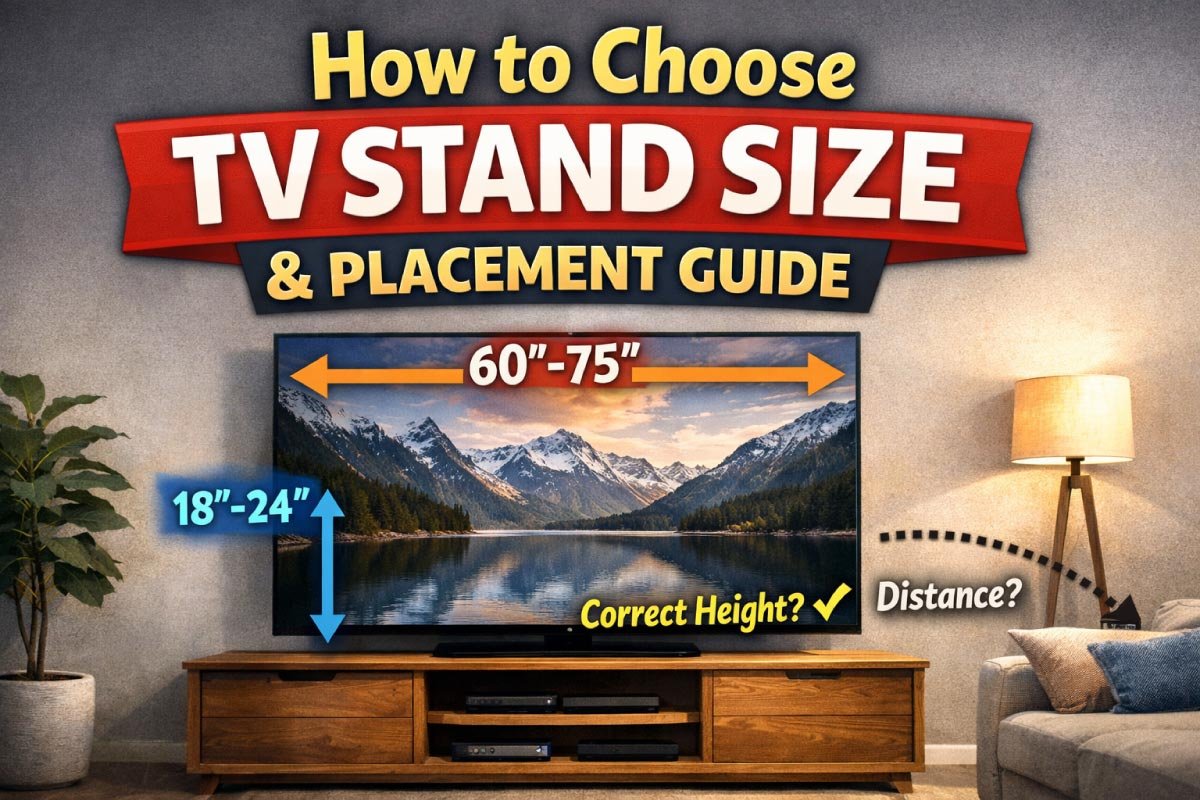
Choosing the right TV stand is more than just picking a stylish piece of furniture. The correct TV stand ensures optimal viewing angles, proper room aesthetics, and adequate storage for your entertainment accessories. With so many sizes, designs, and placement options available, it’s easy to feel overwhelmed. This guide will break down the factors you need to consider, provide practical charts for sizing, and help you make an informed decision.
Understand Your TV Size
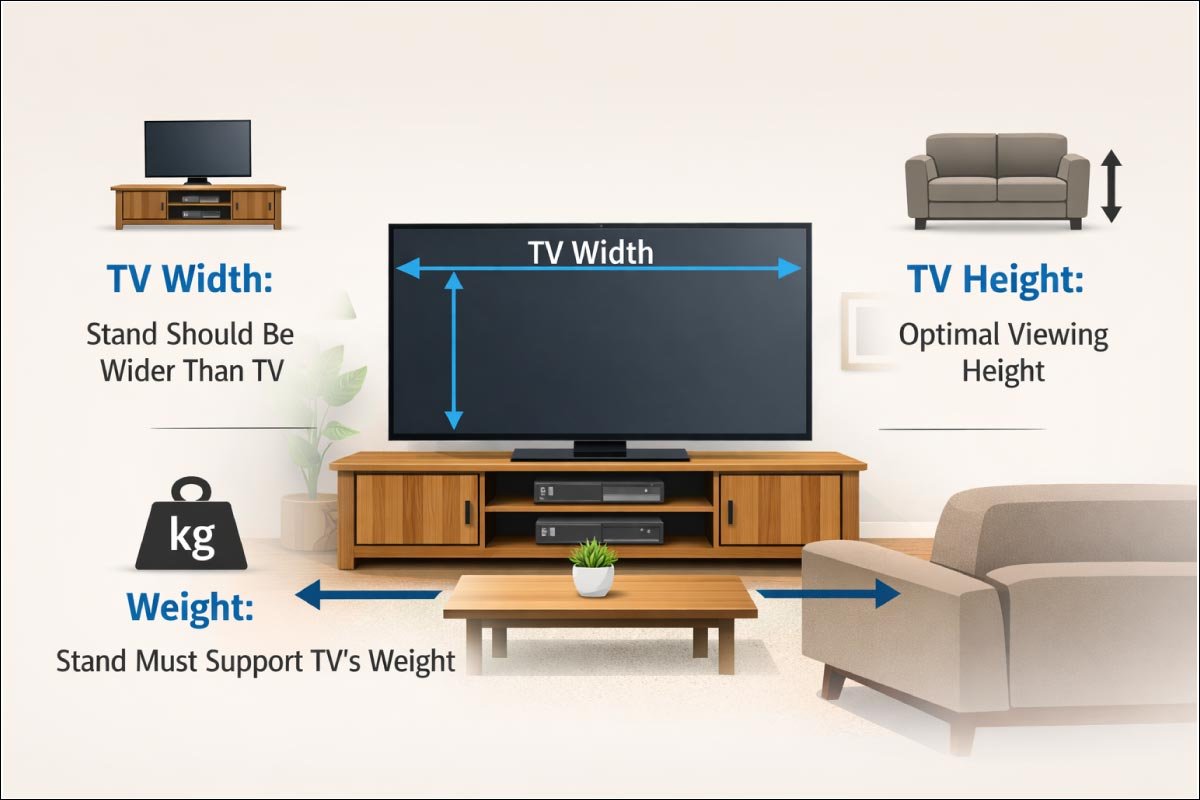
Choosing the right TV stand starts with understanding your TV’s dimensions. Knowing the width, height, and weight ensures you pick a stand that not only fits but also provides safe, comfortable viewing. Consider how these measurements interact with your seating and room layout for optimal placement.
Key Considerations:
- TV Width: The stand should be slightly wider than your TV for stability.
- TV Height: The viewing height depends on the stand height and your seating arrangement.
- Weight: Ensure the stand can support your TV’s weight safely.
Recommended TV Stand Width Based on TV Size
Choosing the right TV stand width is essential for both aesthetics and safety. A properly sized stand ensures your TV fits securely while maintaining balanced proportions in your living space. The table below provides recommended minimum and ideal stand widths based on different TV sizes for optimal viewing and style.
| TV Size (inches) | TV Width (inches) | Minimum Stand Width (inches) | Ideal Stand Width (inches) |
|---|---|---|---|
| 32 | 28 | 30 | 36 |
| 43 | 38 | 40 | 48 |
| 50 | 44 | 46 | 54 |
| 55 | 48 | 50 | 60 |
| 65 | 57 | 59 | 68 |
| 75 | 66 | 68 | 78 |
| 85 | 74 | 76 | 86 |
Determine the Optimal Viewing Height
The height of your TV stand is crucial for comfortable viewing. Aligning the screen’s center with your eye level prevents neck strain and enhances your viewing experience. Consider your seating height and TV size to select a stand that creates the perfect line of sight.
Tips for Choosing Stand Height:
- For larger TVs (65 inches and above), a lower stand works best to keep the screen at eye level.
- For smaller TVs (32–50 inches), a slightly taller stand can improve viewing angles.
- Adjustable stands or risers can help fine-tune the height.
Recommended TV Stand Height by TV Size
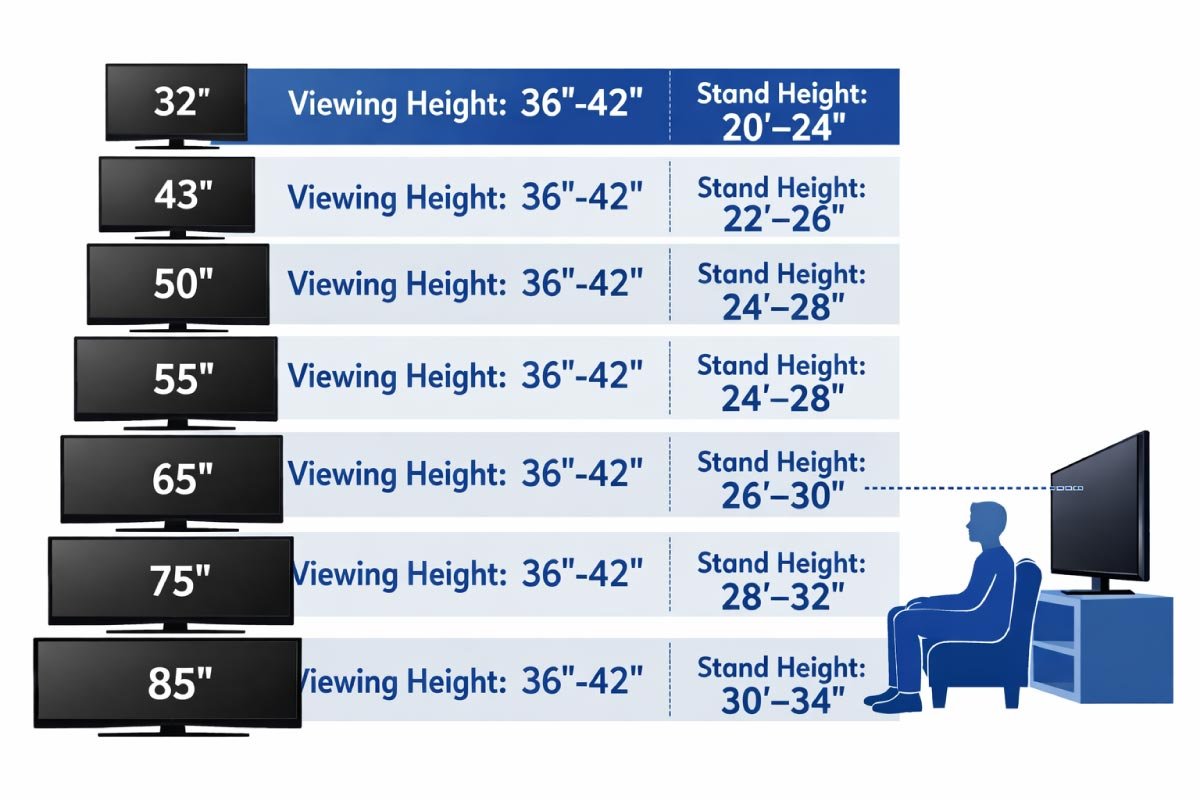
Proper TV stand height is crucial for comfortable, strain-free viewing. Aligning the screen with eye level enhances your viewing experience and protects your neck and posture. The table below outlines ideal TV stand heights for different TV sizes, ensuring optimal placement for both comfort and style.
| TV Size (inches) | Ideal Viewing Height (inches) | Stand Height Recommendation (inches) |
|---|---|---|
| 32 | 36–42 | 20–24 |
| 43 | 36–42 | 22–26 |
| 50 | 36–42 | 24–28 |
| 55 | 36–42 | 24–28 |
| 65 | 36–42 | 26–30 |
| 75 | 36–42 | 28–32 |
| 85 | 36–42 | 30–34 |
Match the Room Layout
A well-chosen TV stand should blend with your room’s layout while ensuring comfortable viewing. Take into account the TV’s distance from seating, the shape of your room, and how people move through the space. A thoughtful setup enhances both functionality and aesthetics.
-
Viewing Distance: The ideal distance is 1.5–2.5 times the diagonal size of your TV.
-
Room Shape: Narrow rooms may benefit from wall-mounted TVs or slimmer stands.
-
Traffic Flow: Keep at least 24 inches of walking space around the TV area.
Recommended Viewing Distance for TV Sizes
Maintaining the right viewing distance is key to an immersive and comfortable TV experience. Sitting too close can cause eye strain, while too far reduces detail visibility. The table below provides recommended minimum and maximum distances for different TV sizes, helping you enjoy optimal picture quality and comfort.
| TV Size (inches) | Minimum Viewing Distance (ft) | Maximum Viewing Distance (ft) |
|---|---|---|
| 32 | 4 | 6 |
| 43 | 5 | 9 |
| 50 | 6 | 10 |
| 55 | 6.5 | 11 |
| 65 | 8 | 13 |
| 75 | 9 | 15 |
| 85 | 10 | 17 |
Consider Storage and Cable Management
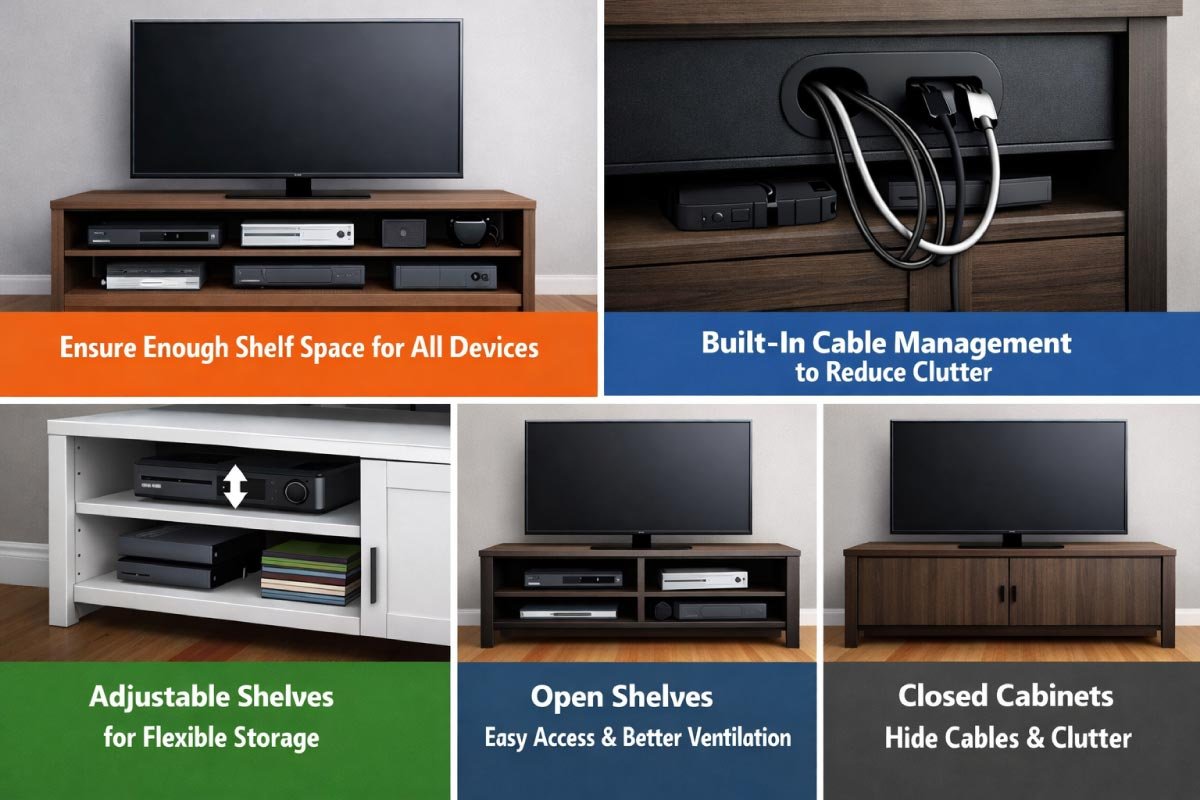
A TV stand should do more than just hold your TV—it can organize your media and keep cables tidy. Evaluate your storage needs and cable setup, choosing a stand that balances accessibility, ventilation, and aesthetics to maintain a clean, functional entertainment area.
-
Ensure enough shelf space for all devices.
-
Look for stands with built-in cable management to reduce clutter.
-
Consider adjustable shelves for flexible storage options.
Open shelves offer easy access and better ventilation, while closed cabinets hide cables and clutter.
TV Stand Storage Guide
A TV stand isn’t just for holding your screen—it’s also a hub for organizing entertainment essentials. Choosing the right storage type ensures accessibility and keeps your space tidy. The table below recommends suitable storage options for different stand sizes, helping you store devices, media, and accessories efficiently.
| TV Stand Size (inches) | Recommended Storage Type | Suggested Components to Store |
|---|---|---|
| 36–48 | Open shelves | DVD player, small consoles |
| 48–60 | Combination of shelves/cabinets | Gaming consoles, media players, remotes |
| 60–72 | Large cabinets + drawers | Speakers, Blu-ray collection, gaming accessories |
| 72+ | Modular storage options | All entertainment devices and decor items |
Placement Guidelines
The position of your TV stand affects both comfort and safety. Proper placement ensures optimal viewing angles, reduces glare, and maintains a balanced room layout. Consider wall, corner, or open-space options carefully to create a setup that looks good, functions well, and keeps everyone safe.
-
Against a Wall: Most common, helps anchor the TV and maintain safety.
-
Floating in Room: Can work in open-plan spaces but may require additional cable management solutions.
-
Near Windows: Avoid placing TVs directly in front of bright windows to reduce glare.
-
Corner Placement: Corner stands are perfect for smaller rooms, but make sure the TV is angled for comfortable viewing.
Safety Tip: Always anchor large TVs or stands to the wall, especially in homes with children or pets.
Material and Style Considerations
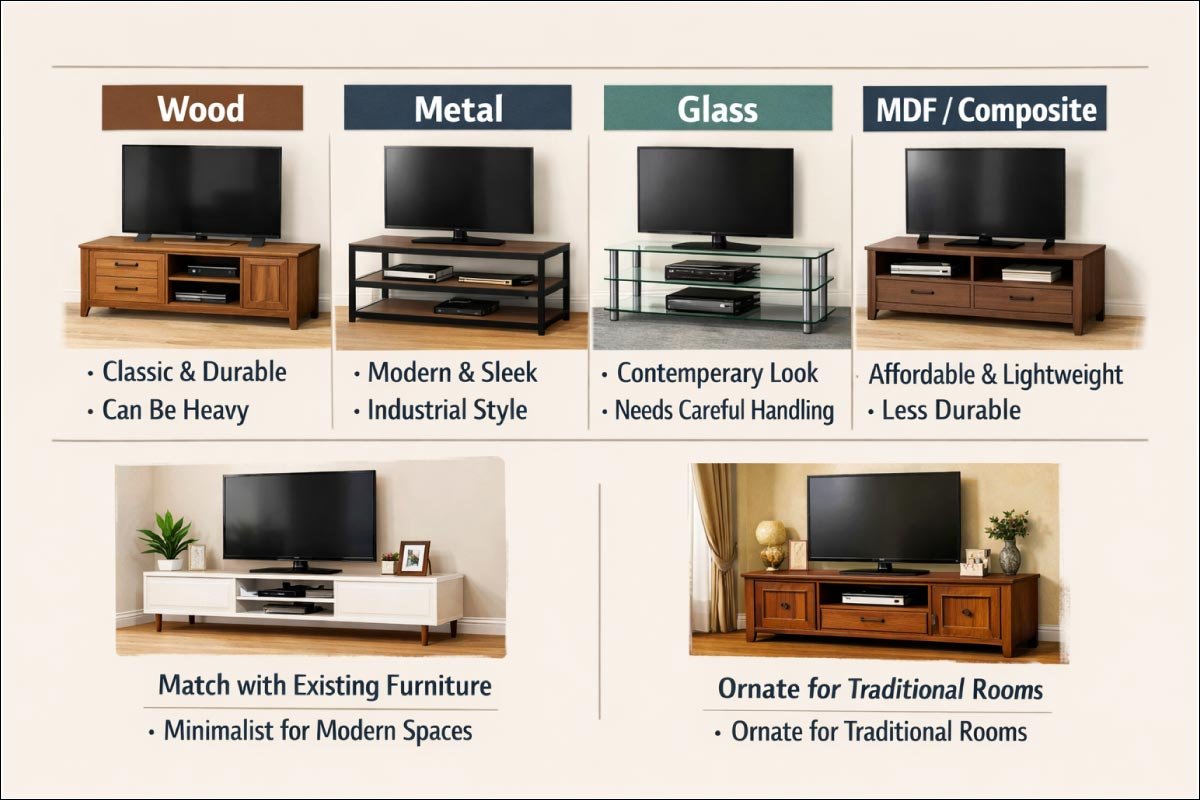
Choosing the right material and style for your TV stand affects both longevity and the overall look of your room. Consider durability, weight, and how the stand complements existing furniture. Selecting the appropriate finish and design ensures your TV setup is both functional and visually appealing.
-
Wood: Classic and durable. Solid wood lasts longer but may be heavier.
-
Metal: Modern and sleek, perfect for industrial designs.
-
Glass: Offers a contemporary look but requires careful handling.
-
MDF/Composite: Affordable and lightweight, but less durable.
Design Tip: Match the TV stand style with existing furniture. Minimalist designs fit most modern spaces, while ornate wooden stands work in traditional living rooms.
Common Mistakes to Avoid
Even with the perfect TV and stand in mind, certain mistakes can compromise safety, comfort, and aesthetics. Being aware of common pitfalls—like improper sizing, poor cable management, or ignoring weight limits—helps you choose a stand that is both functional and visually balanced for your space.
-
Choosing a stand that’s too narrow – risk of instability.
-
Selecting a stand that’s too tall or too low – discomfort during viewing.
-
Ignoring cable management – results in a messy setup.
-
Not checking weight capacity – TV might be unsafe.
-
Prioritizing style over functionality – storage and placement suffer.
Discover More:
Final Thoughts
Selecting the right TV stand involves more than aesthetics. Proper width, height, storage, and placement enhance both your viewing experience and living room functionality.
Always consider your TV size, room layout, and storage needs before making a purchase. With the right measurements and planning, your TV setup can be both stylish and comfortable.
This guide provides a comprehensive framework for choosing the perfect TV stand, ensuring optimal viewing, adequate storage, and a visually pleasing setup.
Using the tables above as references, you can confidently pick a TV stand that complements your home while meeting all functional needs.
Discover More:
👉 Welcome to Size Helper – your go-to source for smart sizing solutions! Explore detailed furniture size guides, accurate appliance measurements, essential sports equipment sizes, and trendy fashion sizing charts. 🖐️ Discover comprehensive size guides, dimension charts, and fit tips to make every choice perfect!
